Vishwadeep Khatri
Administrators
-
Joined
-
Last visited
Everything posted by Vishwadeep Khatri
-
A fierce talent war is raging in the AI sector, with tech giants like Google facing significant researcher departures to rivals OpenAI and Anthropic. This exodus has impacted Google's market value, highlighting the intense competition for top AI minds. Prominent figures, including co-authors of groundbreaking AI papers, are switching allegiances, reshaping the landscape of artificial intelligence development. View the full article

-
The hiring push comes as Anthropic works to expand its computing capacity beyond the US. The company had said in a blog post in April that rapid growth in demand had placed pressure on its infrastructure, impacting reliability and performance. View the full article
-
Orange's Chief AI Officer, Steve Jarrett, is departing the French telecom giant to join U.S. AI startup Anthropic. He will be based in Paris and will focus on adapting Anthropic's AI products for European and African markets. This move comes as Anthropic, the creator of Claude and Mythos AI models, expands its international presence with a new office in Milan and plans to significantly grow its global team. View the full article
-
Chinese AI firm Z. ai is aiming for artificial general intelligence, fueled by strong investor interest after its GLM-5.2 model neared top US AI performance. The company plans a domestic listing to fund this ambitious goal. This development comes as global allies express concern over reliance on US-controlled AI, highlighting China's progress in bridging the frontier AI gap despite computing constraints. View the full article
-
IBM has unveiled groundbreaking chip technology capable of producing transistors at 0.7 nanometers, a significant leap towards smaller and more powerful semiconductors. This innovation, featuring a novel 'nanostack' architecture, promises nearly double the density of previous designs and could revolutionize AI capabilities. While commercial production is estimated to be five years away, this development intensifies the race among tech giants to meet the growing demand for advanced computing power. View the full article

-
View the full article
-
Legion LegalTech Corp, a legal tech firm based in the US, has initiated legal action against the federal government after a controversial directive mandated AI company Anthropic to restrict access to its advanced models for foreign users. Legion argues this mandate, issued by the Commerce Department, has significantly disrupted its operations and affected its Canadian development team. View the full article
-
Their moves rattled investors and cast new doubt on Google’s ability to compete in the fierce race to build better models.Shares of Alphabet closed down slightly after falling as much as 1.2% during the trading day Wednesday. View the full article

-
Europol warned last year that organised crime gangs were turning to AI-powered scams to target victims. Tackling smuggling gangs that illegally move migrants across Europe remains a priority for many governments. View the full article

-
Anthropic said in the letter that distillation is a way to help accelerate China's ability to reach Anthropic's advanced Mythos Preview capabilities. View the full article
-
Cybersecurity faces a monumental opportunity and challenge with advanced AI models now identifying software flaws at lightning speed. Zscaler CEO Jay Chaudhry highlights that vulnerabilities hidden for decades are being uncovered, demanding rapid fixes before exploitation. The company is actively testing AI, including Anthropic's Mythos, to stay ahead in this rapidly evolving threat landscape, emphasizing the urgent need for enhanced cybersecurity measures. View the full article

-
AI is evolving beyond text-based chatbots, with researchers now focusing on "world models." These advanced systems aim to teach AI to understand and interact with the physical world, much like humans do. This shift is attracting significant investment, with a new generation of entrepreneurs and prominent scientists exploring how AI can learn spatial and temporal structures, paving the way for smarter robots and more immersive virtual environments. View the full article

-
Compute marketplace Ornn has secured $33 million in a funding round led by a16z crypto, with participation from Galaxy Ventures and others. Founded by MIT graduates, Ornn aims to bring transparency to the computing power market, which is crucial for AI. The platform will allow data centers and cloud providers to trade compute capacity, similar to commodity markets. This funding will fuel talent acquisition and business expansion. View the full article

-
China's 360 Security Technology has launched 'Yitian Tulong,' a direct competitor to American AI vulnerability detection systems like Anthropic's Mythos. Founder Zhou Hongyi highlighted the critical need for such technologies in national security, bringing attention to issues surrounding 'one-way transparency.' The firm asserts that its 'Tulongfeng' tool effectively identifies software flaws to mitigate cyber threats and secure a tactical advantage. View the full article

-
Every online query, especially those powered by AI, significantly increases energy and water consumption, experts warn. AI's growing demand is counterproductive to climate goals, with companies lacking transparency on resource use. Individuals can mitigate this by using AI less for simple tasks and making queries concise. While AI integration is pervasive, opting out and supporting eco-conscious search engines are viable choices for consumers to influence the market. View the full article

-
OpenAI has unveiled its first custom AI chip, Jalapeno, developed with Broadcom to boost its infrastructure. This move aims to overcome computing power shortages and reduce reliance on Nvidia's GPUs. Designed for AI inference, the chip is comparable to Nvidia's and Google's offerings. OpenAI plans to deploy Jalapeno by year-end, marking a significant step in its multi-generation chip development strategy. View the full article
-
Chinese tech giant ByteDance has launched paid subscriptions for its popular AI chatbot, Doubao, a move aimed at monetizing its vast user base. Doubao, boasting over 300 million monthly users, now offers a professional version with enhanced features like file organisation and website development, differentiating it from free rivals. View the full article
-
AI startup Anthropic has launched Claude Tag, a new Slack-native AI experience, replacing its previous chatbot. This "inline" agent seamlessly integrates into team workflows, assisting with diverse tasks by leveraging organizational tools and context. Claude Tag, powered by the Opus 4.8 LLM, operates as a shared teammate within channels, remembering conversations and proactively notifying users upon task completion. View the full article
-
India has emerged as one of the top countries in artificial intelligence (AI) readiness, trailing only the U.S. and China, while remaining one of the world's least concentrated equity markets, according to a recent report by J.P. Morgan. View the full article

-
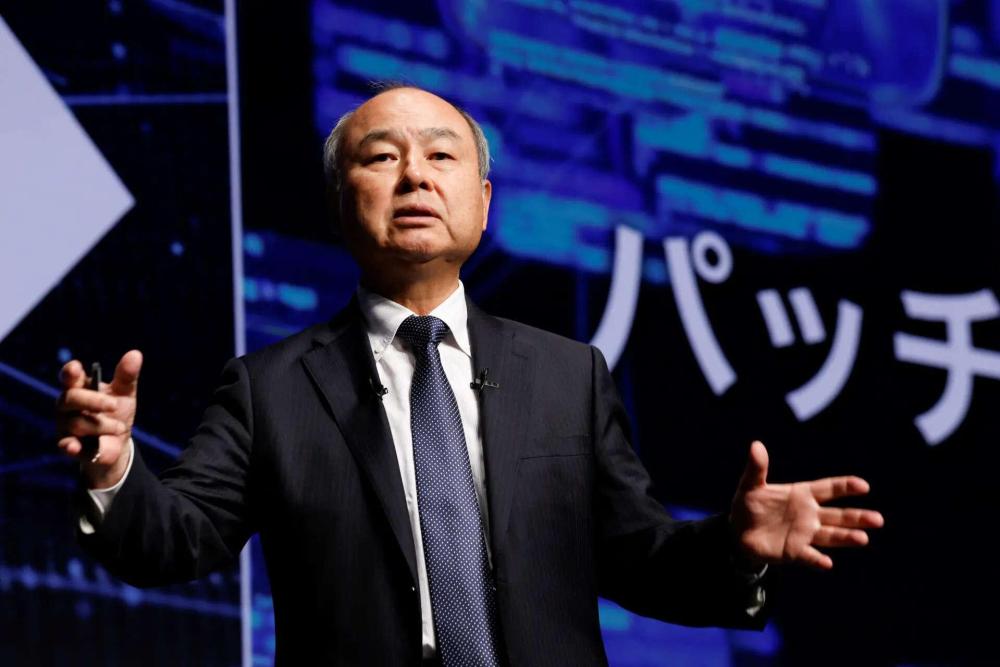
Masayoshi Son, SoftBank's CEO, dismissed concerns about an AI bubble, calling it an "insult to AI" and emphasising its nascent stage with vast potential. He reiterated SoftBank's role as an "egg-laying factory" and expressed frustration over the company's market valuation compared to its asset value. Son, 68, plans to lead the company into his 70s to achieve "artificial super intelligence." View the full article
-
Generative AI is set to revolutionise consumer shopping, moving beyond discovery to completing transactions. Young shoppers, particularly Gen Z, are leading this shift, leveraging AI for product research and even purchases. As AI tools evolve and companies like Amazon and Walmart adapt, expect a new era of "agentic commerce" with a "dual front door" for seamless buying experiences. View the full article

-
The United States stands at the forefront of AI development, yet China is swiftly closing the gap with cost-efficient AI systems. Chinese companies are making headway in corporate environments by offering significantly lower operational costs than their American counterparts. This trend may accelerate as organisations prioritise cost-cutting, despite the continued importance of US frontier AI for sophisticated applications. View the full article

-
Artificial intelligence is advancing beyond mere language comprehension. Researchers are now constructing 'world models' that allow AI systems and robots to grasp the physical realm. This initiative is set to enhance AI's ability to navigate intricate environments and foresee the impacts of their actions, leading to the development of advanced robots and engaging virtual realities, sparking significant interest from investors. View the full article

-
The Facebook parent, which launched the Muse Spark AI model in April, is the only major U.S. developer of AI technology that has not reached an agreement to voluntarily share its models with the federal government for review, according to the report. View the full article
-
Databricks is significantly boosting its presence in India, recognising it as a key market for growth and revenue. This expansion is fueled by India's vibrant digital sector, increasing enterprise AI adoption, and global firms leveraging the nation's talent for development. View the full article