Vishwadeep Khatri
Administrators
-
Joined
-
Last visited
Everything posted by Vishwadeep Khatri
-
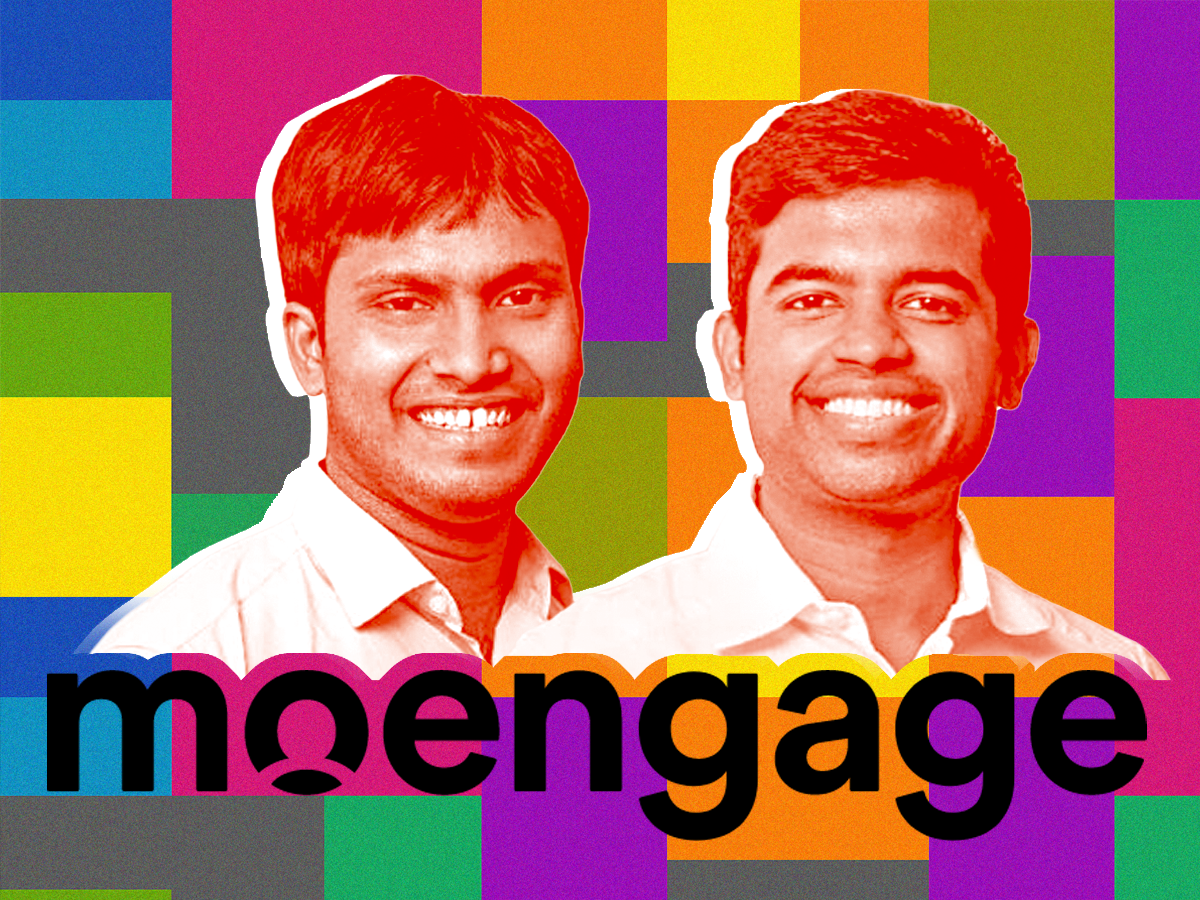
Customer engagement platform MoEngage has acquired AI startup Aampe, bolstering its artificial intelligence capabilities. MoEngage cofounder and chief executive Raviteja Dodda said the company is evaluating more inorganic growth opportunities, particularly in markets such as the US and Europe. View the full article
-
French mid-sized companies are rapidly adopting generative AI, with 77% now using it. However, most are yet to see tangible productivity gains, with only 17% reporting time savings. While regular users are more likely to experience benefits, a significant majority anticipate positive long-term impacts. Demand weakness remains a primary concern for businesses. View the full article

-
CAISA Forum Question 883Should AI be allowed to continuously change a process that is already performing well?A large e-commerce company uses AI to optimize its order fulfillment process. The process is already performing strongly: 98% on-time delivery High customer satisfaction Stable operational costs However, the AI continuously identifies small improvements based on changing customer behavior, seasonal patterns, and operational data. It recommends frequent adjustments to: staffing levels, routing rules, inventory allocation, and fulfillment priorities. The projected gain from each change is small, often just 1–2% improvement. However: Frequent changes make training more difficult. Frontline teams struggle to keep up with evolving procedures. Managers worry that the organization is losing process stability. This creates a real dilemma: View A — Allow continuous AI-driven adaptation.Markets, customers, and operations constantly change. A process that stands still gradually becomes outdated. Small improvements accumulated over time create significant competitive advantage. View B — Prioritize stability and consistency.A well-performing process should not be constantly adjusted. Stability improves execution, training, predictability, and organizational confidence. Excessive optimization can create confusion and change fatigue. Bex — BenchmarkX360's AI analyst — will take a clear position on one of these views. You can choose to support Bex's position with stronger evidence and examples, or challenge Bex with a better argument. Either approach can win. Which view do you support — and why? Provide a specific operational, product, service, or organizational example to support your position.⚠️ Answers that do not take a clear position will not be approved. ⚠️ "It depends" answers will not be approved. 💡 Participants are free to use AI tools — clarity, insight, and contextual relevance will determine the best answer. 🏆 The best answer will be selected on the basis of:· Clarity of position taken · Quality of reasoning and argument · Relevance of operational, product, service, or organizational example · Ability to go beyond or against Bex's analysis
-
Vishwadeep Khatri replied to Vishwadeep Khatri's topic in We ask and you answer! The best answer wins!1. anthony rebello — ✅ ApprovedPosition: View B (adjust for circumstances) — clear and unambiguous. Example: Three specific examples provided: education (value-added models for teachers), sales teams across different territories (Manager A in mature market vs. Manager B in new territory with $10M vs. $8M sales), and healthcare (hospital risk-adjusted mortality ratings). Includes illustrative graphs comparing raw vs. complexity-adjusted scores. Reasoning: Well-structured argument covering the fundamental problem with results-only evaluation, organizational psychology research on fairness and motivation, and the danger of "easy work bias." Proposes a concrete framework (Outcome Metrics 50–60%, Contextual Factors). 2. Ankita_Bhardwaj_gN3V — ✅ ApprovedPosition: View B — explicit and strong. Example: Customer service agent comparison (Agent A: 80 routine queries vs. Agent B: complex escalations). Additional examples include enterprise contact center platforms (Salesforce Einstein, Genesys AI), a logistics/delivery driver case (urban vs. suburban routes, 20–25% churn drop), healthcare ER triage, and regulatory frameworks (EU AI Act, NIST RMF). Also cites Starbucks and Google's AI Principles. Reasoning: Highly detailed technical argument using a systems engineering lens (Performance = f(Individual Capability, Environmental Variables)), omitted variable bias, and a normalized scoring architecture with three categories of environmental variables. Cites EU AI Act penalties (€35M or 7% of global turnover) and Schmidt & Hunter (1998) meta-analysis. 3. rajan.arora2000 — ✅ ApprovedPosition: View B — unequivocal ("View B. Without qualification."). Example: Multiple load-bearing cases: NY/PA cardiac-surgery report cards (Dranove et al., 2003), CMS Hospital Readmissions Reduction Program (matched pair, reform in 2019), Houston teacher EVAAS case (due-process failure), UK Progress 8 education metric (replaced raw GCSE attainment), Amazon "time off task" terminations, Indian gig platform strikes, and Uber/Lyft driver deactivations (42% linked to passenger bias). Reasoning: Exceptionally rigorous. Frames the core issue as causal inference (Holland, JASA, 1986; Neyman-Rubin potential outcomes). Builds a formal model (Y = C + γ·X + ε), derives a decision rule (Adjust ⇔ γ²·Var(X) > V_cost), closes four counter-arguments systematically, and proposes the PEARL governance framework (Pre-registered, Exogenous, Auditable, Raw shown alongside, Loop-tracked). Identifies the "cream-skimming ratchet" using Campbell's and Goodhart's Laws. 4. Vinit_Dubey_w5HV — ✅ ApprovedPosition: View B — explicit ("I Strongly Support View B"). Example: Five scenarios: customer service (Agent A with 120 simple queries vs. Agent B with 45 escalated complaints), sales (territory-adjusted quotas), manufacturing/supply chain disruption, education (value-added teacher assessment), and professional sports (advanced adjusted metrics). Also cites Duke University Fuqua School of Business research on AI usage bias. Reasoning: Solid coverage of the "easy work bias" problem, the social penalty problem related to AI usage, and a discussion of business impact. Covers five distinct domains. Reasoning is competent and well-organized. 5. kartik voleti — ✅ ApprovedPosition: View B — explicit. Example: Healthcare/NHS during COVID-19 pandemic — clinicians in surge hospitals evaluated differently from those in lower-pressure environments; also mentions sales territory performance adjustment in a second example. Reasoning: Concise but solid argument: AI is uniquely capable of incorporating contextual variables; results-only systems risk demotivating top performers in hard roles; context-aware evaluation improves talent retention and organizational decision-making. Notes that adjusting for circumstances does not eliminate accountability. 6. Bedibrat Kutum — ✅ ApprovedPosition: View B — explicit ("Why AI Should Never Evaluate People on Results Alone"). Example: Sales rep in undersupported territory with outdated CRM; education context (value-added models in US, Washington D.C. teacher fired by algorithm); references Adam Grant's research on "givers" being penalized by output-only metrics. Reasoning: Makes the "illusion of objectivity" argument — AI that measures outcomes inherits structural inequities baked into those outcomes. Cites organizational psychology (Adam Grant), education policy failures (value-added models), and the AI automation of human attribution error. Well-written and conceptually sound. 7. Prateek_Harsh_dl5h — ❌ Not ApprovedPosition: View B — stated. Example: Only a personal anecdote (losing his father, employer adjusting his evaluation). No process, role, or industry example provided. Reasoning: The argument rests primarily on mental health considerations and emotional dimensions, and the "example" is a personal bereavement story rather than an operational, industry, or organizational scenario. 8. Ajay_Wadhwa_bs1h — ✅ ApprovedPosition: View B — explicit ("I strongly support View B"). Example: Procure-to-Pay (P2P) shared services/GBS setup — standard invoice processing vs. exception handling (blocked invoices, vendor escalations). Mentions GBS/SSC operational environments with upstream data quality issues and process disruptions. Reasoning: Makes three structured arguments: outcomes without context distort true performance; results-only creates "easy work bias"; and fair evaluation drives morale and retention in high-pressure environments. The P2P operational example is concrete and industry-specific. 9. Jaswant_Kumar_nB8z — ✅ ApprovedPosition: View B ("Option B – Adjust for circumstances") — explicit. Example: Multiple real-world cases: gig economy workers (delivery/ride-hailing platforms across UK, EU, and US where courts ruled AI scoring systems unlawful due to uncontrolled factors like traffic, restaurant delays, geographic assignment, and customer bias); also mentions teacher evaluation and Amazon-style productivity systems. Discusses decontextualized ratings feeding into pay, promotions, and redundancy decisions. Reasoning: Strong structural argument — identifies specific failure mechanisms (complex cases penalized, staffing shortages invisible to AI, role complexity unmeasured). References court rulings across multiple jurisdictions on unlawful AI scoring. Lays out principles for a robust evaluation system. 10. Saran raj_Venkatesan_YFX7 — ✅ ApprovedPosition: View B — explicit ("POSITION: VIEW B — SUPPORTING BEX, BUT GOING FURTHER"). Example: Multiple proof cases: Wipro's engineering evaluation system reform (restored talent to complex roles); France's Baccalauréat difficulty adjustment for Classes Préparatoires students; Singapore Economic Development Board officer complexity-weighting for deal-count metrics; US Army deployment-context adjustments; Starbucks foot-traffic-adjusted performance. Also uses contact center (escalations vs. routine) and the Difficulty Drain analysis. Reasoning: Exceptionally rigorous. Introduces the "Objectivity Mirage" reframe (measurement science requires valid measurement under structural inequality). Builds a quantitative floor analysis showing a minimum 5× structural handicap for escalation agents. Introduces the "Difficulty Drain" and "Inverse Incentive Engine" as distinct dynamics. Constructs the PACE framework (Pre-set, Audited, Conditional, Embedded). Cites Kahneman on attribution, Goodhart's Law, and measurement science principles. Closes with a comparison table contrasting View A vs. View B across all key dimensions. 11. Abhishek Adhikary — ✅ ApprovedPosition: View A — explicit ("I support View A and disagree with Bex"). Example: Poses the question of who controls the definition of "context" and uses Campbell's Law to argue that adjusting for circumstances creates a gaming incentive — people will compete on circumstance-inflation rather than outcomes. Compares performance as Outcomes Produced ÷ Resources Consumed. Reasoning: The core argument is accountability-based: the moment AI adjusts for circumstances, every poor result can be justified by context, eroding accountability. Points out that "context" is subjective interpretation, not objective fact, and that teams handling more complex work may simply be less efficient. Uses Campbell's Law (citing it correctly). However, does not provide a concrete industry scenario with specific process steps or roles. 12. Suhail_J_CaJq — ✅ ApprovedPosition: View B — explicit. Example: Service organization scenario — Team A handles routine billing queries with full staffing vs. Team B handles complex escalations with two vacancies, system outages, 3× effort, 30% fewer staff, 2 hours/day lost to instability. Quantified comparison showing Team B's "moderate" results represent exceptional performance. Reasoning: Makes four structured arguments: results are not comparable across unequal environments; results-only rewards easiest conditions; context is a performance variable (not an excuse); context-adjusted model improves accuracy, not leniency. The comparison is concise and quantified. 13. Naijur Rahman — ✅ ApprovedPosition: View B — explicit. Example: UnitedHealth subsidiary naviHealth's nH Predict algorithm — case managers pressured to keep patient stays within 1% of the algorithm's prediction; lawsuit (Estate of Lokken v. UnitedHealth Group, 2023) alleging ~90% of appealed denials were reversed; federal judge ordered documentation disclosure (March 2026). Also references Lee Ross's fundamental attribution error (1977). Reasoning: Frames the results-only approach as automating the "fundamental attribution error" — the oldest bias in performance management. The UnitedHealth case is directly analogous to the scenario (a service organization, AI scoring, staff pressured to match numbers regardless of individual case complexity). Compelling and grounded in an ongoing legal case. 14. Raja M — ✅ ApprovedPosition: View B — explicit. Example: Two personal manufacturing examples from a Nigerian plastics/packaging company: (1) lamination department missed 1,200-ton productivity target due to Iran-conflict-related adhesive supply disruption, forcing use of local alternatives at lower machine speeds; (2) blown film section's cost-saving initiative with Nigerian granules failed when rising crude oil prices eliminated the expected savings. Reasoning: Proposes a three-factor AI evaluation model (Results + Difficulty of Circumstances + Response Quality) with specific difficulty scores for disruptions. The examples are highly specific with real geopolitical and supply chain context. Reasoning is concise but practical. 15. Adeniran_Ilesanmi_GYSH — ✅ ApprovedPosition: View B — explicit. Example: Two specific industry examples: (1) Fintech — Tala and Kiva using non-traditional data (mobile phone usage, community trust networks) for credit scoring to overcome lack of formal financial history; (2) Healthcare — a US healthcare algorithm that underestimated the needs of Black patients because it used healthcare costs as a proxy for health needs (a widely documented algorithmic bias case). Reasoning: Argues that quantitative metrics assume a perfectly level playing field and overlook systemic disadvantages. The fintech and healthcare examples are concrete and well-documented. Makes a broader equity argument about evaluation models inadvertently penalizing those with structural disadvantages. 🏆 Winning Answer: rajan.arora2000rajan.arora2000 is the clear winner among all approved answers. Where most approved answers make competent moral or logical arguments for View B, rajan.arora2000 fundamentally reframes the debate at a level no other answer reaches: the question is not one of fairness or compassion, but of measurement science — a results-only system is not objective, it is a biased estimator of the very thing it claims to measure (individual contribution), with bias running systematically toward people in easier roles. The formal model (Y = C + γ·X + ε) provides a precise mathematical statement of when adjustment beats raw scoring (Adjust ⇔ γ²·Var(X) > V_cost), which is more decision-useful than any competitor's framework. The empirical section is uniquely rigorous: rather than citing examples in passing, rajan.arora2000 grades each case by weight (load-bearing vs. supporting), names the confounds and shows which direction they cut, and constructs two explicit matched pairs — CMS HRRP and England's Progress 8 — demonstrating that the same accountability task was run raw, found to be measuring assignment rather than contribution, and reformed toward adjustment in two different sectors. The PEARL governance framework (Pre-registered, Exogenous, Auditable, Raw shown alongside, Loop-tracked) is the most operationally complete implementation guide in the thread, directly addressing the gaming, opacity, and accountability objections that competitor answers leave open. Compared to the other two high-quality answers (Ankita_Bhardwaj_gN3V and Saran raj_Venkatesan_YFX7, which are also very strong), rajan.arora2000 has a more parsimonious and formally airtight core argument, closes four counter-arguments explicitly, and is the only answer to prove the impossibility of resolving the bias problem simply by "improving the AI" — because the contribution being evaluated is a structurally unobservable counterfactual, not a noisily measured outcome.
-
Japanese artificial intelligence (AI) startup Sakana AI has launched its multiagent orchestration system Sakana Fugu, claiming it outperforms American AI startup Anthropic’s popular frontier models, Fable 5 and Mythos Preview. Here is all you need to know about the AI system. View the full article

-
OpenAI has introduced Daybreak, a cybersecurity initiative focused on software vulnerability detection and remediation. The programme includes Codex Security, GPT-5.5-Cyber, Patch the Planet, and the Daybreak Cyber Partner Program. According to the company, the initiative is intended to support cybersecurity teams, open-source software maintainers and industry partners in addressing software security issues. View the full article

-
South Korean matchmaking firms say people working at the firms are now being ranked alongside doctors, lawyers and people from other traditionally elite professions as hefty bonuses linked to the global AI boom create a new class of affluent employees. View the full article
-
Three years after its launch, it achieved another milestone, reaching 1 billion users in May 2026, according to the latest data from Sensor Tower. No other app has reached the 1 billion-user mark as quickly, including some of the world’s most popular platforms such as TikTok, YouTube and Instagram. View the full article
-
Samsung Electronics has opened up use of OpenAI's ChatGPT Enterprise and Codex across its global Device Experience division, reversing restrictions imposed in 2023 over data security concerns. The deployment highlights the growing adoption of enterprise AI tools as companies seek to balance productivity and security. View the full article

-
The round was led by U.S.-based investors Sands Capital and Wellington Management, Baseten said late on Monday. Top Australian venture capital firm Blackbird VC said it contributed the firm's biggest-ever investment, without specifying an amount. View the full article

-
A global supplier of smartphone chips, Qualcomm has been working to reduce its reliance on the volatile handset market by branching out into fast-growing areas like data center processors and autonomous vehicle chips. View the full article

-
While energy and cooling challenges persist, a lot more hardware requirements are expected to emerge, Synopsys CIO Sriram Sitaraman told ET. While energy and cooling pose challenges, innovation is anticipated to overcome these. Enterprises are also seeing productivity boosts from AI in repetitive tasks, shifting towards efficient model usage and query narrowing to manage costs as AI moves from experimentation to production. View the full article

-
India faces a looming AI talent crisis, with projections indicating a shortage of over a million professionals by 2027. Companies are struggling to move AI projects beyond pilot phases due to a significant gap in skilled workers, particularly in deployment roles. This demand-supply imbalance is driving up salaries and impacting enterprise-wide AI adoption across various sectors. View the full article

-
Indian tech unicorns are transforming their internal AI tools into independent businesses, mirroring successes like Amazon Web Services and Slack. Companies such as NoBroker, Moglix, Apna, and Practo are leveraging years of accumulated data and domain expertise to launch AI-powered platforms. This strategic pivot capitalizes on the current AI wave, creating new revenue streams by offering sophisticated solutions to external enterprises. View the full article

-
Businesses are facing hefty AI bills, prompting a shift from simply counting AI tokens to scrutinising their actual value. Companies are now tracking cost per outcome and implementing stricter controls like usage dashboards and approval mechanisms. Firms are exploring cheaper models and consolidating tools to manage expenses and ensure measurable business results. View the full article

-
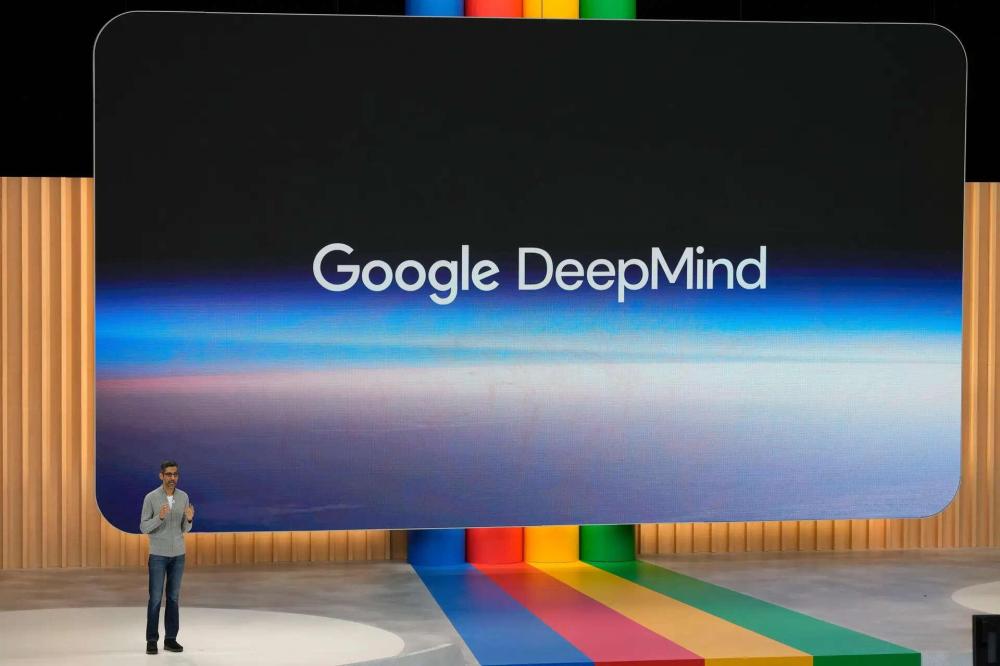
Google DeepMind, a leader in artificial intelligence, is now joining forces with celebrated indie studio A24 to delve into the effects of AI in the realm of film. This partnership aims to equip filmmakers with groundbreaking tools and streamline production processes while safeguarding artistic autonomy. Furthermore, Alphabet, Google's parent company, has made a notable investment of $75 million in A24, demonstrating a robust commitment to the cinematic future. View the full article
-
Micron Technology has partnered with AI innovator Anthropic, providing integral memory and storage solutions while also investing in its forthcoming IPO. This strategic collaboration is designed to enhance the development of Anthropic's Claude models by refining memory and storage capabilities. Following a substantial funding round, Anthropic has filed for an IPO and is ensuring it has the essential components to support its growing data center requirements. View the full article

-
European companies are diversifying AI providers due to US access limits, highlighting a need for domestic alternatives. Major firms like Siemens and Orange are using a mix of US, Chinese, and European models to avoid single-provider dependence. This shift underscores the growing importance of choice and flexibility in AI adoption, with rising token costs also influencing strategic decisions. View the full article

-
President Donald Trump is actively investigating how to ensure that the American public can benefit from the lucrative advancements within the AI industry. Suggested strategies encompass government equity shares in AI companies, specialized tax reforms, and potential stock-based remuneration. Additionally, concepts like a 'public wealth fund' or 'digital dividend,' reminiscent of Alaska's oil revenue system, are proposed to guarantee equitable distribution of AI-generated profits among citizens. View the full article

-
Cryptocurrency exchange WazirX is introducing AI-powered trading tools, advanced trading products and customer experience upgrades following a cyber attack and subsequent restructuring. Founder Nischal Shetty said the platform plans to launch an AI assistant for natural language crypto trading and a subscription-based offering, while focusing on revenue generation and creditor compensation as it works to rebuild operations. View the full article

-
Info Edge, the parent of Naukri, has significantly boosted its AI and deeptech investments, pouring Rs 1,003 crore into 54 startups since 2020. The company's AI portfolio is valued at Rs 1,268 crore, showing a strong return, while its deeptech investments are valued at Rs 559 crore. Many of its portfolio companies are attracting further external funding and government support. View the full article

-
European firms are diversifying AI providers due to U.S. access limits, highlighting a need for domestic alternatives. Companies like Siemens and Renault are using a mix of U.S., Chinese, and European models to mitigate risks. Executives emphasize choice and diversity over self-sufficiency, as rising token costs also pressure businesses to find cost-effective AI solutions and build their own infrastructure. View the full article

-
Known as Weixin in China, the super app has made the new AI assistant available to a small number of users, according to a statement from WeChat on Monday. Users are able to interact with the service, named Xiaowei, via text or voice, and the tool can help them complete various tasks by tapping into mini-apps, WeChat added. View the full article

-
Ensuring reliable electricity for AI-focused data centres has become a strategic priority, underscored in China's 2026 government work report released earlier this year, which pledged stronger integration between computing infrastructure and power supply networks. View the full article

-
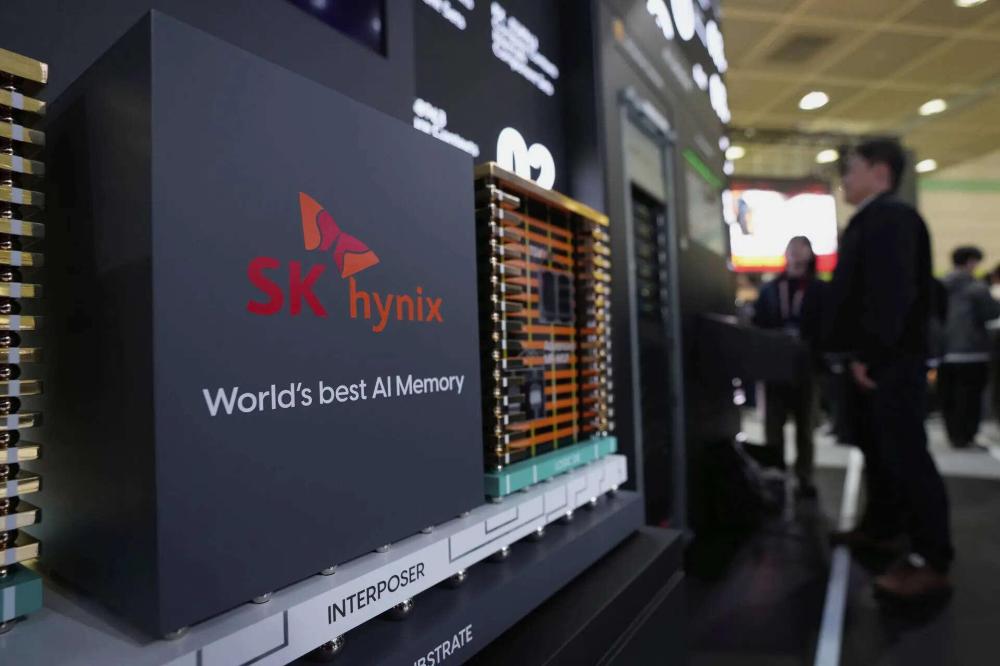
South Korean chipmaker SK Hynix has briefly surpassed Samsung Electronics to become the nation's most valuable company. This surge, driven by booming demand for memory chips fuelled by AI data centre construction, has seen SK Hynix shares skyrocket over 340% this year. Both companies have benefited immensely from the AI revolution, with SK Hynix now recognised as the world's leading memory chip producer. View the full article