Everything posted by Vishwadeep Khatri
-
AI News from ET - Iconiq, go-to wealth adviser for tech’s elite, is putting billions into AI
Iconiq is expanding aggressively into venture capital, investing billions in AI startups like Anthropic. Leveraging elite global networks, it connects founders with powerful investors, achieving strong returns while navigating risks, conflicts of interest, and growing ambitions in tech. View the full article
-
AI News from ET - EU denies bowing to tech lobby on data centre green impact
The European Commission denies allegations of copying industry lobbyists' proposals for data centre environmental impact rules. A probe suggests tech giants like Microsoft, Amazon, Google, and Meta influenced a decision to keep individual data centre information secret. The Commission admits using stakeholder advice but insists the core intention of respecting business secrets remains. Aggregated national data is now publicly available. View the full article
-
AI News from ET - TSMC to expand 3nm chip production in Taiwan, US and Japan as AI demand surges
TSMC is significantly boosting its 3-nanometer chip production worldwide. This expansion is driven by a surge in demand for artificial intelligence. New facilities are being built and upgraded in Taiwan, the United States, and Japan. This move aims to solidify TSMC's leading position in the crucial AI chip market. The company anticipates substantial sales growth in the coming years. View the full article
-
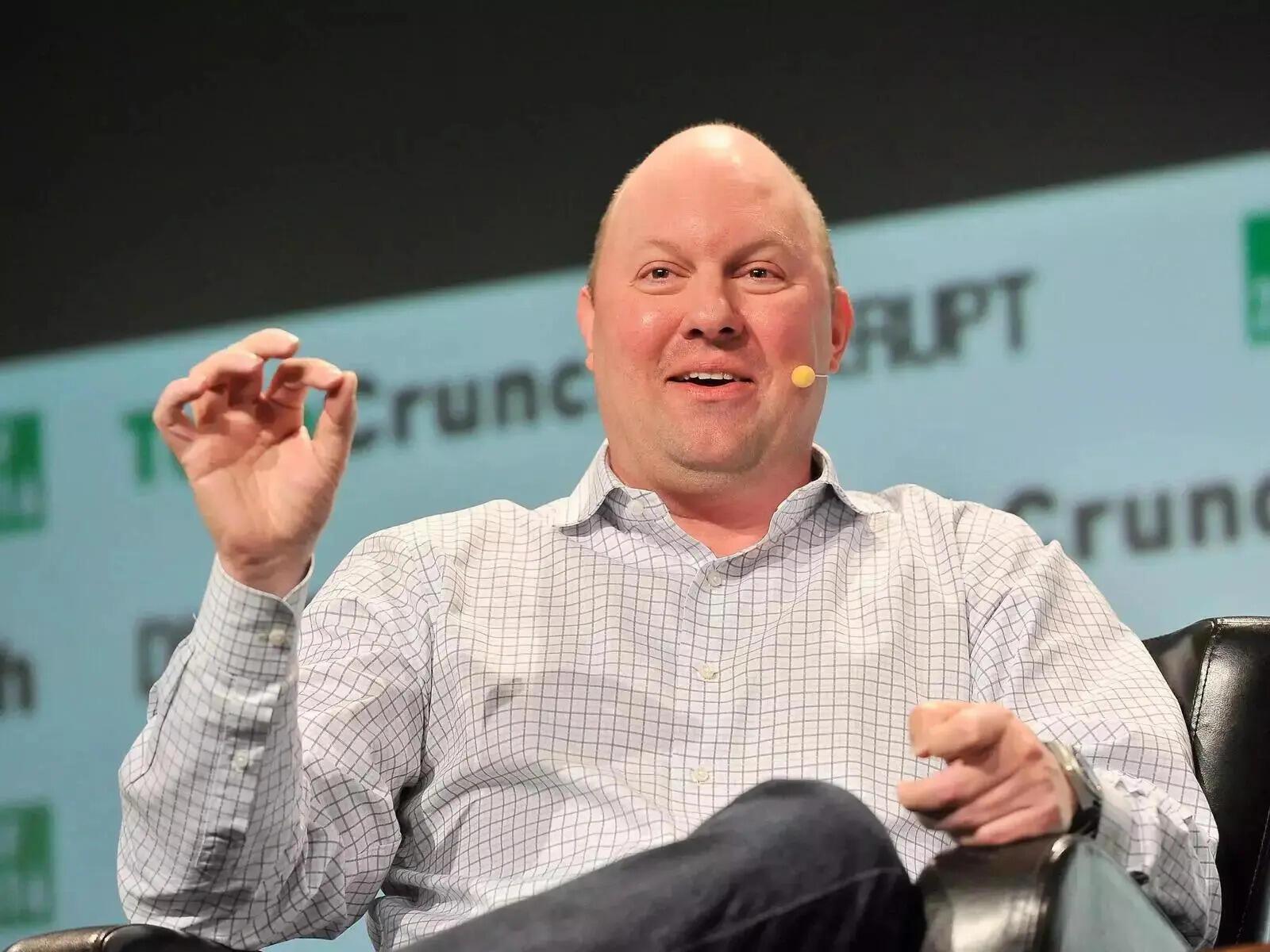
AI News from ET - Elon Musk floats 'universal high income' to offset AI-led job disruption
Elon Musk suggests universal high income as a solution for job displacement due to artificial intelligence and robotics. He believes AI will boost production significantly, leading to abundance without inflation. Experts and netizens are reacting to this idea, with some seeing it as inevitable and others proposing alternative funding or restrictions on AI development to safeguard human life. View the full article
-
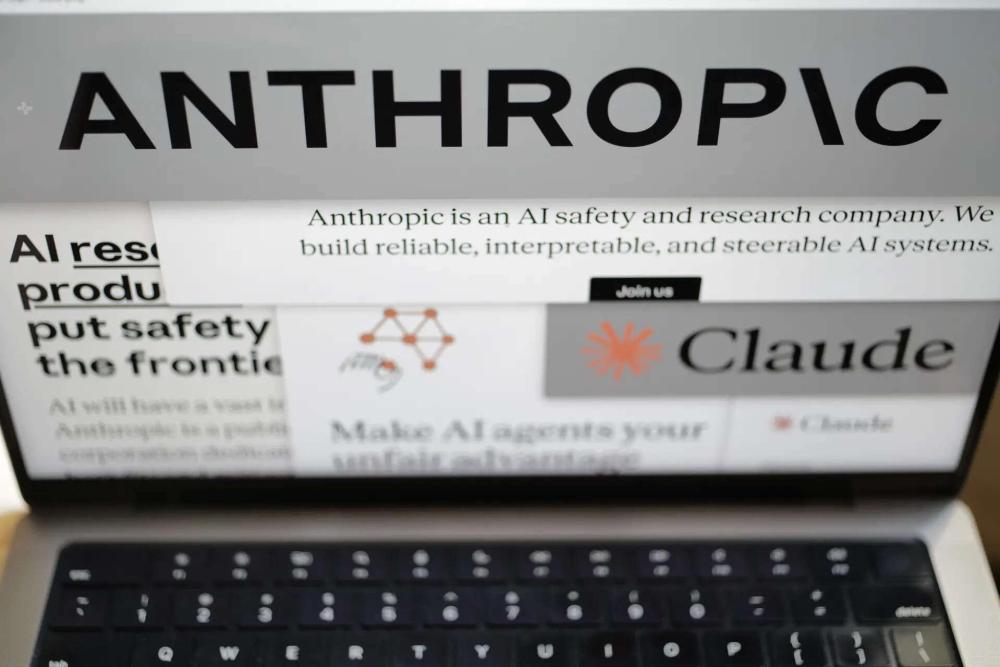
AI News from ET - Nervous Indian fintechs push Anthropic for access to Mythos
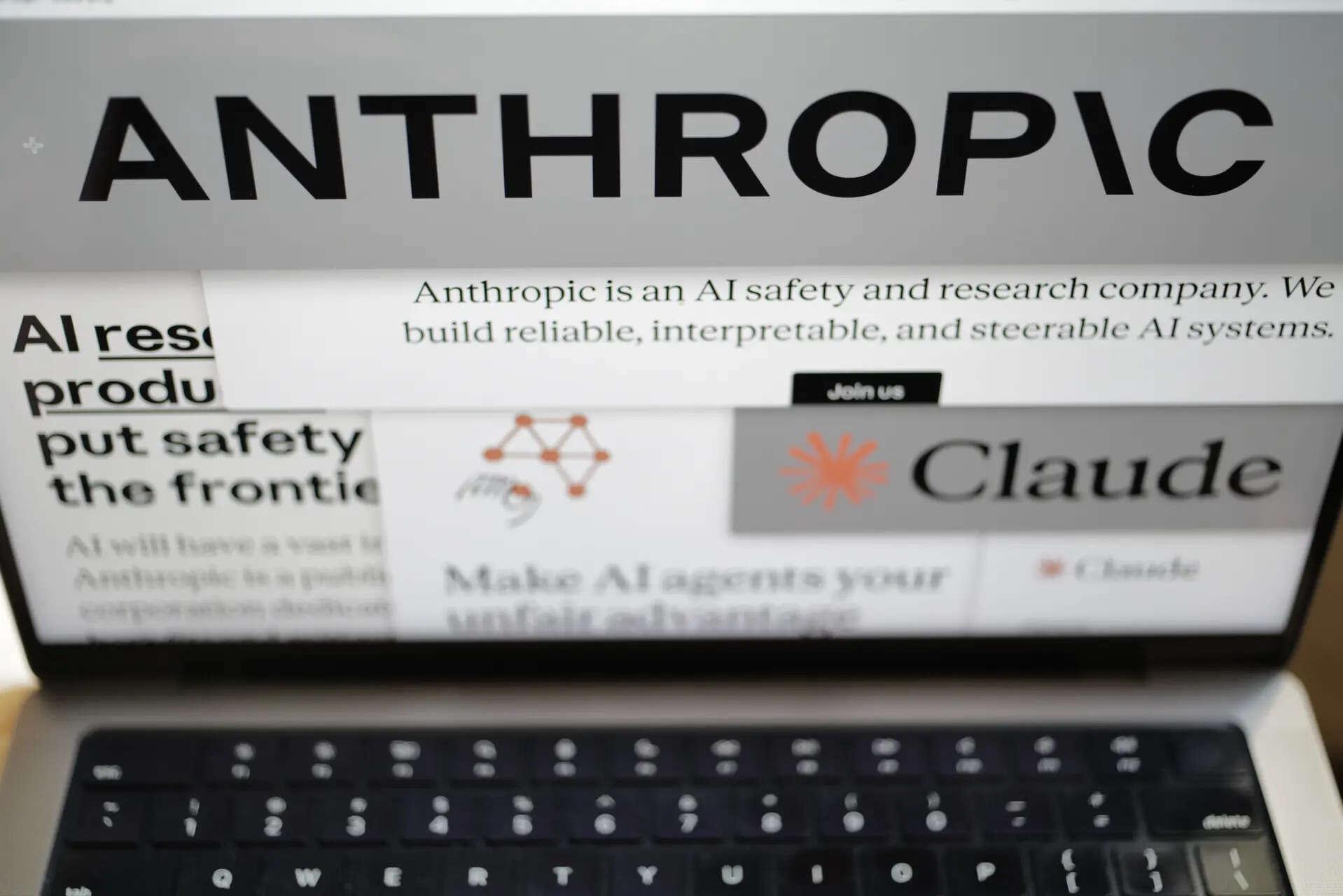
One97 Communications, Razorpay Software and Pine Labs are among the Indian companies that have pushed the San Francisco-based AI developer to let them test Mythos and detect vulnerabilities on their own systems. Their requests came after Anthropic announced a limited roll-out of its latest large-language model, which it considers too dangerous to release more widely. View the full article

-
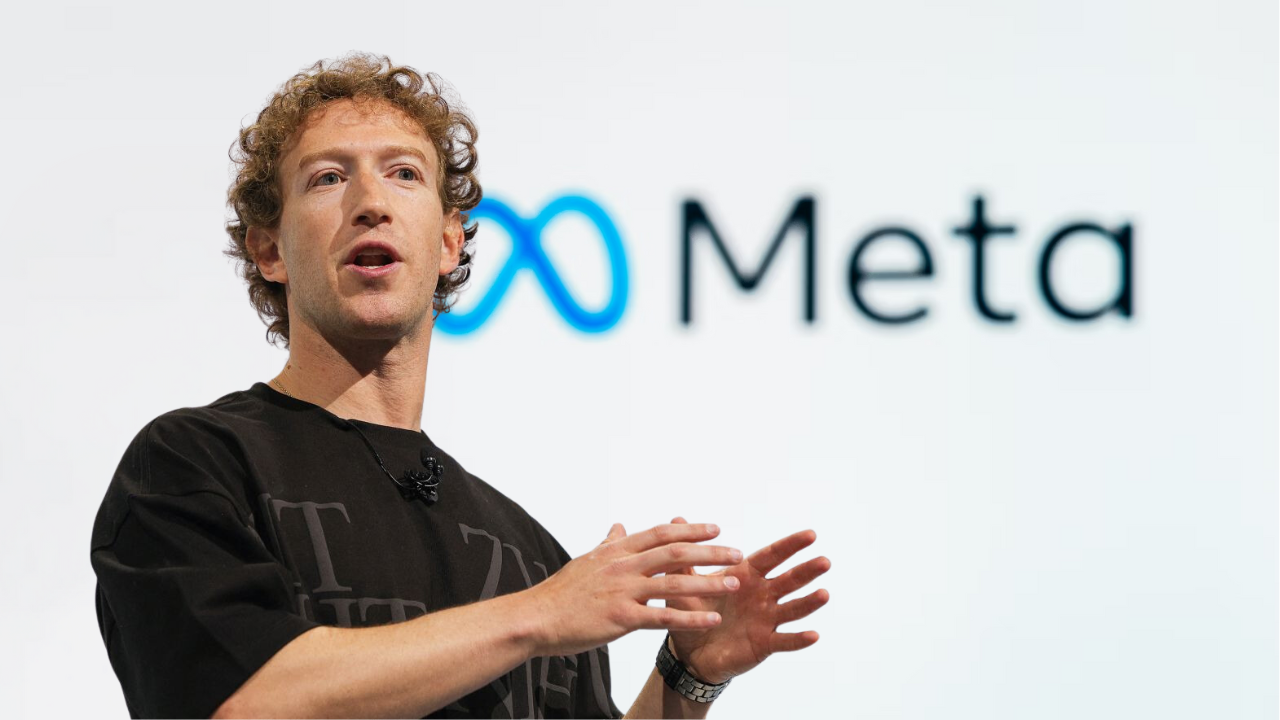
AI News from ET - Anthropic CEO to meet White House chief of staff amid Pentagon AI dispute: Report
Anthropic CEO Dario Amodei is slated to meet White House chief of staff Susie Wiles on Friday, in a sign of a breakthrough in the artificial intelligence startup's dispute with the Pentagon, Axios reported. View the full article
-
AI News from ET - Canva unveils new platform, transitions to ‘AI platform with design tools’ from ‘design platform with AI tools’
Design giant Canva unveiled its AI-native platform, Canva 2.0, powered by its own models. This shift transforms it into an AI platform with design tools, aiming for the next generation of users. The company also introduced a new AI Pass for enhanced AI capabilities. View the full article
-
Efficient but Unexplainable — Should AI Still Be Trusted?
CAISA Forum Question 864If AI significantly improves efficiency but cannot explain its decisions, should it still be used? A large insurance company deploys an AI system to approve or reject claims. After implementation: Claim processing time reduces by 60% Operational cost drops significantly Consistency in decisions improves However: The AI cannot clearly explain why certain claims are approved or rejected Customer support teams struggle to justify decisions to customers Some rejected customers escalate complaints, asking for reasons that cannot be clearly provided This creates a real dilemma: View A — Use the AI despite limited explainability. The efficiency gains are substantial, and consistent decisions are better than slow, subjective ones. Perfect explainability is not necessary if outcomes are reliable. View B — Do not rely on non-explainable AI. Without clear reasoning, decisions cannot be trusted, defended, or improved. Lack of transparency can damage customer trust and create regulatory and ethical risks. Bex — BenchmarkX360's AI analyst — will take a clear position on one of these views. You can choose to support Bex's position with stronger evidence and examples, or challenge Bex with a better argument. Either approach can win. Which view do you support — and why? Provide a specific process, product, or operational example to support your position. ⚠️ Answers that do not take a clear position will not be approved. ⚠️ "It depends" answers will not be approved. 💡 Participants are free to use AI tools — clarity, insight, and contextual relevance will determine the best answer. 🏆 The best answer will be selected on the basis of: · Clarity of position taken · Quality of reasoning and argument · Relevance of process, product, or operational example · Ability to go beyond or against Bex's analysis
-
Better in One Way, Worse in Another — Should AI Decide?
Vishwadeep Khatri replied to Vishwadeep Khatri's topic in We ask and you answer! The best answer wins!🏆 Winner: Shivangi _Gilotra_0r4l Position: View B — Do not implement the change. Examples: CVS Pharmacy speed quota disaster vs. Zara's accuracy-first model, with original quantitative math proving the 20% speed gain is a net negative (+21% work, only +19% correct output, +$146K/year rework), Goldratt's Theory of Constraints, and a 12-month compounding cost model. ✅ Approved. The most complete and analytically rigorous answer — the quantitative table and 12-month model prove the gain is an illusion rather than just asserting it, and the "broken objective function" insight reframes the entire debate: the right question is not whether to accept the trade-off, but why the AI is recommending one that shouldn't exist. The CVS vs. Zara comparison delivers a clean, cross-industry verdict that no other answer matched in breadth or precision. 1. Ankit Kulkarni Position: View B — Do not implement the change. Examples: Personal LCD carrier production experience (speed-driven defects and hidden factory costs) and Boeing 737 MAX. ✅ Approved. Clear position with a genuine first-hand operational example grounded in Lean thinking, though both examples are somewhat compressed. 2. Sarvajit_Kadam_vhpT Position: View B — Do not implement the change. Example: Amazon's "perfect order rate" standard. ❌ Not Approved. The Amazon reference is surface-level and used identically by several others, with no distinct operational example or original analytical contribution. 3. Varad Position: View B — Do not implement the change. Examples: Zappos speed-push reversal and personal GenAI-OCR invoice processing experience (only 20% end-to-end accuracy in Oracle, creating downstream financial risk). ✅ Approved. Strong dual-example structure combining an industry reference with a specific first-hand case; the Cause → Effect chain is clearly laid out in both. 4. vikramb Position: View B — Do not implement the change. Example: Amazon's end-to-end optimization philosophy vs. local optimization. ❌ Not Approved. The answer is too brief and does not provide a specific, concrete operational example beyond a generic Amazon reference. 5. Vinay Parsatwar Position: View B — Do not implement the change. Example: Amazon fulfillment — investing in verification and robotics to achieve speed without sacrificing accuracy. ✅ Approved. Well-structured reasoning on trust erosion and systemic error amplification; Amazon is used more analytically than most, though the answer lacks a distinct or first-hand example. 6. Dinesh_Tiwari_WBim Position: View B — stated but content appears severely truncated. ❌ Not Approved. Only a single partial sentence is available; without a full argument and specific example, the answer cannot be assessed on any evaluation criterion. 7. Sayantan Bhattacharjee Position: Nominally View B, but explicitly outlines scenarios where View A might make sense (food delivery, low-risk products, correctable errors). ❌ Not Approved. The explicit conditions under which implementation would be acceptable make this a balanced hybrid rather than an unambiguous View B position. 8. Anitha Krishna Position: View B — Do not implement the change. Example: Ocado 2019 Andover warehouse fire — AI-driven coordination errors in an automated system led to a catastrophic facility fire; proposes a 4-phase pilot framework. ✅ Approved. Highly specific and genuinely distinctive example not used by any other participant; the insight that "the AI gave a technically correct answer to the wrong question" is sharp and well-expressed. 9. vijay_wadhekar_WYf9 Position: View B — Do not implement the change. Example: Shared Services Centre AP automation — faster invoice processing but only 20% end-to-end accuracy, triggering supplier payment holds and supply chain disruption. ✅ Approved. Specific and process-level with a finance/SSC context that is meaningfully distinct from the warehouse framing; the downstream consequence chain is well articulated. 10. Chinmay_Phanashikar_fbVD Position: View B — Do not implement the change. Examples: Toyota's "stop the line" principle, detailed quantitative ROI breakdown, and Amazon correctly interpreted. ✅ Approved. Rigorous quantitative modelling and the "trust contract vs. competitive advantage" framing are strong; slightly below the top answers as examples are drawn from familiar references without a first-hand or uniquely documented case. 11. m.v.elango79 Position: View B — Do not implement the change. Examples: Walmart automated fulfillment ($150M correction costs), FedEx Ground AI routing, Amazon pandemic expansion, and Myntra India. ✅ Approved. The widest set of distinct industry examples in this topic; the AI governance argument — that accepting flawed output sets a damaging reward signal for future optimizations — is a genuinely original and important contribution. 12. Hrishikesh_Bhosale_KcVX Position: View B — Do not implement the change. Examples: Amazon FBA wrong-item problems, appliance e-commerce case, Myntra India; cites industry benchmarks (1–3% error rate norm) and customer churn permanence (80% don't return after an error). ✅ Approved. The error-rate benchmarking point — showing the proposed increase would breach industry norms — is a precise and effective rebuttal to View A; somewhat overlaps with m.v.elango79 in examples but the benchmarking lens differentiates it.
-
AI News from ET - AI is a gold mine for spammers and scammers, but Google is using it as a tool to fight back
Generative AI is supercharging online spam and scams, with the FBI reporting over $893 million in losses last year. Tech giants like Google are deploying advanced AI systems, such as Gemini, to combat this deluge. Gemini successfully blocked over 99% of policy-violating ads before they reached audiences, demonstrating AI's crucial role in defence. View the full article
-
AI News from ET - German banks examine risks of Anthropic's Mythos with authorities
German banks and authorities are scrutinizing Anthropic's new AI model, Mythos. Experts warn it could boost cyberattacks, posing challenges to banking systems. Regulators in Britain and the United States are also concerned. Anthropic is working with tech firms and banks to prepare defenses for future vulnerabilities. Updates are expected soon. View the full article
-
AI News from ET - OpenAI to spend more than $20 billion on Cerebras chips, receive equity stake: The Information
OpenAI has reportedly agreed to a significant deal with chip startup Cerebras, potentially worth over $20 billion across three years. This agreement, which could include an equity stake for OpenAI, aims to secure substantial computing power for AI model inference and development. Cerebras could disclose parts of its previously undisclosed arrangement with OpenAI as soon as Friday, the report said. View the full article
-
AI News from ET - Legal checkpoints for AI agents now mission critical, say experts
Legal and policy experts are urging Indian regulators to move beyond broad AI principles and begin addressing the unique risks posed by autonomous AI agents. India currently has no dedicated law to govern AI agents that can act on their own and interact with other systems, leading to a yawning gap as companies rapidly deploy such tools across payments, banking and supply chains, they said. View the full article
-
AI News from ET - White House to give US agencies Anthropic Mythos access: Report
The US government is planning to make a version of Anthropic's frontier AI model Mythos available to major federal agencies amid concerns that the tool could sharply increase cybersecurity risk. View the full article
-
AI News from ET - OpenAI launches AI model GPT-Rosalind for life sciences research
The GPT-Rosalind, named after 20th-century British scientist Rosalind Franklin, is designed to support research across biochemistry, drug discovery and translational medicine. View the full article
-
AI News from ET - Centre forms nodal body to coordinate, develop AI governance norms
The Centre on Thursday announced the formation of the AI Governance and Economic Group (AIGEG) to lead the country's national AI governance strategy. Set to serve as a high-level inter-ministerial body, it will coordinate the development of AI policy across central ministries and institutions. View the full article
-
AI News from ET - Indian companies are moving beyond AI pilots to real world applications: Anthropic’s Irina Ghose
Indian organisations, from large public sector players to SMEs, are engaging more actively with artificial intelligence. They are moving beyond proof-of-concept stages to scaled deployments, said Irina Ghose, managing director, India at Anthropic, on Thursday. View the full article
-
AI News from ET - Anthropic releases Claude Opus 4.7; here is what changes with its latest flagship model
Anthropic on Thursday released Claude Opus 4.7, the latest upgrade in its flagship Opus AI model family. Users will now be able to delegate work that previously required close supervision to the AI assistant. The model demonstrates stronger instruction-following, higher consistency over extended workflows, and the ability to self-verify outputs before delivering results. View the full article
-
AI News from ET - Myseum takes flight after Allbirds in fresh AI rebrand wave
Companies are shifting focus to artificial intelligence. Allbirds, a footwear maker, saw a significant stock surge after announcing a pivot to AI compute infrastructure. Social media firm Myseum Inc is also adopting a similar strategy. This trend highlights investor interest in AI, with some firms leveraging it to raise funds. Past pivots to blockchain also saw similar investor enthusiasm. View the full article
-
AI News from ET - Bank of England says it is testing AI risks to financial system
The Bank of England is actively assessing artificial intelligence risks to the financial system. They are conducting simulations and working with global partners to understand AI's impact on trading. This proactive approach aims to address potential market stress. Meanwhile, the Treasury Committee urges faster action on regulating critical AI and cloud firms. View the full article
-
AI News from ET - EU in talks with Anthropic over risks of AI model Mythos
The EU said Thursday it is in discussions with US AI firm Anthropic over concerns about the capabilities of its latest model, which the company itself worries could be a boon for hackers. But no foreign entities were included, raising concerns about the world's preparedness for a model whose offensive capabilities would not stop at US borders. View the full article
-
AI News from ET - Google, Pentagon discuss classified AI deal: Report
-
AI News from ET - ChatGPT maker OpenAI shifts its focus to business users amid Anthropic pressure
OpenAI is prioritising business AI tools to boost revenue. The company is launching a new model for professional work. This strategic shift aims to compete with rival Anthropic. OpenAI is moving away from some consumer offerings. This focus on high-value professional tasks is key to its future profitability. Business clients now represent a significant portion of OpenAI's income. View the full article
-
AI News from ET - Stellantis, Microsoft sign five-year partnership for AI push
Automaker Stellantis partners with Microsoft for five years. They will jointly develop artificial intelligence and cybersecurity. This collaboration aims to boost Stellantis' technology efforts. The partnership will also modernize Stellantis' IT infrastructure. This move helps Stellantis compete with tech-focused rivals. It focuses on enhancing vehicle features and customer experiences. View the full article
-
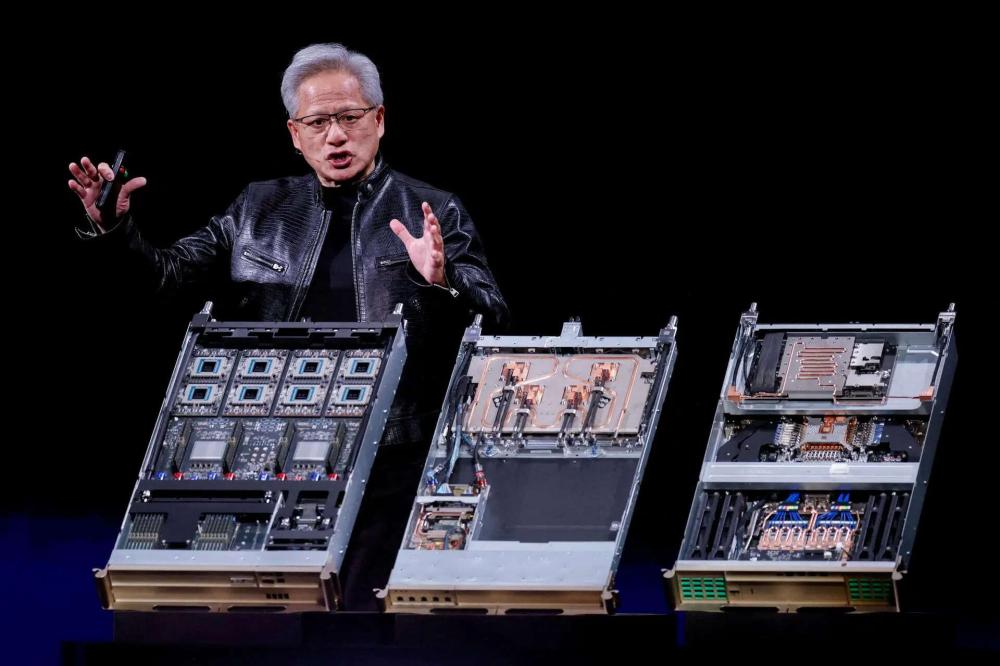
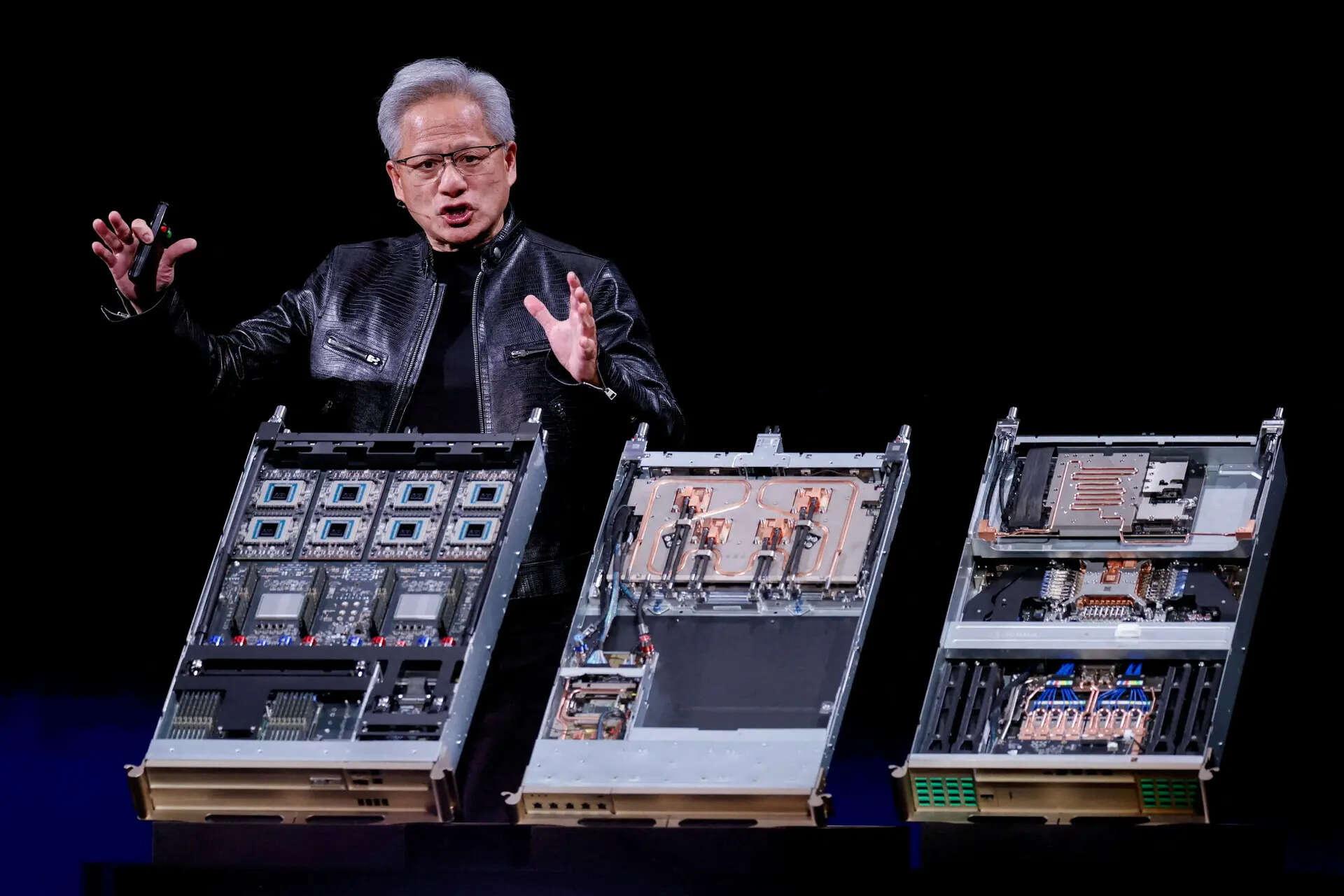
AI News from ET - Nvidia’s Jensen Huang admits he erred in not backing OpenAI, Anthropic early on
Nvidia CEO Jensen Huang admitted missing early investment opportunities with OpenAI and Anthropic, calling it his "miss" and a "mistake." He explained Nvidia wasn't positioned for the multi-billion-dollar investments these AI labs required then. Now, with Nvidia's stronger financial footing, the company has committed significant funding to both OpenAI and Anthropic. View the full article