Vishwadeep Khatri
Administrators
-
Joined
-
Last visited
Everything posted by Vishwadeep Khatri
-
Norm Ai secured $120 million in a Series C funding round. This investment values the legal AI startup at $1.2 billion. The company has now raised over $260 million since its founding. Norm Ai plans to use the funds for hiring and expansion. Businesses increasingly adopt AI for legal and compliance work. View the full article

-
Industry leaders and financial experts highlighted the necessity of integrating Artificial Intelligence (AI) into financial reporting and corporate auditing while maintaining rigorous human oversight to safeguard against rising fraud risks. View the full article

-
The Bank of England identifies artificial intelligence as a growing threat to financial stability. Investors are heavily betting on AI's success, increasing banks' cyberattack vulnerability. Previous risks like high debt and credit lending persist alongside new AI dangers. The central bank proposes measures to ease capital requirements for banks after a crisis. Britain's banking system remains resilient, but AI's future impact requires careful monitoring. View the full article

-
Chinese authorities are meeting with tech firms about restricting AI model access. These discussions aim to protect advanced artificial intelligence as a national asset. Companies like Alibaba and ByteDance are involved in these important talks. China is also considering tougher penalties for AI technology theft. These potential controls mirror actions taken by the United States. View the full article

-
The chip is designed for inference - the stage of AI computing in which a trained model generates responses for users - rather than for training new models, sources said. View the full article
-
Investments in artificial intelligence (AI) infrastructure, the global clean energy transition and supply-chain reshoring could trigger a new commodity supercycle, creating long-term opportunities in copper, power infrastructure and electrification-related sectors, according to a Centrum report. View the full article

-
European shares remained flat as elevated AI stock valuations prompted caution. Technology stocks led declines, tracking a glum mood in global markets. Defence sector stocks saw marginal gains, with a NATO summit anticipated for new contracts. Sweden's Saab jumped after a brokerage upgrade, while Shell raised its outlook. Investors watched the NATO summit for potential new defence spending announcements. View the full article
-
European Central Bank requires banks to develop AI cyber threat plans. Banks must submit these detailed plans by October thirty-first. This action addresses growing concerns about advanced AI capabilities. Large-scale cyber disruptions could erode financial system trust and stability. Regulators are urging modernization and improved cyber hygiene across institutions. View the full article
-
Synopsys plans to stop offering manufacturing process control software. This move allows the company to divert resources to higher-margin AI design offerings. Chipmakers like Samsung Electronics and SK Hynix were informed about the end-of-life decision. Affected products include automation software that monitors fabrication plant anomalies. Some chipmakers are developing their own in-house manufacturing tools. View the full article
-
Vishwadeep Khatri replied to Vishwadeep Khatri's topic in We ask and you answer! The best answer wins!1. rajan.arora2000 Position: View B (Preserve long-term organizational memory) — stated without qualification, with one narrow, self-derived exception (data pruned only by "mechanism-death," never by age). Specific Example: Builds a quantitative safety-stock model directly from the prompt's own figures (p×L > H, roughly $100k expected loss vs. $50k buffer premium, ~2:1). Anchors on Toyota's post-2011 RESCUE supplier database (650,000+ sites, Reuters-cited 2–6 month chip stockpile policy) versus GM/Ford during the 2021 shortage, plus a portfolio of dated, sourced cases: the 2020–21 auto/semiconductor shortage (~$210B, AlixPartners), Target's 2022 inventory glut (~43% YoY, $15.1B, Q2 guidance cut), ERCOT Winter Storm Uri (2021, FERC/NERC), and Basel 2.5/FRTB banking regulation. Reasoning Quality: Exceptional — directly engages the prompt's own numbers rather than only external analogies, derives a break-even/robustness test, closes the four strongest counterarguments, and explicitly critiques Bex's example as unverifiable while offering a documented substitute. 2. Raja M Position: View B (AI should preserve long-term organizational memory), via a proposed dual-memory (short-term/long-term) architecture. Specific Example: Draws on the author's own company, Insignia Print Technology, describing two real disruptions — a Naira devaluation forcing activation of alternate suppliers at 30–50% higher prices, and Middle East/Iran-conflict shipping disruptions causing port congestion and freight cost spikes. Reasoning Quality: Competent — the example is a genuine first-hand operational account with concrete process detail (which suppliers were activated, cost premiums paid), though it lacks precise dates, revenue figures, or external verification. 3. Vinit Dubey Position: View B (Preserve long-term organizational memory), implemented through tiered data retention. Specific Example: Cites Toyota's post-2011 supplier resilience systems and the 2020 COVID comparison to competitors, plus general references to Basel III/Dodd-Frank stress testing, SARS/H1N1 hospital surge protocols, Boeing/Airbus incident databases, and Walmart's hurricane-demand playbook. Reasoning Quality: Good — clean framework distinguishing "fast-decaying" vs. "slow-decaying" data types with a probability × impact table, but most of the named examples are asserted at a general level without specific figures, dates, or outcomes attached in this response. 4. Ankita_Bhardwaj_gN3V Position: View B (Preserve long-term organizational memory), implemented via a proposed "Dual-Engine Resilience Architecture." Specific Example: A six-company table — P&G (multi-echelon AI, 99%+ on-shelf availability), Toyota (RESCUE system, outproduced GM in 2021), Caterpillar (10–15 years of data preventing lost revenue), Walmart ("Hurricane Frances" baseline, 3–5x localized revenue boost), Schneider Electric (10% carbon-footprint reduction during 2022 energy crisis), and TSMC (1999 earthquake data enabling 90%+ recovery within hours). Reasoning Quality: High quality — well-organized, ties each example to a specific mechanism and figure, and proposes a concrete technical architecture (fast/slow layers with KPIs), though several figures are stated without citation and may not be independently verifiable. 5. Naijur Rahman Position: View B (Preserve long-term organizational memory), with an explicit data taxonomy distinguishing "routine" from "disruption signature" data. Specific Example: The most heavily documented entry — Nokia vs. Ericsson following the March 17, 2000 Philips chip plant fire (Nokia profits +42% in 2000; Ericsson $400M+ losses, later exited mobile in 2011; cites Kellogg School case study); Toyota's 2011 RESCUE system (78% output decline, 77% profit decline, 26 of 30 lines shut, per Toyota's own 2012 annual report); Southwest Airlines fuel hedging ($3.5B saved 1998–2008, $1.3B gain in 2008, per SEC filings); and Baxter International's 2024 Hurricane Helene IV-fluid crisis (Sept 27, 2024, 60% of US IV fluid supply, CDC advisory Oct 12, 2024, recovery by Feb 2025). Reasoning Quality: Exceptional — every example carries specific dates, figures, and named sources (SEC filings, Kellogg School, CDC), and it directly corrects Bex's unverifiable P&G claim with sourced counter-evidence. 6. anthony rebello Position: View B (Preserve long-term organizational memory), framed through a biological "immune memory" analogy. Specific Example: Reinsurers Munich Re/Swiss Re pricing catastrophe risk on centuries of data; Toyota's 1997 Aisin Seiki brake-valve fire mapped forward to the 2011 Tōhoku earthquake; post-2008 Basel III/CCAR stress testing surviving the 2020 COVID shock; and Taiwan/South Korea's SARS (2003)/MERS (2015) infrastructure reactivated for COVID-19. Reasoning Quality: High quality — the immune-system and lighthouse analogies are effectively tied back to concrete, dated cases, though financial figures are largely absent in favor of narrative and timeline detail. 7. Abhishek Adhikary Position: View B (Preserve long-term organizational memory), via a "dual-layer" fast/slow data architecture. Specific Example: Condensed versions of Nokia vs. Ericsson (42% profit rise vs. $400M loss), Toyota's RESCUE system outperforming Ford/GM in COVID shortages, Southwest's fuel hedging ($3.5B saved), and Baxter International's 2024 crisis. Reasoning Quality: Competent — the examples carry real figures, but the post reads as a compressed summary of points made at greater length elsewhere in the thread, with little original analysis beyond restating the tables and conclusions. 8. Prateek _Harsh_dl5h Position: View B ("firmly support"), argued mainly through the cost of "stateless" AI architectures rather than the disruption-memory dilemma itself. Specific Example: P&G's Supply Chain 3.0 (35-petabyte data repository, 80% touchless planning, 98%+ shelf availability), BMW's iFACTORY digital twins (four weeks to three days for collision simulation, 30% projected cost reduction), Maersk's historical shipping-data routing (15% logistics reduction), and Domina's Latin American logistics platform (20M shipments/year, 80% faster data access). Reasoning Quality: Reasonable but off-target — the examples are specific and figure-rich, but they mostly demonstrate general efficiency gains from data retention rather than addressing the core question of preserving rare, catastrophic-event history against recency-driven forgetting. 9. Jaswant_Kumar_nB8z Position: View B (Preserve long-term organizational memory), with a detailed statistical/portfolio-risk framework. Specific Example: Cites "Ford's supply chain forecasting work" and researchers building shortfall-prediction models on multi-year data, but provides no dates, figures, or source, and explicitly concedes this is "a commonly cited pattern rather than a rigorously sourced statistic." Reasoning Quality: Good analytically (strong portfolio-risk math, e.g., 1-(0.99)^500 ≈ 99.3% aggregate disruption probability) but the sole real-world example is a vague, self-acknowledged name-drop. 10. Adeniran_Ilesanmi_GYSH Position: View B (Preserve long-term organizational memory), framed through Knightian uncertainty, extreme value theory, and Bayesian updating. Specific Example: Extensive dated case set — Toyota vs. competitors 2020–2024 (900k vs. 3–5 million units lost in the chip shortage, 2021 Thailand flooding, 2022 Ukraine neon-gas disruption), semiconductor cyclicality (Intel/Samsung vs. SMIC/GlobalFoundries, $2–3B stranded capacity in 2019), a 2009-to-2016 automotive supplier bankruptcy pattern (~$8–12M cost differential), the 2011 Thailand floods hitting Western Digital/Seagate, and the 2021 Suez Canal blockage set against 1956 and 1967–75 closures. Reasoning Quality: Exceptional in scope and technical grounding (EVT, CVaR formulas, Peso problem, prospect theory), though several specific dollar figures (e.g., "$15–20 billion competitive advantage") are asserted without citation and may not be independently verifiable. 🏆 Winner: rajan.arora2000 Among the approved entries, rajan.arora2000 stands out because it is the only response that grounds its argument directly in the prompt's own stated facts — building a quantitative safety-stock model from the scenario's implied demand, lead-time, and cost parameters rather than relying solely on external analogies — while still layering in the same caliber of sourced, dated real-world evidence (Toyota's RESCUE system via Reuters, AlixPartners' $210B estimate, Target's actual reported guidance, and Basel Committee regulatory text) seen in the next-strongest entries like Naijur Rahman's and Adeniran_Ilesanmi_GYSH's. Where Naijur Rahman's Nokia/Ericsson and Baxter cases are superbly documented and Adeniran_Ilesanmi_GYSH's technical framework is the broadest, rajan.arora2000 uniquely closes the loop by deriving a break-even threshold, explicitly testing robustness (halving frequency or severity), addressing the four strongest counterarguments, and directly engaging with and correcting Bex's weaker anecdote — giving it the clearest position, the most complete and self-critical reasoning, and examples that are both specific and directly tied to the mechanics of the stated dilemma.
-
A Utah program allows AI chatbots to refill prescriptions, sparking medical debate. This initiative raises questions about AI regulation and patient safety measures. Doctors express concerns about potential risks and drug interactions with automated renewals. Some states are now exploring similar AI healthcare waivers and legislation. The program's future hinges on balancing innovation with established medical practices. View the full article

-
Morgan Stanley suggests market gains are broadening beyond semiconductors. Investors may shift focus to AI hyperscalers and other sectors. This rotation follows recent weakness in chip stocks and Fed rate expectations. Consumer discretionary, transport, and biotech shares could benefit from this shift. The brokerage notes hyperscalers have already experienced underperformance. View the full article

-
According to the report, Watermelon is still in training and is expected to succeed Meta's previous frontier AI model, codenamed Avocado, which was released publicly earlier this year as Muse Spark, the company's flagship large language model. View the full article

-
Naukri has launched a new suite of AI-powered recruitment tools for businesses, including AI-Rex for automating hiring stages, Talent Pulse for workforce intelligence, and PremiumX for senior roles. These solutions leverage extensive recruitment data to enhance efficiency. Additionally, jobseekers benefit from AI-driven career guidance and interview preparation, marking a significant expansion of Naukri's AI capabilities. View the full article

-
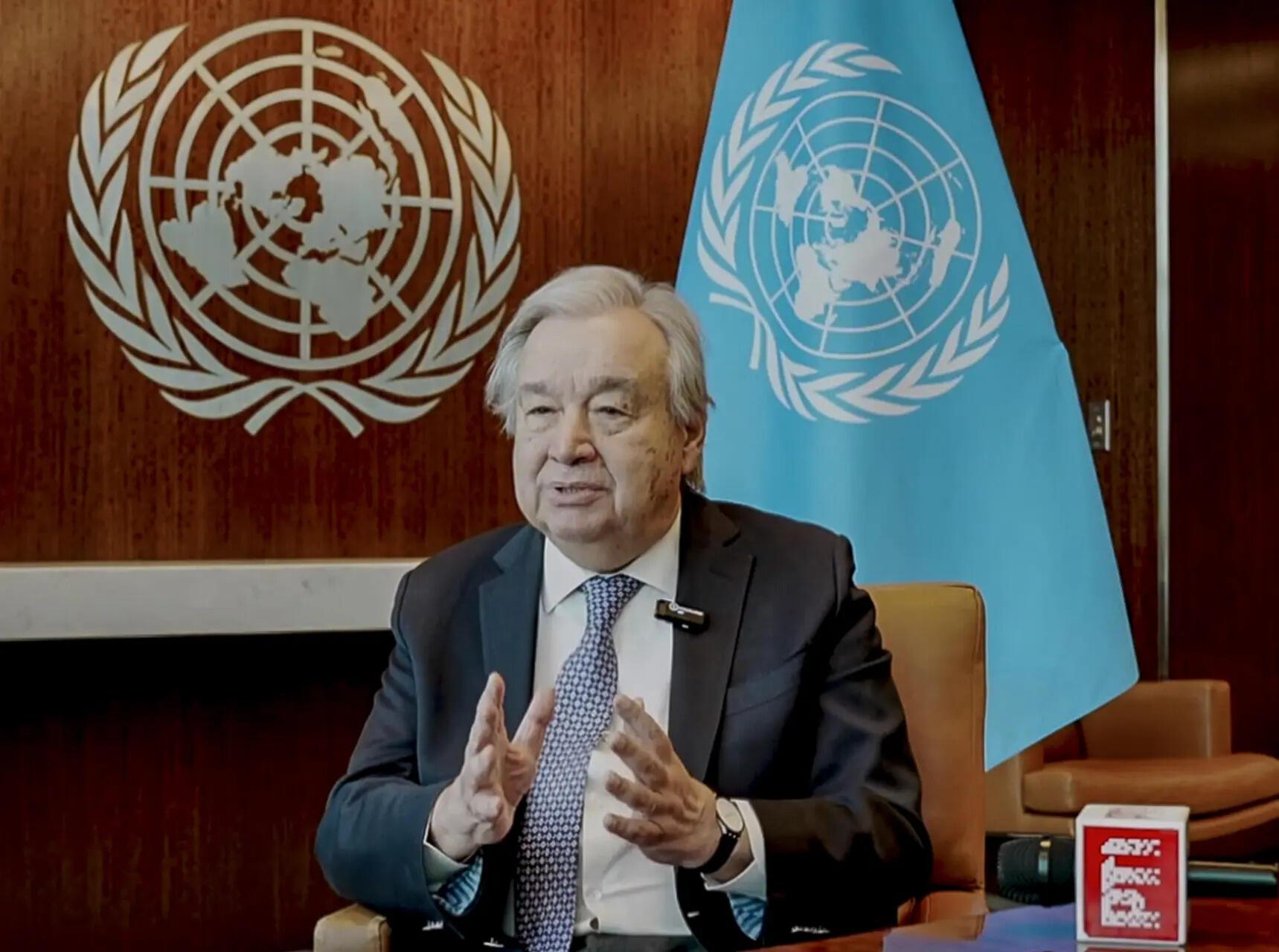
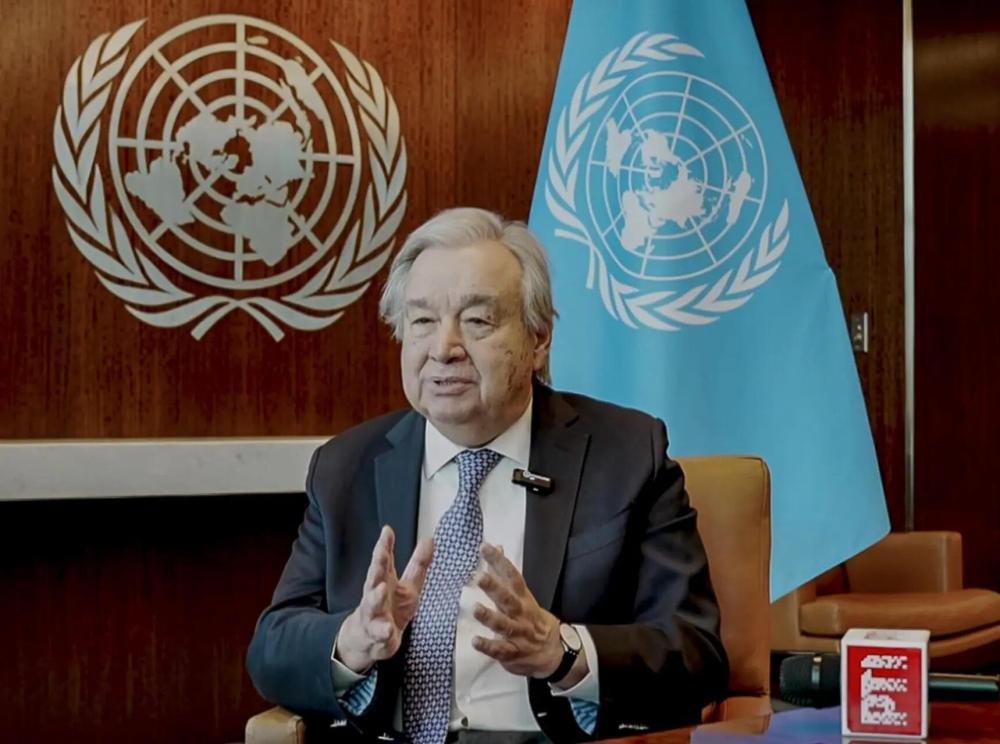
United Nations chief Antonio Guterres has issued a stark warning: artificial Intelligence is advancing at an unprecedented pace, outpacing even its creators' ability to comprehend its implications. Addressing a global dialogue in Geneva, he stressed the urgent need for harmonised international rules to manage AI's profound impact on economies, work, elections, and security, particularly safeguarding children from its potential risks. View the full article
-
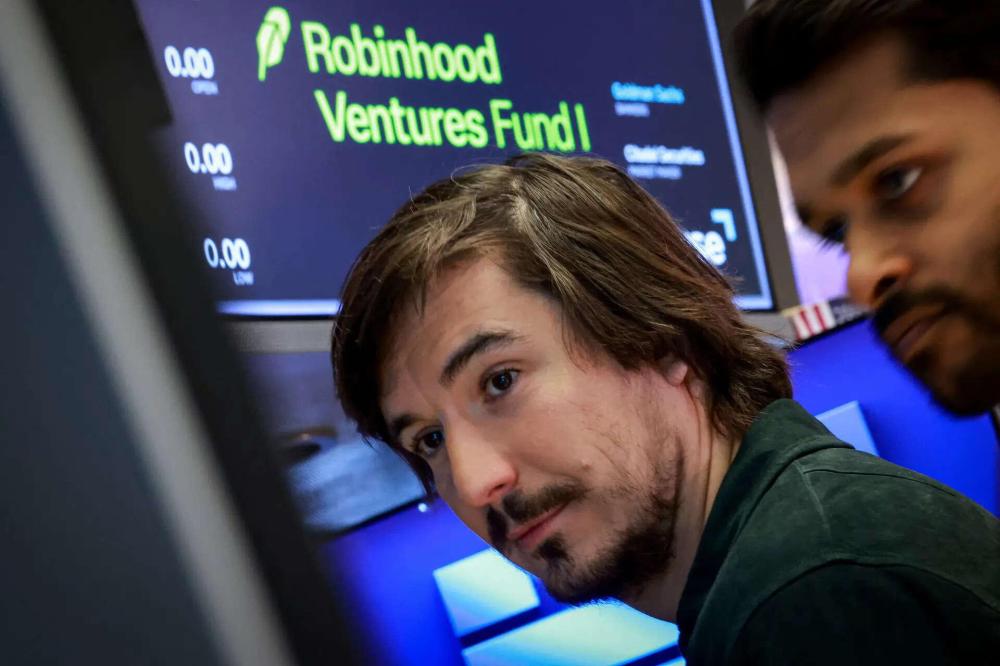
The company had in May unveiled tools that allow AI agents to trade stocks and make purchases on behalf of users. The company said its users can create a dedicated trading account, separate from their primary one, and have AI agents trade on their behalf. View the full article
-
AI is often viewed only through a technological lens, even though its impact extends far beyond technology, right from social re-engineering of the corporate landscape to fundamentally changing how organisations work, structure teams and lead people, he said. View the full article

-
Out of India, Into the world VCs believe India's energy transition solutions will be globally relevant, making them lucrative long-term bets View the full article

-
The rapid emergence and spread of AI has become a defining feature of the U.S. economy, of prime interest to Federal Reserve officials trying to understand its potential to reshape productivity, growth, inflation and labor demand. Among a broad review of the Fed launched by new Chairman Kevin Warsh, one panel will look solely at AI and its implications for productivity, a force that can allow the economy to grow faster with less inflation, but also means fewer workers are needed to create the same output. View the full article

-
Artificial intelligence is poised to revolutionize economies, but emerging markets must cultivate local ecosystems to truly benefit, a World Bank report reveals. Beyond importing models, success hinges on robust digital infrastructure, skilled talent, and adaptable AI building blocks. This shift promises short-term productivity gains and long-term economic transformation, provided challenges like market fragmentation and global player concentration are addressed through strategic investment and collaboration. View the full article

-
India's Minister of State for External Affairs, Kirti Vardhan Singh, is leading a delegation to Geneva for the inaugural UN Global Dialogue on AI Governance. This crucial forum will review the first independent scientific assessment of AI's capabilities, risks, and opportunities. Discussions will cover AI's societal impact, bridging digital divides, safety, and human rights, aiming to foster international cooperation for AI's responsible development, especially for developing nations. View the full article

-
Global brokerage Jefferies suggests the AI investment boom might falter not due to tech giants cutting spending, but investor impatience for returns. A significant wealth transfer to North Asia, evident in surging Korean and Taiwanese market caps, highlights where AI capital is flowing. US hyperscalers' recent underperformance and increased debt funding raise concerns about potential capital destruction if returns don't materialize. View the full article

-
A US startup, Orbital, is looking to set up space-based data centres to meet the surging demand for AI computing power. The company aims to launch its first data centre satellite next year, with plans for 100,000 satellites in low Earth orbit to deliver 10 gigawatts of compute. Orbital plans to scale up deployment towards the end of the decade when the SpaceX-owned Starship will come online and significantly reduce the launch cost, Poon said. View the full article

-
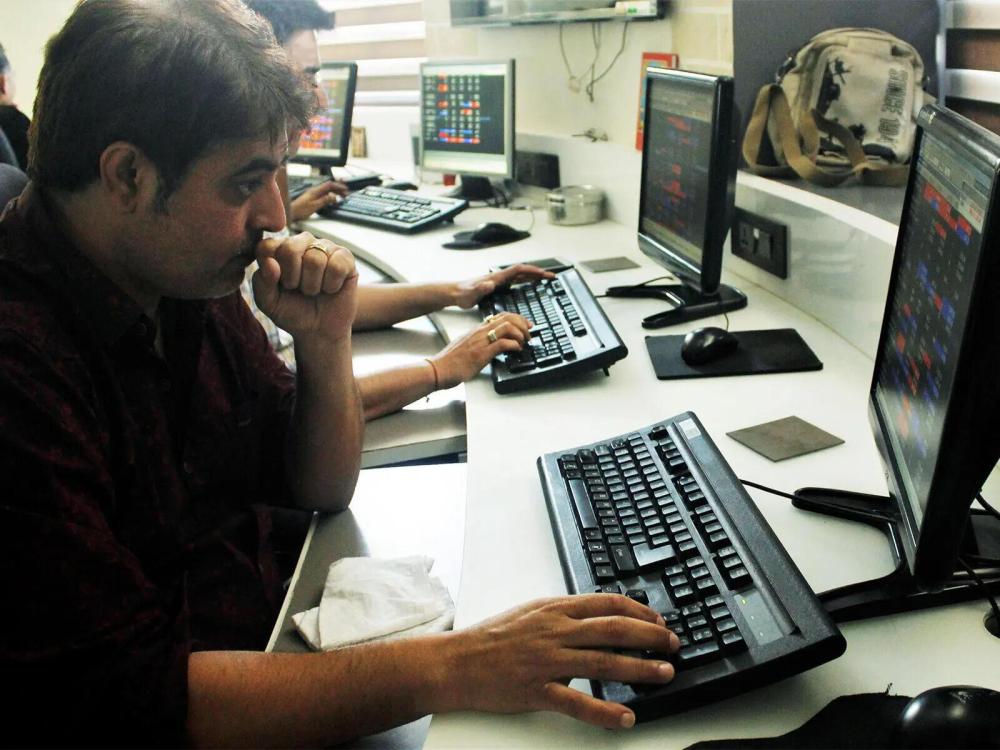
India's Information Technology (IT) companies are expected to report another quarter of subdued earnings growth despite seasonal strength, due to client-specific issues, weakness in select verticals and geopolitical uncertainty. Addressable tech spending in Indian IT companies is expected to remain softer year-on-year as enterprises redirect technology budgets towards artificial intelligence (AI) initiatives and Global Capability Centres (GCCs), according to a report by Systematix Research. View the full article
-
AI’s looming threat on the IT services sector has battered India’s blue chip technology stocks. Whether its a new frontier model launch, or improvements in agentic coding, or OpenAI and Anthropic’s direct fight for the services pie, the IT sector has seen its worst sell-offs in recent times. The information technology (IT) sector has suffered a brutal correction, with the Nifty IT Index plunging roughly 31% during the first six months of 2026, marking its worst performance since the 2008 global financial crisis. Driven by massive foreign institutional outflows, geopolitical tensions, and structural fears over Artificial Intelligence (AI) disruption, the index recently sank to a multi-year low. This sell-off has erased hundreds of thousands of crores in investor wealth and pushed several blue-chip tech stocks down by 25% to nearly 50% from their historical peaks