Vishwadeep Khatri
Administrators
-
Joined
-
Last visited
Everything posted by Vishwadeep Khatri
-
Wipro has launched a new AI hub in Bengaluru. This centre focuses on Anthropic's Claude models. It aims to help businesses adopt AI more widely. Wipro will train thousands of employees. This move comes as AI impacts traditional IT services. Rival TCS also recently partnered with Anthropic for AI scaling. View the full article

-
European leaders and tech executives are focusing on technological sovereignty. Discussions at G7 and VivaTech highlight concerns about American AI dominance. Europe aims to build its own AI champions. This involves boosting regional cloud and chip industries. The goal is to reduce reliance on U.S. technology. France is pushing for domestic solutions in government services. View the full article

-
The factory represents a fundamental test of whether, as Huang believes, AI will be a source of job creation instead of a technology that supplants workers as it becomes possible to write software, analyze a spreadsheet, run an assembly line or even drive an automobile without much human effort. View the full article

-
With a smartphone strapped to her head, Nagireddy Sriramyachandra films herself slicing mangoes in her kitchen in India to train AI-powered robots to take on household jobs in the future. "I may get a robot myself in the future," she added. View the full article

-
Microsoft is changing how it charges for its software for the first time in two decades, moving to bill customers with a pay-as-you-go model each time they use its new AI agent. The turn is a notable one for Microsoft, whose office software has relied for some two decades on fixed, predictable subscription fees. View the full article

-
Karnataka is planning new support for biotech firms. This includes funding, mentoring, and help with regulations and sales. The state aims to boost its biotech sector. Artificial intelligence and biomanufacturing are key focus areas for future growth. The government will strengthen the entire biotech value chain. View the full article

-
France is moving away from American AI technology for its intelligence services. The government announced it will stop using Palantir's data systems. A French company, ChapsVision, will now provide these critical services. This move aims to build national autonomy in the digital sphere. France is also investing heavily in its own AI development. View the full article
-
SpaceX is set to acquire AI coding firm Anysphere, creators of Cursor, for a staggering $60 billion. This strategic move aims to bolster SpaceX's enterprise AI market presence, following its recent blockbuster IPO. The deal, expected by Q3 2026, could significantly boost xAI's capabilities. View the full article

-
McKinsey projects AI could boost Hungary's productivity by €15 billion by 2030, helping close the gap with European neighbours. However, lagging adoption risks further divergence. Executives highlight potential cost transformations, faster service delivery, and the imperative of global competitiveness to avoid being outpaced by foreign AI adopters. View the full article

-
The "Patching as a Service" product will be rolled out in Japan through a joint venture established last November between SoftBank's domestic telecoms arm, SoftBank Corp, and OpenAI. View the full article
-
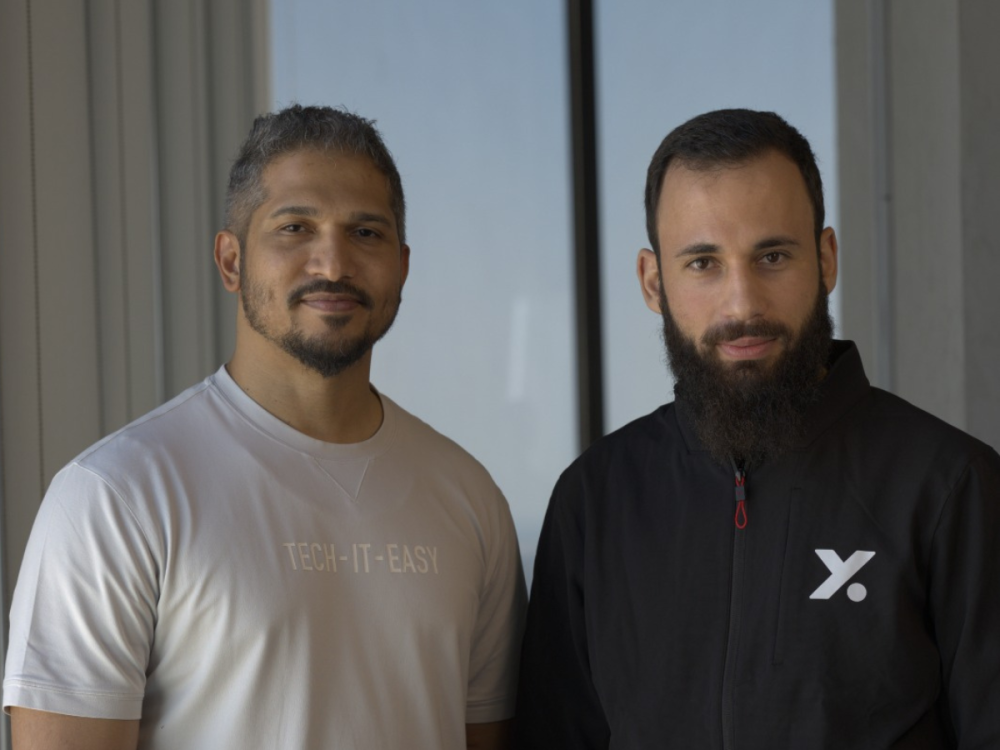
UAE-based CNTXT AI has acquired Actualize, an enterprise AI company specializing in dialect-aware Arabic voice agents. This move significantly enhances CNTXT AI's Arabic voice AI capabilities, enabling sovereign AI agents that can perform actions across enterprise and government sectors. The combined entity aims to simplify the path from data to production-grade Arabic AI systems for the growing GCC market. View the full article
-
CAISA Forum Question 881Should AI reveal how it evaluates performance if people can use that information to game the system?A large customer service organization uses AI to evaluate team performance. The AI considers dozens of factors, including: customer satisfaction, resolution quality, repeat contacts, response time, escalation patterns, and long-term customer outcomes. Employees begin requesting full transparency regarding how the AI calculates performance scores. The leadership team sees two possible outcomes: Greater transparency may improve trust and acceptance of the AI. However, employees may start optimizing their behavior to improve AI scores rather than improve actual customer outcomes. For example: Agents may avoid difficult cases. Teams may focus on measured activities while neglecting important but unmeasured work. Managers may learn how to improve scores without improving performance. This creates a real dilemma: View A — Make the AI fully transparent.People deserve to know how they are being evaluated. Transparency builds trust, accountability, and fairness. If the evaluation logic is sound, it should not need to be hidden. View B — Keep parts of the AI evaluation logic confidential.Complete transparency can encourage gaming behavior. The purpose of the system is to improve outcomes, not help people maximize scores. Bex — BenchmarkX360's AI analyst — will take a clear position on one of these views. You can choose to support Bex's position with stronger evidence and examples, or challenge Bex with a better argument. Either approach can win. Which view do you support — and why? Provide a specific operational, service, product, or organizational example to support your position.⚠️ Answers that do not take a clear position will not be approved. ⚠️ "It depends" answers will not be approved. 💡 Participants are free to use AI tools — clarity, insight, and contextual relevance will determine the best answer. 🏆 The best answer will be selected on the basis of:· Clarity of position taken · Quality of reasoning and argument · Relevance of operational, service, product, or organizational example · Ability to go beyond or against Bex's analysis
-
Chinese Artificial Intelligence lab DeepSeek has closed its first funding round that raised more than 50 billion yuan ($7.40 billion) under an unusual deal structure, The Information reported on Tuesday, citing people with direct knowledge of the matter. View the full article
-
In an interview with ET, Sarvam cofounder Vivek Raghavan said the company would use the capital to build compute infrastructure, train and finetune models, scale inferencing, and build software layers for enterprise and government customers. View the full article

-
Vishwadeep Khatri replied to Vishwadeep Khatri's topic in We ask and you answer! The best answer wins!1. rajan.arora2000 — View A ✅ ApprovedTakes an explicit View A position with exceptional depth, naming Goodhart's Law as the core mechanism and arguing that offline validation answers "a weaker question wearing the costume of caution." Supports the position with multiple differentiated industry cases (Google/Bing guardrail practice, Microsoft ExP, Knight Capital, Zillow) and a break-even churn arithmetic model. Also provides a specific governance table and correctly concedes the narrow zone where View B applies (e.g., cold-chain medical routing). 2. Sunil Emandi — View A ✅ ApprovedTakes a clear View A position and provides a specific banking customer service example — AI proactively managing overdue service requests, routing callers, and providing real-time agent sentiment support. Argues convincingly that dynamic human behavior and operational bottlenecks cannot be replicated in simulations. Reasoning is solid and the industry example is operationally realistic with concrete AI capability steps described. 3. Suhail_J_CaJq (#66490) — ❌ Not ApprovedThis post contains no answer — it is entirely a blockquote copy of the moderator's original question. There is no stated position, no example, and no reasoning of any kind. 4. Suhail_J_CaJq (#66495) — View B ❌ Not ApprovedStates a View B position but provides no specific industry, company, or process example to support it. The argument relies on vague uncertainty about impact scale and a general "operation success, patient dead" analogy with no real-world grounding. The reasoning is too thin and abstract to meet the approval standard. 5. Vinit_Dubey_w5HV — View B ✅ ApprovedTakes an unambiguous View B stance and makes a strong process-specific argument: warehouse fulfillment centers are tightly coupled ecosystems where a 20% test cannot be physically isolated the way software code can. Adds the Knight Capital 2012 failure ($440M in 45 minutes) as a named cross-industry case for cascade risk from ungoverned live deployment. Reasoning covers operational, human, and customer trust dimensions in a well-structured argument. 6. Ehisuoria Aigbogun — View A ❌ Not ApprovedTakes a clear View A position but relies on Amazon as the sole supporting example, described only in generic terms with no specific initiative or measurable outcome cited. Also references "Project Prometheus backed by Jeff Bezos" which is unverifiable and lacks any operational detail. The post fails the specificity requirement due to the absence of a concrete, grounded example. 7. anthony rebello — View A ✅ ApprovedTakes a clear View A position and supports it with the broadest range of named examples in the thread — Netflix, Amazon, Google, Uber, Johns Hopkins Hospital (AI sepsis prediction), and Bank of America (Erica fraud detection). Correctly identifies the key governance success factors: limited exposure, human oversight, continuous monitoring, and rollback mechanisms. Depth per example is somewhat shallow, but the multi-industry breadth and healthcare/financial services cases add meaningful specificity. 8. Bedibrat Kutum — View A ✅ ApprovedTakes a clear View A position and grounds it in a first-person deployment: an AI Copilot tested on a limited cohort within a customer retention team, providing real-time conversation suggestions to agents handling churning customers. The process steps (20% launch, expert assignment, documentation of every outcome) are described concretely, making this a genuine operational example rather than a theoretical framework. Reasoning is practical and the "augment, don't replace" conclusion is well-supported by the described experience. 9. kartik voleti — View A ❌ Not ApprovedTakes a View A position and proposes a sensible order-segmentation methodology (high-value vs. low-value vs. refundable clusters) but cites no specific company, industry, or real deployment to support it. The post presents a generic design framework without grounding it in any verifiable context. The absence of a specific example is an explicit deficiency under the approval criteria. 10. Naijur Rahman — View A ❌ Not ApprovedTakes a clear View A position but relies on Amazon A/B testing as the sole example, referenced in entirely generic terms with no named program, specific operation, or measurable outcome. The reasoning is competent but standard, adding no new angle beyond the basic "simulations miss real conditions" argument. The lack of any concrete, specific example disqualifies it from approval. 11. Saran raj _Venkatesan_YFX7 — View A ✅ ApprovedTakes an explicit View A position and distinguishes between a naive "ungoverned" View A and a defensible "governed" one — directly critiquing Bex's single Amazon example as insufficient proof. Supports the position with three specific and differentiated examples: Toyota's andon cord (frontline workers as early-warning sensors), Starbucks Mobile Order Pilot (live pilots revealing congestion not visible in design assumptions), and Netflix Recommendation Experiments (guardrail-metric testing on limited user populations). Reasoning is strong, naming metric blindness as the core risk and providing a concrete governance comparison table. 12. Dinesh Selvarajan — View B ✅ ApprovedTakes a clear View B position and reframes it constructively: not "no AI," but "human-in-the-loop before live autonomy," implemented via shadow mode where a supervisor accepts or rejects AI recommendations, with every decision becoming labeled training data. Backs this with a specific personal project — the Auto Dispute Handler — describing the exact interface design and the outcome (faster than manual from day one, with progressive auto-approval as model accuracy improved). Correctly notes that Amazon's success required infrastructure most organizations cannot replicate. 🏆 Winner: rajan.arora2000Rajan.arora2000's answer wins by a clear margin over the other five approved answers. It is the only post that operates at a true analytical framework level — naming Goodhart's Law as the governing mechanism, constructing a break-even churn arithmetic model, and providing a five-point governance table with specific guardrails — rather than simply listing examples and principles. Compared to the second-strongest answer (Saran raj _Venkatesan_YFX7), which shares the "governed vs. ungoverned" framing, rajan.arora2000 goes further by explicitly conceding the narrow zone where View B is correct (unboundable individual harm in cases like cold-chain medical routing), which strengthens rather than weakens the View A argument. It is also the only post that critically weights its own evidence, distinguishing "load-bearing" cases from "illustrative" ones — a level of epistemic discipline entirely absent from all other submissions. The result is the most comprehensive, most practically actionable, and most intellectually rigorous answer in the thread.
-
In fact, nation-states may soon start needing citizenship or security clearances to work on the next state-of-the-art models the way they do for defence, space and nuclear tech. Netizens noted that even Andrej Karpathy, the founding member of OpenAI, and currently a member of Anthropic’s pretraining team, may not have access to the models. View the full article

-
The administration ordered Anthropic to block any foreign nationals, whether inside or outside the U.S., from using its latest models, Fable 5 and Mythos 5, the company said in a blog post on Friday. In response, Anthropic said it would disable access to the models globally. View the full article

-
AI skills are changing how we work. Instead of generic claims, skills are now specific AI instructions. This allows users to train AI assistants for repeated tasks. Think of them as mini-playbooks for your company. Creating effective skills requires defining exact outcomes, audience, and checks, writes Parminder Singh. View the full article

-
Indian VC firms are increasingly backing AI startups founded by non-Indians, drawn by the promise of higher returns, writes Swathi Moorthy. View the full article

-
Staggering token spending is forcing Indian firms to explore ways to rein in AI cost. This is where open-source models, small language models & inference layer startups step in, writes Swathi Moorthy. View the full article

-
Indian businesses are increasingly embedding AI, transforming operations and yielding measurable returns. However, legacy infrastructure, skill gaps, and a need for business model shifts pose challenges. Experts emphasise domain-specific AI applications and developing indigenous language models as India's key opportunity. View the full article

-
A shortage of trained insurance professionals is driving insurers to automate claims processing, underwriting, and customer onboarding. This shift enables companies to handle growing business volumes with greater accuracy and efficiency, rather than replacing existing roles. Technology adoption is enhancing productivity and allowing employees to focus on higher-value client interactions. View the full article

-
Europe is not a security risk to the United States. This statement comes after a US order restricted access to powerful AI models. EU tech chief Henna Virkkunen stressed cooperation on AI. The incident highlights Europe's drive for technological independence. Measures are being considered to reduce reliance on foreign tech firms. Europe seeks to bolster its own digital capabilities. View the full article

-
Adani Group and Jabil Inc. are joining forces to build AI and data centre hardware in India. This partnership aims to create a large-scale manufacturing platform for AI-ready equipment. The venture will leverage Adani's infrastructure and Jabil's manufacturing expertise. This initiative targets both domestic and global markets, capitalizing on the growing demand for AI computing power. View the full article

-
China has launched a new AI application pilot base in Nanjing for its metallurgical sector. This initiative aims to accelerate the adoption of artificial intelligence in the steel industry. The base will focus on developing data, AI models, and testing platforms. View the full article