Vishwadeep Khatri
Administrators
-
Joined
-
Last visited
Everything posted by Vishwadeep Khatri
-
Humanoid, a UK robotics firm, secured $152 million in Series A funding. This investment fuels the development of next-generation platforms and proprietary AI software. The company plans beta robot deployments at customer sites later this year. Humanoid has established partnerships with major technology and manufacturing companies. Bosch will serve as the contract-manufacturing partner for the new robots. View the full article

-
German authorities warned Tuesday of the "growing influence" of AI and digital technology on the sexual abuse of children, saying in a report that criminal abusers are increasingly using those tools. Sexual abuse of minors is "increasingly shifting to the digital realm," driving overall statistics "upward", said Holger Muench, the head of Germany's Federal Criminal Police Office (BKA). View the full article

-
The Google parent - set to report second-quarter results on Wednesday - has delayed from June the launch of its next flagship model, Gemini 3.5 Pro, built especially to catch up with rivals in the lucrative market for AI coding tools and agentic AI tasks. View the full article
-
A significant chipmaking tool from ASML has arrived in New York. This advanced equipment will drive research into future chip designs and manufacturing. The Albany NanoTech Complex is North America's sole facility of its kind. This transformative technology development places the US at the forefront of innovation. The tool is expected to be fully operational by the year's end. View the full article

-
As part of the agreement, Microsoft Azure customers will be able to develop software using Mistral's data centers in France, giving Microsoft more capacity in Europe and regulated industries an alternative to U.S.-controlled infrastructure. View the full article

-
As countries and companies race to secure AI's economic benefits, investment in data centres, energy infrastructure and digital networks is surging worldwide. View the full article
-
"We are finding watermarks of our US large language models on many of the Chinese models, and that's unacceptable," Bessent said in an interview with Fox Business Network. "So we're going to be looking at that in the coming days or week." View the full article

-
In a significant development, a group backed by the investment giant BlackRock has pledged a massive $5 billion to Aligned Data Centers. This substantial financial commitment signals strong confidence in Aligned's future growth and expansion plans within the booming data center industry, potentially accelerating their development projects. View the full article
-
The talks would be led on the U.S. side by Treasury Secretary Scott Bessent, four of the sources said. The identity of other participants on the U.S. and Chinese side, as well as the agenda and location of the discussion, are still under deliberation as preparations are at an initial stage. View the full article

-
Prime Minister Andy Burnham has formed his new Cabinet team in London. British Indian minister Kanishka Narayan was promoted to the Cabinet as AI Minister. Lisa Nandy retained her department and gained new digital responsibilities. Shabana Mahmood continues as Home Secretary, and Jonathan Reynolds resumes trade. Several senior ministers allied with predecessor Keir Starmer were removed. View the full article

-
TSMC, the world's biggest chipmaker, is planning a significant price hike. Reports from Nikkei Asia indicate that they'll be increasing their chipmaking costs by as much as 10% starting in 2027. This move could impact the cost of many electronic devices we use daily. View the full article

-
Q891ScenarioAn organization sells something to a large base of customers — this could be a product, a subscription, a service, tickets, or a booking. Right now it charges one price for everyone. Its yearly revenue is about $50M. An AI pricing model can switch this to personalized pricing: instead of a single price, it sets a price tuned to each customer, based on signals like their history, timing, location, and how much they seem willing to pay. Some customers would be offered less than today's price; some would be offered more. One price for everyone (today) A price for each customer (AI) Price a customer sees The same as everyone else Tailored to them Revenue Baseline +6% (~+$3M/year) Customers who'd pay less than today — ~40% (price-sensitive buyers get lower offers) Customers who'd pay more than today — ~35% (those willing to pay a premium) Trust and simplicity High — clear and predictable At risk if the price differences come to light Two things make this hard: Personalized pricing isn't only about charging more. It lets the AI offer lower prices to price-sensitive customers who might otherwise walk away — so ~40% actually pay less, and some people who couldn't afford it before can now buy. It genuinely widens access, not just revenue. But the customers who end up paying more are often the loyal ones — the people who don't shop around or hunt for a better deal. And price differences are easy to discover now: one screenshot comparing two people's prices, shared online, and the story becomes "they charge you more if they think you'll pay it." That kind of trust damage is slow, public, and hard to undo. Two Opposing ViewsView A — Set a price for each customer. Charging everyone the exact same price sounds fair, but it quietly does its own unfairness: it turns away price-sensitive customers who would gladly buy at a lower price, and it leaves money on the table from those happy to pay more. Tailored pricing fixes both — about 40% of customers get a better deal than today, more people can afford to buy, and the business earns ~6% more to reinvest. Markets already do this everywhere: student discounts, early-bird rates, coupons, loyalty tiers, off-peak deals. Personalized pricing just does it precisely instead of crudely. With sensible limits — a cap on how far prices can move, and no use of unfair personal signals — it's both more efficient and more inclusive. View B — Keep one price for everyone. A single, open price is the bedrock of trust. Customers know they're paying the same as the person next to them, and that predictability is worth more than a 6% bump. Personalized pricing quietly flips fairness on its head: it often charges your most loyal customers the most, precisely because they trust you and don't go looking elsewhere — you end up punishing your best relationships. And these differences don't stay hidden. The moment two customers compare prices, the message becomes "they size you up and charge what they think they can get" — and that reputation costs far more than $3M to repair. The honest way to earn more is to give people more value at one fair price, not to quietly read each customer's wallet. Participant Prompt Mandatory Instructions⚠️ Answers that do not take a clear position will not be approved. ⚠️ "It depends" answers will not be approved. ⚠️ Attachments will not be evaluated. Please provide your complete response in the body of your reply post. 💡 Participants are free to use AI tools. Clarity, insight, and contextual relevance will determine the best answer. Judging CriteriaClarity of position taken Quality of reasoning and argument Relevance of the example Ability to go beyond or against Bex's analysis
-
As the technology has spread, countries have become increasingly concerned with so-called "AI sovereignty" -- developing domestic models serving their own security, privacy and business interests. A spokesperson for South Korea's science ministry told AFP Tuesday that a government initiative aims to roll out a general-purpose AI chatbot as well as an AI agent capable of more complex tasks by the end of the year. View the full article

-
Vishwadeep Khatri replied to Vishwadeep Khatri's topic in We ask and you answer! The best answer wins!1. GoutamNamata Position: View A (Tell customers it's AI) Specific Example: A generic, hypothetical "contact center that uses AI to generate customer email replies and support recommendations." No named company, no documented figures or sources. Reasoning Quality: Reasonable — The "trust is like a bank account" framing and the long-term-credibility-over-short-term-acceptance logic are coherent and clearly argued, but the entire case rests on an invented scenario rather than any real, documented instance. 2. rajan.arora2000 Position: View A (Tell customers it's AI — "without qualification") Specific Example: A dense evidentiary base — CNET/"CNET Money Staff" (Nov 2022, Futurism broke it, survived ~10 weeks); Sports Illustrated/AdVon (CEO Ross Levinsohn terminated); Koko's Oct 2022 experiment (~4,000 people, ~30,000 messages); the Associated Press/Automated Insights disclosed program (300 earnings stories/quarter in 2014 to 4,700 in Q1 2018, Zacks data, citing Blankespoor, deHaan & Zhu, Review of Accounting Studies 2018); IBM Watson Health/MD Anderson ($62M, sold to Francisco Partners for $1B Jan 2022, relaunched as Merative); plus academic theory (Arrow/Harris/Marschak 1951; Grossman 1981; Milgrom 1981; Spence 1973; Dietvorst 2015; Longoni 2019; Logg 2019). Reasoning Quality: Exceptional — Computes the break-even three independent ways, steelmans View B honestly, itemizes charges against his own side, defines falsification tripwires, and ties every example to a mechanism rather than merely citing it. 3. Savio Dsouza Position: View B (Treat AI as just another tool) Specific Example: His own workplace as an L&D professional at Stanley Lifestyles — e-learning modules and ILT content development. A first-person professional anecdote, not a named external case with documented outcomes or figures. Reasoning Quality: Competent — The "AI is the newest addition to an existing toolkit (LMS, authoring software, templates)" analogy is clear and internally consistent, and the "we don't disclose which authoring tool built a module" point is fair, but it is asserted from personal experience rather than evidenced. 4. Saurabh Sambhaji Chavan Position: View A (Transparency / disclose) Specific Example: IBM Watson Health, cited only as a company that "openly communicated its use of AI-powered solutions in healthcare" and thereby "strengthened trust" — a bare, favorable name-drop with no figures, timeline, or documented outcome (and one whose real history is contested). Reasoning Quality: Reasonable — General transparency-builds-trust argument is clearly stated and on-topic, but it is generic and the single example is unsupported by any documented detail. 5. kartik voleti Position: View A (Tell customers it's AI) Specific Example: Volkswagen Dieselgate (2015) — concealment software, initial cost savings, then over €30 billion in fines, settlements, recalls, plus leadership change and compliance overhaul; contrasted with Microsoft Copilot as a positive case (published Responsible AI standards, transparent enterprise governance, expansion across Microsoft 365). Reasoning Quality: High quality — A well-structured argument (five numbered points, business impact, counterargument, conclusion) that uses VW as a documented concealment-cost anchor and Microsoft as a disclosure-enables-adoption contrast, explicitly acknowledging VW is not an AI case but transfers structurally. 6. Ankita_Bhardwaj_gN3V Position: View A (Explicit, Upfront AI Disclosure) Specific Example: Seven named benchmarks — Airbnb (12% YoY increase in nights booked with disclosed AI review/support); H&R Block (AI Tax Assist on Azure OpenAI); Klarna (2.4M conversations in first month = ~700 FTE agents, 25% drop in repeat inquiries); Intuit ("Intuit Assist" labeled across TurboTax/QuickBooks); and on the opacity side MSN/Microsoft News, the Willy Wonka Experience Glasgow, and Sports Illustrated (CEO terminated, licensing lost). Reasoning Quality: High quality — Splits evidence cleanly into successful-disclosure vs. cost-of-opacity, adds a "Trust-by-Design" tiered framework, and rebuts View B on three fronts (detection inevitability, regulatory trap, the human-redo feedback loop). 7. anthony rebello Position: View A (Disclose — with a named human owner and a materiality threshold, before 2 Aug 2026) Specific Example: Nine documented precedents, six load-bearing — CNET/Red Ventures (Jan 2023); Sports Illustrated/Arena Group (licence termination Jan 2024); Amazon's scrapped recruiting engine (2014–2018); the Dutch childcare benefits scandal (government resigned Jan 2021); Optum/UnitedHealth care algorithm (Science, Oct 2019, ~200M people); Apple Card/Goldman Sachs (NYDFS, finding Mar 2021); Moffatt v. Air Canada (Feb 2024); Klarna as the positive control; and EU AI Act Art. 50 / California SB 942–AB 853 (operative 2 Aug 2026). Reasoning Quality: Exceptional — Reframes the decision as cost-vs-probability-weighted-loss, runs break-even and correlated-tail analysis, offers five structural analogies, weights each precedent by relevance, concedes View B's strongest point, and specifies decision rules that would reverse the recommendation. 8. Suhail_J_CaJq Position: View A (Tell customers it's AI) Specific Example: CNET's undisclosed AI articles (2022–2023) — financial explainers under the "CNET Money Staff" byline, 77 articles, Futurism's Jan 12 2023 report, editor-in-chief Connie Guglielmo confirming corrections on 41 of 77, publication paused, revised AI policy in June 2023, story spreading to CNN/Gizmodo/Washington Post. Reasoning Quality: High quality — Focused and disciplined: distinguishes "assisted" tools (spreadsheets) from autonomous decisions, argues disclosure creates quality-improving discipline, and maps the CNET case precisely onto the scenario's "if people find out later" row with named actors, counts, and dates. 9. Ajay _Wadhwa_bs1h Position: View A (Tell customers it's AI) Specific Example: A bank using AI to pre-screen mortgage applications — flagging risk, drafting approval/denial letters, and recommending terms — traced through both the concealment path (a journalist or regulator later revealing that thousands of applicants had life-altering financial decisions made by an undisclosed algorithm, triggering regulatory hearings and class-action exposure) and the disclosure-from-day-one path ("This application was reviewed with AI assistance"), with reference to financial regulators already moving toward mandatory AI disclosure in lending. Reasoning Quality: High quality — One of the sharpest analytical framings in the thread: "the cost of disclosure is fixed and shrinking; the cost of concealment is unbounded and growing," paired with a precise category distinction between tools that merely format work and tools that make autonomous decisions about people. The mortgage-underwriting scenario is developed in genuine operational detail across both outcomes rather than merely named. 10. Jaswant_Kumar_nB8z Position: View A (Tell customers it's AI) Specific Example: Air Canada chatbot (2024, BC Civil Resolution Tribunal, bereavement-fare misinformation, airline's "separate legal entity" defense rejected, $200 voucher fix rejected); Workday AI hiring-screening class action (2023–2026, disparate-impact claim, related suit against Eightfold AI under the Fair Credit Reporting Act); SEC "AI washing" enforcement (March 2024, two investment advisers, combined $400,000 penalties; Presto Automation 2025 action); and UnitedHealthcare's nH Predict (naviHealth, alleged 90% error rate, Medicare Advantage post-acute care, federal judge ordering documents back to 2017, class certification expected mid-2026). Reasoning Quality: High quality — Opens with a thorough principles framework (consent, accountability, contestability, professional duties) that could stand alone as generic, but then grounds it in four to five precisely dated, figure-bearing legal cases, each tied to the "assisted vs. automated decision" distinction. 11. Dinesh Selvarajan Position: View B (Treat AI as just another tool) Specific Example: Spotify Discover Weekly — launched July 2015 as fully AI-generated personalized playlists with no "made by AI" label; by end of its first year, 40 million+ listeners and nearly 5 billion tracks streamed, as reported by Fast Company in March 2016, with growth driven by word-of-mouth and no disclosure friction. Reasoning Quality: High quality — One of only two well-argued View B entries. Distinguishes the scenario's healthcare compliance context from voluntary trust-building, argues "transparency means standing behind your work and answering honestly when asked, not front-loading a label," and uses Spotify as documented proof that quality alone can carry adoption. 12. Prateek _Harsh_dl5h Position: View A (Transparency as an operational safeguard) Specific Example: Ten cases with figures — IBM Watson Health & Mayo Clinic (24% increase in clinician adoption); Klarna (700 FTE-equivalent, 2.3M conversations/month, resolution time 11 min → under 2 min, repeat inquiries −20%); Amazon's hiring tool ($0 ROI, gender bias); Zillow Offers ($304M inventory write-down, 25% workforce cut, unit shutdown); Octopus Energy (80% CSAT vs. 77% human); Casetext/CoCounsel (GPT-4, acquired by Thomson Reuters for $650M); Air Canada ($650 CAD, BC CRT Feb 2024); Sports Illustrated (CEO Ross Levinsohn terminated); iTutorGroup/EEOC (settled Aug 2023, $365,000); and EU AI Act Article 50. Reasoning Quality: Exceptional — The most comprehensive figure-bearing case library in the thread, split into disclosure-wins and opacity-costs, each entry stated as "The Fact / The Metric," anchoring the "calibrated trust" thesis in measurable outcomes. 13. Raja M Position: View A (Tell customers it's AI) Specific Example: Facebook–Cambridge Analytica (reputational damage driven less by the data collection itself than by users feeling they were never informed how their information was used) and the Volkswagen Emissions Scandal (a global crisis because customers and regulators believed the truth had been intentionally concealed), used to establish the principle that customers forgive mistakes more readily than a lack of transparency; supported by the 2024 Edelman Trust Barometer and IBM's Global AI Adoption Index, and by the industry pattern of Microsoft (Copilot), Google (Gemini), and Adobe (Firefly) openly signaling AI use. Reasoning Quality: High quality — A well-organized ten-section argument that separates proven quality (4.3 vs 4.2) from the real transparency issue, frames the core risk as tomorrow's trust loss rather than today's acceptance rate, and offers a concrete, well-judged disclosure wording ("generated using AI… produced under our quality standards… human review available"). The Facebook and Volkswagen cases are deployed as clear structural analogies for how perceived concealment, not the underlying error, drives the damage. 🏆 Winner: anthony rebello Among the approved answers, anthony rebello wins on all three criteria taken together. On clarity of position he is unambiguous — disclose, with a named human owner and a materiality threshold, before the 2 August 2026 deadline — and unusually, he specifies the exact metrics and thresholds that would cause him to revise or reverse that recommendation, which no one else did. On reasoning quality he does not merely assert that concealment is risky; he reframes the entire decision as a cost-versus-probability-weighted-loss problem, computes an explicit break-even, models the correlated-tail risk against the 60%-of-revenue trust base, and honestly steelmans View B before conceding its one valid point (the spellcheck/materiality boundary). On examples he is both the broadest and the most disciplined: nine documented precedents, each weighted by structural relevance, spanning written-output concealment (CNET), contractual/licence loss (Sports Illustrated), scoring-model failure that internal metrics missed (Optum), realized regulatory catastrophe (the Dutch childcare scandal), liability (Air Canada), a positive control (Klarna), and the decisive regulatory calendar entry (EU Art. 50 / California). Prateek and rajan are close rivals — Prateek offers the richest metric-laden case library and rajan the most mathematically rigorous break-even — but rebello uniquely fuses rajan's analytical rigor with Prateek's evidentiary breadth while adding the two things the others lack: relevance-weighting of his precedents and explicit falsification conditions. That combination of a crisply defensible position, board-ready quantitative reasoning, and the deepest yet most carefully prioritized evidence set is what sets him apart.
-
Regulators led by the China's Ministry of Commerce (MofCom) have been consulting leading domestic AI and chipmaking groups on how to prevent China's advanced technologies and star start-ups from being acquired by the west, the report said, citing two people involved in the discussions. View the full article
-
U.S. District Judge Araceli Martinez-Olguin granted final approval of the settlement, the largest known settlement of a U.S. copyright case, rejecting arguments that it was too small. View the full article
-
From the fabled Silicon Valley VC firm Andreessen Horowitz (a16z) to Singapore’s sovereign wealth fund GIC, fund houses across the globe are using AI for sourcing deals. They are creating virtual investment committees, custom tools for internal use, and chatbots for investor relations. The trend is beginning to take root in India too. View the full article

-
The Andhra Pradesh government has allotted 200 acres to the country’s largest IT firm in Anakapalli district, where Google has already begun constructing its 1 GW hyperscale data centre, sources said. Separately, TCS has purchased an 88-acre land parcel in Bopkhel, Pune, for Rs 640.50 crore from Hemisphere Properties, the public sector enterprise responsible for liquidating VSNL (now Tata Communications) assets. The company received shareholder approval for the sale on June 30, it said in a stock exchange filing. View the full article
-
The race to build the world’s most powerful artificial intelligence models is rapidly turning into a battle over pricing. While companies such as OpenAI and Anthropic continue to command premium prices for their flagship models, rivals including Google, xAI, Meta, and Chinese AI firms are charging significantly less for both API access and subscription plans. View the full article

-
Scaling AI agents will depend on striking the right balance between machine autonomy & human decisions, GoTo CTO Olga Lagunova tells Tanya Pandey. View the full article

-
Chris Fall has resigned as Director of the US Centre for AI Standards and Innovation. He was appointed to lead the federal AI testing institute just three months ago. A Commerce Department spokesperson confirmed his departure to Reuters news agency. Arvind Raman will temporarily assume Mr. Fall's leadership responsibilities. Mr. Raman currently oversees the AI testing institute at the Commerce Department. View the full article
-
Researchers have copied massive quantities of publicly-available climate and environmental data from NASA onto a Swiss supercomputer to train artificial intelligence models and for safekeeping amid US funding cuts. Switzerland's Federal Institute of Technology Zurich (ETH) university announced the move late last week, saying its researchers had copied around 100 petabytes of NASA data to the Swiss National Supercomputing Centre (CSCS) in the southern city of Lugano. View the full article

-
The Alphabet-owned company expects the new chip, informally dubbed "Frozen v2," to help address an AI computing capacity crunch that has fueled internal tensions and prompted Google Cloud to decline deals with outside customers, the report said. View the full article

-
Chipmaker shares are experiencing significant price swings on Wall Street this month. Investors anticipate these companies will drive much of the S&P 500's profit growth. Recent earnings reports have shown strong results but market reactions have been mixed. Concerns about artificial intelligence demand sustainability are fueling investor reassessment of the sector. Leveraged exchange-traded funds are also contributing to the increased market volatility. View the full article

-
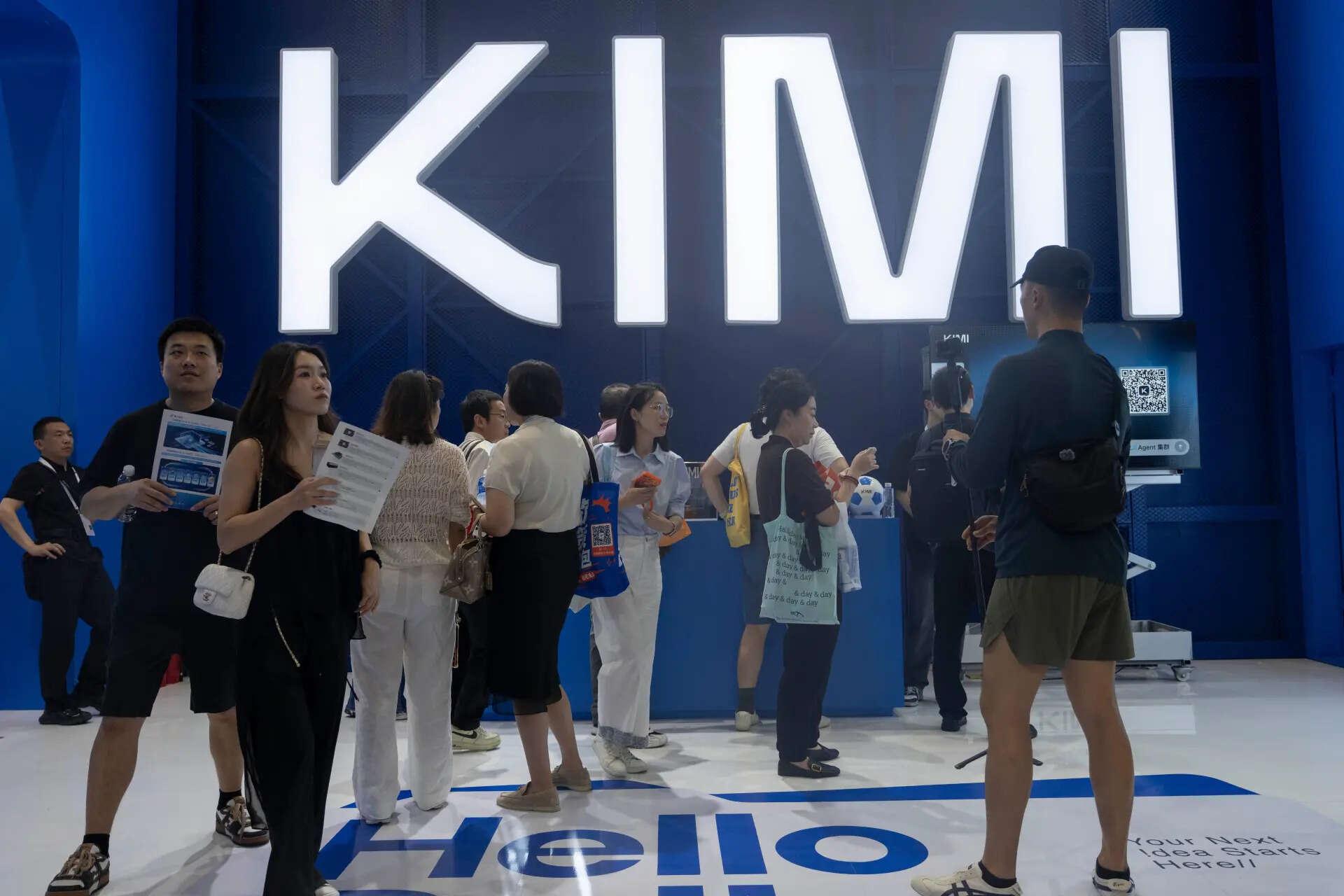
The Chinese startup unveiled Kimi K3 on Friday, a model that it says delivers performance that rivals top-tier offerings from OpenAI and Anthropic PBC at a fraction of the cost. As investors drew comparisons with last year’s “DeepSeek moment,” IG market analyst Tony Sycamore said $314 billion has been wiped from the company’s valuation estimates for the two unlisted US firms. View the full article