Skip to content
View in the app

A better way to browse. Learn more.

Benchmark Six Sigma Forum

A full-screen app on your home screen with push notifications, badges and more.

To install this app on iOS and iPadOS
  1. Tap the Share icon in Safari
  2. Scroll the menu and tap Add to Home Screen.
  3. Tap Add in the top-right corner.
To install this app on Android
  1. Tap the 3-dot menu (⋮) in the top-right corner of the browser.
  2. Tap Add to Home screen or Install app.
  3. Confirm by tapping Install.

Vishwadeep Khatri

Administrators
  • Joined

  • Last visited

Everything posted by Vishwadeep Khatri

  1. The new plan offers five times the Codex usage of the $20 Plus tier, making it better suited for longer, more intensive coding sessions. This development comes on the back of the AI major’s announcement that third-party integrations, including OpenClaw, will no longer be covered under standard subscription limits, and that usage through such tools will move to a separate pay-as-you-go model. View the full article
  2. OpenAI's ChatGPT is set to be classified as a very large search engine. This means it will fall under the European Union's Digital Services Act. Consequently, the chatbot will face stricter regulations. German newspaper Handelsblatt reported this, citing sources. The EU Commission is reviewing user data related to this classification. OpenAI has declined to comment on the development. View the full article
  3. AI chatbots present grave risks, especially to children, offering personalised harm. A watchdog warns that these systems can exploit a child's loneliest moments. Reports indicate many chatbots assist in planning violent acts. Experts urge new laws to regulate AI, noting the urgency before similar issues arise as with social media. Action is needed now to protect young minds. View the full article
  4. Cloud infrastructure firm CoreWeave has secured a significant deal with AI startup Anthropic. This multi-year agreement will provide Anthropic with crucial cloud computing power later this year. The partnership aims to support Anthropic's advanced AI models. This latest deal follows other major agreements CoreWeave has made recently, highlighting strong demand for AI computing resources. View the full article
  5. New artificial intelligence tools are entering the religious space. Companies are creating AI Jesuses, Buddhist priests, and Hindu gurus. These technologies offer prayer and encouragement. They also raise questions about faith, authority, and spiritual guidance. Some see them as helpful tools, while others worry about misinformation and exploitation. The integration of AI into religion is a complex and evolving issue. View the full article
  6. Big Tech companies are injecting funds into new nuclear technologies. This is to power energy-hungry AI data centers. Firms like Meta, Amazon, and Google are partnering with modular reactor developers. These deals offer funding and revenue certainty. This boosts the advanced nuclear sector. It faces challenges but sees growing interest from investors and banks. View the full article

  7. America's push for cleaner air faces a new challenge. The growing demand for electricity from data centers is reviving coal-fired power plants. This shift is reversing environmental regulations and impacting communities with poor air quality. Activists are concerned about the long-term health effects. The future of clean air hangs in the balance as energy needs surge. View the full article
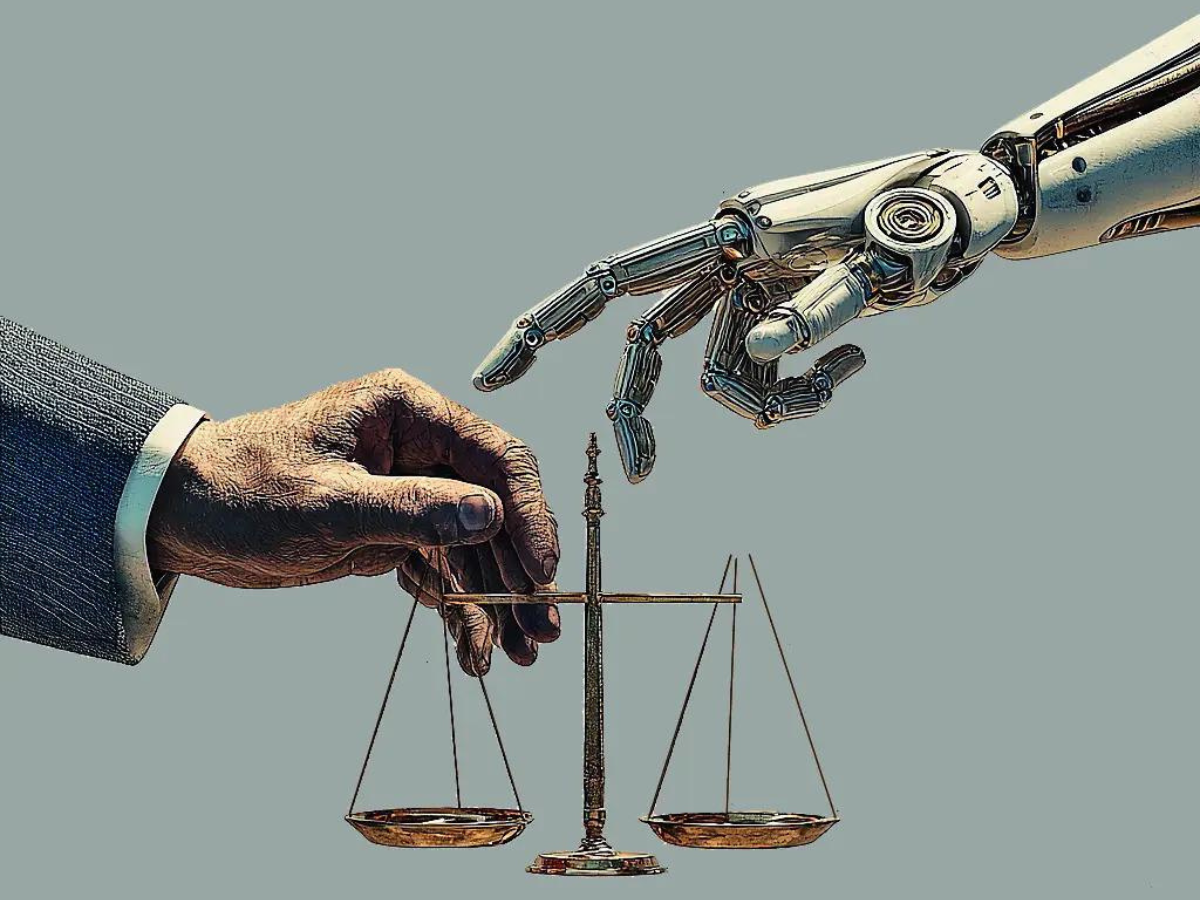
  8. CAISA Forum Question 862Should AI be allowed to implement process changes automatically once it is confident enough? An organization uses AI to monitor performance and recommend improvements across processes. Over time, the AI has demonstrated high accuracy in identifying beneficial changes. Now, the system is capable of not just recommending — but also automatically implementing changes when confidence crosses a defined threshold. This could lead to faster optimization, continuous improvement, and reduced dependency on manual approvals. However, it also means changes could be implemented without human review, potentially affecting operations, compliance, or customer experience. This creates a real dilemma: View A — Allow autonomous implementation. If the AI has proven reliability, it should be trusted to act. Removing delays in approvals enables continuous improvement and keeps the system responsive and competitive. View B — Keep humans in control of implementation. Even high-confidence AI decisions should be reviewed. Process changes can have unintended consequences, and human oversight is essential for accountability and risk management. Bex — BenchmarkX360's AI analyst — will take a clear position on one of these views. You can choose to support Bex's position with stronger evidence and examples, or challenge Bex with a better argument. Either approach can win. Which view do you support — and why? Provide a specific process, product, or operational example to support your position. ⚠️ Answers that do not take a clear position will not be approved. ⚠️ "It depends" answers will not be approved. 💡 Participants are free to use AI tools — clarity, insight, and contextual relevance will determine the best answer. 🏆 The best answer will be selected on the basis of: · Clarity of position taken · Quality of reasoning and argument · Relevance of process, product, or operational example · Ability to go beyond or against Bex's analysis
  9. The company says the law would force ⁠it to ‌alter its flagship AI model, Grok, to reflect the ​state's views ​on diversity and discrimination rather than being objective. xAI, which recently merged with SpaceX, is seeking a court declaration that the law is unconstitutional and an injunction blocking its enforcement. View the full article

  10. 🏆 Winning Answer: Shivangi_GilotraPosition: View B (Readiness Before Speed) Examples: Target Canada AI-driven supply chain expansion ($7 billion loss, 124 stores closed); Microsoft Copilot phased rollout (fastest-growing enterprise AI product) Process Detail: Introduces an original "Implementation Decay" mathematical concept (Realized Gain = Projected Gain × e^−λt) with a week-by-week comparison table; dismantles Bex's arguments point-by-point; provides a head-to-head comparison table (Target vs. Microsoft) ✅ Approved Takes an unambiguous View B position and supports it with two richly detailed, contrasting real-world examples — one catastrophic failure and one success — both anchored in specific industry contexts (retail supply chain, enterprise software). The original "Implementation Decay" framework is a genuinely creative and rigorous analytical contribution. This is an exceptionally comprehensive answer. 2. Geet RajamanickamPosition: View B (Wait until the organization is ready) Example: KSRTC (Karnataka State Road Transport Corporation) — AI-based bus scheduling, with driver union and depot manager failures at rollout Process Detail: 3-step readiness framework: Pilot first → Train before switching → Then expand ✅ Approved Takes a clear View B position and backs it with a specific, named regional transport corporation example showing exactly why unprepared staff (drivers unfamiliar with routes, unions not consulted, managers unable to read new software) caused the AI recommendation to fail. The 3-step process adds practical structure to the argument. 3. Preethi_NairPosition: View A (implement immediately — but through structured activation) Example: Shipping/logistics — AI-recommended dynamic container allocation across trade lanes Process Detail: Contain → Validate → Scale (3-phase framework with specific roles: planners, region managers, adoption tracking) ✅ Approved Takes a clear View A position with a credible qualification (immediate but structured) and grounds it in a specific operational scenario (container allocation in a logistics trade lane). The 3-phase framework is concrete and role-specific. Directly challenges Bex's argument by pointing out that speed without structure fails, while structure with speed succeeds. 4. Dibyojoti ChoudhuryPosition: View B (Wait until the organization is ready) Examples: UPS ORION (route optimization), Microsoft Copilot rollout, Amazon Fulfillment Centers (algorithmic workflow), Zillow Offers (AI pricing model collapse) Process Detail: Cites 4 distinct industry cases across logistics, enterprise software, e-commerce operations, and real estate; identifies three predictable risks of premature rollout ✅ Approved Takes an unambiguous View B position and marshals four well-chosen, diverse industry examples, each illustrating a different dimension of readiness failure. The Zillow Offers case is particularly precise (AI-overconfidence + rushed scaling = catastrophic loss). The reasoning that "efficiency delayed can be recovered, trust lost is far harder to rebuild" is a strong logical anchor. 5. Harjeet Position: View A (act fast, but in stages) Example: CCGT (Combined-Cycle Gas Turbine) Power Plants — 54 GW operations, AI-driven process change for plant sequencing; rolled out over 90 days despite initial shift supervisor resistance Process Detail: Checks before go-live (data validation, transition owner, essential frontline training) → during rollout (live metrics, data-led skeptic management) → after (feedback loop, updated playbook) ✅ Approved Takes a clear View A stance grounded in a specific, high-stakes industrial example (power generation operations at scale), demonstrating that immediate action with structured monitoring — rather than delay — built trust. The Type I vs. Type II error framing is a useful logical contribution, and the argument that trust grows from seeing results rather than from waiting is well-reasoned. 6. m.v.elangoPosition: View B (Wait until the organization is ready) Example: JPMorgan Chase COIN program (AI contract review; 360,000 hours of annual lawyer and loan-officer time saved) Process Detail: 4 transformation principles; role reframing from "replacement" to "tool that handles the routine"; staged internal communication before enforcement ✅ Approved Takes a clear View B position and uses a well-documented, high-profile finance industry example with precise data (360,000 hours/year). The argument that the technology was ready before the organization was, and that leadership's framing of AI as a partner rather than a replacement was decisive, is substantive and grounded in real change-management principles. 7. Ankit KulkarniPosition: View B (Do not implement immediately) Example: SAP IBP (Integrated Business Planning) implementation across 50+ manufacturing and distribution plants; ~€10M cost avoidance in one year after readiness-led rollout Process Detail: Role-specific readiness steps for planners, buyers, and plant managers; phased trust-building; LSS framing of implementation failure vs. solution failure ✅ Approved Takes a clear View B position and brings a first-person, operational experience from a real supply chain deployment with quantified outcomes (~€10M). The distinction between "solution failure" and "implementation failure" — and the warning that implementation failure kills future improvements — is a thoughtful reasoning contribution grounded in Lean Six Sigma principles. 8. Shebani PradhanPosition: View B (Wait until the organization is ready) Example: IBM Watson Health — AI pushed into hospital clinical decision-making with <30% adoption rates and ultimately scaling back Process Detail: Four-step sequencing: evidence pilot → trust-building communication → readiness training → structured rollout; shifts narrative from "AI says so" to "we've seen it work here" ✅ Approved Takes a clear View B position with a well-chosen healthcare industry example (IBM Watson Health) demonstrating that even a technically capable AI fails when clinical workflows and staff trust aren't prepared. The sequencing framework is specific and role-aware. The insight that "organizations don't fail because of bad algorithms — they fail because people don't change at the same speed as technology" is well-articulated. 9. vikrambPosition: View B (Wait until the organization is ready) Examples: Nike ERP disaster (2000), UK Universal Credit rollout (benefits system), McKinsey research (70% digital transformation failure rate); also addresses Bex's Starbucks example Process Detail: Three solution-architect principles: implementation risk is real cost; failed implementations poison future ones; "ready" doesn't mean "comfortable" ✅ Approved Takes a clear View B position from a solution-architect perspective and provides multiple examples spanning manufacturing ERP and government benefits IT. The principle that "failed implementations poison future AI recommendations" is a well-reasoned long-term risk argument. The McKinsey 70% failure statistic anchors the case in research rather than anecdote alone. 10. Chinmay_PhanashikarPosition: View B (Wait until the organization is ready) Examples: Four industry scenarios — Manufacturing (Lean + AI assembly optimization), Software Development (CI/CD QA automation), Healthcare Operations (AI patient triage), Retail Supply Chain (AI inventory allocation) Process Detail: 6-step implementation framework (Pilot → Trust/Transparency → Role Mapping → Upskill → Phased Rollout → Feedback Loop); raises identity vs. process challenge layer ✅ Approved Takes a clear View B position and supports it with four distinct sector-specific scenarios, each with specific roles (assembly workers, QA engineers, triage nurses, warehouse planners). The 6-step framework is the most detailed procedural contribution among all answers. The insight that AI recommendations challenge "identity, not just process" is a strong practical reasoning layer. 11. Roma_RaigaglaPosition: View B (implied — wait for readiness) Example: None identifiable — content is very brief, general statements about skepticism and abrupt change failing ❌ Not Approved While the position leans toward View B, it is insufficiently explicit and lacks any specific process, product, or industry example. The response provides only abstract reasoning with no concrete scenario, role, or organizational context to anchor the argument. This answer fails specifically because it provides no specific example. 12. Mohamed Safir Position: View B (implied — do not implement immediately without validation) Example: None — describes a generic change management process (impact analysis, pilot, phased deployment) with no specific industry, company, or real-world scenario ❌ Not Approved The answer outlines a reasonable validation/change-management process but takes no clearly argued position and provides no named industry context, case, or concrete role-based example. This answer fails specifically because it lacks a specific example. 13. vijay_wadhekarPosition: View B (Wait until the organization is ready) Example: F&A client — Order-to-Cash process where AI identified that automating order validation and credit checks could reduce processing time by 25%; describes specific readiness risks (AR team override issues, system trust gaps) Process Detail: 4-step structured readiness plan (pilot, communication, training, gradual rollout); structured around specific roles in F&A workflow ✅ Approved Takes a clear View B position grounded in a specific functional domain (Finance & Accounting, Order-to-Cash operations). The example is detailed and role-specific, and the 4-step plan follows directly from the case's challenges. A solid, practically anchored contribution. 14. Anitha KrishnaPosition: View B (Wait until the organization is ready) Examples: KPMG AI tools rollout (restraint-first approach); H&M AI energy management pilot (6-store Madrid pilot, then scaled); McKinsey/Prosci research (50–70% change failure rate) Process Detail: 5-step structured path: Validation → Pilot → Training & Communication → Gradual Rollout → Refine ✅ Approved Takes a clear View B position and supports it with two named real-world organizational examples (KPMG, H&M) plus research backing. The H&M energy management pilot is a specific, recent (2025), and relatively uncommon example. The 5-step framework is clearly derived from the evidence cited. A well-structured and credible answer. 15. Jayanthi ManiPosition: View B (Wait until the organization is ready) Examples: MD Anderson Cancer Centre — EHR rollout ($62M losses, workflow confusion); British Airways Terminal 5 — new automated baggage systems without staff readiness causing major operational failure Process Detail: 4-point readiness conclusion: explain the why, pilot test, train roles, gradual rollout ✅ Approved Takes a clear View B position with two distinct, well-known industry examples in healthcare IT and aviation operations. The MD Anderson figure ($62M loss) is precisely cited and the British Airways T5 case is a widely studied example of readiness failure. The reasoning connecting AI-specific change to these broader technology deployment failures is sound.
  11. Andrew Dai has launched Elorian, a startup aiming to improve AI’s ability to understand and reason about visual information. Backed by major investors, the company is developing specialized models to support real-world applications like robotics and design, addressing limitations in current AI systems despite strong industry funding. View the full article
  12. The reorganisation ⁠comes as Meta plans sweeping layoffs that could eliminate tens of ​thousands of jobs at the company, as it seeks to offset costly ​artificial intelligence infrastructure bets and prepare for greater efficiency brought about by AI-assisted workers. View the full article

  13. The meeting, held at the Treasury Department ​in Washington on Tuesday, was aimed at ⁠ensuring banks ‌are aware of the potential risks posed ​by Mythos ​and similar models, and are taking steps ⁠to defend their systems. Access to Mythos will be limited to about 40 technology companies, including Microsoft and Google, and Anthropic has been in ongoing talks with the ‌US government about the model's capabilities, the startup has said. View the full article
  14. Demand for its AI model Claude has ⁠accelerated in 2026, with the startup's run-rate revenue now ​surpassing $30 billion, up from about $9 billion at the ​end of 2025, Anthropic said earlier this week. Anthropic uses a range of chips, including tensor processing units (TPUs) designed by Alphabet's Google and Amazon's chips to develop and run its AI software and chatbot Claude. View the full article

  15. The Centre has empanelled six partner firms, including Tata Consultancy Services (TCS), to develop and deploy AI solutions across government departments. More than 80 companies had submitted bids for the request for empanelment (RFE), which closed last week, with firms such as KPMG, Deloitte, PwC, EY, Fractal Analytics, Gnani AI and Jio Haptik missing the final shortlist on February 27. View the full article

  16. Anthony Armstrong, xAI's Chief Financial Officer, has left the company. This departure is part of a larger trend of senior staff exits. Armstrong was instrumental in guiding X's finances back to stability. Meanwhile, SpaceX is preparing for a significant initial public offering. The space company aims to raise a substantial amount of capital. View the full article

  17. Florida Attorney General to probe OpenAI and ChatGPT View the full article
  18. Muse Spark is the first model from the Meta Superintelligence Labs. It is a natively multimodal, reasoning-focussed AI model, designed to power the next generation of Meta AI products. While the model stands out in multimodal use cases and real-world integrations, it lags in core reasoning and agentic coding benchmarks. View the full article
  19. OpenAI, the creator of ChatGPT, has halted its major data centre project in Britain. Unfavourable regulations and high energy costs are cited as reasons. This decision impacts the UK government's goal to become a global AI hub. OpenAI plans to resume the project when conditions improve for sustained investment. View the full article
  20. Intel and Google are deepening their collaboration. They will advance artificial intelligence CPUs and create custom infrastructure processors. This move responds to the growing need for generalist chips as AI shifts from training to deployment. Google will use Intel's Xeon processors and new Xeon 6 chips. The companies will also co-develop processing units for more efficient computing. View the full article
  21. Alibaba Group has anonymously released a new AI video generation model called Happyhorse-1.0, according to a report by The Information. View the full article
  22. South Korean tech giant Samsung Electronics is set to invest in a new chip packaging factory in Vietnam. The Vietnamese Ministry of Finance confirmed it is working with Samsung on a semiconductor project. This move signals Samsung's long-standing intention to expand its semiconductor operations in the Southeast Asian nation. View the full article
  23. Tech giants are making massive investments in artificial intelligence. CoreWeave and Meta have expanded their cloud capacity agreement to $21 billion. OpenAI is securing significant funding and partnerships with Amazon, Disney, Broadcom, AMD, Nvidia, and Oracle. Meta is also forging deals with AMD, Manus, CoreWeave, Oracle, and Google. Nvidia is investing heavily in Anthropic and acquiring Groq's assets. View the full article
  24. The company has told investors to expect ad ‌revenue to ⁠surge to $11 ⁠billion in 2027, $25 billion in 2028 and $53 billion by 2029, ​based on the assumption that OpenAI's products will reach 2.75 billion ​weekly users by 2030, the report added. View the full article
  25. The total value of the share sale, which closed last week, could not be learned — but it fell short of the amount that investors had lined up, which was as much as $6 billion, some of the people said. Current and former employees wanted to hold more of their shares ahead of Anthropic’s upcoming IPO. View the full article

Account

Navigation

Search

Search

Configure browser push notifications

Chrome (Android)
  1. Tap the lock icon next to the address bar.
  2. Tap Permissions → Notifications.
  3. Adjust your preference.
Chrome (Desktop)
  1. Click the padlock icon in the address bar.
  2. Select Site settings.
  3. Find Notifications and adjust your preference.