

Topics
-
Humanoid, a UK robotics firm, secured $152 million in Series A funding. This investment fuels the development of next-generation platforms and proprietary AI software. The company plans beta robot deployments at customer sites later this year. Humanoid has established partnerships with major technology and manufacturing companies. Bosch will serve as the contract-manufacturing partner for the new robots. View the full article
-
German authorities warned Tuesday of the "growing influence" of AI and digital technology on the sexual abuse of children, saying in a report that criminal abusers are increasingly using those tools. Sexual abuse of minors is "increasingly shifting to the digital realm," driving overall statistics "upward", said Holger Muench, the head of Germany's Federal Criminal Police Office (BKA). View the full article



Leaderboard
-
Mokshesh
Members1Points10Posts -
Johanan Collins
Members1Points72Posts -
Manas Mohapatra
Members1Points11Posts -
Mohammad Mahmudul Hassan
Members1Points10Posts


Popular Content
Showing content with the highest reputation on 10/15/2021 in all areas
-
1 pointIntroduction. Shigeo Shingo contributed to tools such as Total Quality Management, Just in Time, Flow, SMED, Quality at Source, Genchi Genbutsu, and Lean. He along with Taiichi Ohno applied his concepts to the real world in Toyota. Over the years, management gave a greater emphasis to these tools, i.e the “How” losing out on the important “Why”. The Shingo Model has been put together to link the “How” to the “Why”. It gives the relationship between principles, systems, tools, and results. The Shingo Model is a step towards a culture of operational excellence. It helps an organization to imbibe a culture of operational excellence by aligning its systems with principles rather than focussing on the tools. The model has guiding principles and the transformational process. The Shingo Model validates the teaching of Stephen R. Covey who said that values govern our actions but principles govern the consequence of our actions. It validates the fact that principles predict outcomes. Rather than focusing on the tools, it focuses on the underlying principles that operate behind them. It requires the leaders to anchor the mission, vision, and values of the organization to the principle of operational excellence and then for the entire organization to do so. Dimensions of Operational Excellence The Shingo Model has four dimensions viz. Cultural enablers, Continuous process improvement, Enterprise alignment, and Results. In order to see the potential of these principles and the business outcomes, all these four dimensions are important and require focus. These four dimensions cover five business areas, viz customer relations, product or service development, operations, supply, and admin. Each of these dimensions has some guiding principles and supporting concepts. Supporting concepts are important but not universal as the principles. Culture. Sustainable results require keeping the culture as central to the guiding principles, systems, and tools. It does not come through the “know-how”, just the use of tools and techniques but through the “know-why”, the principles behind their use. The leader needs to first experiment and imbibe the principle and then teach the principle to their team. This would empower the team to be take initiative and be creative and move in the right direction. Aligning the Systems with Principles. A bad system will have a large variation in behavior, leading to a variation in outcomes. The Shingo Model helps an organization to align every system with the principles. By doing this, the behavior of their staff is influenced towards the ideal. Tools. Since the guiding principles which form the culture of the organization are aligned with the systems, the staff will be able to better understand the why behind the use of the tools. Reference The Shingo Model for Operational Excellence, Jon M Huntsman School of Business , Utah State University.
.thumb.png.2d8761cc264cf41ed8524dca98b5428f.png) 1 point
1 point -
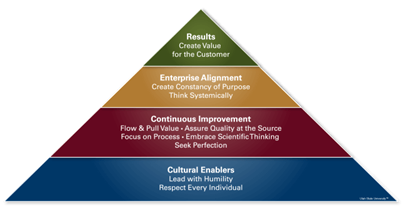
1 pointShingo Model for Operational Excellence Any organization is always under a state of constant transformation. The critical ingredients to success of any transformation are the principled leaders and their clearly defined objectives behind any transformation. The Shingo model of Operational Excellence emphasizes that a successful transformation occurs when leaders create a deep culture of continuous improvement and take personal responsibility in architecting a long-lasting culture of continuous improvement. The most important contribution of Dr. Shingo was his theory on the relationship between principles of leaders, systems and tools in building the organizational culture and driving the results. Over the years many leaders have given extreme importance to systems and tools and neglected the aspect of leadership principles in building the right culture. Application of Shingo Model to build sustainable culture of Continuous Improvement Based on Shingo’s model, the building blocks for a successful and sustainable culture of Operational Excellence is divided into 4 dimensions as shown in the pyramid below Dimension 1: Cultural enablers Dimension 2: Continuous process improvement Dimension 3: Enterprise alignment Dimension 4: Results There are 10 guiding principles of Shingo Model to establish a sustainable culture of continuous improvement. They are as follows: 1. Lead with Humanity – A leader must possess sense of humility. A leader who is willing to seek inputs by listening carefully and continuously creates an environment where employees put their best creative abilities. 2. Respect for Individual – Respect for every individuals must be deeply felt by leaders in an organization 3. Focus on Process – A leader must acknowledge that most of the issues related to defective outcome is rooted in an imperfect process and not people 4. Embrace Scientific Thinking – A persistent practice of systematic exploration of ideas and failure reasons enables organization to understand reality 5. Flow and Pull Value – Value for customers is created there exists a real demand (Pull) and a continuous process (Flow) to fulfil that demand 6. Assure Quality at the Source – Right first time at every step of process can assure quality at the source 7. Seek Perfection – Perfection must be a habit and not an effort to create a mindset and culture of continuous improvement 8. Create Constancy of Purpose – There must exist a firm clarity of why the organization exists 9. Think Systematically – Thorough understanding of the relationships within a system must exist to understand cause and effect systematically and take decisions for improvements 10. Create Value for Customers – Value must be defined through the perspective of what a customer is willing to pay for References https://shingo.org/shingo-model/#headline-66-117 https://the-lmj.com/2012/05/the-shingo-model-for-operational-excellence/

 1 point
 -
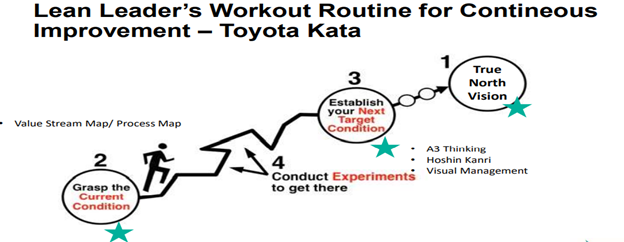
1 pointShingo Model About Shingeo Shingo: Dr. Shingeo Shingo (1909- 1990) was a Japanese industrial engineer who is widely recognized for his work in developing many of the revolutionary manufacturing practices that originated at Toyota and recognized as one of the greatest manufacturing minds in the last 100 years. Applying entities may be from any industry including but not limited to- Services, Manufacturing, Healthcare, public sector etc. He is the cofounder of Lean, TPS, Poka-Yoke, Jidoka, SMED, JIT, Standard Work and Kaizen. About Shingo Model: Image Source: The Shingo Model (shingo.org) The world’s highest standard for operational excellence model is The Shingo Model. The model recognizes the organizational efforts to build operational excellence culture and also the continuous improvement. The Shingo Model world deliver world class levels of excellence in results across an enterprises are based on the principles, systems, tools and cultures. This model can be used for lean maturity assessment and identification of strengths and opportunities for improvement of an organization. Transformation of Organization Culture by Shingo Framework: For organization requires every person is engaged every day in making improvements in culture. This is more than an application of a new tool or a leader’s charismatic personality. The Shingo Model exhibits a very useful framework to guide the organization’s cultural transformation that triggers in achieving ideal results by interacting and integrating between systems, tools, principles, culture, and results by transformation of three levels. Image Source Shingo Institute (shingo.org) The Shingo Model utters the relationship of a set of Ten Guiding Principles to systems, tools, results, and culture. But tools and systems alone cannot operate a business by their own. They are guided by management systems have been aligned to deliver results. People build tools and systems and their behaviors in aggregation to form organizational culture, and ultimate culture greatly influences the organization’s results. Lack of attention from the leadership on culture have significant, far-reaching negative effects on the organization environment. On the other hand, Leaders can take significant role in developing excellent organizational cultures which are built around humility, trust, collaboration, innovation and empowerment. Three Insights of Organizational Excellence: Results Require Ideal Behaviors: Leaders must have strong commitment and hard work towards creating a culture to achieve ideal results. The deal behaviors are expected and evident in every team member. Purpose and Systems Drive Behavior: Leaders must realign management, work system and measure improvements regularly to drive the ideal behavior required by all people to achieve ideal business results. Image Source: Shingo Prize for Operational Excellence Principles Inform Ideal Behavior: Principles are ground rules that govern consequences. This must be engaged in a relentless journey to make things better for any successful organization in the long term mission. Failure to do that will inevitably result in organizational decline. Similarly, excellence must be the quest of everyone. Shingo House of principles of Operational Excellence: The Shingo Model of four dimensions Connecting Four dimensions overlay Five core business systems 1. Cultural Enables 2. Continuous process improvement 3. Enterprise Alignment 4. Results 1. Product/Service development 2. Customer Relations 3. Administrative Operations 4. Supply 5. support system Mapping of Shingo Model Dimensions with Shingo Principles of Operational Excellence: Shingo 10 core principles of OpEx The Shingo Model Dimensions Principle 1: Respect for Individual : Cultural Enablers Principle 2: Lead with Humility Principle 3: Seek Perfection Continuous Process Improvement Principle 4: Embrace Scientific Thinking Principle 5: Focus on Process Principle 6: Assure Quality at Source Principle 7: Flow & Pull Value Principle 8: Think Systematically Organizational Alignment Principle 9: Create Constancy of Purpose: Principle 10: Create Value for the Customer Results Culture of sustainable Continuous Improvement through Kata (Routine): Leadership can change culture by routinely done through forming new habits. Making Scientific Thinking about Life Skills for Everyone is a better way for learning and developing the capabilities of our most valuable resource of our employees. Shigeo Shingo noted “Continuous improvement means trying something we’ve not done before — treading into unexplored territory”. Image Source: https://www.systems2win.com/LK/lean/kata.htm Image Source: ICEES At the end, Leaders must deeply and personally have approached overall systems thinking, understand and practice the Shingo principles over a long term mission that govern and drives their organizational success. we must ensure the behaviors of every employee of the organization in contributing synchronized and aligned with Shingo principles. A coaching and Lean learning culture for personal and organizational development that can play a signification impact in Kata thinking pattern for sustainable continuous improvement. References: 1. https://shingo.org/shingo-model/ 2. https://lean.nh.gov/documents/Shingo%20Model%20Handbook.pdf


 1 point
 -
1 pointShingo Model: Dr. Shingo was an engineer from Japan who was further considered as one of the leading experts in manufacturing practices and the Toyota Production System. One of his important contributions was his understanding of the relationship between Principles, system and tools. Based on his understanding the Shingo model for continuous improvement/process excellence is divided in two parts. The principles are System and Tool. As per his model the research says if you want to sustain the operational excellence, it requires below mentioned fundamental paradigm shifts: 1. Focus is very much needed on both results and the behaviors 2. Ideal behaviors of the organization always flow from the principles which govern the required outcomes 3. A good foundation can only be built by principles upon which you can built a culture which can sustain for a long-term 4. Alignment of the management systems is very much required to create ideal, principle-based behaviors which have the greatest impact on behavior of people of the organization 5. All the available tools (Lean, TQM, JIT & six sigma) always should be ingested into an appropriate system/process to drive ideal behavior and best outcome. 6. The model contained two elements, one is the house and the second one is the diamond. The first element “house” describes the correct principles of operational excellence and the power of balancing the efforts and the second element “diamond” always represents the process of implanting principles into the organization. The well-known Shingo model includes the well-established Lean focus on the results and tools but has also extended this to include wider system such as culture and guiding principles. Based on the Shingo model the Principles of Operational excellence are mentioned below dimensions: 1. Enterprise Alignment 2. Cultural enablers 3. Continuous improvement 4. Result which is the ultimate outcome of the business initiatives Therefore, the approach is both systematic and holistic than many Lean approaches adopted by organizations. This culture also allows them to design their core systems where they can involve a set of appropriate tools into their systems.1 point
-
1 pointThe Shingo Model of Operational Excellence relates the Organization Principles, the Systems and the Tools. Based on the understanding, the entire model is divided into Principals, Systems and Tools and it requires a paradigm shift in the five fundamental aspects. Operational Excellence requires a focus on the Results as well as the Culture (Behavioral Aspect). The Behavioral aspects flow from the Principles that govern the desired result. Principles construct only foundation upon which culture to be built in order to sustain for a longer period of time. Establishing ideal, principal based behaviors requires a management system alignment as it has direct impact on how the people are going to behave. The tools like TPM, TQM, Lean, Six Sigma, JIT etc. are the Enablers and they should be cautiously and strategically inserted into the system to drive better Culture and get Excellent results. Shingo Model Consists of 2 elements. The House which describes the correct principals of Ops Excellence and The power of Balancing the efforts across all dimensions. The Diamond which represents the transformation behavior. This is for inculcating the Principles of Ops Excellence into the Organization. Source: https://www.interfacing.com/the-shingo-model Source: https://lean.nh.gov/documents/Shingo Model Handbook.pdf The Shingo Model: For the Organizations to be successful over a longer period of time, leaders must deeply understand the Principles that are leading to the success i e. the Organization culture must be grounded with correct principle. Source: Shingo Institute The Principles of Ops Excellence: Principles are categorized into 4 dimensions. D1- Cultural Enablers D2-Continuous Process Improvement D3-Enterprise alignment D4-Results These 4 dimensions overlay 5 core business systems viz. Product or Service Development, Customer Reach, Operations, Supply Chain and Administrative support. The Shingo Prize for Ops Excellence has 10 guiding principles. 1) Lead with Humanity: Examples of Ideal Behavior: There is a consistent, good leadership engagement where the most of work happens. Employees can report issues with a confidence, in a positive manner. Governing Mechanism (How?): Establish a common enterprise process center for transparency in delivering. Openly post Issues, Improvements and Solutions with proper governing mechanism. 2)Respect For Individual: Examples of Ideal Behavior: Create an Individual Development Plan (IDP) for all the Employees with appropriate goals. Involve the Employees in the Continuous Improvement Projects of their areas. Provide coaching for the effective problem solving. Governing Mechanism (How?): By defining clear roles and responsibilities Establishing Knowledge sharing platforms 3)Focus on Process: Examples of Ideal Behavior: When an error occurs, focus on mitigating the error Ensure all information/parts/materials are correct and meet required specifications before taking them into the process. Governing Mechanism (How?): By Visual Management, Daily Work Management, Continues Improvement Projects and by not blaming the others 4)Embrace Scientific Thinking: Examples of Ideal Behavior: By Following Structured approach for the Problem Solving Encourage Employees to explore the new ideas Governing Mechanism (How?): By establishing a structured framework Integrating best practice approach like RACI/SIPOC/TDC/Flow Charts etc. By Following Scientifically proven Improvement methodologies like Lean Six Sigma, Design Thinking ,Agile and Artificial Intelligence based projects. 5)Flow and Pull Value: Examples of Ideal Behavior: Establish Pull Approach: Avoid producing more Inventory Ensure sufficient resources are available whenever there is a requirement. Governing Mechanism (How?): Proper Visual management representing all Upstream and Downstream activities (VSM) Visualization of all Customer Touch Points along with proper monitoring 6)Assure Quality at the Source: Examples of Ideal Behavior: Ensure proper material handling without any damages Stop work to fix the error/have periodical maintenance as per schedule before continuing Governing Mechanism (How?): Ensure forms are tied with the Process and CAPA/Abnormality analysis plan is available if there is any deviation (to act immediately). 7)Seek Perfection: Examples of Ideal Behavior: Establish long term sustainable solutions rather than temporary ones Continuous work towards work simplification Governing Mechanism (How?): Making every Employee as a part of Company's Culture Promoting Innovation Culture 8)Create Constancy of Purpose: Examples of Ideal Behavior: Communication the Vision, Mission, Quality Policy Statement and Purpose of the Organization to all Sub Goals are always to be linked with the Organization major goals Governing Mechanism (How?): Clearly defined Organization Objectives and Sub-Objectives Proper KPI Drilldown 9)Think Systemically: Examples of Ideal Behavior: Eliminate the barriers which will act as a blockers for the flow if Ideas/Information Governing Mechanism (How?): Ensuring Managing Points and Check Point mechanisms (MP-CPs) are aligned with the Organization Objective 10)Create Value for the Customer: Examples of Ideal Behavior: Customer is King: Work to understand his needs and expectations. Governing Mechanism (How?): Align Customer Needs with Organization Vision and Imbibe it into the Process. Monitor the performance of Key Customer measures Conduct Customer Satisfaction Surveys Conclusion: Operational Excellence is the vision that many Organizations have established to drive the Improvements, however real changes will happen only when all Principles are clearly understood and deeply routed into the Organization Culture. The focus of the leaders should be more on driving the Principles and Culture whereas the Managers should focus more on designing and aligning the systems to drive Principal based behavior. This model may be used as a Benchmark for what an excellence at highest level should look like. Principles of Ops excellence are only the foundation, on which Organization culture should built with confidence for a long term sustenance.


 1 point
.png.634c7f8caa9696656f2c244e336b4ded.png)

This leaderboard is set to Kolkata/GMT+05:30