

Topics
-
Fifty-five women engineering students completed an AI bootcamp focused on rural Karnataka. Participants developed AI-based solutions after visiting villages and conducting field interviews. The She Innovates bootcamp partnered with several organizations to achieve its goals. This initiative aims to boost women's participation in AI and entrepreneurship. It encourages AI applications for rural development and community-focused sectors. View the full article
-
Besi's quarterly orders more than doubled, fueled by AI and hybrid bonding technology. The company saw increased customer adoption of its advanced chip packaging solutions. Demand for AI applications continues to drive growth in data centers. Besi anticipates revenue growth between ten and fifteen percent. This strong performance aligns with other semiconductor sector reports. View the full article

Leaderboard
-
Vinod GC
Lean Six Sigma Black Belt2Points26Posts -
darryl collins
Members2Points10Posts -
Sai Kotari
Lean Six Sigma Black Belt1Points11Posts -
Vishwanath Oleti
Lean Six Sigma Black Belt1Points10Posts



Popular Content
Showing content with the highest reputation on 07/30/2021 in all areas
-
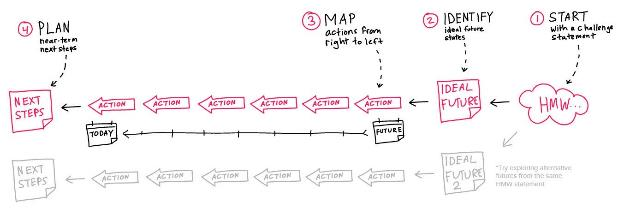
2 pointsMy thoughts on Backcasting Backcasting is a planning methodology that works backward from a desired outcome/outcomes or future state/states to the present. While implementing this methodology one needs to identify the policies, programs, actions, milestones that are necessary in order to reach the future desired state, goal, or objective. Hlomberg Robert in their paper on Backcasting from non-overlapping sustainability principles – a framework for strategic planning have defined Backcasting as a planning methodology that is particularly helpful when problems at hand are complex and when present trends are part of the problems (Robèrta, 2000). John B Robinson from the University of Waterloo first coined the term Backcasting in 1980 and laid out its fundamentals ten years later in 1990. Whilst the term Backcasting may have been coined in 1990, its use could date back to the origin of man. The landing of man on the moon 20 July 1969 is a good example of Backcasting. President John F Kennedy announced in Congress on 25 May 1961 “I believe this nation should commit itself to achieving the goal, before this decade is out, of landing a man on the moon and returning him safely to Earth (History, n.d.).” This set into motion a plethora of activities to put a man on the moon by the end of the decade. Backcasting vs Forecasting While forecasting aims at predicting the future based on trends of the past, Backcasting works in the opposite direction, from the desired outcome to the present. In forecasting, the past is known and the outcome is predicted from these historical trends (partially unknown). In Backcasting the desired future is known, and the likely things I need to do to achieve this desired outcome are partially known. In terms of the dependent variable and independent variable, forecasting predicts the future value of the unknown dependent variables based on known values of the independent variables whereas Backcasting predicts the unknown values of the independent variables in order to explain the known value of the dependent variables (Backtracking, 2021). Backcasting from a Single Scenario and Multiple Scenarios. Backcasting can be done both from a single future desired scenario or a multiple future desired scenario. The individual or the leadership may need to use various techniques such as brainstorming, NGT, Delphi technique, PESTLE, horizon scanning, cause and effect diagrams, etc to list out the future scenarios and home-in onto the desired scenarios that are desirable and favorable to them. Backcasting on the Individual Level and Corporate Level Backcasting can be used on both the individual and corporate levels. A common question during a job interview is; where do you see yourself in the next 5 years? The next logical step to ask would be; what are your plans to achieve that desired outcome. These questions naturally lead to the Backcasting process. At a Corporate level, Backcasting may be taken as a strategy-building exercise examining various scenarios of the future and planning the alternate steps to achieve these scenarios. The planning may involve common activities that could be applicable to all scenarios so that flexibility is built in the planning process and finally differentiation can be built in the plan when closer to the desired future. Steps in Backcasting. The very fundamental step in Backcasting is setting a goal/goals, a vision of the future. What does out vision of the future look like? The clearer the vision, the greater will be the motivation to achieve this goal. After visualizing this goal, one must backtrack and work out the sequence of the steps to achieve this goal. Working out the milestones along with the timeline is an important step. This is similar to the saying – putting your ducks in a row or if you aim for the Stars, you will not land up with mud in your hand. The next step would be to build as much flexibility in the plan as possible. The rapid change in technology and societal patterns Finally, one must work out the resources required at each step and milestone to achieve the future desired state. Backcasting during the Pandemic. The pandemic has affected people across the globe equally, however, the smart ones are using the technique of Backcasting by upskilling, learning totally new skills, networking, and many other activities. Doing a Lean Six Sigma Green Belt or Black Belt or even the Master Black Belt certification or certifications such as the PMP, CPSM, etc. could be milestones that one could achieve while Backcasting. Backcasting and the DMAIC/DMADV Process The tools used in Lean Six Sigma DMAIC or DMADV Projects could also be used in the Backcasting technique. The Delphi technique could be used to get a consensus opinion on what the future could look like. The tollgates could be used at each milestone to see if one is on track and build flexibility based on the changing future. Tools in the Analyse phase such as listing the potential scenarios akin to causes and identifying the root causes (main scenarios), hypothesis testing, design of experiments, simulation, etc. can be used to analyze the various scenarios. Conclusion Proverbs 22:6 is an example of backtracking. Train up a child in the path/way/manner in which he should go and when he is old/mature he will not depart from it (Bible Hub, n.d.). “In the path/way/manner, he should go” is akin to the desired future state, “Train up” is akin to backtracking and setting milestones in the life of the child, “and when he is old/mature, he will not depart from it” is akin to achieving the future state. The technique of backtracking has been around for centuries; however, the technique has been formalized and coined as backtracking just three decades ago. References Robèrta, J. H.-H. (2000, December). Backcasting from non-overlapping sustainability principles — a framework for strategic planning. The International Journal of Sustainable Development and World Ecology, p. 2. History. (n.d.). Retrieved July 28, 2021, from History: https://www.history.com/topics/space-exploration/moon-landing-1969 Backtracking. (2021, July 28). Retrieved from Wikipedia: https://en.wikipedia.org/wiki/Backcasting (n.d.). Retrieved July 29, 2021, from Bible Hub: https://biblehub.com/proverbs/22-6.htm2 points
-
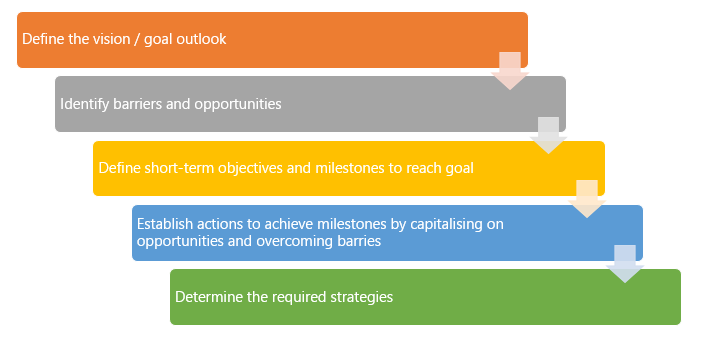
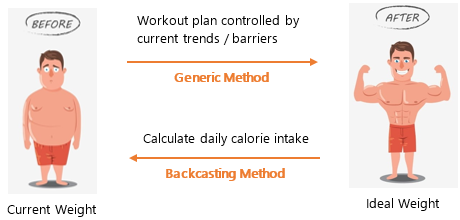
2 pointsI. Definition: Backcasting is a strategic planning method that defines an ideal future state or goal and working backwards to identify the policies and strategies connecting them to the current state that helps identify and arrive at the required actions to get to the future state. This method was developed in 1990, by John B Robinson at the University of Waterloo, Canada. The available forecasting methods involves prediction of the future based on earlier / current performances and trends, where Backcasting works in the opposite direction which helps envision the future and lay down appropriate action to get there when there is unpredictability or uncertainty in current trends. A good visual differentiation between forecasting and Backcasting is given below. II. Application: Backcasting method was originally introduced in the energy industry and is now widely used in the areas including, urban planning, climate reconstruction, statistical analysis and problem solving. III. Steps involved in Backcasting process: 1. Define the vision: This is the foremost and a crucial step where the end goal or the vision is defined. The time period taken into consideration could range from 5 to 20 years. 2. Identify barriers and opportunities: All the opportunities that we have now and will have in the future along with the potential barriers that would hinder achieving the end results are discussed in detail and listed. 3. Define milestones: The bigger goal is broken down into several short-term objectives and the key milestones completed each of the objectives are flagged. 4. Establish actions: Develop detailed robust actions to achieve the short-term milestones. This shall include actions that effectively uses the opportunities or capitalises on them and actions required to overcome the barriers that prevent from achieving the short-term milestones and thereby the goal. 5. Define strategies: This is the final step, where strategies are developed to implement the required actions that were defined in the earlier stage. IV. Backcasting in problem solving: Backcasting principle and steps can be applied in problem solving by first defining a required outcome / output for a product or from a process and working backwards in identifying the appropriate actions / processes / variables that shall facilitate achieving the desired outcome. Backcasting helps in predicting the unknown setting of the causes, to explain the known values of the effect. In other words, Backcasting helps identifying the optimal setting of input variables in order to achieve a desired value of an output variable. A classic example differentiating generic problem-solving approach vs problem solving using Backcasting method is shown below;

 2 points
 -
1 pointForecasting predicts most likely future while Backcasting assesses feasibility of desired future. We use backcasting in our lives in its simplest ways e.g. when we want to order food, when we want to get somewhere. However, enterprise application is complex and desired state is an image 10-20 years from now. For ex. what would a specific system look like in 10-20 years perspective. Forecasting focuses on incremental innovation while backcasting prepares for future vision and works backwards to Today. Due to constraints and demands of current business, most companies get stuck with modest level of innovation. Whereas backcasting breaks away the barriers, defines ideal future state, involves highly innovative vision. And, from that vision one can work backwards to today (current state), work on pipeline of products and services to get to future vision. The term "Backcasting" was coined by Robinson in 1982 to develop future scenarios and explore feasibility. It became popular as a Tool to connect desired state to the present situation. This is used as planning and problem-solving tool to define and visualize desired future. And then work backwards to set up initiatives using imagination and innovation to get to desired state. Ex. Urban development strategies. Long term vision/image requires balance between scientific and social research, innovation, technology. This must all involve all stakeholders. Then these solutions are explored, bottlenecks identified, option selected, action plan setup together with stakeholders Steps of methods- Create the scenario – The method is used to predict the potential impact on a market, industry or society in a 10 to 20-year perspective. Future map could be challenging, involves big difference from today. Start with image of future, like a jigsaw, put the pieces together, till you generate the picture. Should be simple, straightforward and easy to understand. Examples - higher education, health industry, 3d printing, digital change in TV industry, driver less technology etc. Analyse the scenario – Involve all stakeholders, management, leadership, investors, decision makers. Check for things that may work against the scenario, review pros, and cons. Current state – Analyse current state, gather information of present conditions Establish policy and strategy to make the vision a reality Define intermediate steps/phases – Define Intermediate phases. Divide into sequence of phases from where we are today to where we want to be, at least 1 intermediate phase. Could be: Experimental phases, market introduction of technologies before a final launch for full use of technology. Describe phases – describe individual phase with who is using, who is driving the development, who is against the development, what supporting services required etc. Identify phase triggers – Identify what’s needed to move from 1 phase to other to jump from where we are to next phase. Include business and cost models. Estimate timings – Estimate the timing about each phase and follow through. Use the map - check for opportunities, business roles, investment strategy. Take advantage of expected transformation Principles for sustainability- There are 4 principles agreed in scientific community to comply with sustainability. Benefit – everybody can agree on principles, people communicate clearly, people to bring their specialist knowledge. For examples a chess player has their own moves but they all comply with principles and rules. Following 4 principles to comply with sustainability, also known as ABCD principle: Awareness and Vision– Setting up vision and common understanding of sustainable future. Encouraging people to set ambitious goal that requires a radical change. Baseline – Gap analysis of major flows and impact of the organisation to ensure its activities are running in support to sustainability principles. Use these principles on how we are operating and highlight issues without any constraint. Creative solutions – Identify opportunities and potential solution, begin with end in mind. This prevents people developing strategies that solve just today’s problem. Decisions – Prioritise the measures that move the organisation towards sustainability, step by step implementation and action planning. Understand where are we, where we need to get to, how to make path from here to there for being sustainable, understanding the condition, how sustainable business would look like. A few common challenges – · Scenarios are unknown and complex, · Difficult for people to agree on shared vision · Unable to define phases to get there · Scenario can change in the head, someone may have different perspective, conflict of interest · Not easy to achieve Conclusion – Forecasting has its limitations as we make decisions based on what we already know. We take problems with us to the future. Whereas a successful outcome is expected out of backcasting by answering a simple question: what should we do today to reach the future. This involves systematic investment to achieve long term sustainable goal.1 point
-
1 pointForecasting is predicting what the future might look like. It is done basis the current information, today’s data and trend analysis. However, what if we that's not the future that we want to be? American computer scientist Alan Curtis Kay once quoted - the best way to predict future is to invent it. i.e. ‘Future’ - is what we really make of it. Which means, for this we need to begin with the future first. Not the future that might be…, but the future that we want to be. The ideal or the desirable future. Planning a desirable future and then work backwards to identify processes and actions needed that connects the future with present - is what Backcasting is. Statistician say that Backcasting s opposite of Forecasting. In Backcasting none of the current information is in consideration. Backcasting is envisioning a future that we want to have (as opposed to growth to where we currently are), deriving the indicators we would see on the way back, and working backwards to adopt the mindsets, behaviors and communication that will help to lead with resilience. Applying ‘Backcasting’ to solve problems:- Using backcasting is very powerful in problem solving or achieving the compelling vision. It prevents us from proposing solutions to problems that we have today. With the end goal in mind we can suggest solutions that will help us create a sustainable future that we want. Once the solutions are proposed, deciding which ones are most strategic while allowing for tactical flexibility. Working backwards. What steps will we take to get there? At some point there will be disconnect between our vision for future and our current path. This tells us where we need to innovate. How will it look when the problems and unsustainable aspects are solved? Identify bottlenecks. Continue to analyze and define the pathways to our vision. For example, I want to solve my obesity problem. I need to religiously follow the below simple steps; 1. Imagine the successful outcome 2. Work backwards from that success 3. Identity steps that would lead to success 4. Make a plan to put those steps into practice Lets say, I would imagine a successful outcome of reducing my weight by 12 kgs. in 6 months. Before I reach the desired bodyweight, I need to demonstrate the required endurance. So, the next step backwards would be to plan of reducing 2 kgs. a month. But to achieve that much of weight reduction, I first need to get accustomed to reducing at a slower pace. So perhaps the next step back is reducing weight by at least 500 gms. per week. This process of working backwards through steps of progression keeps going until I arrive at a realistic first step. For example, I might arrive at the first step of starting with simple exercises followed by tracking and monitor my weight everyday without stopping. This way backcasting would help me plan the steps by working backwards. At its core, the result is common sense. We ask a simple question: “If we want to achieve an outcome, what steps must we take to arrive at that outcome?”
 1 point
 -
1 pointBACKCASTING Backcasting and Forecasting, both this technique help us in estimating the future but the way both approaches work is altogether very different. In Backcasting, we try to minimize the risk associated with our future estimation. Forecasting: In this technique, we visualize the past trend and analyze the available data and compare it with the present conditions and then begin with plotting the future values. In Forecasting, we follow the below steps: 1. Collect past data and present data 2. Estimate the future possibilities/ events 3. Do extrapolation/ estimation for future Backcasting: We move almost opposite to forecasting. In this technique we start with the future point where we want to reach and then try to adjust everything in the present according to the future target we want to achieve. Below are the steps done in Backcasting: 1. Define and establish the future targets 2. Collect past data and present condition/ events 3. Analyze the data collected that will assist us in finalizing the changes required to the present conditions so the changes comes inline with the vision envisioned 4. Establish a policy and strategy to implement the changes required Example of Backcasting A Government Agency decides to understand the road traffic growth so they look at the data for the growth in road traffic. The decision makers will then analyze this growth rate and then reach the conclusion to predict a future increase of for example 50% over the next 10 years. This conclusion will then lead to the decision to build more capacity for the road network, to meet the demand predicted based on the current road traffic. In contrast to this, backcasting will help in solving the above problem by the Government Agency setting a goal of for example reducing the road traffic by 15% and use this goal to shape the Road Traffic policies and decisions. Backcasting is a creative way of shaping the future. It starts with beginning the desired end firmly in mind. It helps us in deciding what we want the future to look like, and then implement the plans, decisions and actions that are designed to bring that future. It is about shaping the future beforehand, rather than simply waiting for the future to happen to us.
 1 point

This leaderboard is set to Kolkata/GMT+05:30