

Topics
-
Fifty-five women engineering students completed an AI bootcamp focused on rural Karnataka. Participants developed AI-based solutions after visiting villages and conducting field interviews. The She Innovates bootcamp partnered with several organizations to achieve its goals. This initiative aims to boost women's participation in AI and entrepreneurship. It encourages AI applications for rural development and community-focused sectors. View the full article
-
Besi's quarterly orders more than doubled, fueled by AI and hybrid bonding technology. The company saw increased customer adoption of its advanced chip packaging solutions. Demand for AI applications continues to drive growth in data centers. Besi anticipates revenue growth between ten and fifteen percent. This strong performance aligns with other semiconductor sector reports. View the full article



Leaderboard
-
Vishwadeep Khatri
Administrators1Points6,722Posts -
Vastupal Vashisth
Members1Points130Posts -
Natwar Lal
Members1Points50Posts -
Stephen J
Members1Points5Posts



Popular Content
Showing content with the highest reputation on 07/23/2019 in all areas
-
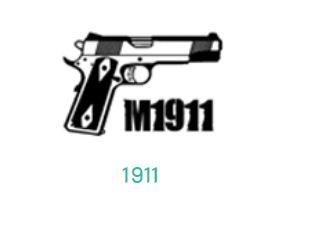
1 pointDFA - Design for Assembly Design for Assembly is one of the approaches in Design for Excellence (DFX). The X here can take many forms like Manufacturing, Safety, Cost, Service, Reliability etc. So how is DFA different from others and when should one go for it DFA should be the preferred if the product that we are designing needs to be assembled and disassembled often. Because in such situations more than anything else, it is more important that the assembly should be 1. easy 2. efficient 3. effective My top of the mind items that usually require to be assembled and disassembled are military guns and toys (especially track toys and Lego). Elements that you need to consider in DFA 1. Number of parts - product with lesser number of parts is easier to assemble. Therefore the number of parts should be kept to a bare minimum. Parameters to check if a part can be removed or not are a. Is it absolutely necessary to have the part made of a different material? b. Does the part has a movement relative to the other parts of the product? c. Is the part used as a fastener or for securing other parts? 2. Time taken to assemble or ease of assembly - there are quiet a few things that are considered here a. Easy to handle parts - neither too small nor too big b. Symmetry of the parts - symmetrical parts are easy to handle c. Remove flexible, slippery, sticky parts along with parts that have sharp edges d. Easy to insert - unidirectional, self inserting and easy to align For a given design (after considering the above parameters), one could also compare the options using DFA-index i.e. Design for Assembly Index. It is given by the below formula DFA = 100 Nm tm / ta Nm - theoretical minimum number of parts tm - minimum assembly time per part ta - estimated total assembly time Higher the DFA, better is the design for assembly. Taking a hypothetical example below to explain Soldiers are frequently required to disassemble and re-assemble their guns. Soldiers will not be using revolvers, but typically their guns are also without too many screws and fasteners. Most of parts are easily assembled using uni-direction motion and fit into one another. Considering two revolvers here Gun 1 - revolver with a rotating chamber for each bullet Gun 2 - revolver with a magazine holder for bullets Theoretical minimum number of parts in both the guns are same. Therefore Nm = 4 1. Barrel 2. Firing Pin 3. Ammunition Chamber (rotating or magazine) 4. Holder tm - minimum assembly time per part remains 4 seconds. ta - total estimated assembly time varies for each gun. In gun 1, it is 90 seconds because before closing you need to match the chamber with the barrel. In gun 2, it is 60 seconds. DFA for gun 1 = 100*4*4/90 = 17.78 DFA for gun 2 =100*4*4/60 = 26.67 DFA index for gun 2 is better, therefore as a manufacturer you should go for the design of 2nd gun. Gun 1 - Rotating Chamber Revolver Magazine Type Revolver P.S. - Images only for illustration

 1 point
 -
1 pointDesign for Excellence ( DFX): Before starting this let us discuss some basic concepts that any design in this world will have variability and randomness and you can question whether it is deterministic or not . example of washer, it has its own ID of 10 mm , suppose a OEM needs it and they are going for it to manufacture from a supplier and it snot necessary that every time its ID will come 10 mm , may be possible that its ID can come 9.9 mm, 10.1 mm so this variation will always be there and in engineering we used to call it as tolerance. now if OEM is asking to manufacturer it the next question of supplier is what is your tolerance because every process has its own limitations. For example a car manufacturing is producing 1000 cars / day , all these car are looking same but there are some difference which normally a common man cant find out. similarly lets say that 1000 engines are producing from same machining, robotic process because there are more chances to have more errors if followed manually all process, but still engine no 1 is different from engine no 50th because of some variation of machine or environment condition or tool condition. visually it will look same but difference is there. idea is to minimize the variation thats why they followed robotic line. Another example of mileage of a vehicle say it is Xkm/L but we have seen it is written with asterisk mark which means that under test condition so now in actual condition mileage will be different because the condition in which you are driving is different form test condition, so it always comes lower what has written while purchasing the vehicle. so we need to design things accordingly and for customer prospective so that tehy can use it in better way and companies also not loose any cost. Design for excellence or DFX is a systematic design approach that includes wide range of guidelines and standards focused on optimizing the product realization lifecycle. in reality, the term DFX is better to be called as Design for "X" where the "X" is variable and can be interchangeable with one of many values depending on any particular objective. DFX has some guidelines which ensures the issues related to manufacturing, cost , quality , assembly and serviceability are addressed at the design stage itself. if any of these guidelines not adhered during the design change it can lead to critical engineering change at later stage which will be very costly and can be cause for product delays. Below are some common substitutes for X: Design for Manufacturing Design for assembly Design for Production Design for cost design for service Design for Safety Design for manufacturing and assembly (DFMA) Design for Reliability Before going to design for assembly lets first have a look on design of manufacturing and product design. In design industry, normally designer follow a principle called "OVER THE WALL DESIGN" in which there will be ground level research by marketing team about the needs and wants of customer and then they convey these requirements to designers and from there they start to work on it to finalize the product and gives to manufacturing after doing engineering or designing and then for sales or service. Here method is followed like Marketing then engineering/designing then manufacturing then sales or servicing. Marketing team gives a raw information about potential buyer of your product about which segment, how much, when , where and then work starts by engineering team or designing team for example car segment marketing team do research on wants and needs of customer like they are going for hatchpack, sedan, SUV, compact SUV. Designer need to think from all prospective like manufacturability, , servicability, sales, transportation . for example he has designed a very beautiful product as per requirement but there is no manufacturing technique to produce it then there will be no meaning for that design. Nowadays 3D Printing are opened up in the manufacturing but it also have its limitations in real life performance. You can make several things with 3 D Printing but you cant make a part from it which is used in engine which is going to assemble in the final vehicle so designer need to think all those critical issues so that product can be easily produces, transported form one place to other and can perform better in market. for example a designer is designing a washing machine or refrigerator then he needs to think all prospective including transportation also , they have given a height of such type that they can accommodate two over one another and can transfer around 50 in one container and lets suppose a designer increase height by one inch then it is not possible to accommodate two washing machine over one another and transportation capacity becomes straight away half and its a loss to the organization so a designer need to consider all factors while designing any product. Now comes on design for manufacturing which is to be taken care by designer only. it should not be like they any product is ok from design prospective but not ok form manufacturing prospective, because it has no meaning of fine drawing but have implementation problem Design for manufacturing (DFM) is the method of design for ease of manufacturing of the total parts that will form the final product after assembly . We should focus on OPTIMIZATION OF THE MANUFACTURING PROCESSES. DFM is the developing practice and emphasizing the manufacturing issues while product development process. if we are having successful DFM then it leads to lower production cost without compromising the product quality. Manufacturing cost includes Component COst, Assembly Cost & Overhaed Cost which can be fixed cost or variable cost Methods of DFM: Estimate the manufacturing cost reduce the cost of components reduce cost of assembly reduce cost of supporting factors includes the impact of DFM final decision on other factors After having a brief discussion over product design and design of manufacturing lets understand Design of Assembly. Design for Assembly: by reading this first question comes in mind is What is assembly and why we need design for assembly . Assembly is handling of two or more components together and make a single output by forming it as per guidelines . we need design for assembly because we used ot handle so many parts/components and if there is no ease to do assembly then it may lead to wastage of time, less production, more rejection and more cost to the organization. for example cloth drying clip is very interesting example of this. it has three components only , the left side, right side, and a spring . the manufacture of it done a very good thing for its manufacturing and assembly. Manufacture has designed symmetrically both L & R side and a spring so now for assembly it can be possible that all are in one bin and spring in other, whatever comes in left hand is left side and whatever comes in right hand is right side and by assembly of one spring into it it can produce one clip. similarly there can be another method of producing it by having Left and right hand side different, in this case manufacture need to have separate bin, more space to store and a guideline to assemble left and right together and most importantly it will slow down production and more cost so first method is suitable having symmetry for booth leads to cost saving and more production, so we need to consider assembly point while designing of any product. So we need DFA because Design of Assembly is the method of design of the product for ease of its assembly in other words "Optimization of parts/system assembly ". It is the tool which is used to assist the design teams in designing of the product that will transition to production at a minimum cost by focusing on the number of parts and their handling and ease of assembly. Another example you can take of side mirror assembled in car, car manufacturing companies have same size of mirror for both side L & R , only difference is that box of both sides, now on assembly line they can take same mirror for both sides and it will lead to save time otherwise need to identify which is left and which is right and need extra space and make a simple process complex one. ts there are some principles for Design for Assembly which are given below: Minimize the part count Always design parts with self locating features Always design parts with self fastening features there should be minimum re-orientation of parts while assembly design parts fr retrieval, handling and insertion emphasize top down assembly do standardization of parts and minimize the use of fasteners design for a base part to locate other components design for component symmetry for insertion We have two major activities while assembly for any product which are given below: 1. Part handling 2. Insertion or fastening below is the guidelines for these two activities while assembly: 1. Design with end to end symmetry or rotational symmetry 2. If we can not achieve symmetry , then make it obviously asymmetric 3. Prevent jamming when parts are stored 4. avoid those features which might allow tangling of parts 5. avoid parts which stick together, slippery, delicate, flexible, very small or very large( condition applied) 6. Very little or no resistance during insertion. These are just set of rules that need to be followed. A designer can design better with this background because it is an approach that provides a designer with organized method to design a product for easy assembly, evaluate competing designs. for example nail and screw assembly are two different job , nail can go with just hammering , no need to match anything axis but in case of screw you have to match with axis , example of plastic chair they can go over one another without jamming and can store at one place , similarly example of disposal glass they can go in each other an can be stored . so need to think all prospective. in point no 5, condition applied unless until there is requirement of that type or part for example diamond ring, in that you cant have a big diamond obviously it will be of small size in these type of cases there will be different techniques to handle them. there are two different assemble for the same product, how will you identify which one is good or which one is not, how will you quantify the features? we can quantify following features during design of assembly for a systematic assembly : 1. Symmetry 2. Size 3. Weight 4. Thickness 5. Flexibility 6. chamfers 7. Insertion time 8. Restricted access for example assembly of metro lines, basically it is assembly of only concrete structures, handling with crane and put them above in line by inserting into each other. so here also we are doing two thing only, Part Handling and Insertion its a different thing that size is very big so need to take care properly and need of special equipment. so concrete structure will have some kind of hollow space or long road which will be inserted into previous one on the top of the pillars, so there will be some marking to define which is front side and which one is back so that crane opertor know exactly from where he is going to pick it up and insert it otherwise suppose he lifts it up and after lifting they know that side is wrong then there will be very difficulty to do again . so it will be waste of time . so need to specify, quantify all factors in design of assembly. Assembly Efficiency: Ema = Nmin* Ta/Tma Where Ema is eficiency Ta is basic assembly time.( Time averaged over parts with no handling, insertion and fastening difficulties) Tma is estimated time to complete the assembly of the actual product Nmin is theoretical minimum number of parts that in a product satisfying one or following criteria: 1. The part moves relative to all other parts which are already assembled during the normal operating mode of final product 2. Proper functioning of the product requires the part to be of a different material than the adjoining parts for example electrical isolation 3. these criteria need to be applied without accounting for general design requirement. fasteners generally dont meet the above criteria so eliminated form this. During design of assembly we need to consider part symmetry , for example a component is given then how would you quantify it symmetry ? basically there are two types of symmetry : 1. Alpha Symmetry: it is defined as the angle through which a part must be rotated about an axis perpendicular to its axis of insertion to return to the original orientation. 2. Beta Symmetry: it is defined as the angle through which a part must be rotated about an axis parallel to its axis of insertion to return to the original position. While measuring the above we consider only one rotation at a time and higher the value of alpha and beta means less symmetric part is..1 point
-
1 pointQ. 157 While solving problems, root cause analysis is considered as an obvious step. When is it that one should refer to a “cause” as the “root cause”? (or a set of “causes” as “root causes”) The most comprehensive answer wins. Do try to consider varying situations. If answers are similar in detail, those with examples will get preference over others. Note for website visitors - Two questions are asked every week on this platform. One on Tuesday and the other on Friday. All questions so far can be seen here - https://www.benchmarksixsigma.com/forum/lean-six-sigma-business-excellence-questions/ Please visit the forum home page at https://www.benchmarksixsigma.com/forum/ to respond to the latest question open till the next Tuesday/ Friday evening as per Indian Standard Time. The best answer is always shown at the top among responses and the author finds honorable mention in our Business Excellence dictionary at https://www.benchmarksixsigma.com/forum/business-excellence-dictionary-glossary/ along with the related term.1 point
-
1 pointA root cause is the lowest underlying factor for a particular issue/problem that are specific and actionable, and if addressed, will eliminate (or mitigate) the problem (e.g., improve performance). Root cause analysis should avoid diving down to very generic, universal causes such as "insufficient budget", "lack of training", "lack of experience"1 point
This leaderboard is set to Kolkata/GMT+05:30