

Topics
-
Jeff Bezos is pushing Prime Video's overhaul to highlight Amazon's AI. The project, known as Lighthouse, aims to showcase AI for millions of users. This initiative seeks to elevate Amazon's standing in the competitive AI landscape. New features will improve content recommendations and respond to spoken requests. Bezos' personal involvement underscores the strategic importance of this AI integration. View the full article
-
Advanced Micro Devices is launching new artificial intelligence hardware on Thursday. This new hardware aims to compete directly with Nvidia's offerings. AMD is targeting the growing data center inference computing market. The company also announced significant deals with AI labs Anthropic and OpenAI. These agreements position AMD for substantial future revenue in the chip sector. View the full article


Leaderboard
-
R Rajesh
Members1Points160Posts -
Vastupal Vashisth
Members1Points130Posts



Popular Content
Showing content with the highest reputation on 11/06/2018 in all areas
-
1 pointIMPORTANT task are the task which are long term goals or plan or task which go for long time and needs daily attention. For example making a Monthly MIS is important because it takes entire month activity, making a presentation of your projects which you are doing for improvement. in other words we can say that important tasks are the tasks which have longer deadline to finish the task. URGENT tasks are the tasks which have shorter deadlines and require quick action or the situations where you have to give quick response.for example to pick up a call, somebody meets with an accident, then its urgent to take him hospital on immediate basis and give first-aid on the other hand to give treatment on time to recover patient fast and better is IMPORTANT, so it depends on the situation also what and where are we doing? here are some examples below: It is urgent to catch the bus to be on time for appearing in the exam but its important to study for qualifying the exam. Its urgent to resolve the problem at customer end but its important to deliver defect free parts to customer. To get better physique is important but its not urgent So we can divide our day to day activity in four categories: 1. Tasks which are important as well as urgent too for example to give answer on this forum before 6 pm today is urgent and important. 2. Tasks which are important but not urgent. for example exercise, to make a call to your relative, long term plan for your goal 3. Tasks which are urgent but not important. for example interview scheduling, to resolve customer problem on spot 4. task which are neither important nor urgent. for example checking your spam box, checking your social media, checking you mobile call log, checking comments1 point
-
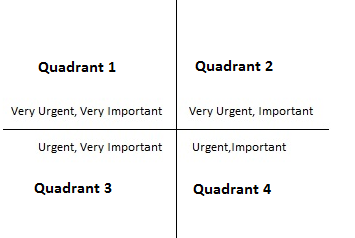
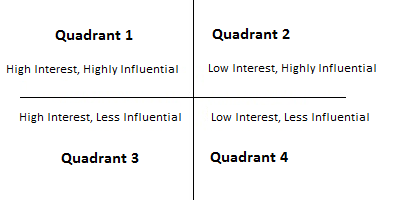
1 pointA typical English dictionary meaning: Urgent - requires immediate action or attention. Importance - Having high/great significance or value. Now let us take the problem statement where a person is looking onto Urgent tasks all the times and he/she is unable to focus on the important ones. Let me provide my ideas/views as how the person can deal with Urgent and Important ones, based on my experience. Taking the Bull by the Horns: When something is deemed as Urgent or important, you need to know how much Urgent it is and how important it is, especially when there are multiple tasks/activities? Are that Urgent activities/tasks need to be done in minutes, hours, days ? How important are those activities/tasks? Very important or Less important. If you have these information, it makes easy to prioritize things. Prioritization is the key aspect here, more so if you are dealing with multiple urgent and important activities/tasks. Let me split Urgent activities/tasks into two categories as 'Very Urgent' and 'Urgent'. Very Urgent activities could be, say ,it should be done in seconds/minutes. Urgent activities could be say can be done in few hours/ in 1 or 2 day's time (some cases in a week's time, may be). This is an arbitrary classification for example purpose. In reality, this may vary from team to team. Similarly let us classify Important activities as 'Very Important' and 'Important'. Now, having a matrix of which of these Urgent and Important activities to be taken, will give the right prioritization. The matrix can be as follows Based on the matrix, activities/tasks that fall in these respective quadrants, can be prioritised accordingly. The next question will be how to decide which activities/tasks can come into each of these categories. [Note: Having some sort of such a matrix helps you to provide more clarity and ease of use]. The stakeholders need to provide the classification of Urgent and Important activities/tasks. Now there comes the next issue ? What if there are several activities/tasks which are in Quadrant 1(Very Urgent,Very Important). How will you prioritize all such activities/tasks? May be if the stakeholders are collocated, you can pull all folks to a meeting room quickly and get this sorted. In case, if all the stakeholders are in different places, schedule a quick call (may be send a mail invite and then share the bridge details) and get this sorted. If stakeholders are at different time zones, then accordingly schedule the call (if the activities/tasks give you that much freedom of time !!). But there is also another critical way of doing this exercise. You need to know 2 things: Which Stakeholder is powerful(read influential) in the customer's organisation (If stakeholders are also from your Organisation - you need to know that as well) and which of the stakeholder has high interest in these/activities/tasks(activities/tasks which may be relevant to him/her). Once you have that information, whichever stakeholder has high influence and high interest, accordingly you need to perform your activities/tasks, as per that order of combination of the two aforementioned factors(from high to low). Let us see that Stakeholder matrix. As we have seen above, you can define the quadrants on your own way. Content in Quadrant 2 can be in Quadrant 3 as well, for instance. Objective is that you need to take into fact that in reality, a stakeholder with high interest (on your project activities/tasks) and more influence (on the organisation be it customer or service provider/vendor) will have more say and more so if it is from customer end. Such a stakeholder involved activities/tasks will take higher precedence for getting addressed. Ultimately subsequent activities/tasks would need to get addressed. In that case, depending on your organisational situations, activities/tasks related to Quadrant 2 or Quadrant 3 might happen. Let us see some examples for 'Urgent' and ' Important' ones using the matrix that was defined earlier for Urgent and Important activities/tasks. Before seeing some examples, let us not forget the fact that the definition or the classification for 'Urgent' and 'Important' activities can be or would be given by only by the stakeholders relevant to those activities/tasks. Our interpretation of those activities/tasks could be different from the stakeholders's, but it does not matter. Only the Stakeholder definitions /classifications need to be taken care. Ex1: Healthcare Industry Let me categorize the activities/tasks, as per the 4-quadrant matrix. Very Urgent and Very Important Activity : Doctor to do a life-saving operation on a patient - This becomes very important because its about saving of a life and it requires immediate attention. In general anything related to Security and Safety of anything will normally come under Very Urgent and Very Important. Very Urgent and Important Activity : Specialist Doctors need to get updates on multiple patients's status who underwent operations on a given date. Urgent and Very Important Activity: Post the operation, after the patient had stayed in ICU, ensuring the patient has the requisite amenities in his/her allocated/dedicated room. Urgent and Important Activity: Specialist Doctor who did the operation need to be informed of patient conditions by Duty Doctors, once patient is shifted to a private room (for observation purpose- to see effect of post operation) . Note : All these classification of Urgent and Important activities/tasks, can vary from individual to Individual or from Organisation to Organisation. They are defined by the relevant stakeholders. Ex2: IT industry Very Urgent and Very Important Activity: Production Support - Critical Incident(Severity 1) closure. Very Urgent and Important Activity: Delivery of a key functionality for a key/critical end-user. Urgent and Very Important Activity: All System Integration Testing(SIT) and User Advanced Testing (UAT) defects to be closed within a week. Urgent and Important Activity: Adherence to Coding Standing standards. Conclusion: In an ever demanding world, where there is plenty of scope for business to grow exponentially, there will be many urgent and important activities, that need to be done on a routine basis. With methodlogies like Agile and with advanced technologies, these challenges are admirably met, most of the times. But these do not come without any challenges/constraints. The workforce of an Organisation do have lot of activities/tasks and quite some of them could be urgent and important ones. Most of the times, the workforce team is calibrated to the rigours of such activities/tasks. That could be part and parcel of the team's work nature. Hence some teams may not feel the heat. But there could be scenarios where the team(s) or individuals might run into new projects/new set of activities/tasks that has many urgent and/or Important requirements to be dealt with. How to deal with such scenarios? This is where you need to have Stakeholder inputs based on the matrix what we saw for Stakeholder and then have the priorities set. If you have only one Stakeholder, then you can get it from that Stakeholder. There are very good prioritization techniques such as Kano Model, MoSCoW model (for Agile specific projects) . For instance, Kano Model clearly articulates in terms of absolute necessity (Must Be) as the first priority. So put your Very Urgent and Very Important activities/instances on that front. Your sole objective is to make as what should be addressed first if there are multiple urgent and important tasks. For that whichever technique(or combination of techniques) is going to help, you can choose . But the above techniques are proven ones. In terms of specifically finding the Important ones, you can ask the stakeholder about the values (maybe in terms of ROI), a particular activity/task can bring in. Remember the customer/stakeholder might also be interested in having a MVP(minimum viable product), at the earliest. Therefore, with this kind of approach to Urgent and Important activities/tasks, the person can prioritise his/her activities/tasks.
 1 point
This leaderboard is set to Kolkata/GMT+05:30