Skip to content
View in the app

A better way to browse. Learn more.

Benchmark Six Sigma Forum

A full-screen app on your home screen with push notifications, badges and more.

To install this app on iOS and iPadOS
  1. Tap the Share icon in Safari
  2. Scroll the menu and tap Add to Home Screen.
  3. Tap Add in the top-right corner.
To install this app on Android
  1. Tap the 3-dot menu (⋮) in the top-right corner of the browser.
  2. Tap Add to Home screen or Install app.
  3. Confirm by tapping Install.

Vishwadeep Khatri

Administrators
  • Joined

  • Last visited

Everything posted by Vishwadeep Khatri

  1. India’s data centre capacity is set to grow at a 26% CAGR over the next five years, according to a report. It highlighted that AI-led infrastructure demand alongwith rising cloud and digital adoption is expected to nearly triple India’s built data centre capacity from 1.6 GW in 2025 to 5 GW by 2030. View the full article
  2. Global companies are using AI in India to create advertisements. This technology helps them produce images and videos faster. Companies like Kimberly-Clark and Target India are bringing more creative work in-house. This shift is changing the advertising industry. AI is speeding up campaign creation and reducing costs for businesses. View the full article

  3. Youtube will now automatically identify AI-generated videos. This new policy will inform viewers if content is created using artificial intelligence. Previously, creators had to self-report AI usage. This change comes as AI technology advances rapidly. Creators can challenge incorrect labels. The flagging will not affect video recommendations. Other platforms like Spotify are also implementing similar AI detection measures. View the full article
  4. The OpenAI Foundation is dedicating $250 million to address AI's impact on jobs and economies. This funding will support research, aid displaced workers, and explore broader economic benefit distribution. The foundation aims to proactively manage AI's rapid evolution. Initiatives will be announced later this year, with the foundation directly running some programs. View the full article

  5. Britain's top cyber spy, Anne Keast-Butler, warns that artificial intelligence is being used in new ways that threaten national security. She states that the nation is in a space between peace and war. Russia is actively targeting critical infrastructure and democratic processes. Allies must urgently increase cybersecurity efforts to stay ahead of evolving threats. View the full article
  6. Indian technology hubs are becoming major innovation centers. Global companies anticipate AI will speed up new product and intellectual property creation. This development is transforming routine tasks into complex work. India's skilled workforce and cost advantages continue to attract investment. Despite regulatory hurdles, patent filings are rising, indicating a growing contribution from these centers. View the full article
  7. Biohub, a venture by Mark Zuckerberg and Priscilla Chan, has launched a protein biology world model. This advanced AI tool aims to speed up drug discovery. The model learns from evolutionary data to understand protein functions. Researchers have already used it to design new protein binders for cancer and immune targets. View the full article
  8. India is rigorously testing its critical financial and government software for vulnerabilities to Anthropic's powerful Mythos AI. Tech giants Infosys and TCS are involved, while CERT-In examines national infrastructure like Aadhaar. This proactive measure stems from global concerns about Mythos' dual potential for cybersecurity defense and attack. View the full article

  9. SK Hynix has crossed the $1 trillion market value mark. This milestone follows similar achievements by rivals Samsung Electronics and Micron Technology. The surge is driven by strong demand for AI memory chips. This has boosted South Korea's KOSPI index to record highs. Investors are showing significant interest in semiconductor stocks. View the full article
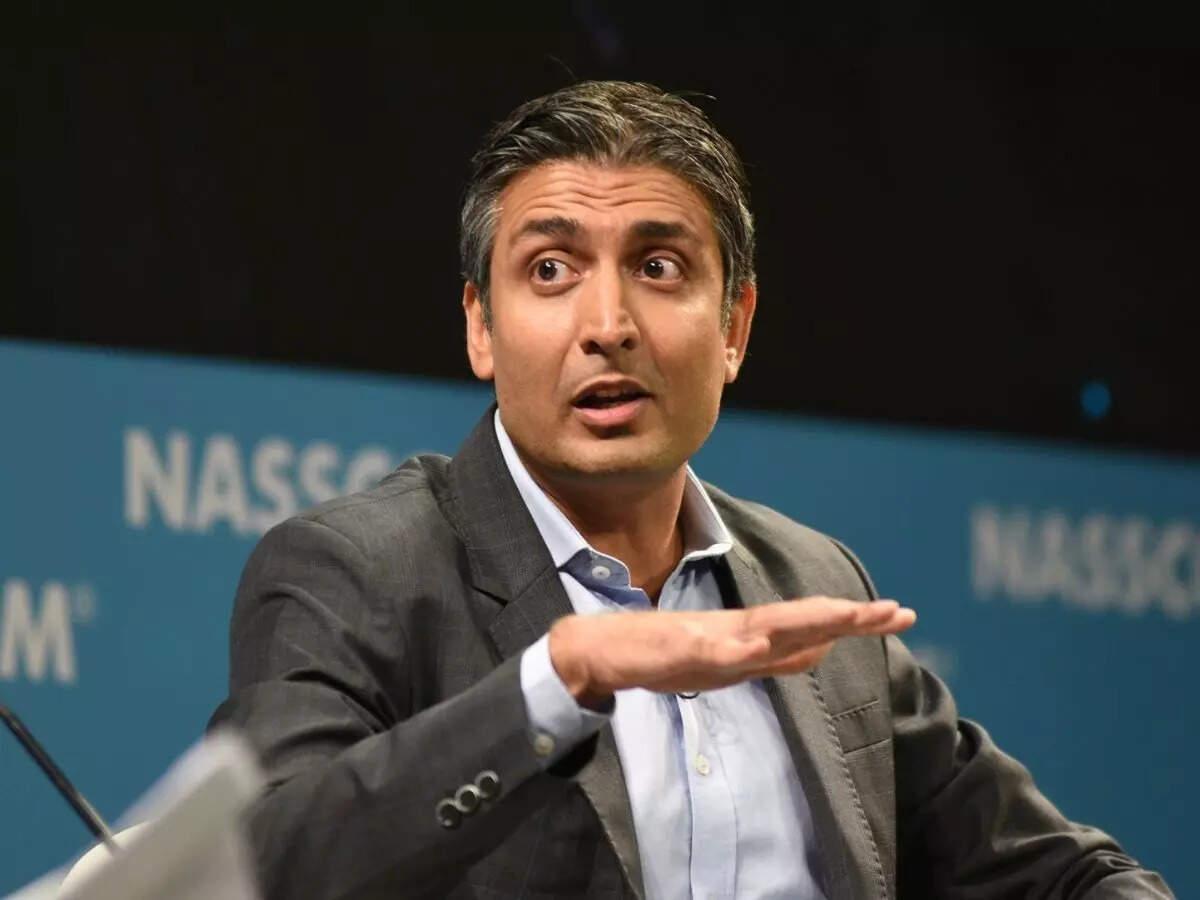
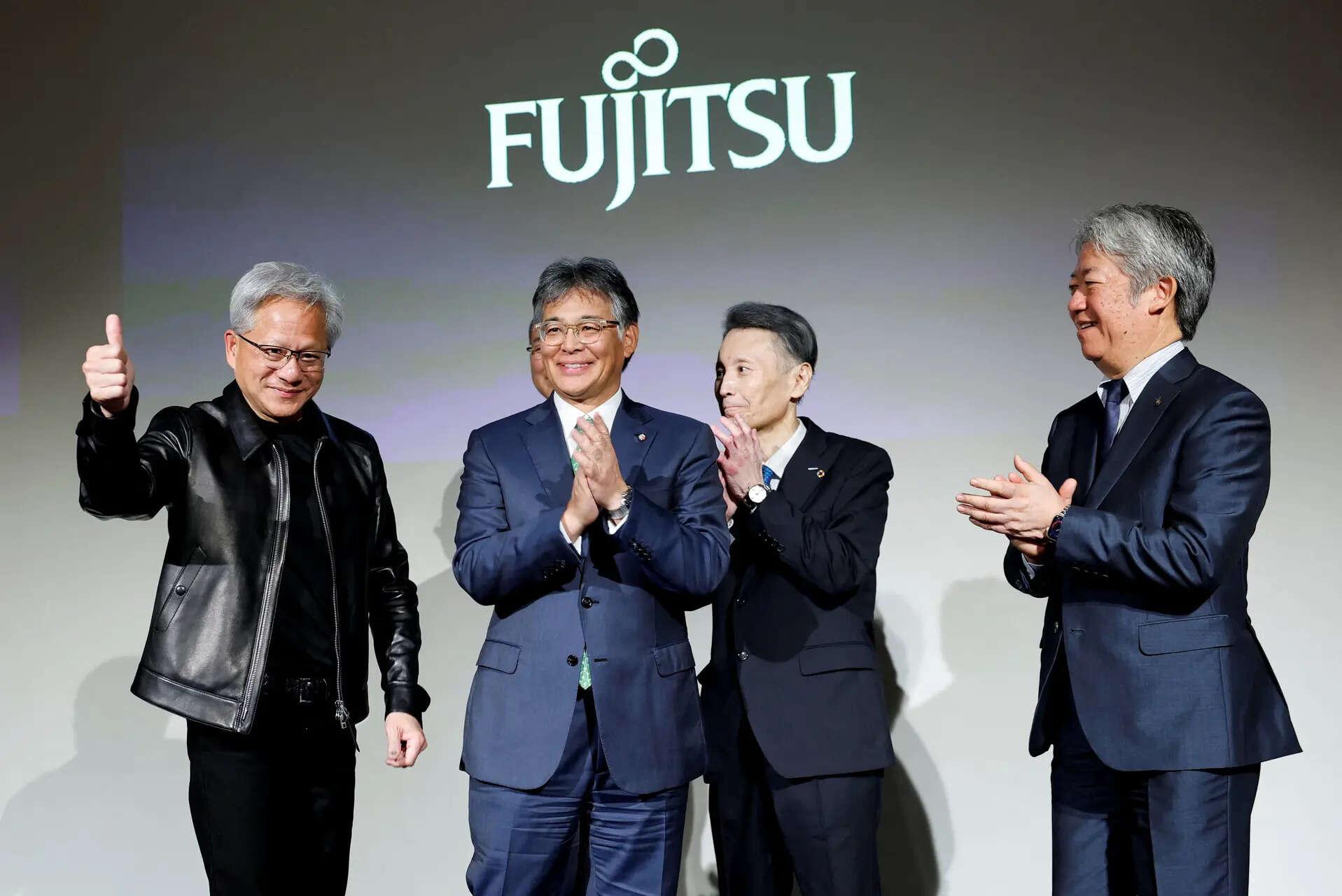
  10. Nvidia CEO Jensen Huang declared Taiwan the heart of the AI revolution. He believes the island will be a global technology manufacturing center for years. Huang announced plans for Nvidia's new Taiwan headquarters. Groundbreaking is set for this year. The facility is expected to be operational by 2030. This marks a significant future investment. View the full article
  11. Bengaluru's Neysa and AI startup Pipeshift are joining forces. They aim to meet India's growing need for AI inference services. This partnership will tackle increasing costs and delays in AI adoption. India's AI market is projected to reach billions. The collaboration focuses on specialized, local AI systems. View the full article
  12. Global companies anticipate AI will boost new product and IP creation at Indian tech hubs, transforming routine tasks into complex innovation. Despite regulatory hurdles slowing local patent filings, India's skilled workforce and cost advantages continue to drive investment, positioning its centres for high-value work. View the full article
  13. Micron has reached a significant milestone, crossing $1 trillion in market value for the first time. This achievement highlights the company's strong performance. Its shares saw a substantial increase. This surge is linked to a brokerage firm raising its price target significantly. Micron is now recognised as a major beneficiary of the ongoing AI boom. View the full article
  14. Investment manager I Squared Capital has acquired 10 data centre facilities from Cogent Fiber for $225 million. This move signals a significant investment in AI infrastructure. I Squared Capital plans to inject an additional $1 billion for upgrades and expansions. The deal focuses on data centres closer to end-users, crucial for AI inference. View the full article
  15. A new artificial intelligence centre of excellence in Karnataka is proposed to boost AI research and public sector innovation. This centre will unite state government, industry, startups, and academia. It aims to develop scalable AI solutions and policy frameworks. Focus areas include public service delivery and multilingual technologies. Safeguards for privacy and fairness are also emphasised as AI adoption grows. View the full article
  16. The shift reflects a structural change in ​how multinationals use their India operations, moving beyond cost-focused support roles to centres that own core functions such as engineering, product development and analytics. View the full article
  17. Fundamentum Partnership has launched F2A, a Rs 3,000 crore frontier-tech investment platform focused on AI and deeptech startups. The firm will invest between Rs 40-90 crore in 12-15 companies over three years, targeting commercialization-stage businesses in sectors like semiconductors and robotics where India has strategic advantages. View the full article
  18. OpenAI CEO Sam Altman stated AI will not cause a global jobs apocalypse. He admitted his fears about white-collar job losses were exaggerated. Altman highlighted the irreplaceable human element in many jobs. He believes the future job market will be different than initially predicted. View the full article
  19. Pope Leo XIV has released Magnifica Humanitas, an encyclical on artificial intelligence. The document warns about concentrated AI power, job losses, and autonomous weapons. It calls for robust regulations and responsible development to ensure AI benefits humanity and avoids deepening inequality. View the full article
  20. Evaluation Summary and Winner AnnouncementAnswer 1 — Jamiu_Lasisi_LQ84Position: View B (Challenge Bex). Has specific example: Yes — Amazon warehouse algorithmic monitoring, Unilever responsible people analytics, and the NHS staff retention crisis. Reasoning quality: Strong. Cleanly distinguishes "AI identifies systemic conditions" from "AI flags individuals for differential treatment," and contrasts Amazon (individual-level) against Unilever (conditions-based) as the right model. ✅ Approved. Clear View B position with three well-matched industry examples and a tight conditions-vs-individuals framing. Answer 2 — rajan.arora2000Position: View B (Predict the pattern, never the person). Has specific example: Yes — ten dissected cases including IBM, Amazon recruiting AI, Wells Fargo, Zillow Offers, COMPAS, Target pregnancy model, Rosenthal & Jacobson, TCS vs Infosys FY22, Sangfor China, and H&M Nuremberg. Reasoning quality: Exceptional. Introduces a derived expected-value function with sensitivity analysis, coins "manufactured attrition," refutes Bex's IBM figure with the CNBC record, and answers four counterarguments to closure. ✅ Approved. The most rigorous submission — formal framework, dissected empirical record, and a deployable five-filter protocol. Answer 3 — V V S Narayana RajuPosition: View A (with intellectual challenge to View B). Has specific example: Yes — IBM predictive attrition program and Salesforce's "Stay Conversation" framework. Reasoning quality: Strong. Argues inaction is "negligence dressed as ethics," makes a sharp equity argument that informal retention favours the politically visible, and cleanly separates "AI surfaces signal; human conducts conversation." ✅ Approved. Forceful View A position with two relevant industry examples and an unusual equity-from-AI argument. Answer 4 — Vikas ChoudharyPosition: View A. Has specific example: Partially — references "large IT and consulting firms" generically rather than a named case. Reasoning quality: Moderate. The "supportive interventions, not labeling or surveillance" framing is correct but the argument is short and the example is non-specific. ✅ Approved. Clear View A position with adequate reasoning, though the example lacks specificity. Answer 5 — Poornima_Gupta_aZ3hPosition: View B (Diagnose systems, never score people). Has specific example: Yes — eight cases including Obermeyer healthcare cost-as-proxy, Amazon recruiting, banking SR 11-7 / fair-lending, Netherlands SyRI/toeslagenaffaire, UK A-level algorithm, Wells Fargo, and the NHS. Reasoning quality: Very strong. Builds a construct-validity attack ("the model doesn't measure intent, it measures resemblance to past leavers"), invokes the bank's own SR 11-7 doctrine reflexively, and proposes a multi-objective routing function with an identifiability penalty. ✅ Approved. Rigorous View B position with banking-sector reflexivity, regulatory grounding, and an actionable resolution gate. Answer 6 — Bhaskar_Sambamurthy_vKbHPosition: View A (systemic implementation). Has specific example: Yes — EY India consulting context with Jira/CRM/HR-survey data streams, framed against McKinsey and Deloitte 2026 research. Reasoning quality: Strong. Builds a "Systemic Intervention Framework" that uses metadata not message content and triggers cohort-level structural change, anchored in published consulting research. ✅ Approved. Clear View A with a sector-specific operating model and named research grounding. Answer 7 — Shobha Rani_VS_jI8YPosition: View B (Reject as currently operationalized). Has specific example: Yes — NASA Challenger, Lehman Brothers, General Motors, MIT research labs, McKinsey partnership pipeline, and Datadog (positive counter-case). Reasoning quality: Very strong. Introduces "Prediction-Induced Concentration Logic Collapse" as the central mechanism, builds a robustness-vs-mean-minimization frame, and includes deployment KPIs and a context-conditional decision matrix. ✅ Approved. Distinctive epistemic framing with diverse historical case studies and a calibrated context-dependent recommendation. Answer 8 — Sanmathi_Naik_DgYEPosition: View A. Has specific example: Yes — IBM predictive analytics and Amazon fulfillment-center workforce analytics. Reasoning quality: Moderate. Correctly frames AI as an early-warning system enabling constructive intervention, but reasoning is largely a list of supportive actions rather than a layered argument. ✅ Approved. Clear View A with two named examples; concise but adequate. Answer 9 — AnmolPosition: View A (strong support). Has specific example: Yes — BPO sector (Gurugram-based BPO, US-healthcare-account agents) and Sales & Marketing (Mumbai FMCG, Bengaluru digital agency). Reasoning quality: Moderate. Multiple industry vignettes with quantified outcomes, but the examples are illustrative/hypothetical rather than documented cases, and counter-arguments are not engaged. ✅ Approved. Clear position and breadth of industry application, with the caveat that the cases are illustrative. Answer 10 — AbilashMohandasPosition: View B (challenge prevailing view). Has specific example: Yes — banking / regulated financial services governance, with conduct-risk amplification and GDPR exposure. Reasoning quality: Strong. Coins the "Trust-Performance Paradox" and "Psychological Safety Cliff," and ties the failure mode specifically to conduct-risk hiding in regulated banking. ✅ Approved. Clear View B with a domain-specific (banking/regulated) lens and well-named mechanisms. Answer 11 — Kiran KaviPosition: View A (with ethical guardrails). Has specific example: Yes — Microsoft Workplace Analytics, with the named outcome of 23% voluntary-turnover reduction in the affected division over 18 months. Reasoning quality: Moderate-to-strong. The "focus on systems, not individuals" pivot is clean and the Microsoft case is concrete, though counter-arguments and trade-offs are only lightly engaged. ✅ Approved. Clear View A with a specific, named case and a quantified outcome. Answer 12 — Anjali_Mali_H0mpPosition: View A. Has specific example: Yes — Walmart predictive analytics for store-associate attrition (predictable scheduling, shift-preference control, early manager conversations). Reasoning quality: Moderate. Operational framing is sound and the Walmart case fits the "act on conditions, not employees" thesis well, but the argument is brief. ✅ Approved. Clear View A with a well-chosen frontline/retail example. Answer 13 — Varsha_Pradeep_loRgPosition: View A (with a key design refinement). Has specific example: Yes — IBM, with the design principle that managers receive the underlying signal ("declining engagement, workload above team average") rather than a flight-risk score. Reasoning quality: Strong. Engages View B's self-fulfilling-prophecy concern directly and proposes a "signal not label" design as the resolution. ✅ Approved. Clear View A position with an unusually crisp design distinction (signal vs label) that addresses View B's strongest concern. Answer 14 — Kumar_Love_s9D0Position: Challenges Bex (View B-aligned). Has specific example: Yes — Meta 2026 monitoring backlash and Amazon "tokenmaxxing" behaviour under AI-platform pressure. Reasoning quality: Strong. Names Pygmalion, Goodhart-style metric gaming, and the limits of measuring "invisible work," then pivots to Organisational Network Analysis as the right unit of measurement. ✅ Approved. Clear View B position with contemporary 2026 industry examples and a constructive ONA-based alternative. Answer 15 — Viraj KhandesagarPosition: View A (with ethical safeguards). Has specific example: Yes — IBM HR analytics and Microsoft workplace insights for workload/burnout/collaboration. Reasoning quality: Moderate. Standard supportive-intervention framing and two well-known examples; the layered counter-argument analysis is light. ✅ Approved. Clear View A with named examples and an explicit safeguards posture. Answer 16 — Amrita RKPosition: View A. Has specific example: Yes — IBM, Microsoft, SAP, and Unilever across technology, consumer goods, and enterprise software. Reasoning quality: Strong. Names model architectures (Transformers, Random Forest + SMOTE, SHAP), addresses View B as "moral convenience," and brings a multi-company evidence base. ✅ Approved. Clear View A with technical grounding and breadth of cross-sector examples. Answer 17 — Anshuman MishraPosition: View A. Has specific example: Yes — IBM, framed around proactive skill matching and systemic intervention rather than individual penalty. Reasoning quality: Moderate-to-strong. The "diagnostic for systemic failure, not personal indictment" framing is clean and View B's concerns are engaged as implementation problems. ✅ Approved. Clear View A with the IBM case used precisely as a systemic-diagnostic example. 🏆 Winning Answer: rajan.arora2000 (Answer 2) Why it wins: rajan.arora2000's submission is the strongest on all three criteria. On clarity of position, the answer is declared without qualification in the opening sentence ("Do not act on AI attrition predictions at the level of the named individual") and the system-vs-name line is held consistently throughout. On quality of reasoning, the submission is uniquely rigorous: it builds a derived expected-value function (V = α·R·p − β·C·r − γ·H·v − δ·F·b) and demonstrates the sign-flip from +0.90 to −0.23 between non-reactive and reactive regimes at identical 95% precision, performs sensitivity analysis to show the verdict is structural rather than coefficient-engineered, coins "manufactured attrition" as a named hazard, and answers four counterarguments (escalation of commitment, survivorship, retrain-the-AI, and the slippery-slope objection) to closure. On relevance and specificity of examples, the answer dissects ten cases spanning IBM, Amazon recruiting AI, Wells Fargo, Zillow Offers, COMPAS, Target, Rosenthal & Jacobson, TCS vs Infosys FY22, Sangfor China, and H&M Nuremberg — each with quantified outcomes, sourced citations, and an explicit "differential vs. a genuine act case" column. The Zillow and TCS-vs-Infosys cases stand out: Zillow as the cleanest empirical proof of reflexivity (the bid-bot deforming the market it was reading) and Indian IT FY22 as a matched-pair controlled comparison that directly answers the survivorship objection. Compared to the next strongest answers — Poornima_Gupta_aZ3h's construct-validity attack with the SR 11-7 banking reflexivity, and Shobha Rani_VS_jI8Y's Prediction-Induced Concentration Logic Collapse with NASA/Lehman/GM cases — rajan.arora2000's submission exceeds them on the formal precision of the value-function derivation, the breadth and global span of the empirical record, the completeness of objection-handling, and the actionability of the Five-Filter Selection Table with its Reactivity Gate, Firewall (N ≥ 5 cohort floor), System-Lever Menu, and paired success-and-canary KPIs.
  21. CAISA Forum Question 875If AI can identify the “best” solution faster than teams can, should organizations reduce collaborative problem-solving sessions? A large operations organization uses AI to analyze recurring process problems and recommend solutions. In several cases, the AI is able to: identify likely root causes within minutes, suggest corrective actions quickly, and produce solutions that outperform ideas generated through long workshops and team discussions. As a result: issue resolution becomes faster, meeting time reduces, and decision-making accelerates. However: cross-functional discussions decrease, employees feel less ownership over solutions, and teams worry that collaborative learning and innovation may slowly weaken over time. This creates a real dilemma: View A — Rely more on AI-driven problem-solving.If AI consistently produces faster and better solutions, organizations should reduce time spent on lengthy collaborative exercises and focus on execution speed. View B — Preserve collaborative problem-solving.The value of team problem-solving is not just the final solution. Collaboration builds understanding, alignment, learning, and long-term capability that AI alone cannot create. Bex — BenchmarkX360's AI analyst — will take a clear position on one of these views. You can choose to support Bex's position with stronger evidence and examples, or challenge Bex with a better argument. Either approach can win. Which view do you support — and why? Provide a specific operational, product, or organizational example to support your position.⚠️ Answers that do not take a clear position will not be approved. ⚠️ "It depends" answers will not be approved. 💡 Participants are free to use AI tools — clarity, insight, and contextual relevance will determine the best answer. 🏆 The best answer will be selected on the basis of:· Clarity of position taken · Quality of reasoning and argument · Relevance of operational, product, or organizational example · Ability to go beyond or against Bex's analysis
  22. Pope Leo XIV's encyclical, "Magnifica Humanitas," urges robust AI regulation and ethical development for humanity's good, not profit. He warned against AI in warfare and the concentration of power, calling for external oversight and a slowdown in development to prioritize human dignity and the common good. View the full article
  23. ​​But 2026 so far marked some of the biggest executive talent movements among frontier AI companies back and forth. From OpenAI and Anthropic to Google DeepMind, Meta and Thinking Machines Lab, the industry is witnessing one of the fiercest talent wars. Himanshi Lohchab lists some of these crucial leadership movements: View the full article
  24. The internet’s new junk food is here. Tanya Pandey & Himanshi Lohchab find out why AI slop is flooding your feed and shrinking your attention. View the full article
  25. The share of entry-level hiring in the sector has fallen to around 15% in 2025 from 28% in 2024 as companies focus more on AI, cloud, cybersecurity and automation-focused roles. Emerging technology roles account for nearly 52% of hiring demand and are expected to touch 60% by the end of 2026, signalling a broader shift away from campus-led pyramid hiring model, experts said. View the full article

Account

Navigation

Search

Search

Configure browser push notifications

Chrome (Android)
  1. Tap the lock icon next to the address bar.
  2. Tap Permissions → Notifications.
  3. Adjust your preference.
Chrome (Desktop)
  1. Click the padlock icon in the address bar.
  2. Select Site settings.
  3. Find Notifications and adjust your preference.