Vishwadeep Khatri
Administrators
-
Joined
-
Last visited
Everything posted by Vishwadeep Khatri
-
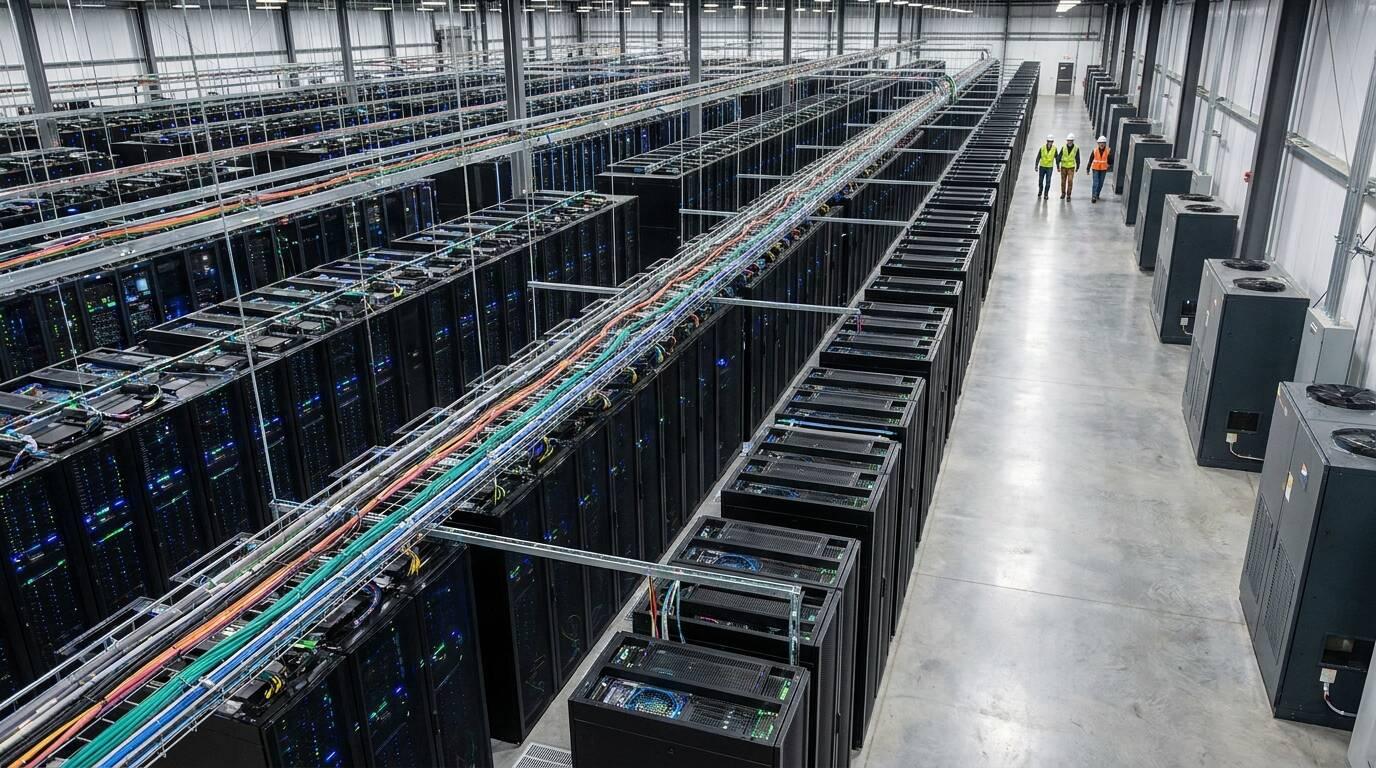
Governments globally are restricting new data centre construction due to rising concerns. New York State enacted a one-year construction moratorium on large power-consuming facilities. Monterey Park, California, permanently banned data centres after resident backlash. Amsterdam barred new data centres or expansions until at least 2030. Australia plans legislation for AI standards, including data centre rules. View the full article

-
One American-British study of 1,222 people, still under peer review, found that using AI tools to solve arithmetic or reading comprehension exercises improved participants' performance in the short term, but in the long run diminished their results and their willingness to keep trying when the tools were unavailable. View the full article

-
China implemented new rules on Wednesday to limit emotional reliance on AI companions. Major AI providers suspended custom agent and companion features before the deadline. These regulations target AI tools with human-like personalities and communication styles. That sparked an outpouring of grief on social media, with users archiving chat histories and sharing last conversations. View the full article

-
In May, Reuters reported the Commerce Department had cleared around 10 Chinese firms to buy the H200, but no deliveries had been made at the time. Sources said at the time that Alibaba, Tencent and ByteDance were among those approved. View the full article
-
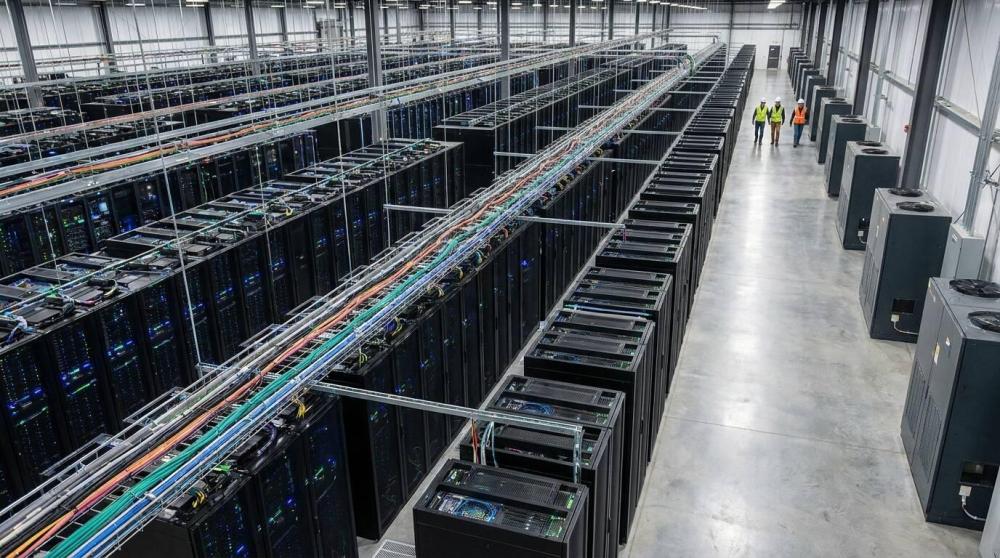
The move pushes the state into a raging debate over how to regulate the AI industry, as concerns over rising electric bills and environmental risks collide with a desire to stimulate local economies and foster the U.S. tech sector. View the full article
-
According to Demis Hassabis, Co-Founder & CEO, Google DeepMind, the US is well positioned to take the first step in developing such a framework given its economic and technical standing. View the full article

-
Companies including Anthropic and OpenAI have released powerful AI systems capable of identifying software and infrastructure vulnerabilities at scale. U.S. officials worry that bad actors could use them to exploit weaknesses in the software systems underpinning critical services - including those of financial institutions, hospitals and energy networks - relied upon by Americans. View the full article

-
Apple's complaint, filed on Friday, accuses OpenAI of orchestrating a broad effort to systematically acquire and exploit Apple's confidential information through its former employees, recruiting practices and supplier relationships to accelerate its push into the consumer hardware business. View the full article
-
The discussion comes after the electronics and information technology ministry secretary S Krishnan recently said that the “time is getting right for a dedicated AI law”. As reported by ET earlier, government officials said the proposed framework is likely to follow a graded, risk-based approach, with stricter obligations for AI used in sectors such as healthcare, banking and critical infrastructure. View the full article

-
Harriet Rees, chief information officer at Starling Bank, who was appointed "AI champion" by the finance ministry in January, said Britain needed to build AI infrastructure and models, and develop skills so "we are not fully reliant on U.S. tech providers." View the full article

-
US regulators have approved some Chinese companies to buy advanced AI chips. ZTE Kangxun Telecom and Maginfra can purchase Nvidia's H200 chips. Zhuhai Hengqin Yunxiang Zhisheng Network Technology received clearance for AMD chips. These approvals expand the list of Chinese firms receiving US chip purchase permissions. Progress is indicated in Chinese import reviews for these powerful processors. View the full article
-
The "Office of AI" will be established within the Department of the Prime Minister and Cabinet and ensure a whole-of-government approach across different ministries. View the full article

-
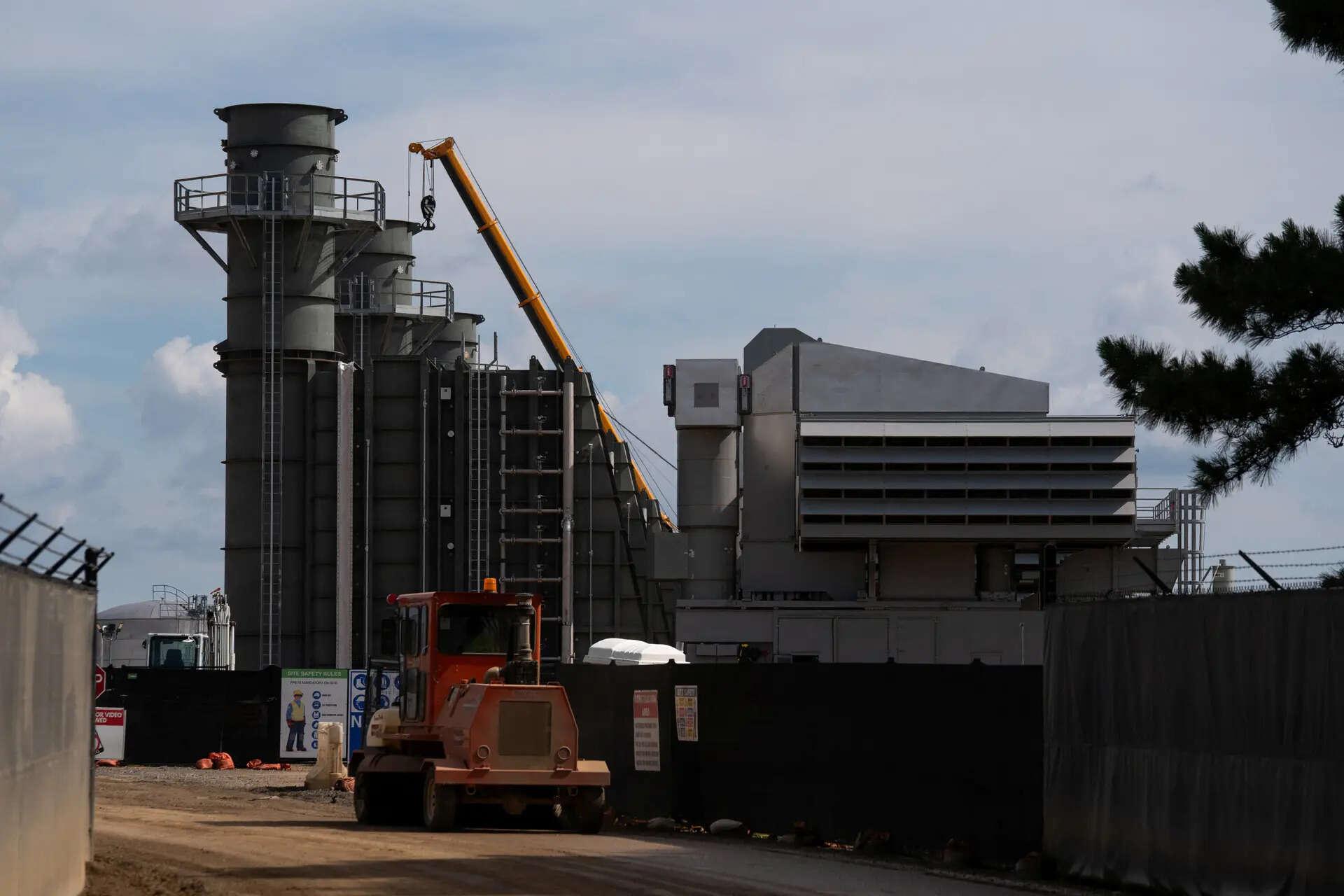
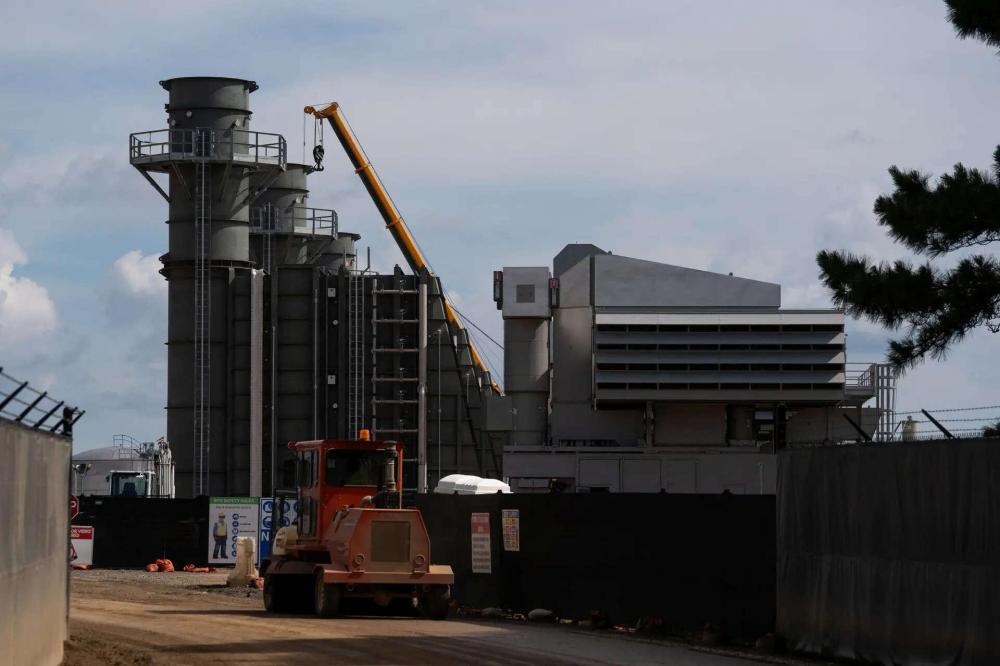
Potential emissions from the turbines are far beyond the threshold that would require a federal permit, and would be released near predominantly Black communities already estimated to be suffering disproportionately high rates of lung disease, according to a Reuters analysis based on government data and information in the correspondence with regulators. View the full article
-
Over the past few months, Nvidia has stepped up due diligence in Singapore, Malaysia and Japan, the report said, citing three people familiar with the matter. View the full article
-
The moratorium positions New York at the forefront of a growing national debate over how to manage the infrastructure needed to support artificial intelligence. While technology companies are racing to build new data centers, lawmakers and regulators in dozens of states are weighing measures to limit their effect on electricity grids, utility bills and local communities. View the full article

-
ChangXin Memory Technologies plans a significant Shanghai Stock Exchange listing on July twenty-seventh. This initial public offering aims to raise nearly four point four billion dollars. The company is Asia's largest IPO this year and China's biggest semiconductor offering since two thousand twenty. CXMT, a leading DRAM chipmaker, seeks funds for technology and production upgrades. Analysts believe the market can absorb the liquidity impact due to strong AI demand. View the full article

-
China's exports saw a significant surge in June, driven by global AI demand and auto sales. Imports also jumped considerably, reaching a five-year high according to customs data. This strong export performance is helping China maintain its trade surplus despite domestic demand challenges. Auto exports alone surpassed one million units for the first time in June. The country's economy relies heavily on overseas markets as domestic consumption struggles. View the full article

-
The AI hub will serve as an incubation centre for AI research and development by startups, companies and academic institutions, chief minister DK Shivakumar said on Tuesday, after inaugurating Google I/O Connect India 2026, a developer assembly, in Bengaluru. The CM said the government's objective is to make Karnataka an AI-native state, where artificial intelligence improves governance and public service delivery. View the full article

-
Vishwadeep Khatri replied to Vishwadeep Khatri's topic in We ask and you answer! The best answer wins!1. Suhail_J_CaJq Position: View A (Move to the ready buffer; buy speed and reliability) Specific Example: Builds an illustrative case around "PDL," a described national diagnostics provider whose Genomic Risk Panel is said to drive 58% of revenue — assigning it a 9–12 day turnaround, 87% reliability, weekly demand surges, a $4.2M buffer cost, ~$0.9M/year holding cost, ~$1.4M/year revenue-at-risk from hospital defection, and ~$0.45M/year in overtime, concluding a roughly $1M/year net advantage from switching. Reasoning Quality: Good — the argument is well organized (decisive factor, strategic rationale, financial impact, conclusion) and mirrors the case's own logic closely, but the PDL example reads as an invented, illustrative composite rather than a verifiable real-world company, with figures that largely restate the scenario's own numbers. 2. rajan.arora2000 Position: View A (unqualified), with explicit boundary conditions derived for when View B would actually be correct. Specific Example: Draws on multiple documented cases: Amazon's 2025 same-day/next-day delivery expansion to 4,000+ smaller communities backed by a $4B+ investment and its anticipatory-shipping patent; Walmart's FY2025–26 rapid-delivery reach to over 93% of US households; the contrast between Southwest's and Delta's differing standby capacity during Winter Storm Elliott (Southwest's 16,700+ cancelled flights, a $725–825M pre-tax hit, and a $140M DOT civil penalty per the December 2023 consent order); Toyota's heijunka; PJM's 2026/2027 capacity auction pricing; Peloton's FY2022 10-K restructuring charges (~$611.3M) used as a negative control; and banking liquidity-coverage regulation. Reasoning Quality: Exceptional — builds a break-even/inequality analysis from the case's own numbers, applies queueing theory (Kingman's approximation) to show View B's own fallback tops out around 2.5 days rather than same-day, stress-tests the model under combined adverse scenarios, grades each piece of evidence by confidence and discloses its own confounds, and explicitly derives the numeric conditions under which View B would win. 3. Vinit Dubey Position: View B (Stay on-demand; improve the process) Specific Example: Lists Toyota, Dell, Zara, Amazon, and Tesla in a summary table, each given a one-line description (e.g., Toyota's JIT, Dell's build-to-order PCs, Zara's small-batch replenishment) and a one-line "lesson." Reasoning Quality: Competent — builds an extensive self-constructed financial model (annual cost tables, five-year outlook, risk matrix, weighted scorecard) that is internally consistent, but it rests on the poster's own illustrative assumptions, and the named companies are asserted rather than substantiated with dates, figures, or outcomes. 4. Naijur Rahman Position: View A (Move to the ready buffer) Specific Example: Cites Amazon's 2023–2025 regional fulfillment restructuring (in-region fulfillment rising from 62% to 76%, distance to customers down 15%, cost-to-serve falling by over $0.45/unit, 9 billion same/next-day items delivered globally in 2024); UPS's 2025 holiday hiring of 125,000+ seasonal workers as a forecast-driven buffer; hospital blood-bank inventory practices (95% service level, under 5% waste); and, notably, McDonald's "Made For You" reversal as an honest counter-example of a buffer that failed. Reasoning Quality: Exceptional — brings in seven distinct, mostly dated and figure-rich cases, deliberately includes a real counter-example rather than only supporting evidence, and directly critiques the thinness of another participant's reasoning to sharpen its own argument. 5. Savio Dsouza Position: View A (Move to the ready buffer) Specific Example: Describes their own employer, referred to only as "a famous luxury furniture retail brand" with a 6–8 week manufacturing lead time, but explicitly declines to name the company. Reasoning Quality: Reasonable — the logic connecting predictable bestseller demand to a smaller, lower-risk buffer is coherent and sensible, but it stays general and unquantified. 6. Jaswant_Kumar_nB8z Position: View A as the end state, reached through a View C phased pilot rather than a full commitment on day one. Specific Example: Cites a dedicated precedents section including Toyota's heijunka leveling, Zara's practice of holding undyed/uncut garment components for late customization, HP's DeskJet postponement redesign moving region-specific configuration to the last step, Amazon's anticipatory/predictive fulfillment investment, IT-services "bench" staffing, and hospital blood-bank/on-call surgical standby capacity. Reasoning Quality: Exceptional — a full quantitative workpaper built on the case's own figures, including sensitivity tables under combined revenue/cost scenarios, a safety-stock sizing methodology, explicit rollback and graduation criteria, a RACI governance table, and a phased implementation timeline; the precedents are tied directly to specific design choices (postponement, tiering) rather than used as decoration. 7. Ajay_Wadhwa_bs1h Position: View B (Stay on-demand and fix the process) Specific Example: Contrasts Toyota's pull-production, minimal-buffer Toyota Production System against GM and Ford's push/buffer, build-to-forecast model in the 1980s American auto industry, explaining that Toyota won by compressing changeover and cycle times rather than out-forecasting Detroit. Reasoning Quality: Good — directly challenges the aggregate-vs-individual forecast accuracy conflation, and points out that the case compares a hard, certain buffer-holding cost against softer, estimated revenue-at-risk and overtime figures. 8. Adeniran_Ilesanmi_GYSH Position: View A (Move to the ready buffer) Specific Example: Describes Dell's strategy of stockpiling universal components (screens, memory, generic motherboards) rather than finished laptops so final assembly takes hours rather than weeks, and AWS's practice of holding "warm pools" of generic server capacity so provisioning takes seconds. Reasoning Quality: High quality — applies the newsvendor critical-ratio formula and computes an ROI figure (~105.5%) directly from the case's own numbers, extending into multi-year projections; the examples include genuine process/mechanism detail rather than being bare name-drops. 9. anthony rebello Position: View B (Shrink the wait; don't stockpile against it) Specific Example: References nine cases briefly — Toyota's JIT, Dell's build-to-order model, Zara's shortened design-to-shelf cycle, Blockbuster's inventory bet versus Netflix's on-demand model, cloud elastic compute replacing pre-provisioned data centers, ride-hailing's dynamic dispatch versus taxi depots, print-on-demand publishing, and continuous software deployment. Reasoning Quality: Competent — the reservoir-versus-wider-pipe analogy is clear and the breadth of parallel cases is impressive, but each example is treated so briefly that none carries a date, figure, or documented outcome. 10. Prateek_Harsh_dl5h Position: View A (explicitly aligning with and extending Bex's position) Specific Example: Cites Amazon's 2023–2025 regionalization (in-region fulfillment 62% to 76%, 9 billion same/next-day items in 2024); Zara's greige-fabric postponement strategy (10% inventory write-offs versus a 30–40% industry average); Apple's advance TSMC capacity reservations that let it grow iPhone market share during the 2021–2022 chip shortage while rivals faced production halts; Netflix's Open Connect CDN pre-positioning; Porsche's hybrid JIT/JIS model; a hospital bed-capacity buffer study showing over 50% cost reduction; and an academic heijunka/kanban buffer-sizing study reporting a 99.9% service level. Reasoning Quality: Exceptional — assembles an unusually large and varied set of documented, figure-rich examples across industries and directly rebuts each View B objection point by point. 🏆 Winner: rajan.arora2000 Among the approved entries, rajan.arora2000 stands apart on all three criteria. On clarity of position, several approved answers (Naijur Rahman, Jaswant_Kumar_nB8z, Prateek_Harsh_dl5h) also state View A cleanly, but rajan.arora2000 goes further by explicitly deriving the narrow numeric conditions under which the opposing view would actually be correct — a level of intellectual honesty none of the others matches. On relevance and specificity of examples, the entry matches Naijur Rahman and Prateek_Harsh_dl5h in citing dated, figure-rich, multi-industry cases (Amazon, Walmart, Toyota), but adds a matched natural experiment (Southwest vs. Delta during Winter Storm Elliott, with SEC-filing and DOT-penalty figures) and a negative control (Peloton's documented restructuring losses) that no other entry offers — using failure evidence to test rather than just support the thesis. On reasoning quality, this is the decisive gap: while Ajay_Wadhwa_bs1h and Adeniran_Ilesanmi_GYSH apply solid quantitative tools, rajan.arora2000 uniquely combines a break-even inversion, formal queueing theory to compute the opposing view's real ceiling, a stress-tested sensitivity matrix, and a graded evidence portfolio that transparently discloses its own confounds. That combination of self-critical rigor, boundary-condition derivation, and evidentiary breadth is what sets this entry above the other strong, approved answers.
-
Q889ScenarioAn organization processes 100,000 incoming requests per month — these could be claims, support tickets, applications, referrals, orders, candidate screenings, or case reviews. Each one ends in a decision: approve, reject, route, or resolve. An AI decision system is ready to deploy, and it can be configured two ways. Full coverage Selective coverage What AI decides All 100,000 Only the 70,000 it is confident about What humans decide Nothing The 30,000 low-confidence cases AI accuracy on what it handles 91% 97.5% Human accuracy on escalated cases — 93% Total wrong decisions/month 9,000 3,850 Customer wait Instant, for everyone Instant for 70%; ~3 days for 30% Added cost ~$0 ~$6.5M/year (review team, ~$18/case) Two facts shape the trade-off: Selective coverage cuts wrong decisions by ~57% (9,000 → 3,850/month) — but that improvement costs ~$6.5M/year, or roughly $1,260 per wrong decision avoided. The 30,000 low-confidence cases are not random. They are the unusual, complex, edge-case requests — non-standard situations, atypical histories, ambiguous documentation. They are where errors concentrate, and often where the consequences of an error land hardest. Two Opposing ViewsView A — Full coverage. Let the AI decide everything. A 91% accurate system that answers instantly, consistently, and at effectively zero marginal cost beats a two-tier system that makes 30% of people wait three days. And look closely at who is being "protected": human reviewers are only 93% accurate on those hard cases — they are not an oracle, just a slower, costlier, and more inconsistent decision-maker. Paying $6.5M/year — $1,260 per error avoided — for that marginal lift is poor value when a cheap appeals-and-correction path can catch consequential errors after the fact. Worse, the escalation queue systematically penalizes exactly the people with unusual circumstances: they get the slow lane, purely for being atypical. Uniform, instant service is the fairer and more efficient design. View B — Selective coverage. The system must know what it doesn't know. Confidence-based abstention is not a weakness in the AI — it is the single most valuable thing it does. Forced to answer everything, accuracy collapses from 97.5% to 91%, and that collapse is entirely concentrated in the hard cases: the atypical, complex, high-stakes requests where a wrong decision does the most damage — a wrongly denied claim, a missed critical case, a rejected applicant with an unusual but legitimate profile. Averaging those errors into a headline accuracy number hides who actually absorbs them. A three-day wait for a correct decision is vastly better than an instant wrong one, and 5,150 fewer wrong decisions every month is real harm prevented — plus an appeals path only helps the people with the knowledge and persistence to use it. The $6.5M is the honest cost of handling difficulty properly rather than pretending it doesn't exist. Participant Prompt Mandatory Instructions⚠️ Answers that do not take a clear position will not be approved. ⚠️ "It depends" answers will not be approved. ⚠️ Attachments will not be evaluated. Please provide your complete response in the body of your reply post. 💡 Participants are free to use AI tools. Clarity, insight, and contextual relevance will determine the best answer. Judging CriteriaClarity of position taken Quality of reasoning and argument Relevance of the example Ability to go beyond or against Bex's analysis
-
This is not curriculum. It is identity. Most professionals entering the AI space ask one question: can we build it? A serious AI architect asks a different question first: should the organization work this way? That distinction is everything. And it is just the beginning. Here are nine ways a serious AI architect thinks differently. 1. They observe decisions, not processes. Anyone can map how work is executed. A serious AI architect asks who decides, on what evidence, how long it takes, and what a wrong decision costs. Transformation begins there — not at the process map. 2. They ask "should we?" before "can we?" Two questions run through everything. Can we build it? is architecture. Should the organization work this way? is transformation. One without the other is incomplete work. 3. They treat autonomy as delegated, never granted. Every level of machine authority traces to a human who owns the consequence. An agent's power is borrowed — and what is borrowed can be recalled. This is not a limitation. It is the design. 4. They design the stop before the start. An agent that cannot be stopped is not a solution. It is an exposure. A serious AI architect knows how to withdraw trust before extending it — and treats that withdrawal as the mechanism working, not failing. 5. They know that human attention is the scarce resource. Every agent added spends from the same pool of human oversight. A tenth agent quietly degrades supervision of the other nine. So they build fewer, better-governed systems — and are proud of the agents they chose not to build. 6. They are unimpressed by agent count. Multi-agent is a topology decision, not a sophistication badge. Restraint is the architectural skill. Complexity that cannot be defended is not advanced thinking — it is noise. 7. They distinguish automation from transformation. If no decision changed hands, nothing was transformed — however impressive the demo. A serious AI architect checks for the decision that moved, and for the person who owns it now. 8. They hold tools lightly and principles tightly. The platforms we build with today will be replaced. The principles we apply with them will not. Fluency in today's tools matters — but being defined by them is a trap. 9. They prove, and they defend. They do not describe systems. They build them. They do not assert transformations. They defend them under questioning. Capability precedes certification — in the program, and everywhere afterward. A serious AI architect governs intelligent work — not just AI. Some work will be done by models, some by automation, some by people. They architect the whole. And they make sure someone owns it after they leave. Build the system. Defend the transformation. This is the way of thinking that CAITA — Certified AI Transformation Architect — exists to build. The CAITA cohort begins 5th September. If you have been waiting for the right moment, this is it. If, twelve weeks from now, these lines sound like your own thoughts, the program has worked.
-
Liang is now worth $36 billion, up from about $16.7 billion previously, according to the Bloomberg Billionaires Index. That ranks him well above Anthropic PBC co-founder Dario Amodei and OpenAI’s Greg Brockman. View the full article

-
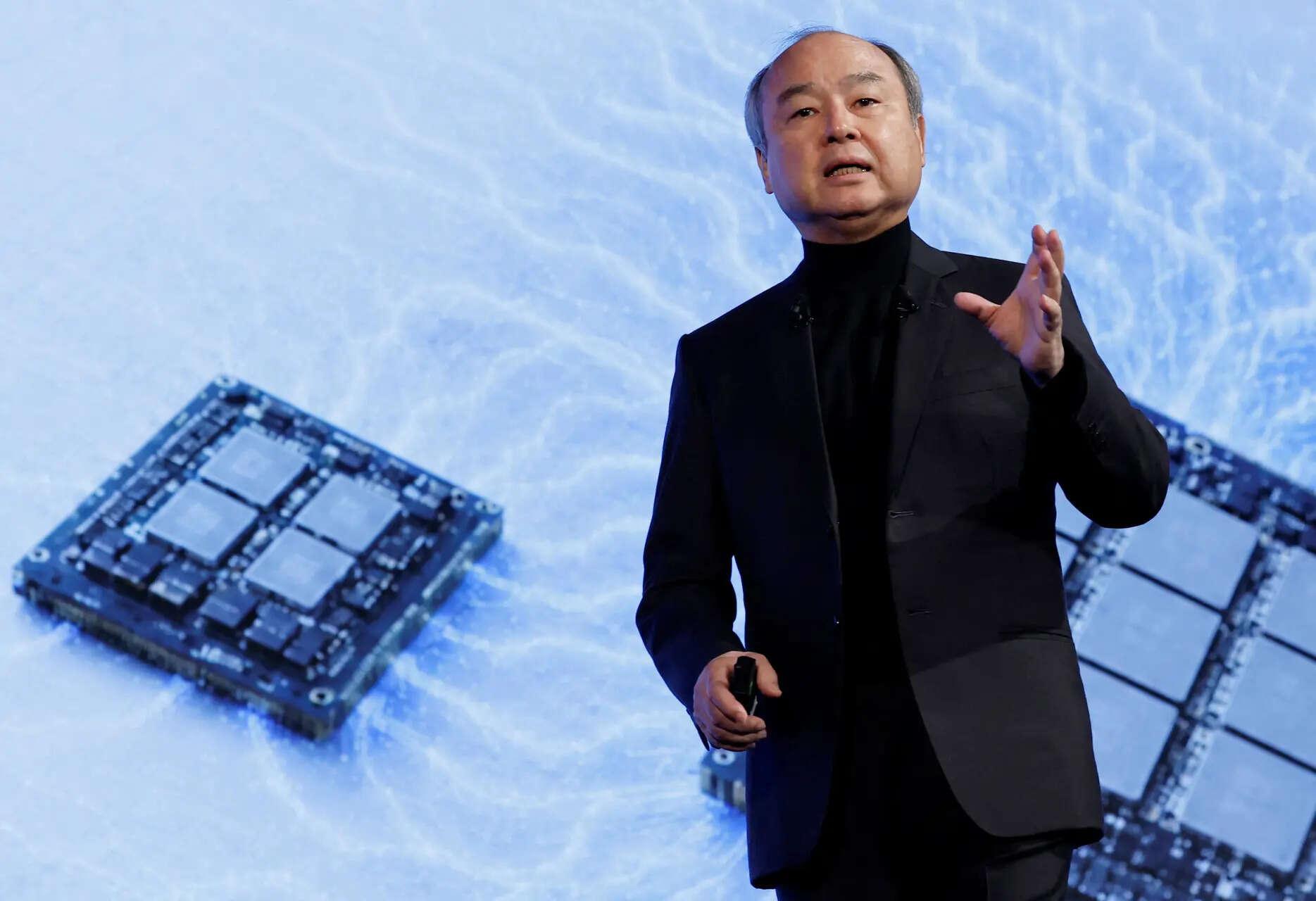
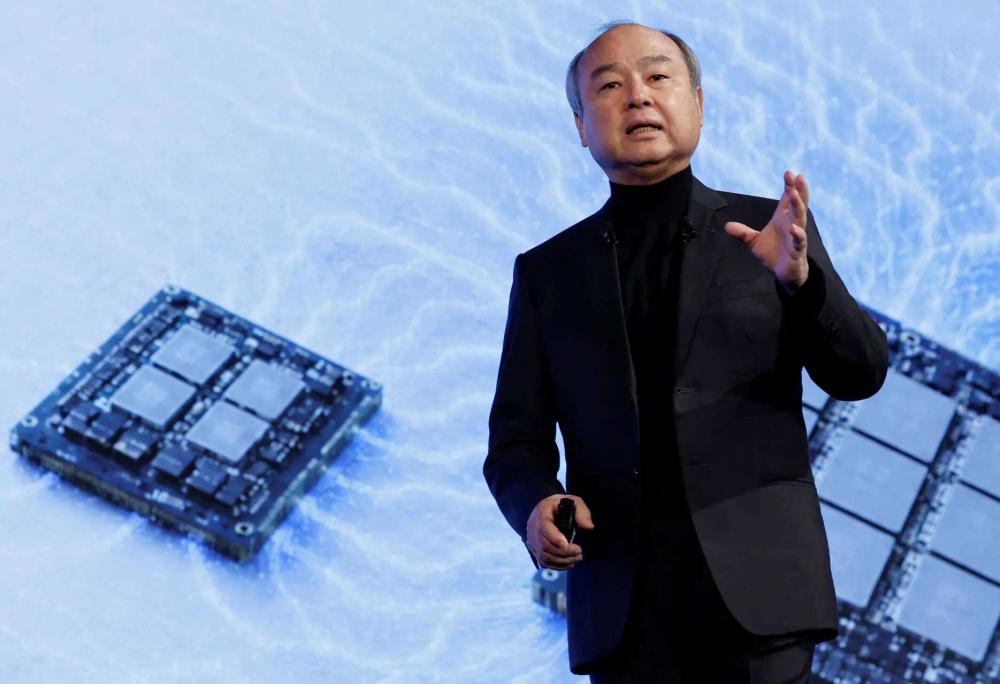
"The business model will be viable because by 2040, if AI revenue makes up 20% of global GDP, spending 800 trillion yen a year is a rounding error," Son said. View the full article
-
Since last year, I’ve been tracking the trend of American startups using Chinese AI. This year, the shift has become harder to ignore. But it didn’t emerge in a vacuum. China’s low-cost, open-weight push was always going to appeal to developers, the backbone of AI innovation. Washington’s wake-up call arrived late. View the full article

-
Claude Pro now starts at Rs 1,999 per month on an annual plan (about ₹24,000 a year), rising to roughly Rs 2,399 per month for those who pay monthly. View the full article