Vishwadeep Khatri
Administrators
-
Joined
-
Last visited
Everything posted by Vishwadeep Khatri
-
The fundraising could value the company after the investment at between 350 billion yuan and 400 billion yuan, or between $52 billion and $59 billion. View the full article

-
The four contracts, all with U.S.-based technology providers running AI applications, are expected to start in the first half of 2027 and require nearly A$369.5 million in capital expenditure, primarily for high-performance Nvidia GPUs, network and storage infrastructure. View the full article

-
US President Donald Trump on Tuesday signed an executive order creating a voluntary framework under which AI developers will share advanced models with the government before public release. "Voluntary frameworks are not enough, however" and the government must be empowered "to block the release of systems that pose an unacceptable national security risk," he added. arp/bl-sst/sla View the full article

-
India is leading Copilot's rapid adoption, with a 250% year-on-year growth in deployment. Major IT firms like Infosys, TCS, and Wipro are scaling licenses to over 100,000 employees each, signalling a shift towards AI as an operating model. Banking and manufacturing industries in India are also deploying agents in a big way, said Puneet Chandok View the full article

-
CAISA Forum Question 877 If AI identifies spare capacity as waste, should it eliminate it? A large logistics company uses AI to optimize its delivery operations. The AI analyzes vehicle utilization, staffing levels, warehouse capacity, and route efficiency. It discovers that: Delivery vehicles are only utilized at 82% capacity on average. Certain warehouses appear underutilized. Extra staffing is maintained for demand spikes that occur only a few times each year. The AI recommends removing these “inefficiencies,” which would: Reduce operating costs by 12%. Improve asset utilization. Increase short-term profitability. However: The spare capacity currently helps absorb unexpected demand surges. Weather disruptions and seasonal peaks are handled more smoothly because of these buffers. Removing them could make the system more vulnerable during unusual events. This creates a real dilemma: View A — Eliminate the excess capacity. Unused capacity is waste. Organizations should optimize resources continuously and avoid paying for capability that is rarely needed. View B — Preserve the buffer. What looks like waste may actually be resilience. Spare capacity helps organizations survive disruptions, uncertainty, and unexpected opportunities. Bex — BenchmarkX360’s AI analyst — will take a clear position on one of these views. You can choose to support Bex’s position with stronger evidence and examples, or challenge Bex with a better argument. Either approach can win. Which view do you support — and why? Provide a specific operational, product, or service example to support your position. ⚠️ Answers that do not take a clear position will not be approved. ⚠️ “It depends” answers will not be approved. 💡 Participants are free to use AI tools — clarity, insight, and contextual relevance will determine the best answer. 🏆 The best answer will be selected on the basis of: · Clarity of position taken · Quality of reasoning and argument · Relevance of operational, product, or service example · Ability to go beyond or against Bex’s analysis
-
Snowflake CEO Sridhar Ramaswamy believes India's AI advantage lies in its talent and innovation under constraints, not just infrastructure. He advises focusing on engineering prowess and efficient systems, cautioning against solely measuring AI adoption by token usage and emphasizing business outcomes over consumption metrics. View the full article

-
Mathematicians are urging caution about artificial intelligence claims. Over 150 professors signed a declaration warning governments not to believe the hype surrounding AI's math skills. They highlight commercial incentives to overstate capabilities. The declaration emphasizes guiding mathematical research with human judgment and transparency. Concerns include AI producing incorrect proofs and undermining research credit. View the full article

-
President Donald Trump has rolled out a new initiative for AI firms, allowing entities such as OpenAI and Google to present their most sophisticated AI technologies to the government for a period of 30 days ahead of public disclosure. This proactive approach is designed to tackle worries related to AI systems revealing critical vulnerabilities. View the full article

-
Anthropic has opened access to its new AI model, Mythos, to 150 organisations worldwide. This powerful AI can rapidly find computer security flaws. Early tests revealed thousands of vulnerabilities. Now, groups from over 15 countries, including critical infrastructure sectors, are joining the program. This move aims to proactively address potential cyber threats before they can be exploited. View the full article

-
If Anthropic’s offer goes ahead, it will test investor appetite for AI companies, which have commanded massive private valuations—both Anthropic and OpenAI are within shouting distance of the trillion-dollar mark. View the full article
-
Codex has grown 27x since early 2026, and more than quarter of user requests on the platform are for non-coding tasks, the company said in a report. View the full article

-
Vishwadeep Khatri replied to Vishwadeep Khatri's topic in We ask and you answer! The best answer wins!1. Jamiu_Lasisi_LQ84Position: Ambiguous — "I support View A's objective, but I have concerns about Bex's method." The author frames this as "Challenge Bex—Right Goal, Wrong Instrument," arguing the AI uses the wrong metric (current value vs. lifetime value trajectory). Under scrutiny, this resolves into an argument that the current AI-driven tiering as described should not be implemented — which functionally aligns with View B. ❌ Not Approved The answer does not take an explicit, unambiguous position for either View A or View B as defined in the question — the author simultaneously claims to "support View A's objective" while arguing the AI recommendation should not be followed as stated. This hedge lands squarely in "it depends on the metric used" territory, which fails the approval threshold. While it includes good examples (Siebel/Salesforce, AWS startups, HubSpot), the positional ambiguity disqualifies it. 2. rajan.arora2000Position: VIEW B — Explicitly, clearly stated and unambiguous. ("VIEW B — WITHOUT QUALIFICATION: Balanced service levels.") Examples: Eleven dissected empirical cases including Salesforce/mid-market churn, Zendesk vs. Freshdesk (matched pair), DBS Bank AI deployment (positive control), HSBC reflexive feedback loop, Maruti Suzuki rural dealer network, Infosys vs. TCS (matched pair), JD.com merchant tiering, First Direct, Zillow iBuying collapse, AWS Activate, and Shumailov 2024 model collapse (Nature). Industry contexts span banking, SaaS, CRM, e-commerce, automotive, IT services, and B2B tech. ✅ Approved Takes an unambiguous View B position with a richly detailed, multi-framework argument (Goodhart's Law, Taleb's stationarity failure, March's exploration/exploitation model), a formal value equation with worked numerical examples across two market regimes, a 5-gate "PRISM" governance framework, and 11 dissected cases from diverse industries. This is an exceptionally thorough, well-reasoned, and practically deployable answer. 3. Bhaskar_Sambamurthy_vKbHPosition: VIEW B — Clearly stated. ("I support View B (Maintain balanced service levels) and strongly argue against Bex's stand.") Examples: Stripe's balanced merchant support model (small merchants getting same core service as Shopify, capturing early-stage companies like Zoom and Lyft), legacy telecom providers that deprioritized SMBs and lost them to Zoom/RingCentral/Twilio, Salesforce Einstein critique. Provides a process-level "AI-First Balanced Framework" (LLM Support Agent → Human+AI Copilot tiering). Industry contexts: SaaS payments, telecom, B2B support operations. ✅ Approved Takes a clear View B position with concrete industry examples (Stripe fintech, telecom SMB defection), specific process/role descriptions (TAM + AI Copilot model), and sound strategic reasoning including the "Leaky Bucket" fallacy and risk metrics (DRR, CES). Reasoning is solid and the Stripe example is well-chosen and specific. 4. AbilashMohandasPosition: VIEW A — Clearly stated. ("Position: Support View A — Prioritize High-Value Customers" and "Final Verdict: Support View A — Intelligently and Without Apology") Examples: Salesforce's published tiered support model (150,000+ customers segmented across four tiers: Standard/Premier/Signature/Signature+, tied directly to contract value). Provides a detailed Service Tier Matrix (Strategic Accounts → dedicated TAM + named engineer; Mid-Market → pooled specialist + self-serve; Long-Tail → automated + community). Industry: SaaS/CRM enterprise service operations. ✅ Approved Takes an unambiguous View A position with a specific, real-world precedent in Salesforce's explicitly published tiered support architecture. The answer provides concrete process steps (SLA tiers, role assignments, escalation paths), governance guardrails (minimum service floors, audit cycles, growth re-tiering triggers), and rebuts View B's objections with substantive counterarguments. The position is clear, the reasoning is structured, and the example is directly relevant to the question's B2B service context. 5. Sanmathi_Naik_DgYEPosition: VIEW B — Stated. ("I support View B — Maintain balanced service levels") Examples: Airline analogy: economy passengers should receive reliable booking services and reasonable support times alongside premium customers. Also references Marriott hotels (loyalty programs adding value to premium without degrading economy) and Apple (same warranty support regardless of customer status). ❌ Not Approved While the position is stated for View B, the primary "example" — airlines ensuring economy passengers get safe transport — is a generic consumer-service analogy, not a specific B2B process, role, or industry scenario with concrete outcomes. The answer lacks specificity in its reasoning (no data, no process steps, no causal mechanism) and does not demonstrate solid reasoning about the B2B service tradeoffs described in the question. The examples fail to provide the required specificity to qualify for approval. 6. AnmolPosition: VIEW A — Clearly stated. ("I strongly support the statement that AI should prioritize high value customers - View A") Examples: BPO industry (tiered agent assignment: Platinum clients → top agents + AI hybrid; Gold → AI-assisted mid-level agents; Silver → automated self-service). IT Managed Services Provider (MSP) scenario: AI monitors all clients but routes enterprise banks/telecoms alerts to senior engineers in 15 minutes vs. 4–6 hours for startups. E-commerce platform (high-value orders rerouted to faster logistics). Hospitality (VIP event AI resource allocation). Provides specific Tiered SLA Framework tables across multiple industries. ✅ Approved Takes a clear View A position with multiple industry-specific examples and detailed process steps (specific SLA times, escalation paths, role assignments for each tier). The BPO and IT MSP scenarios are concrete, relevant to B2B service operations, and include specific operational mechanics. The reasoning around revenue concentration and "VIP effect" is sound. The answer does acknowledge the risk of over-prioritization and proposes a balanced tiered model, but maintains a clear View A stance throughout. 7. Vikas ChoudharyPosition: VIEW B — Clearly stated. ("I support View B - Maintain balanced service levels.") Examples: AWS — startups like Airbnb, Netflix, Stripe began as low-revenue customers; AWS maintained consistent baseline service while providing premium support to larger customers. ❌ Not Approved While the View B position is clear and the AWS example is relevant, the answer lacks the required depth and specificity. It is a brief, ~300-word response that states a position and cites one example without elaborating on the specific process steps, role-level mechanisms, or causal reasoning that would demonstrate solid reasoning. The AWS example is mentioned but not dissected — no specific service decisions, timelines, or operational details are provided. The answer does not demonstrate a sufficient quality of reasoning to meet the approval bar. 8. V V S Narayana RajuPosition: VIEW B — Clearly stated. ("My Clear Position: I support View B.") Examples: AWS (2006 startup support program → Airbnb, Netflix, Stripe, Dropbox became enterprise accounts). Salesforce (early SMB customers grew into enterprise deployments and became the company's most powerful word-of-mouth sales force). Stripe (Patrick Collison's philosophy of equal-quality service to all developers). Also cites a portfolio diversification argument (financial analogy) and quotes from Marc Benioff (Salesforce), Brian Chesky (Airbnb), and Jeff Bezos. Industry contexts: cloud services, CRM/SaaS, fintech. ✅ Approved Takes an unambiguous View B position with well-developed examples across multiple B2B industries, strong reasoning about incomplete value modeling (lifetime value, referral value, network effects), and the "transparent tiering with quality floor" distinction. Includes specific operational mechanisms and strategic logic. The Salesforce SMB-to-enterprise growth path is particularly well-argued, showing how small customer service investment created both growth and an advocacy network that drove enterprise sales — a causal chain the AI model cannot capture. 🏆 Winning Answer: rajan.arora2000 On clarity of position, it is the only answer that explicitly labels itself "VIEW B — WITHOUT QUALIFICATION" in its opening line and then proactively defines precisely what that means — distinguishing the claim from a simplistic anti-differentiation stance and pre-empting the most obvious objections before they arise. On quality and completeness of reasoning, it stands alone in the field: it deploys three named theoretical frameworks (Goodhart's Law, Taleb's Extremistan stationarity failure, and March's exploration/exploitation trap), constructs a formal four-term value equation with worked numerical examples across two market regimes (V = +0.074 in a stationary market vs. V = −0.244 in a growth market), performs a sensitivity analysis showing the sign-flip persists even with 20% penalty reduction, and explicitly addresses the "just retrain the AI" counterargument by demonstrating that model accuracy cannot escape the stationarity problem it creates. On relevance and specificity of examples, it provides eleven dissected empirical cases spanning banking (HSBC, First Direct), SaaS (Salesforce, Zendesk/Freshdesk), automotive (Maruti Suzuki), professional services (Infosys/TCS), e-commerce (JD.com, Zillow), and cloud services (AWS) — including two matched-pair comparisons that control for survivorship bias, a documented reflexive feedback loop case (HSBC internal audit), and a positive control (DBS Bank) that shows AI working correctly. No other approved answer comes close to this combination of theoretical depth, quantitative rigor, multi-industry empirical breadth, and a deployable governance framework (the PRISM Gates), making rajan.arora2000's response the clear winner.
-
Commonwealth Bank of Australia CEO Matt Comyn said businesses globally are likely to tighten scrutiny of artificial intelligence-related spending through 2026 as adoption accelerates and pressure mounts to demonstrate returns on investment. View the full article

-
Effective Monday, the Regulations on Trade Secret Protection mark the first time Chinese law protects such digital assets as proprietary secrets, according to state broadcaster China Central Television. View the full article

-
The global AI race is shifting focus from models to infrastructure, power, and sovereign ecosystems, with energy efficiency becoming a key competitive advantage. Enterprises are prioritising robust infrastructure, security, and talent to support AI adoption, which is still in its early stages but poised for significant growth. View the full article

-
Saurabh Vijay, currently heading the Aadhaar body, will soon assume additional charge as the CEO of the India AI Mission. This strategic, government-funded initiative which was approved in March 2024, aims to build an indigenous AI ecosystem. Vijay's appointment follows the departure of the previous CEO in April. View the full article

-
AI search is reshaping online discovery. Brands are shifting their content strategies to ensure visibility within AI answers and recommendations. This new focus, known as Generative Engine Optimisation (GEO), is becoming a significant budget item for marketers. Experts predict intensified monetisation efforts by AI search companies, with ad bids potentially exceeding traditional platforms. View the full article

-
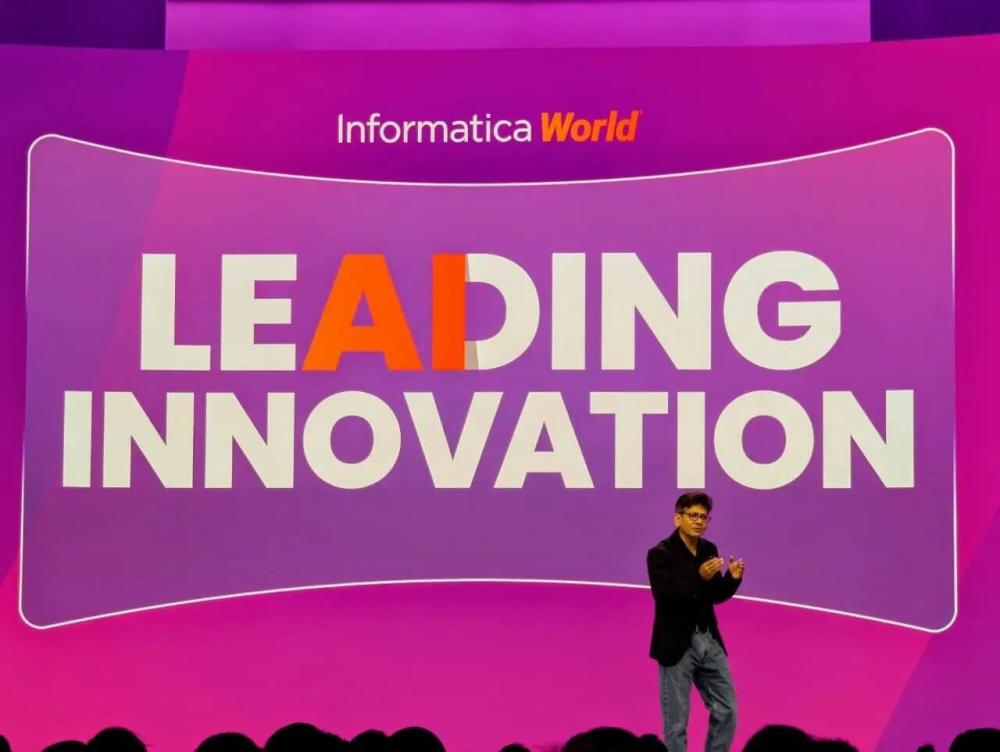
Artificial intelligence is poised to automate half of enterprise data tasks within 18 months. Salesforce's Gaurav Pathak highlights AI agents handling data discovery, integration, governance, and quality. This shift allows employees to focus on strategic work. Indian enterprises are cautiously adopting AI, facing hurdles in business outcomes, governance, privacy, and data quality. View the full article
-
Companies are facing a significant challenge with the escalating cost of AI tokens as they adopt agentic workflows. Uber has already depleted its annual AI budget, and Salesforce is consuming trillions of tokens. This surge in demand is driving a shift towards usage-based pricing, with projections indicating a massive increase in token usage in the coming years. View the full article

-
Save money on AI tools with smart LLM token management. Parminder Singh, CEO of Reliance Enterprise Intelligence, shares six practical tips. Store context, order concise answers, and paste only necessary information. Edit responses precisely instead of regenerating. Match AI models to tasks and plan your AI interactions. These strategies help users optimise their AI usage and reduce costs. View the full article

-
Remote work is making companies hesitant to hire young graduates. A New York Fed study shows this is a key reason for increased unemployment among recent college leavers. Businesses find it harder to train and mentor new staff remotely. This trend predates AI tools. The job market shows fewer layoffs but difficulty finding new roles for those out of work. View the full article

-
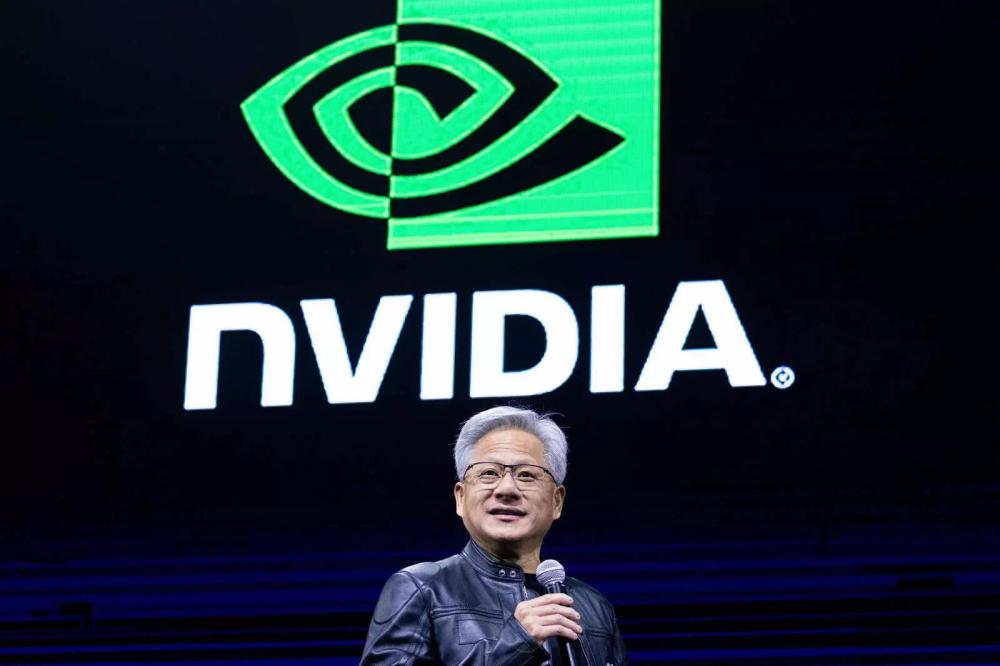
Nvidia is pushing AI PCs with a new chip for local processing. AI-optimized computers are boosting some companies' results. New AI PCs from brands like ASUS, Dell, and HP are expected soon. These devices offer faster AI tasks and local AI agent support. Concerns about privacy and chip supply persist. The future of AI PCs looks promising. View the full article
-
The European Commission has held productive discussions with Anthropic concerning future access to its Mythos AI product. The EU's cybersecurity agency, ENISA, is expected to gain access to Mythos. This AI tool is designed to identify vulnerabilities in computer code, enhancing defenses against cyberattacks. Initial concerns about the tool enabling attacks appear to be overstated. View the full article

-
LVX Ventures has launched Elvix, an AI platform offering continuous investment feedback. Built on extensive private market data, Elvix helps investors evaluate startups and track portfolio risks. This innovation addresses information gaps in private investing. The platform uses proprietary AI to analyze opportunities and monitor performance. Elvix aims to provide decision intelligence for early-stage and growth investments. View the full article

-
AirTrunk, backed by Blackstone, will invest over $21 billion in a new data centre in Maharashtra's Raigad Penn Growth Centre. This facility will boast a 3 GW capacity. India is attracting significant foreign investment in data infrastructure, with US tech giants expected to invest over $630 billion this year. View the full article