Vishwadeep Khatri
Administrators
-
Joined
-
Last visited
Everything posted by Vishwadeep Khatri
-
CAISA Forum Question 875If AI can identify the “best” solution faster than teams can, should organizations reduce collaborative problem-solving sessions? A large operations organization uses AI to analyze recurring process problems and recommend solutions. In several cases, the AI is able to: identify likely root causes within minutes, suggest corrective actions quickly, and produce solutions that outperform ideas generated through long workshops and team discussions. As a result: issue resolution becomes faster, meeting time reduces, and decision-making accelerates. However: cross-functional discussions decrease, employees feel less ownership over solutions, and teams worry that collaborative learning and innovation may slowly weaken over time. This creates a real dilemma: View A — Rely more on AI-driven problem-solving.If AI consistently produces faster and better solutions, organizations should reduce time spent on lengthy collaborative exercises and focus on execution speed. View B — Preserve collaborative problem-solving.The value of team problem-solving is not just the final solution. Collaboration builds understanding, alignment, learning, and long-term capability that AI alone cannot create. Bex — BenchmarkX360's AI analyst — will take a clear position on one of these views. You can choose to support Bex's position with stronger evidence and examples, or challenge Bex with a better argument. Either approach can win. Which view do you support — and why? Provide a specific operational, product, or organizational example to support your position.⚠️ Answers that do not take a clear position will not be approved. ⚠️ "It depends" answers will not be approved. 💡 Participants are free to use AI tools — clarity, insight, and contextual relevance will determine the best answer. 🏆 The best answer will be selected on the basis of:· Clarity of position taken · Quality of reasoning and argument · Relevance of operational, product, or organizational example · Ability to go beyond or against Bex's analysis
-
Pope Leo XIV's encyclical, "Magnifica Humanitas," urges robust AI regulation and ethical development for humanity's good, not profit. He warned against AI in warfare and the concentration of power, calling for external oversight and a slowdown in development to prioritize human dignity and the common good. View the full article

-
A self-proclaimed lazy individual leverages AI to automate tedious tasks, saving hours weekly. This includes using an AI agent to manage LinkedIn connection requests, accepting them automatically and providing summaries. For familiar contacts, another AI assistant crafts personalized thank-you messages, streamlining social and professional interactions. View the full article

-
Operators and investors ramping up capacity with billions in investments as India’s data centre capacity may touch 4 GW by 2030, writes Tanya Pandey View the full article

-
The share of entry-level hiring in the sector has fallen to around 15% in 2025 from 28% in 2024 as companies focus more on AI, cloud, cybersecurity and automation-focused roles. Emerging technology roles account for nearly 52% of hiring demand and are expected to touch 60% by the end of 2026, signalling a broader shift away from campus-led pyramid hiring model, experts said. View the full article

-
The internet’s new junk food is here. Tanya Pandey & Himanshi Lohchab find out why AI slop is flooding your feed and shrinking your attention. View the full article

-
But 2026 so far marked some of the biggest executive talent movements among frontier AI companies back and forth. From OpenAI and Anthropic to Google DeepMind, Meta and Thinking Machines Lab, the industry is witnessing one of the fiercest talent wars. Himanshi Lohchab lists some of these crucial leadership movements: View the full article

-
Pope Leo XIV has released a new document, "Magnifica Humanitas," calling for global leaders to regulate artificial intelligence. This marks the latest in a long tradition of papal calls for social justice. The Pope warns that AI could spread misinformation and lead to conflict. His message emphasizes the need for human-centered ethical considerations in technology's rapid advancement. View the full article

-
India must unite government, companies, and academia for AI advancement. A young workforce offers a significant advantage. Skilling initiatives are crucial for a large AI-trained population. Stronger intellectual property protection is also vital for innovation. IBM is expanding its presence to tap into talent beyond major tech hubs. View the full article

-
Speaking at the presentation of Pope Leo's first encyclical on artificial intelligence, Olah said there was "a real possibility" that AI will displace human labor "at very large scale". View the full article

-
Companies can no longer gain a competitive edge with standard AI models, as nearly 90% of organisations now use large language models said report by McKinsey & Company. True advantage lies in building unique, integrated AI systems and workflows that are difficult for rivals to replicate, turning cognitive work into scalable infrastructure. View the full article

-
Pope Leo XIV will release on Monday his long-awaited manifesto on artificial intelligence (AI), a bid to address ethical and social challenges as the technology rapidly develops worldwide. The release of "Magnificent Humanity" follows several years of study by the Church of AI-related technologies. View the full article

-
Huawei aims for advanced chip design by 2031. The company is developing a new 'Tau Scaling Law' to improve chip performance. This innovation could bypass US sanctions restricting access to cutting-edge semiconductor technology. Huawei's upcoming Kirin chips will feature a related 'LogicFolding' architecture. The company has already produced hundreds of chips based on this new principle. View the full article
-
Singapore's economy surged six percent in the first quarter. Demand for artificial intelligence chips is driving this growth. This boost helps balance challenges from the Middle East conflict. The government maintains its annual economic forecast. Strong performance in trade, manufacturing, and finance sectors is noted. AI-related demand is expected to continue supporting regional economies. View the full article

-
The AI startup said around 50 carefully selected partners, including technology firms and research organisations, were given limited access to the model over recent weeks. Mythos Preview was used to scan more than 1,000 open-source software projects during the trial. View the full article
-
A new report reveals that half of surveyed workers feel overly dependent on AI, with younger generations expressing greater concern about probable diminished intelligence. Despite pressure to use AI for productivity, many lack understanding of its practical application, leading to increased "workslop" and misuse on sensitive tasks. View the full article

-
Bihar is set to become a major AI hub. The government will soon launch an AI policy to transform governance and development. AI will enhance transparency in welfare schemes and speed up complaint resolution. The state aims for technological advancement and economic prosperity. View the full article

-
Novo Nordisk is leveraging Artificial Intelligence to significantly speed up new drug launches. The company expects to cut down the time to market by as much as two-thirds. Its center in Bengaluru, India, is becoming crucial for global drug preparations. View the full article
-
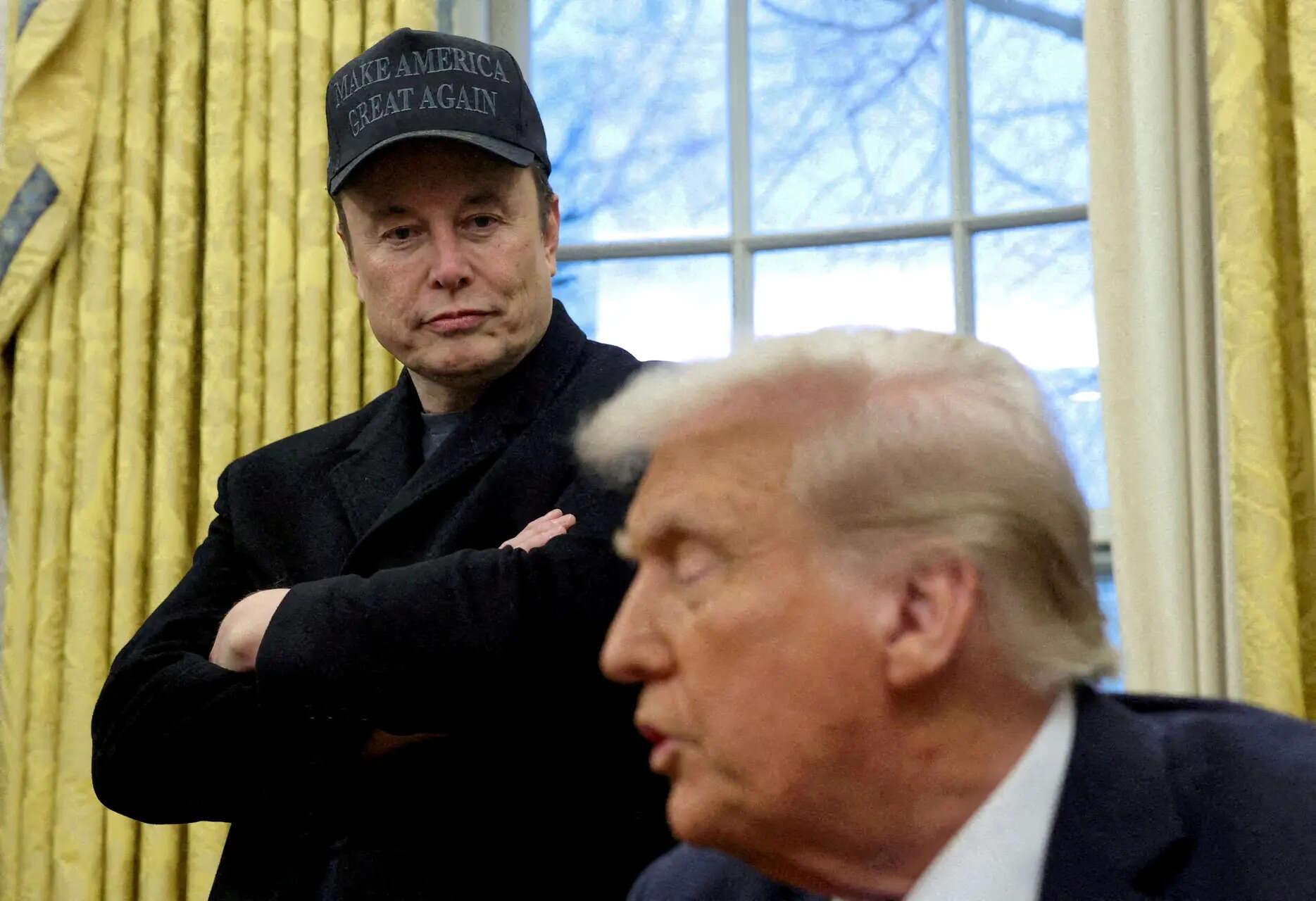
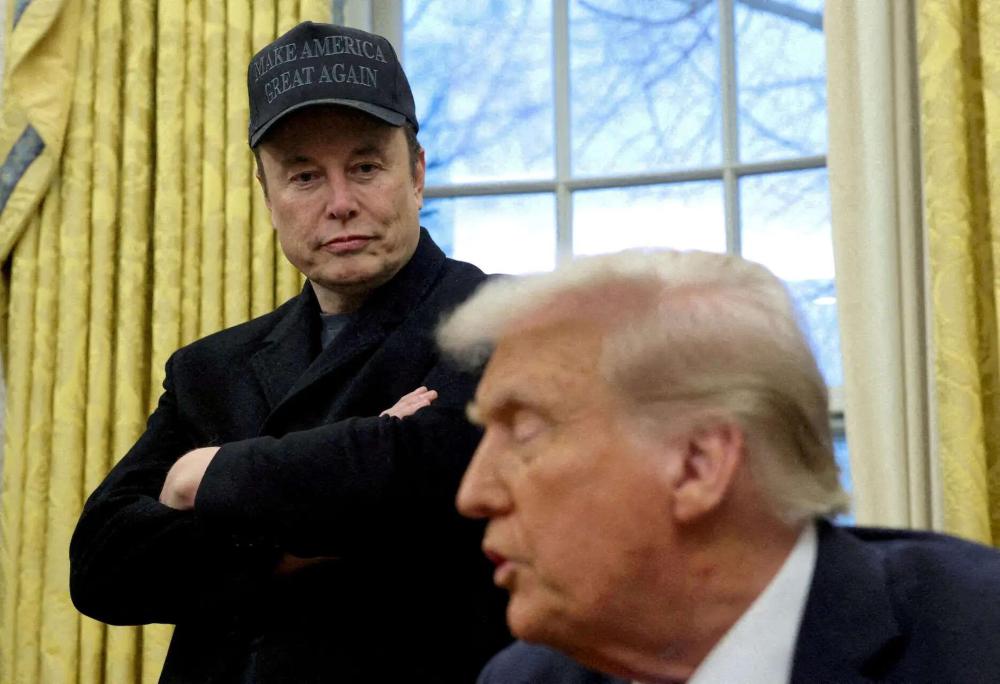
President Donald Trump's executive order on powerful AI models has collapsed. Allies in Silicon Valley reportedly convinced the president to pull the plug. The order aimed to implement new AI cybersecurity measures. This development highlights Washington's struggle to agree on AI guardrails. The United States lags behind Europe and Asia in AI regulation. View the full article
-
CAISA Forum Question 874If AI can predict which employees are likely to leave, should organizations act on that prediction before the employee resigns? A large service organization deploys an AI system that analyzes: absenteeism trends, internal mobility patterns, performance fluctuations, engagement survey responses, workload signals, and communication behavior. The AI identifies employees who are at high risk of attrition months before they formally resign. The organization can now: proactively offer incentives, change roles, reduce workload, or engage managers early to retain talent. However: employees may feel unfairly profiled or monitored, managers may start treating “high-risk” employees differently, and some predictions may turn out to be wrong. This creates a real dilemma: View A — Act proactively using AI predictions.Losing experienced employees is costly and disruptive. If AI can identify attrition risk early, organizations should intervene before valuable talent is lost. View B — Do not act on predictive attrition signals.Using AI to predict employee exits can damage trust, create bias, and influence workplace behavior unfairly. Employees should be judged by actual actions, not predicted intent. Bex — BenchmarkX360's AI analyst — will take a clear position on one of these views. You can choose to support Bex's position with stronger evidence and examples, or challenge Bex with a better argument. Either approach can win. Which view do you support — and why? Provide a specific organizational, operational, or industry example to support your position.⚠️ Answers that do not take a clear position will not be approved. ⚠️ "It depends" answers will not be approved. 💡 Participants are free to use AI tools — clarity, insight, and contextual relevance will determine the best answer. 🏆 The best answer will be selected on the basis of:· Clarity of position taken · Quality of reasoning and argument · Relevance of organizational or operational example · Ability to go beyond or against Bex's analysis
-
Epsilon India is achieving more with its current workforce. Artificial intelligence is boosting productivity in software development and operations. This allows the company to handle more work and take on new responsibilities. AI is also speeding up technical support and the rollout of customer offers. Global centres are now valued for outcomes, not just cost savings. View the full article
-
JPMorgan is widely implementing AI tools across its global investment banking operations, signaling a significant shift in the sector. The bank plans to hire more AI specialists and fewer traditional bankers, a move mirroring industry trends. AI is streamlining content preparation and enhancing client engagement for bankers. View the full article

-
Vishwadeep Khatri replied to Vishwadeep Khatri's topic in We ask and you answer! The best answer wins!Answer 1 — Jamiu_Lasisi_LQ84Position: View B (Continue) Has specific example: Yes — Amazon Web Services (AWS) built inside Amazon's retail infrastructure, 2004–2006, showing how AI trained on retail metrics would have flagged the initiative as failing before it became a $90B/year revenue engine. Reasoning quality: Strong. Distinguishes convergent metrics (valid for execution projects) from divergent signals (expected in transformation projects). Explains the category error clearly and anchors the example well. ✅ Approved. Takes an unambiguous View B position with a highly relevant industry example (technology/cloud sector) and a logically structured argument about why AI metrics are the wrong instrument for transformation initiatives. Answer 2 — Bhaskar_Sambamurthy_vKbHPosition: View A (Stop early) Has specific example: Yes — pharmaceutical industry (AI-enabled early drug termination), plus a personally lived AI forecasting project in an unnamed organization disrupted by Covid/Russia-Ukraine war data issues. Also constructs a detailed 3-tier governance framework with PMO, steering committee, and an AI Project Review Board (APRB), and proposes dual-threshold confidence scoring (≥85% for termination review, 60–84% for a pivot sprint). Reasoning quality: Strong and structured. Argues on financial metrics (burn rate, opportunity cost, technical debt), cultural impact (normalizing smart failure), and proposes a concrete, tiered operational process. Acknowledges View B's risk via the personal exception and builds a structured override framework around it. ✅ Approved. Takes an explicit View A position with pharmaceutical/industry examples, a personal lived example, and a detailed, process-specific governance model (tiered thresholds, APRB, XAI mandate) that is among the most operationally concrete of all submissions. Answer 3 — Anjali_Mali_H0mpPosition: View A (Stop early) Has specific example: Yes — IBM Watson Health (healthcare/AI sector): $4B+ investment, strong executive sponsorship, failure signals (poor data quality, low hospital adoption, workflow integration failures, delivery delays) went unheeded; division eventually sold at a loss in 2022. Reasoning quality: Moderate. Three clear sub-arguments (data beats bias, sunk cost trap, agility) are presented but briefly and without much depth. The IBM Watson Health example is well-chosen and directly mirrors the scenario (strong sponsorship + politically important + significant investment), but the analytical development is thin. ✅ Approved. Takes a clear, unambiguous View A position with a specific, relevant real-world example in the healthcare/AI industry that closely mirrors the scenario described. The reasoning is present but relatively brief. Answer 4 — Poornima_Gupta_aZ3hPosition: View B (Continue) Has specific example: Yes — multiple: SpaceX Falcon 1 (aerospace), Katalin Karikó's mRNA research (pharma/biotech), Dyson Dual Cyclone vacuum (consumer products), Netflix streaming pivot (media), HSBC Dynamic Risk Assessment with Google Cloud (banking/AML), First Direct (UK banking), Tesla Model 3 (automotive/manufacturing), Novartis CAR-T/Kymriah (pharma/gene therapy). Eight cases are tabulated with explicit "what AI would have seen" vs. "what actually resulted" comparisons. Reasoning quality: Exceptional. Introduces the payoff-asymmetry framework (Extremistan vs. Mediocristan from Taleb), survivorship bias in training data, the McNamara Fallacy, real-options logic (Dixit & Pindyck), venture capital portfolio logic, and a formal expected value formula. Addresses four counterarguments (sunk cost fallacy, survivorship of the winners list, "just retrain the AI," and "every sponsor hides behind Extremistan") and refutes each directly. Concludes with a 4-step Mandatory Investigation Protocol. ✅ Approved. Takes an explicit, unambiguous View B position supported by eight industry-spanning case studies, a formal mathematical framework, rigorous objection-handling, and a practical governance protocol. One of the most comprehensively argued submissions. Answer 5 — Ehisuoria_AigbogunPosition: View B (Continue) Has specific example: Yes — the iPhone (2007 consumer electronics): Steve Ballmer's public mockery illustrates how existing prediction models trained on physical-keyboard mobile success factors would have flagged the iPhone negatively. Also briefly mentions NVIDIA's GPU pivot (late 1990s–early 2000s), where early financial pressure and unclear ROI would have triggered AI termination before CUDA/AI GPU value emerged. Reasoning quality: Moderate. Makes a valid conceptual point (disruptive ideas don't resemble historical success patterns) but stays at a fairly high level. The iPhone example is compelling but the analysis doesn't deeply unpack the governance or process implications. NVIDIA is mentioned but not developed. ✅ Approved. Clear View B position with two specific industry examples (consumer electronics, semiconductor). Reasoning is sound but not deeply developed beyond the core insight. Answer 6 — Vikas_ChoudharyPosition: View A (Stop early) Has specific example: Yes — Google Glass (consumer tech, weak adoption signals ignored) and Ford Edsel (automotive, market feedback and rising costs ignored). Also references ERP transformation programs generically (large-scale rollouts continued despite delays, low adoption, governance breakdowns). Reasoning quality: Moderate. The core argument is sensible (AI as objective early warning vs. sunk-cost/political bias), and two named examples are provided. However, the Google Glass and Ford Edsel examples are not precisely analogous to the scenario (they are product launches, not internal organizational transformation initiatives), and the ERP example is generic and unnamed. The analysis stays surface-level. ✅ Approved. Takes an explicit View A position with named, specific examples from consumer technology and automotive industries. Reasoning is clear but the examples are product-market failures rather than internal transformation initiatives, slightly weakening direct applicability. Answer 7 — Anmol (comment_66139)Position: Implicitly View A (the opening phrase "when AI systems flag risks or inefficiencies, but leadership presses forward anyway" positions against ignoring AI signals), but the post never explicitly states a view. The heading "I strongly support..." appears in Article 9 (comment_66140), not here. This post begins mid-argument without a position declaration. Has specific example: Yes — BPO industry AI migration (integration failures, latency issues, legacy system problems in 2025–2026 wave of AI contact center migrations). Reasoning quality: Moderate, focused on BPO sector operational failures. ❌ Not Approved. This post does not open with or contain a clear, explicit position statement for View A or View B. It begins mid-sentence ("when AI systems flag risks...") without a declared stance, making it structurally ambiguous as a standalone submission. Answer 8 — Anmol (comment_66140)Position: View A (Stop early) — explicitly stated: "I strongly support the statement that AI should be the deciding factor whether to continue with the project or not — View A." Has specific example: Yes — same BPO/AI contact center migration example as Article 7 (latency failures, integration debt, ignored AI warnings in BPO sector), appearing to be a resubmission or continuation of the previous post with an explicit position added. Reasoning quality: Moderate. Provides an industry-specific example from BPO (business process outsourcing) with concrete failure indicators (500ms latency vs. 200ms threshold, legacy API integration debt, workflow lockouts). However, the example is relatively niche and the reasoning beyond the example is formulaic. ✅ Approved. Takes an explicit View A position with a specific BPO/technology services industry example including concrete operational metrics (latency thresholds, integration failure types). Reasoning is adequate though not deeply layered. Answer 9 — rajan.arora2000Position: View B (Continue) — explicitly stated: "I Support View B: Escalate Under New Governance, Not Terminate." Has specific example: Yes — DBS Bank digital transformation (2014–2019, banking sector): legacy system outages increased 40%, digital satisfaction lagged, business units resisted cloud infrastructure, AI model would have assigned >75% failure probability. CEO Piyush Gupta escalated governance, reset milestones, brought new technical leadership. Outcome: digital revenue reached 60% of retail, 22% profit CAGR 2016–2018, Euromoney World's Best Digital Bank 2019. Also references a contrasting failure case (implied) around India. Reasoning quality: Strong. Introduces the March Exploration vs. Exploitation (1991) framework, Taleb's Extremistan/Mediocristan distinction, a formal optimization formula (maximize NPV + option value + capability retention), and a calibration matrix by initiative type. Argues for "escalate governance" not as a middle ground but as View B's operational definition. Directly reframes the question from "was the AI right?" to "what is the appropriate response when option value exists?" ✅ Approved. Clear View B position with a specific, highly relevant banking sector example (DBS Bank) with named outcomes, a formal decision framework, and strong theoretical grounding. Answer 10 — Shobha_Rani_VS_jI8YPosition: View B (Continue) — explicitly stated: "We unapologetically champion View B." Has specific example: Yes — Nokia's MeeGo OS abandonment (telecommunications, 2011): Nokia terminated under AI-like operational pressure, forcing a desperate Windows Phone alliance, causing smartphone market share to collapse from 40% (2007) to under 3% (2013). Amazon Web Services (2003–2006): AI would have triggered termination; persistence unlocked $1T+ in enterprise value. Maruti Suzuki India (1982–1988): zero local infrastructure, currency swings, supply delays; Suzuki persistence trained local talent and built India's largest automotive brand. Reasoning quality: Moderate to good. Introduces "Institutional Learned Helplessness," "Capability Debt," and a complex governance topology with formal gate criteria (Paradigm Null, Velocity Floor, Utility Drift with mathematical formulas), a Multi-Filter Strategic Selection Matrix, and a Joint Human-Machine Protocol. However, the heavy use of proprietary-sounding terminology and very complex framework tables partially obscure the core argument. The examples are strong, but the architectural framing is verbose and sometimes substitutes jargon for analytical clarity. ✅ Approved. Takes an explicit View B position with three diverse, named industry examples spanning tech, automotive, and emerging markets, plus a structured governance framework. The reasoning is substantive despite being somewhat overwrought stylistically. Answer 11 — Rahul_Suri_1N6fPosition: View B (Continue) — explicitly stated: "I Support View B: AI Should Inform the Decision to Continue — Not Make It." Has specific example: Yes — Microsoft Azure cloud-first transformation under Satya Nadella (2014–2017, enterprise technology): every health indicator would have produced severe AI failure signals (years behind AWS/Google Cloud, threatening highest-margin revenue lines, billions in datacenter capex with no short-term ROI, historical failures like Windows Phone and Surface RT as pattern-match comparators). Azure is now the foundation of Microsoft's trillion-dollar valuation. Also references NASA's Mars Science Laboratory/Curiosity Rover (JPL): 26-month delay, $900M overrun; AI comparing against mission baselines would have output high failure probability; governance treated it as a diagnostic requiring human interpretation — result was one of NASA's most celebrated operational achievements. Reasoning quality: Excellent. Structured into four clearly labeled sections (Position, Argument, Operational Examples, Engagement with Bex's Analysis). Layer A establishes the epistemological limitation of pattern-matching AI. Layer B develops the portfolio-level cost of algorithmic attrition (organizations abandon competitive differentiation through "algorithmic attrition"). Layer C reframes the root cause as a governance problem, not a project-health problem. Engages directly and respectfully with Bex's argument while explaining precisely where it fails (diagnostic vs. decisional authority confusion). Two diverse, detailed examples from different sectors (enterprise tech and space/government). Highly structured and analytically precise. ✅ Approved. Takes an explicit View B position with two specific, sector-diverse examples (Microsoft/enterprise tech and NASA/JPL), structured four-layer reasoning, and a clear, well-developed governance reframe. Answer 12 — AbilashMohandasPosition: No clear position — the post explicitly opens with "there's no simple yes or no answer" and discusses "when to act on AI signals versus when to override them." It presents a framework for deciding whether to kill, pivot, or continue without taking a position on the specific scenario. Has specific example: General innovation examples (AWS, cloud transformation) mentioned conceptually, not argued for a specific position. Reasoning quality: Thoughtful analysis but deliberately non-committal. ❌ Not Approved. This is an explicit "it depends" answer. The post acknowledges it is not taking a clear yes/no position, and the framework presented is balanced/neutral rather than advocating for View A or View B. Per the evaluation criteria, balanced/neutral answers are not approved. Answer 13 — Varsha_Pradeep_loRgPosition: View B (Continue) — explicitly stated: "Position: View B - Continue the Project Despite the AI Warning." Has specific example: Yes — Microsoft's Azure cloud transformation under Satya Nadella (2014, enterprise technology): moving from licensed software to cloud subscriptions, Office 365 disrupting revenue models, billions in Azure infrastructure before profitability, Nokia mobile acquisition still impacting strategy, competitive pressure from AWS. Also Best Buy's operational turnaround (retail sector): facing "retail apocalypse" and Amazon pressure, similar signals of disruption; persistence through transformation preserved the brand. Reasoning quality: Good. Identifies the core issue cleanly: "The same signals that indicate failure can also indicate a transformation passing through its most difficult but necessary phase." Directly refutes Bex's Ford Focus Electric example (correctly noting it was a market discontinuation, not an AI-monitored internal transformation). Identifies the structural bias problem (AI learns from historical patterns, but breakthrough transformations succeed by breaking historical precedent). Proposes a clear, constructive role for AI as an early warning system for diagnosis, not as decision-maker. ✅ Approved. Takes an explicit View B position with two named industry examples (Microsoft enterprise tech transformation, Best Buy retail transformation), clear reasoning around the structural bias of historical training data, and a well-constructed refutation of Bex's Ford example. Answer 14 — Kumar_Love_s9D0Position: View B (Continue) — explicitly stated: "I strongly support View B." Has specific example: Yes — Microsoft Azure transformation (enterprise tech, same as Varsha_Pradeep and Rahul_Suri): billions redirected to data centers, sales compensation misaligned with cloud subscriptions, internal friction very high. Also Tesla Model 3 "Production Hell" (2017–2018, automotive/manufacturing): aggressive production targets missed, cash burn severe, Elon Musk called it "production hell" — AI verdict would have been to stop or scale back; leadership persisted, Model 3 became the best-selling EV globally. Reasoning quality: Moderate to good. Makes the valid point about non-linear, chaotic nature of transformation and the historical precedent gap for truly novel initiatives. The examples are real and relevant but the Tesla example in particular is well-developed with specific operational detail. However, the argument doesn't engage as deeply with the governance question as some other submissions — it focuses more on validating the persistence case than on proposing what to do instead of termination. ✅ Approved. Takes an explicit View B position with two named examples (Microsoft Azure, Tesla Model 3) including manufacturing sector detail, and clear reasoning about AI's inherent blind spot for non-precedented transformations. Answer 15 — Sanmathi_Naik_DgYEPosition: No explicit View A or View B — the post opens with "Organizations should not automatically stop projects based solely on AI predictions of failure. Instead, they should use AI as an early warning system, applying these criteria to decide whether to kill, pivot, or continue." Has specific example: Post-it Notes, Airbnb, iPhone mentioned generically as examples of things that "looked like failures early on" — no specific process, role, or industry scenario is developed. Reasoning quality: General and balanced; advocates for a middle-ground framework. ❌ Not Approved. This is a "neither/nor" answer that deliberately avoids taking a position for either View A or View B. The criteria states "It depends" or balanced/neutral answers are not approved. Additionally, it fails to provide a specific concrete example with industry context, process steps, or realistic scenario — only brief name-drops of well-known products without development. Answer 16 — Viraj_KhandesagarPosition: View A (Stop early) — explicitly stated: "I support View A — organizations should stop projects early when AI consistently predicts a high probability of failure." Has specific example: Yes — Amazon Fire Phone (2014, consumer technology): weak customer demand metrics, poor app ecosystem signals, pricing misalignment were visible early; project continued, resulting in massive write-down. Also IBM Watson for Oncology (healthcare): early adoption resistance from oncologists, inconsistent clinical recommendations, training data limitations flagged; project eventually scaled back. Reasoning quality: Good. Clear position, two concrete examples from named companies in specific industries (consumer tech and healthcare). Makes the valid point that "leaders should validate the findings through human review" while still maintaining that ignoring strong predictive signals is "irresponsible leadership." The reasoning is coherent and the examples are directly analogous to the scenario. ✅ Approved. Takes an explicit View A position with two specific, relevant industry examples (Amazon/consumer tech and IBM Watson/healthcare), sound reasoning about objectivity vs. political pressure, and a nuanced acknowledgment that AI informs but doesn't replace human decision-making. Answer 17 — Amrita_RKPosition: View A (Stop early) — explicitly stated: "My Support is for stance: View A — Stop the project early based on AI prediction." Has specific example: Yes — Ford's "Ford 2000" global consolidation initiative (1995–1998, automotive/manufacturing): collapsing communication between regional divisions, product development delays, quality deterioration indicated systemic structural failure within three years; Ford reversed course, restructured, returned decision-making to regional units, preserving product competitiveness. Also references unnamed financial services/consulting firms (two organizations) using AI project intelligence where portfolio delivery success rates improved 20–35% versus divisions using traditional project reviews. Reasoning quality: Good to strong. Distinguishes between "AI as forcing function for hard conversations" vs. "AI as autonomous terminator" — explicitly stating View A does not mean AI autonomy. Makes the institutional credibility argument (transparent early termination cultivates trust). The Ford 2000 example is detailed and directly analogous (large-scale organizational transformation, not a product discontinuation). The unnamed financial services case provides quantitative outcome evidence (20–35% improvement in delivery success rates). ✅ Approved. Takes an explicit View A position with a specific, detailed, and directly analogous industry example (Ford 2000 manufacturing/automotive transformation), credible supporting evidence from financial services sector, and a nuanced argument that AI acts as a "forcing function" rather than autonomous terminator. 🏆 Winning Answer: Poornima_Gupta (Answer 4)Why it wins: Poornima_Gupta_aZ3h's submission stands clearly above all other approved answers across all three criteria. On clarity of position, the answer is declared without qualification in the opening sentence ("I take View B without qualification") and is never hedged or softened. On quality and completeness of reasoning, the submission is uniquely rigorous: it introduces a formal expected-value framework with explicit variables (V(success), burn rate, real options value), distinguishes Extremistan from Mediocristan payoff structures, names and refutes survivorship bias in AI training data, and explicitly handles four counterarguments (escalation of commitment, winner survivorship, "just retrain the AI," and "every sponsor claims Extremistan") — each answered with a direct, logically closing response rather than a deflection. No other answer demonstrates this level of dialectical completeness. On relevance and specificity of industry/process examples, the submission provides eight tabulated case studies spanning aerospace (SpaceX), pharmaceuticals (Karikó/mRNA, Novartis CAR-T), consumer products (Dyson), media/streaming (Netflix), banking (HSBC AML/Google Cloud, First Direct), automotive (Tesla Model 3), and technology — each with explicit "what AI signals would have shown" vs. "what the outcome actually was" framing that directly mirrors the forum scenario. The HSBC AML case is particularly notable because it involves an AI transformation initiative being evaluated by AI, creating a reflexive argument of exceptional analytical force. Compared to the next strongest approved answers (Rahul_Suri_1N6f's well-structured four-layer argument and rajan.arora2000's strong DBS Bank case), Poornima_Gupta's submission exceeds them in the breadth of evidence, the precision of the theoretical framework, the completeness of objection-handling, and the actionability of the proposed 4-step Mandatory Investigation Protocol — making it the most thoroughly argued, most comprehensive, and most practically useful answer in the thread.
-
President Trump halted an AI executive order. He feared it would slow America's technological progress. The order aimed to review AI's national security risks. This move comes amid concerns about AI's cybersecurity capabilities. Tech firms were to collaborate voluntarily. The administration seeks to balance innovation with safety. View the full article

-
California Governor Gavin Newsom on Thursday ordered officials to start work on a plan to mitigate the job-destroying impact of artificial intelligence, the first US state to do so. "California has never sat back and watched as the future happened to us -- and we won't start now," he said. View the full article