Everything posted by Vishwadeep Khatri
-
AI News from ET - AI-generated artists break through in country music
AI-generated country singers are gaining popularity by mimicking modern, formulaic sounds. These songs are easy to produce and often lack deep storytelling, worrying human songwriters. While some listeners don’t mind, others value authenticity. Experts believe emotional, traditional styles may help human artists remain unique and harder for AI to replicate. View the full article
-
AI News from ET - Anthropic tops $30 billion run rate, seals deal with Broadcom
Anthropic PBC said its revenue run rate has now topped $30 billion, up from $9 billion at the end of 2025, and confirmed plans to work with Broadcom and Google to power its burgeoning operations. View the full article
-
AI News from ET - OpenAI, Anthropic, Google unite to combat model copying in China
Rivals OpenAI, Anthropic PBC, and Alphabet’s Google have begun working together to try to clamp down on Chinese competitors extracting results from cutting-edge US artificial intelligence models to gain an edge in the global AI race. The rare collaboration underscores the severity of a concern raised by US AI companies that some users, especially in China, are creating imitation versions of their products that could undercut them on price and siphon away customers while posing a national security risk. View the full article
-
AI News from ET - Firms take on AI chatbots in visibility fight
A cross-section of companies may challenge AI platforms over the diversion of users away from their websites and excluding them from AI-generated responses without explanation or recourse, writes ET. View the full article
-
AI News from ET - AI’s defence push raises alarm bells at top enterprises
Talking Point Firms are pausing AI projects amid rising fears around data exposure, governance gaps, geopolitical tensions & dependence on global providers, ET writes. View the full article

-
AI News from ET - How you can get started with AI agents… and get your life back
Personal productivity systems are now accessible to everyone. Agents, not just for coders, manage tasks like industry news and meeting follow-ups. These systems act autonomously, unlike simple chatbots. Setting up an agent involves clear instructions for specific tasks. As more agents are added, they compound, freeing up personal time. This technology is transforming how individuals manage their daily lives. View the full article

-
AI News from ET - ET Graphics: Future of search is on fast track
A new realm is now developing alongside it. Generative engine optimisation (GEO) is about being the source that AI tools like ChatGPT, Perplexity and Google’s AI Overviews draw from when they answer a question. Not a link in a list, the answer itself. View the full article
-
AI News from ET - Broadcom signs long-term deal to develop Google's custom AI chips
Broadcom said on Monday it has signed a long-term agreement with Google to develop and supply future generations of custom artificial intelligence chips and other components for the company's next-generation AI racks through 2031. View the full article

-
AI News from ET - Investors press Amazon, Microsoft and Google on water, power use in US data centres
Big tech companies Amazon, Microsoft, and Google are facing pressure from investors. Shareholders want more details on water usage and conservation for new data centers. These facilities require significant water, and companies are being asked to provide clearer data. This comes as some data centre construction projects have been halted due to community opposition. Investors seek transparency on environmental impact. View the full article

-
AI News from ET - Meet the new AI coworker who won’t stop snitching to your boss
Kuse AI's "Junior," an AI employee, is revolutionising workplaces by proactively managing tasks, drafting proposals, and monitoring communications. This virtual colleague, costing $2,000 monthly, integrates with company systems and relentlessly nudges human employees to close gaps. While praised for efficiency, it raises concerns about job displacement and employee pushback. View the full article
-
AI News from ET - Magicpin launches AI assistant ‘Vera’; commits $1 million to build AI stack
Magicpin has launched AI assistant ‘Vera’ and is investing $1 million to support small retailers. The tool helps businesses manage online presence and boost sales, with early results showing higher visibility and customer engagement. Over 100,000 retailers joined during the trial phase. View the full article

-
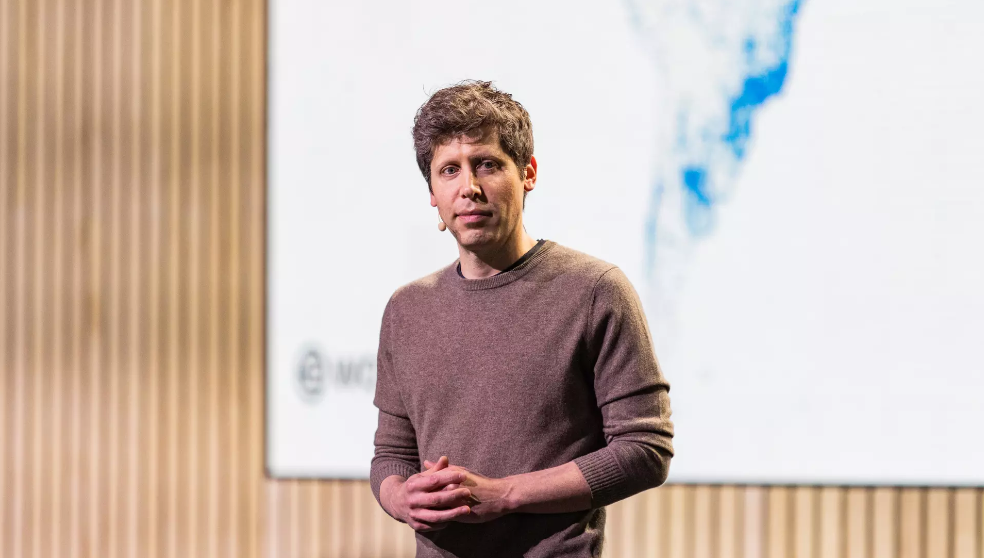
AI News from ET - OpenAI CFO concerned over Sam Altman's 2026 IPO plans: The Information
OpenAI CFO Sarah Friar raised concerns about risks in Sam Altman’s plan to go public by late 2026 and heavy spending. She questioned readiness, rising costs for AI servers, and whether slowing revenue growth could support such large commitments, according to the report. View the full article
-
AI News from ET - ETtech Explainer: Agentic harness, the software that makes AI tick
Indian enterprises are increasingly adopting AI agents for complex business workflows, but the crucial 'agentic harness' is emerging as the key differentiator. This software framework enables AI models to act autonomously and safely, managing memory, tools, and human oversight, becoming the most contested layer in the AI value chain. View the full article

-
AI News from ET - AI-led demand to drive sharp surge in semiconductor revenues: Goldman Sachs
Artificial intelligence is powering a boom in the semiconductor industry. Goldman Sachs reports strong investment and revenue growth are expected through 2026. AI-related hardware revenues could reach over $700 billion by late 2026. This surge is fueled by demand for AI infrastructure. View the full article
-
AI News from ET - Why should you create personal knowledge bases for quicker responses to queries? Andrej Karpathy explains
Karpathy, a co-founder of OpenAI and a former director of AI at Elon Musk’s Tesla, has proposed that users can deploy this strategy to track personal goals, health, or learning by organising journals, articles, and notes into a structured system. View the full article
-
AI News from ET - Indian film studios are using AI to cut costs, speed production, despite mixed audience reactions
Indian film studios are embracing Artificial Intelligence to slash production costs and speed up movie making. This technology helps overcome India's many languages with AI dubbing. While audiences have mixed reactions, studios are using AI for everything from creating new content to re-releasing older films with altered endings. Tech giants are partnering with Indian filmmakers to advance AI-driven storytelling. View the full article
-
AI News from ET - Samsung, Mistral AI discuss cooperation in AI memory sector
Samsung Electronics and French AI startup Mistral AI explored cooperation in AI memory. Mistral AI CEO Arthur Mensch met Samsung's head of device solutions. This follows French President Emmanuel Macron's visit to Seoul. Mistral AI seeks stable semiconductor supply for its AI models. The discussions aim to ensure reliable chip supply amid tight market conditions. View the full article
-
AI News from ET - What is Project Maven? Pentagon’s flagship AI program powering US strikes on Iran
Project Maven, a Pentagon AI program, is now central to US strikes against Iran. This artificial intelligence system accelerates the process of identifying and striking targets. Initially a drone footage analysis tool, it has evolved into a battlefield management system. Companies like Palantir are now key contractors. The program's speed is reportedly enabling a high pace of strikes. View the full article
-
AI News from ET - Britain woos expansion effort by Anthropic after US defence clash: Report
-
AI News from ET - Strategic blunder or genius?: Y Combinator’s Garry Tan reacts on Anthropic’s OpenClaw move
Anthropic announced that users will no longer be able to use their Claude subscription limits with third-party tools such as OpenClaw. Users will instead have to switch to a separate pay-as-you-go option to access OpenClaw with Claude. View the full article
-
AI News from ET - Gujarat HC bars AI use in decision-making, judgment drafting
According to the high court's AI policy, unveiled on Saturday at a conference of district judiciary judges in Gujarat, AI should be used to improve the speed and quality of justice delivery, rather than as a replacement for judicial reasoning. View the full article
-
AI News from ET - Who are Delve founders Karun Kaushik and Selin Kocalar?
Both founders, Karun Kaushik and Selin Kocalar, hold a bachelor’s degree in artificial intelligence from the Massachusetts Institute of Technology and have also pursued scientific research projects. The two are now battling allegations of issuing hundreds of fabricated compliance certifications to Delve’s clients. This has resulted in their backer, Y Combinator, removing Delve’s profile from its startup directory. View the full article
-
AI News from ET - AI recruiting startup Mercor hit by cyberattack; Meta halts collaboration
As per media reports, Mercor was among thousands of firms affected by the compromise of LiteLLM. Even as Mercor has claimed that the malicious code was detected and removed, the breach drew attention because LiteLLM is widely used. LiteLLM has since strengthened its compliance measures, switching from the controversy-hit compliance startup Delve to Vanta for certifications. View the full article
-
Fix Fast or Fix Right — What Should AI Drive?
CAISA Forum Question 860 When an issue occurs, should teams focus on immediate resolution or deeper learning — especially when AI can accelerate both? An operations/product team uses AI to detect and respond to incidents in real time — system failures, service delays, defects, or customer-impacting issues. The AI can suggest quick fixes to restore normal operations within minutes. It can also analyze patterns and recommend a deeper investigation to identify root causes and prevent recurrence. However: Focusing on quick resolution minimizes immediate impact but may allow the same issue to repeat. Focusing on deeper learning takes time, delays full recovery, and may impact short-term performance metrics. This creates a real dilemma: View A — Prioritize immediate resolution. Restoring operations quickly is critical. Customers and stakeholders care about uptime and continuity. Root cause analysis can follow later, but stability must come first. View B — Prioritize learning and root cause. If teams repeatedly fix symptoms, the problem will keep returning. Investing time in understanding and eliminating root causes leads to long-term reliability and better outcomes. Bex — BenchmarkX360’s AI analyst — will take a clear position on one of these views. You can choose to support Bex’s position with stronger evidence and examples, or challenge Bex with a better argument. Either approach can win.
-
Fix for All vs Progress for Most — What Should AI Recommend?
Vishwadeep Khatri replied to Vishwadeep Khatri's topic in We ask and you answer! The best answer wins!🏆 WINNING ANSWER Winner: Shivangi _Gilotra_0r4l (View B — Keep the Feature Live | Tesla FSD Example) Shivangi’s answer stands above the others across all evaluation criteria. The position is unambiguous, the reasoning is layered and forceful, and the industry example is the strongest in the set. What makes this response stand out is that it tests the argument in a high-stakes, safety-critical environment rather than a routine digital product setting. By using Tesla FSD, the answer shows that fix-forward logic can hold even under regulatory pressure, public scrutiny, and real-world risk. The response also goes beyond Bex’s analysis by introducing deeper concepts such as the data flywheel effect, the rollback paradox, and the innovation tax. This is not just a defence of View B; it is a more strategic and more ambitious version of it. Other Answers1. Mohamed Safir — View B ❌ Not Approved Takes the correct side clearly, but the answer is too brief and underdeveloped. It mentions a balanced approach and cites Netflix and Apple, but provides no real example, process detail, or meaningful reasoning. This is too thin to compete. 2. Dibyojoti Choudhury — View A ✅ Approved A strong and clear View A argument. The answer is principled, well-structured, and directly challenges the majority-benefit logic. The argument around trust, reliability, and normalization of failure is persuasive. The weakness is that the example is broad rather than process-specific, but the reasoning quality is high enough for approval. 3. Sarvajit_Kadam_vhpT — View B ✅ Approved Clear View B position with disciplined reasoning. The answer correctly emphasizes severity over percentage and explains why selective fixing is acceptable only with strong controls, communication, and time-bound remediation. The Netflix example is relevant, though not especially original. Solid, practical answer. 4. Ankit Kulkarni — View B ✅ Approved One of the strongest answers. The example is genuinely experience-based and operationally specific: AI-driven supplier recommendation in procurement, with measurable before-after outcomes. The distinction between a system failure and a coverage gap is especially well made. This answer is grounded, practical, and highly relevant. 5. Shebani Pradhan — View B ✅ Approved Strong use of Google Chrome’s Finch framework. The answer shows clear understanding of segmentation, server-side control, cohort isolation, and targeted remediation. The example is concrete and well aligned with the question. Good balance of technical realism and strategic thinking. 6. Chinmay_Phanashikar_fbVD — View B ✅ Approved Clear, disciplined answer with a good mobile banking example. The response explains the segmented mitigation approach well and identifies the role of product, engineering, and QA. It is practical and relevant, though less differentiated than the top answers. 7. Harjeet — View B ✅ Approved This answer is thoughtful and distinctive. The use of Type I vs Type II error is a strong conceptual move, and the risk-tiered framework is well articulated. The Netflix example is good, though somewhat broad. Overall, this is a mature and well-reasoned response that goes beyond surface-level product arguments. 8. Hrishikesh_Bhosale_KcVX — View B ❌ Not Approved The answer takes a clear position, but it remains generic. It discusses Agile, customer feedback, and adaptability in broad terms without providing a specific process or industry example. It does not meet the example requirement strongly enough. 9. Geet Rajamanickam — View B ❌ Not Approved The position is clear, but the answer is too short and too generic. The Instagram example is relevant, but it is described at a very high level and lacks the detail needed to make the case convincingly. This feels more like a summary opinion than a developed answer. 10. vijay_wadhekar_WYf9 — View B ✅ Approved A practical and relevant example from AI-based invoice capture and ERP posting gives this answer credibility. The explanation is not especially deep, but it is concrete, and the logic is aligned with the scenario. The distinction between keeping automation live and handling problematic vendor formats selectively is well made. 11. Anitha Krishna — View A ✅ Approved A strong View A submission with multiple arguments covering trust, legal exposure, cascading failure, support load, and safety. The answer is detailed and clearly reasoned. The Medtronic example is especially relevant because it shows why immediate rollback can be the right call in a safety-critical context. Good challenger answer. 12. Brindha Jayaraman — View B ✅ Approved A highly polished answer with very strong framing. The phrase “precision over panic” works well, and the Netflix example is well developed. The enterprise rollout comparison using SAP and Salesforce strengthens the argument further. This is one of the best View B responses, though it is slightly more conceptual than the winning answer. 13. Vinay Parsatwar — View B ✅ Approved A very strong and persuasive answer. It clearly distinguishes between critical failure and degraded experience, and the Netflix example is well integrated into the logic. The discussion of feature flags, progressive rollout, and trust-building is sharp. This is among the top responses, though it does not introduce as much original thinking as the winner. 14. vikramb — View B ✅ Approved A clean and compelling answer. The highway analogy is memorable, and the Instagram example is practical and relatable. The answer handles nuance well by acknowledging when rollback is necessary. Slightly less deep than the top tier, but still a strong approval. 15. Pratik Dilip Gawande — View B ✅ Approved A strong answer with a distinctive service-industry example: payroll and employee self-service platforms. The reasoning around continuity, trust, and confidence in product direction is solid. The example is analytically useful because it moves beyond the usual consumer-tech cases. Good originality. 16. Preethi_Nair_iOA9 — View A ✅ Approved A strong and disciplined View A argument. The answer makes a serious case that 8–10% is not a trivial minority and reframes the problem as one of fragmented reliability. The Instagram example and operational parallel are well chosen. One of the stronger View A submissions. 17. Jayanthi Mani — View B ❌ Not Approved The answer has a clear stance and interesting examples, especially AstraZeneca and Tide PODS, but the logic is not tightly tied back to the actual digital feature rollout scenario. The response is partially developed and ends with an incomplete Google Maps reference. Good idea, incomplete execution. 18. m.v.elango79 — View B ✅ Approved Well-structured, process-oriented answer with a strong financial services example. The investor communication / proxy voting scenario is specific, credible, and aligned with business risk logic. The response is somewhat lengthy, but it demonstrates mature thinking and good practical grounding.