Vishwadeep Khatri
Administrators
-
Joined
-
Last visited
Everything posted by Vishwadeep Khatri
-
Trump has embraced government investment in private companies in his second term, scrambling his party's politics. His administration last year secured a 10 per cent stake in the struggling Silicon Valley company Intel, and it considered a government takeover of Spirit Airlines earlier this year, although the airline couldn't reach a deal and ultimately closed. View the full article
-
The package, one of the biggest private credit transactions in history, highlights the race by top-tier financiers to fund data center construction and the chips they use. Tech companies are tapping every corner of the credit markets to meet AI’s unprecedented capital demands, forcing Wall Street to engineer novel debt structures to keep pace. View the full article

-
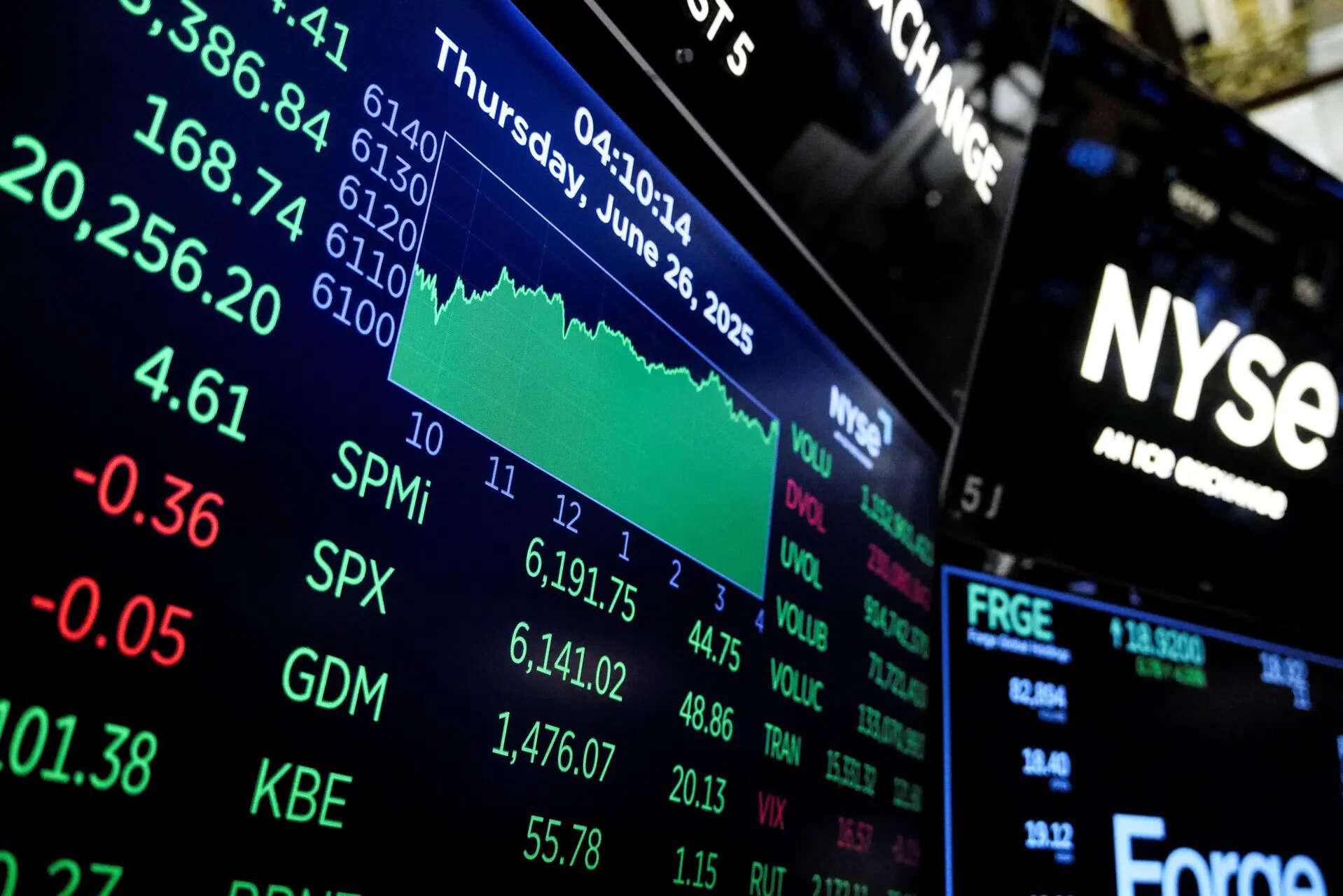
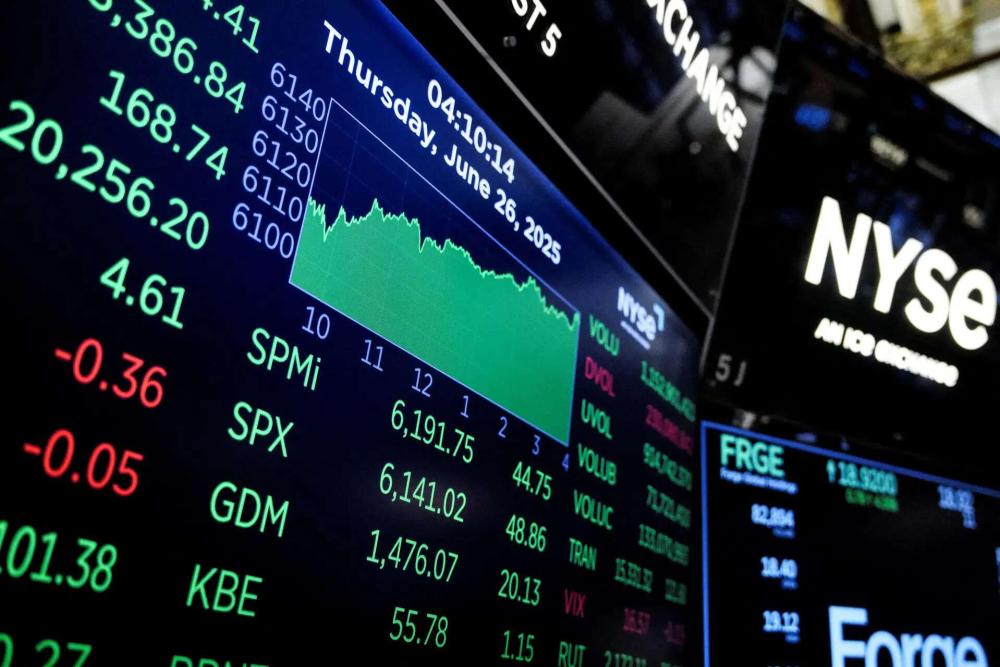
The company will replace swimming pool equipment distributor PoolCorp on the benchmark index before the start of trading on June 22. Marvell shares jumped nearly 6% in extended trading. View the full article
-
As part of the deal, Google will pay SpaceX $920 million monthly from October this year to June 2029, with capacity ramping up through September at a reduced fee, Elon Musk's space venture said in a regulatory filing. View the full article

-
Digital news outlet NOTUS reported on Thursday that senior U.S. officials held preliminary discussions with AI companies about the potential for the government to buy some shares in their firms. View the full article

-
India is prioritising strategic autonomy and control over AI and biometric hardware, following global trends. Concerns over trusted sources for IoT devices and potential espionage are driving this focus. Mandates for CCTV and telecom equipment highlight the government's commitment to securing digital public infrastructure. View the full article

-
Meta is considering raising tens of billions of dollars in a stock offering as it seeks new sources of capital to fund the company's AI ambitions, according to a report by the Financial Times. View the full article
-
A groundbreaking vaccine, designed entirely by artificial intelligence, has been tested in humans for the first time. This experimental jab aims to protect against a wide range of viruses, including those that caused SARS, MERS, and Covid-19. Early trials involving a small group showed a modest effect on immune systems. View the full article

-
Investors are pouring money into Artificial Intelligence, even as economic worries grow. SpaceX's massive IPO signals strong AI interest. Companies like Google are expanding AI infrastructure. Chipmakers are seeing huge demand. However, some signs suggest market expectations may be too high. Analysts are watching closely to see if this AI boom can withstand inflation and slowing growth. View the full article

-
A huge AI data centre is planned for Fouju, France. This project brings hope for jobs and money to the small village. However, residents worry about environmental damage and disruption. The facility will consume vast amounts of power. Local groups question its economic value against the significant impact. The debate highlights the growing tension between digital advancement and community well-being. View the full article

-
America's top envoy in Europe has urged the European Union to stand with the United States in a critical artificial intelligence race against China. The ambassador voiced worries about the EU's plans to reduce reliance on American technology. He stressed that Western civilization's interests lie in an American victory in this technological contest. View the full article

-
In a long article on its website, titled "When AI builds itself", Anthropic said it would be good to have the option to slow or temporarily pause frontier AI development, citing safety risks and loss of control over the models as they self-improve. View the full article

-
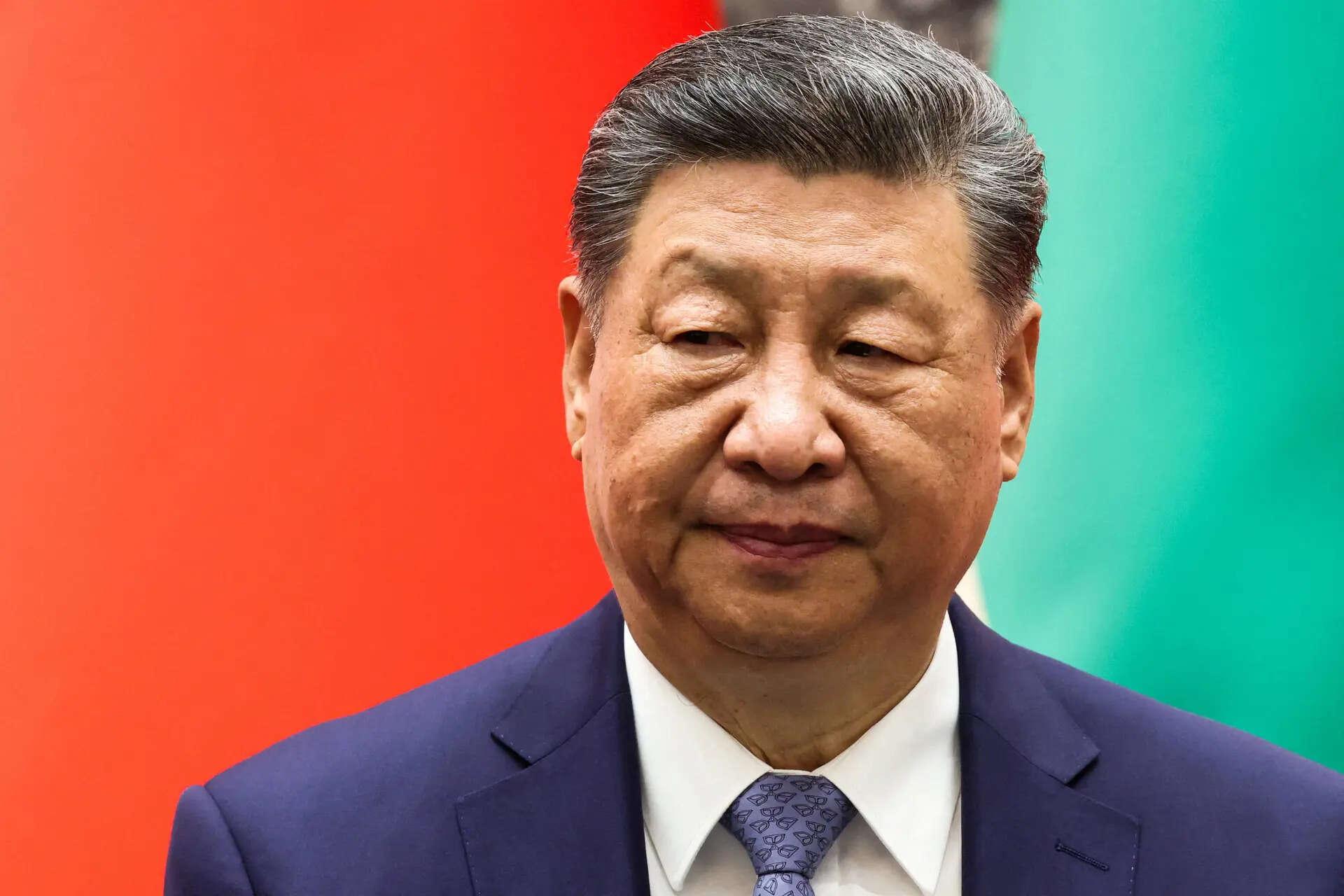
The project, known as "Xinhua Yudian," meaning Xinhua lexicon, is "an intelligent agent for learning, researching, and disseminating Xi Jinping Thought on Socialism with Chinese Characteristics for a New Era," the company said. View the full article
-
In an interview with Bloomberg, Murati said the decision to start the company stemmed from a desire to build a frontier AI lab focused on human-AI collaboration. Thinking Machines is building AI interaction models that make human-AI conversations rich and nuanced in real time instead of “turn-based”. View the full article

-
CAISA Forum Question 878A telecom company uses AI to improve its customer support operations. The AI analyzes customer complaints, service usage, escalation patterns, retention data, and support costs. It discovers that: 90% of customers receive satisfactory service and rarely complain. The remaining 10% of customers generate nearly 65% of complaints, escalations, and support costs. To address this, the AI proposes a major change: Allocate more support resources to the dissatisfied 10%. Provide them with faster response times and specialized assistance. Keep the overall support budget unchanged. However, to make this possible: Response times for the remaining 90% of customers would increase slightly. Average customer wait time would increase by approximately 8%. Service levels for most customers would become marginally less responsive. The AI predicts that the change would significantly reduce complaints and improve retention among the dissatisfied segment. This creates a real dilemma: View A — Prioritize the dissatisfied minority.The most dissatisfied customers create the greatest risk to reputation, retention, and escalation. Improving their experience should take priority, even if it causes a small reduction in service levels for the majority. View B — Prioritize the satisfied majority.Most customers are already receiving good service. Reducing service quality for the majority to improve outcomes for a small segment is inefficient and unfair. AI should optimize for the greatest overall benefit. Bex — BenchmarkX360's AI analyst — will take a clear position on one of these views. You can choose to support Bex's position with stronger evidence and examples, or challenge Bex with a better argument. Either approach can win. Which view do you support — and why? Provide a specific operational, service, product, or industry example to support your position.⚠️ Answers that do not take a clear position will not be approved. ⚠️ "It depends" answers will not be approved. 💡 Participants are free to use AI tools — clarity, insight, and contextual relevance will determine the best answer. 🏆 The best answer will be selected on the basis of:· Clarity of position taken · Quality of reasoning and argument · Relevance of operational, service, product, or industry example · Ability to go beyond or against Bex's analysis
-
Vishwadeep Khatri replied to Vishwadeep Khatri's topic in We ask and you answer! The best answer wins!Answer 1 — Vikas Choudhary (View B)Position: View B — Preserve the Buffer. Explicitly stated: "I support View B." Key content: Argues that AI struggles to recognize resilience value, that systems optimized for maximum efficiency are often the most fragile, and uses the airline industry as an example — noting airlines that aggressively optimized schedules and cut staffing slack faced cascading cancellations during weather events, leaving them unable to recover. Also applies the principle to logistics: spare warehouse space that appears idle may be the only buffer available during a surge. Evaluation of three criteria: Clear position: ✅ Explicitly View B, no hedging. Specific example: ⚠️ Partially — mentions the airline industry generically ("many airlines") but does not name a specific carrier, route structure, or incident with concrete data. Quality of reasoning: Moderate — makes the core resilience argument and the efficiency-fragility trade-off, but the reasoning is stated more as assertion than demonstration. The airline reference is useful but lacks specificity (no named airline, no figures, no named event). Answer 2 — 🏆 Winning Answer rajan.arora (View B) Position: View B — Preserve the Buffer. Stated emphatically and repeatedly: "I support View B. Preserve the buffer." and "View B — without qualification." Key content: An exceptionally comprehensive, multi-section argument. Identifies the "calm-sample fallacy" — the logical error of reading a utilization metric estimated on calm periods as a verdict on unsampled tail risk. Invokes Taleb's Extremistan/Mediocristan framework, Goodhart's Law, March's exploration/exploitation model, and Dixit & Pindyck's real options theory. Presents a formal quantitative model (V = αS − β(pLA) − γO − δR) with anchored parameters from McKinsey MGI research. Provides 11 dissected real-world cases across multiple industries: Toyota vs. GM/VW chip shortage (automotive), UPS ORION (logistics), Texas ERCOT/Storm Uri (energy), SVB (banking), LTCM (finance), Southwest vs. Delta meltdown (airlines), Zara (apparel), Reliance Jio (telecom), Hospital ICU surge (healthcare), Ever Given/Suez (shipping), and AI model collapse (Shumailov, Nature 2024). Includes matched-pair controlled comparisons (Toyota vs. GM; Southwest vs. Delta), sensitivity analysis, and a practical "SLACK gates" decision framework with a Canary KPI (Surge Recovery Time). Evaluation of three criteria: Clear position: ✅ Explicitly and unambiguously View B, with a dedicated section showing where View A is genuinely correct (Mediocristan zone) and why this case falls outside it. Specific examples: ✅ Extensive — 11 named, industry-specific cases with figures (e.g., Toyota's 2–6 month chip stockpile policy; GM's ~278,000 units cut; Southwest's ~16,700 cancellations and $1.1B cost; Delta's 311 vs. 5,500+ cancellations; ERCOT's ~246+ deaths and $80–130B+ cost; UPS $300–400M/yr savings with 100k+ seasonal workers retained). Quality of reasoning: ✅ Exceptional — applies multiple named frameworks with citations, constructs a formal model with anchored parameters and sensitivity analysis, acknowledges and closes four specific counter-arguments, names confounds in its own matched-pair examples, and provides a structured decision tool (SLACK gates) for practitioners. Answer 3 — AbilashMohandas (View B)Position: View B — Preserve the Buffer. Stated clearly: "CLEAR POSITION: Preserve the Buffer." and "FINAL POSITION: Preserve the Buffer." Key content: Challenges Bex's UPS argument by showing UPS retained surge-capacity driver pools, overflow warehouse agreements, and buffer fleets — it did not actually eliminate spare capacity, it managed it intelligently. Presents a structured banking / contact centre example: a retail bank's contact center with 74% average agent utilization where AI recommends 20% headcount reduction, but the analysis misses 4–6 regulatory announcement spikes per year, 2–4 system outages, 1–2 fraud incidents, and predictable year-end surges — each triggering 40–300% volume spikes. Includes a table of what AI can see vs. what it cannot price (disruption costs, reputational damage, customer lifetime value lost). Provides a four-type capacity classification framework (True Waste / Operational Buffer / Resilience Reserve / Strategic Slack) and four AI design principles (resilience-weighted objective functions, dynamic buffer management, scenario-based stress testing, human-in-the-loop governance). Evaluation of three criteria: Clear position: ✅ Explicitly View B throughout; no "it depends" hedging. Specific example: ✅ The retail bank contact center is a concrete, detailed, industry-specific scenario with specific metrics (74% utilization, 20% headcount reduction recommendation, 4–6 spikes/year, 40–60% volume impact, SLA breach consequences) and a real-world outcome note about a UK bank that downsized based on AI-driven efficiency models. Quality of reasoning: ✅ Strong — correctly identifies that UPS is actually evidence against Bex (not for), uses structured tables to expose the AI's blind spots, provides a practical multi-type capacity framework, and prescribes actionable AI design principles. Reasoning is clear, well-organized, and grounded in operational specifics. Answer 4 — Anjali _Mali _H0mp (View B)Position: View B — Preserve the Buffer. Stated clearly: "View B — Preserve the Buffer (Spare Capacity = Strategic Resilience)." Key content: Uses Amazon's fulfillment and delivery network as the central example. Argues Amazon intentionally maintains excess capacity — warehouses below full capacity outside peak season, underutilized delivery fleets, seasonal hiring ahead of demand, overlapping fulfillment zones — to handle Prime Day demand spikes (2–3x baseline volume), holiday surges, and weather disruptions. Explains the operational mechanics (pre-positioned inventory, flexible labor pools, redundant routing, overflow handling). Includes a comparative table (Efficiency Focus vs. Resilience Focus) and proposes reframing the AI objective from "minimize unused capacity" to "minimize total cost of failure + missed opportunity," with scenario-based AI modeling and capacity classification as solutions. Evaluation of three criteria: Clear position: ✅ Explicitly View B, consistently stated. Specific example: ✅ Amazon's logistics network is a named, relevant, industry-specific example with specific operational details (2–3x baseline volume on Prime Day, seasonal hiring practices, fulfillment zone redundancy, same-day/next-day SLAs). However, it lacks hard figures (e.g., no dollar costs, no actual cancellation numbers, no specific disruption outcomes cited with data). Quality of reasoning: ✅ Solid — the core argument is well-made (AI optimizes for averages, misses that peak demand can drive 40% of annual profit), the Amazon case is logically deployed, and the reframing of the objective function is a practical and intelligent recommendation. The reasoning is somewhat less rigorous than answers 2 and 3 — the example is well-chosen but somewhat surface-level (Amazon's logistics strategy is a broadly known fact, cited without specific sourced data), and counter-arguments are not engaged. Answer 5 — Sanmathi_Naik_DgYE (View A)Position: View A — Eliminate the Excess. Stated: "View A — Eliminate the Excess." Key content: Argues for four benefits of eliminating excess capacity: cost efficiency, operational discipline, market competitiveness, and agility. Uses Toyota's lean manufacturing (Just-in-Time) as an example — noting Toyota eliminated excess inventory to reduce waste and improve efficiency. Also references cloud computing — companies shifting from owning excess server capacity to pay-as-you-go models. Evaluation of three criteria: Clear position: ✅ Explicitly View A, no hedging. Specific example: ⚠️ Weak — Toyota is named, but this is deeply ironic: Toyota is actually the company that maintained a 2–6 month chip buffer AGAINST pure JIT optimization post-2011, and during the 2021 chip shortage, Toyota outperformed GM precisely because of its buffer. The answer misapplies the Toyota example. The cloud computing reference is real but very generic (no company, no service, no figures). Quality of reasoning: ❌ Weak — the four benefits listed are asserted rather than demonstrated. There is no engagement with the specific scenario details (seasonal peaks, weather disruptions, slow-to-rehire surge staff). The Toyota example is factually inapt for this context, and the reasoning does not address the asymmetric risk structure of logistics operations at all.
-
The 29-year-old founder of data-labeling startup Scale AI joined Meta after Chief Executive Officer Mark Zuckerberg overhauled his company’s AI efforts, including through a $14 billion investment in Scale that was widely viewed as a bid to recruit Wang. View the full article

-
SpaceX is inviting investors to bet on Elon Musk's vision of AI data centers in space and humans on Mars. The sky-high valuation for SpaceX -- nearly $1.8 trillion -- is based on the idea that his legendary run will continue and that Musk can achieve his goal of data centers in space and putting people on Mars. View the full article

-
AI that can build itself would be a major development in the history of technology, but "full recursive self-improvement also might increase the risks of humans losing control over AI systems," the AI startup said. View the full article

-
The minority affairs ministry is integrating artificial intelligence into its services. AI chatbots and voice solutions will soon support citizens in multiple languages. These advancements aim to streamline applications, improve Hajj pilgrim support, and boost employment for minority youth. View the full article

-
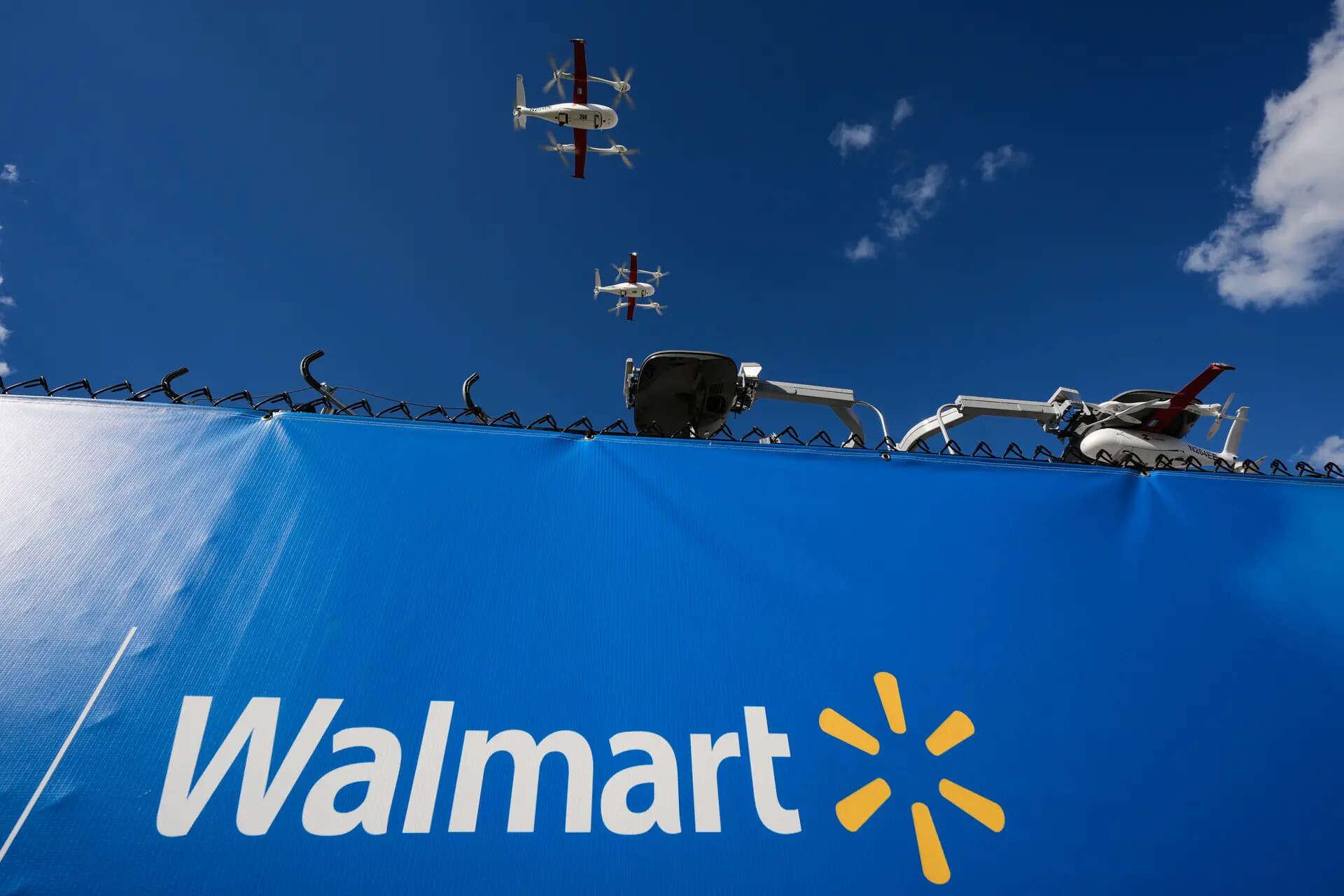
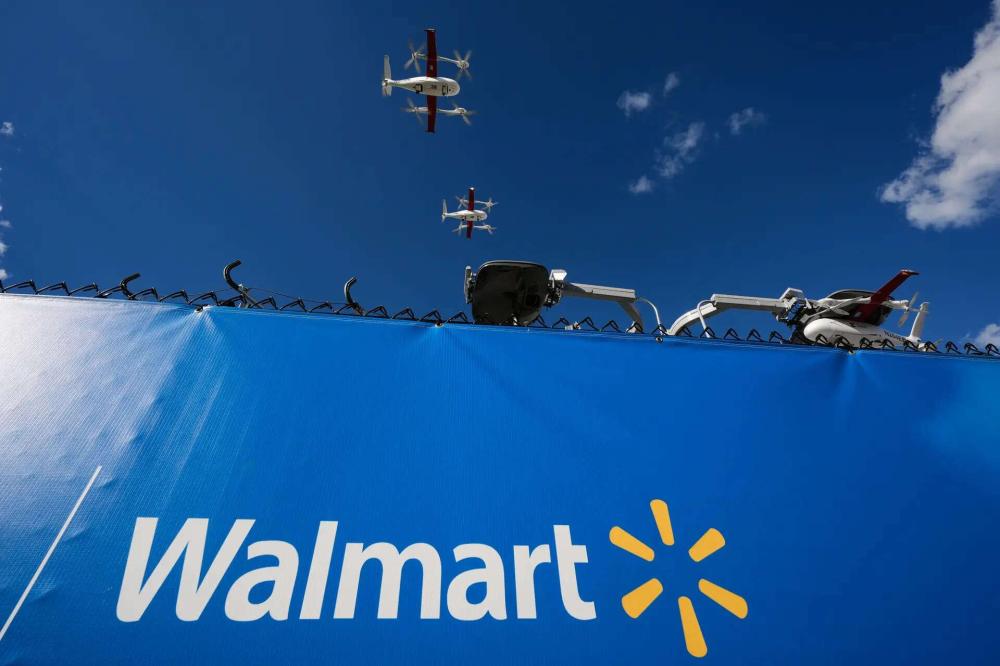
Walmart investors on Thursday voted against a shareholder proposal asking it to report on how its use of AI is affecting the well-being of its workforce, according to preliminary voting results from the retailer's annual shareholders' meeting. View the full article
-
US Representatives Lori Trahan, a Democrat, and Jay Obernolte, a Republican, released draft legislation to regulate AI, according to a spokesperson for Trahan. View the full article

-
Canada has unveiled a new artificial intelligence strategy. This plan aims to create 250,000 jobs by 2031. A new C$500 million tech fund will support homegrown AI firms. The government expects this strategy to boost the country's GDP by 3%. This initiative will also help small and medium-sized businesses access AI tools. New consumer privacy legislation is also planned. View the full article

-
CrowdStrike shares dropped significantly on Thursday. This happened after the company's financial outlook did not meet high investor hopes. Demand for cybersecurity software remains strong, boosted by new AI models. Analysts suggest some investors may have taken profits after a recent surge in CrowdStrike's stock price. Other cybersecurity firms also saw their stock values fluctuate. View the full article

-
India leads the world in using AI at work. Employees and managers are adopting AI tools widely. This adoption boosts job satisfaction significantly. Many believe AI agents will handle half their tasks soon. Organizations focusing on AI integration see better business results and happier staff. This shift is reshaping the future of work. View the full article