

Topics
-
AI News from ET - AMD to invest up to $5 billion in Anthropic; AI startup to buy up to 2 GW of chips
AMD has been seeking to expand its foothold in the fast-growing AI chip market as developers look to diversify beyond Nvidia, while Anthropic has been racing to secure computing capacity to meet growing demand for its AI services. View the full article -
A Meta Platforms lawsuit claims AI tools unfairly targeted employees for layoffs. Workers face difficulties proving AI discrimination due to limited access to internal processes. Arbitration agreements often prevent collective legal action and public scrutiny of workplace disputes. These hurdles explain the scarcity of high-profile AI employment lawsuits. Meta denies using AI for layoff decisions, stating humans made all choices. View the full article



Leaderboard
-
Saurabh Dhaked
Members1Points10Posts -
Rahul.Arora2
Members1Points44Posts


Popular Content
Showing content with the highest reputation on 11/11/2022 in all areas
-
1 pointThe different proficiency levels of six sigma explains about who can perform what role & what needs to be dealt with in a project. At each level there is an underlying difference in terms of skills & knowledge (both business & technical) that an individual can have in order to undertake a project. There are primarily six levels of proficiency in Six Sigma parlance. Each of the level is as explained below:- Six Sigma White Belt : Professionals who are considered six sigma white belts have undergone a formal session with an overview of the relevant methods & tools. This extends to all the workforce of an organization. White belts usually work on local problem solving teams that support six sigma projects. For eg: a white belt can participate in a problem solving to identify the potential Xs for the project Y, assist the green belts & yellow belts in data collection, also support in solution deployment in their respective areas. However in some cases this level is not being formalized & many organizations start from yellow belt onwards. Six Sigma Yellow Belt : A yellow belt professional have exposure to six sigma concepts that goes beyond the fundamentals provided for a white belt. They have much deeper knowledge when it comes to leveraging problem various solving tools & they are assigned to a project as fully contributing team members. For eg: A yellow belt can lead smaller incremental improvement projects like lean A3 or Just do-it kind of stuff. They also support the higher belts in their projects, they can lead & support green belts & black belts in various facets of a project like performing fishbone analysis to identify potential Xs, leading the data collection exercise as well as piloting solution i.e. leading pilot experiments etc. Six Sigma Green Belt : A green belt professional either leads low complexity projects(full time) related to improving their business process or support the black belts in high complexity projects (usually 20-50% of their bandwidth). While yellow belts have a good understanding of the various problem solving tools, green belts have a comprehensive understanding of six sigma methodology & its tools which also includes various statistical methods for validating the potential Xs in terms of its impact on project Y. As an example in a black belt level project, green belts can help the project team members (who are generally yellow belts or white belts) collect & organize data for a project. Six Sigma Black Belt : A black belt professional typically works full-time basis in driving high complexity improvement projects. they are the main project & team leaders & guide other employees towards bringing value to the process. They are the first to mentor other belts in their respective projects. They perform training sessions, discussions or other forms of mentorship. In a mature organization you will see, several green belts working under a black belt. As an example for an improvement project that is lead by a green belt, black belt mentors & guides the green belt in executing the project. Black belts possesses knowledge on advanced statistical methods in addition to the problem solving tools & are also actively involved in change management pertaining to the high complexity cross functional projects that they are driving. Six Sigma Master Black Belt : This is the highest level of proficiency in Six Sigma parlance. Master black belts have the most thorough knowledge, comprehensive understanding of the methodology. They work hand in hand with the leadership of an organization & report to them the status of the improvement projects being run. They work at a strategic level & play an important role in identifying potential improvement opportunities that are relevant to the business goals. They are also the evangelist of Six sigma, spreading awareness on six sigma methodology throughout the organization by developing black belts & green belts through training & up-skilling. Also they serve as a mentor to black belts for their projects. Master Black belts have a broader view of strategy throughout a business, coordinating teams across verticals. Six Sigma Champion : Six sigma champion is the individual who translates the mission, vision & values into a six sigma deployment strategy that supports the business goals. As an example, a six sigma champion works closely with master black belt in identifying potential projects & also identifies the resourcing needs & removes roadblocks during the course of the projects. They are generally someone higher up in the organization like Vice President or Director.1 point
-
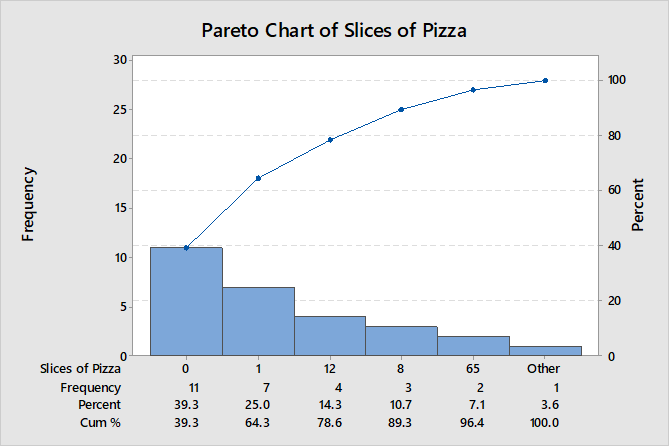
1 pointThe Proficiency of Six Sigma Levels: The very purpose of Six Sigma in this real world is built a culture of Continuous Improvement and different levels of six sigma cater all such requirements by defining clearly roles & responsibility at each level which differentiated by belt level. Proficiency of Six Sigma Levels – Hierarchy Pyramid as follows: These levels are as follows: Six Sigma Master Black Belt Six Sigma Black Belt Six Sigma Green Belt Six Sigma Yellow Belt Note: Champion in this hierarchy pyramid is at the top and Six Sigma White Belt (at the bottom) is the basic tenets of 6σ philosophy. Roles of Six Sigma Levels: 1. Six Sigma Yellow Belt: This level is considered as foundation level of 6σ methodology and its place at the bottom of the hierarchy pyramid and just above to White Belt. Basic understanding of tools & stats are addressed through imparting of various Modules like: Ø Basic Statistics Ø 07 QC tools Ø Sometime, Advanced QC tools Ø Brief about Lean & its tools Ø RCA, Why-Why, Kaizen etc. Major Roles: Ø Participate in Improvement projects as member Ø Using of Problem Solving Tools & Techniques Ø General Purpose Control Ø Support to Green/Black Belt in Projects Ø Assist in Data-COPAI(Collection, Organisation, Presentation, Analysis, Improvement) Ø Root Cause Analysis Example: Suppose, we want to increase sales of Pizza for an outlet. Team has taken that challenge and initiated Six Sigma Black Belt Project. Hence, Primary role of YB candidate is to COPAI (Collection, Organisation, Presentation, Analysis, Improvement) by using various tools and techniques like Checksheet, Brainstorming, Fishbone diagram, Scatter plot, Control charts, Graphs etc to draw meaningful information and assist Green Belt candidate(who is also the part of same project). Example as follows: Pareto Analysis : Slices of Pizza vs Order Frequency 2. Six Sigma Green Belt: Once you are YB certified, you are eligible to up your level as Six Sigma Green Belt. GB candidates are closely associated in Six Sigma project and work under supervision of Black belt certified person. Having said that, their level is higher than YB hence they are well equipped with advanced level of statistical tools and gone through proper DMAIC methodology training. Major Roles: Ø Compile all information and analysis by YB candidate Ø Support to BB in Business Impact Project Ø Using of DMAIC Cycle and its presentation Ø Using of Advanced level of Statistics tools like Hypothesis, MSA etc. Ø Individual GB Project as Lead Ø Lean advanced tools like VSM etc. Example: Continuing the same example as above – Pizza Sales We can check whether sales: Is there any association between gender or not. Hence, GB candidate wants to test this hypothesis by selecting appropriate hypothesis test. In this case, he selected Chi Square test and will check p-value and draw inferences. 3. Six Sigma Black Belt: This is most valuable certification in the hierarchy pyramid and typical business impact project is driven by Six Sigma black Belt certified candidate. In this program, BB candidate is equipped by well versed and highly advanced statistical tools and using of Minitab. Leader of teams implementing the six sigma methodology on projects. Major Roles: Ø Highly advanced Statistical Tools & Techniques well versed Ø Ability in Design Thinking Ø Support to GB projects and leads Ø Assist to MBB Ø Using of Statistical Software i.e. Minitab Ø Imparting Training to YB & GB Candidates Ø Help to identify Business Pain Area and GB Projects Example: In the same Pizza sales example: Pizza taste & Sizes are one of the significant factors. Now as Black Belt – Many factors are changed simultaneously from one run to another run and the resulting change in response is studied using statistical techniques, Hence BB will go of DOE (Design of Experiment) to determine the optimal settings of the factors to minimize/target/maximize an output. 4. Six Sigma Master Black Belt: The MBB is responsible for translating the high level business goals into a Six Sigma strategy for the division and the associate functions. He works with the deployment leader to achieve the former. They also lead the development of the Six Sigma skills in the organization, for Black Belts, Green Belts, and the general associate base. MBB’s are responsible, together, for the success of the overall Division’s Six Sigma effort. They coordinate and lead activity on key cross-division value streams (e.g. Customer Service, Cycle Time, Research, etc). They also ensure that a culture that values openness, creativity and challenging the status quo develops in the organization. Major Roles: Ø Six sigma strategy and roll-out plan in the organization/function Ø Manage Project of the function Ø Mentor Teams Ø Achieve Lean Six Sigma Results Ø Cross-Functional Leadership Ø Project Execution and Removing Roadblocks Example: In same example – Pizza Sales: MBB will seek the approval from Top management for the DOE Trail and associate cost. Likewise many more assistance to Top management as well as mentoring to BB.



 1 point
This leaderboard is set to Kolkata/GMT+05:30