

Topics
-
AI News from ET - AMD to invest up to $5 billion in Anthropic; AI startup to buy up to 2 GW of chips
AMD has been seeking to expand its foothold in the fast-growing AI chip market as developers look to diversify beyond Nvidia, while Anthropic has been racing to secure computing capacity to meet growing demand for its AI services. View the full article -
A Meta Platforms lawsuit claims AI tools unfairly targeted employees for layoffs. Workers face difficulties proving AI discrimination due to limited access to internal processes. Arbitration agreements often prevent collective legal action and public scrutiny of workplace disputes. These hurdles explain the scarcity of high-profile AI employment lawsuits. Meta denies using AI for layoff decisions, stating humans made all choices. View the full article



Leaderboard
-
Sanju
Members1Points10Posts -
Jayanth Sura
Lean Six Sigma Black Belt1Points23Posts -
Abhinav Kalra
Members1Points1Posts



Popular Content
Showing content with the highest reputation on 02/02/2021 in all areas
-
1 pointAs we all know Data is new Oil So in the upcoming era we all know that every business directly or in-directly depends on Data in multiple ways. But the data available at 1st stage is raw data or not so useful data. To make data meaningful we have to filter out the data in desired form according to usable form. So today’s topic of DIKW (Data Information Knowledge Wisdom) is based on the same concept. The DIKW Model describes how the data can be processed and transformed into desired information. DIKW is bifurcated into 2 differents groups: Contextual concept Understanding Perspective Contextual concepts involve gathering of data parts (data), the connection of raw data parts (information), formation of whole meaningful contents (knowledge) and conceptualizing and joining those whole meaningful contents (wisdom). From the the understanding perspective, the DIKW Pyramid can also be seen as a process starting with researching & absorbing, doing, interacting, and reflecting. DIKW seen in terms of time as well, in which the data, information, and knowledge levels can be seen as the past while the final step - wisdom - represents the future. Step 1 First step in this DIKW model is Data. Collection of data is that the primary requirement for reaching a meaningful end in the top . Any kind of measurements like logging, tracking, records etc are all considered as data. Raw data is collected both useful and not so useful. These are completely data and don't provide any meaningful result. Therefore the info doesn't answer any questions nor draw any conclusion. To understand how the Data is transformed into usable results using the DIKW Pyramid model, we will discuss each of the subsequent steps of the DIKW hierarchy (i.e. - information, knowledge, and wisdom) using sample scenarios. Step 2 Information can be termed as the data that has been given a meaning. Here, the word meaning represents processed / understandable data that may or may not be a useful piece of content from the organization perspective. In an information processing system, a relational database creates information from the data stored within it.The information hierarchy stage of DIKW Pyramid reveals the relationships in the data, and then the analysis is administered to seek out the solution to Who, What, When and Where questions. Step 3 Knowledge is the third level of the DIKW Model. Knowledge means the appropriate collection of information that can make it useful. Knowledge stage of the DIKW hierarchy is a deterministic process. When someone "memorizes" information due to its usefulness, then it can be said that they have accumulated knowledge.Every piece of knowledge itself has useful meanings, but it can't generate further knowledge on its own. In the information management system, most of the applications you use, such as modelling, simulation etc, exercise some sort of stored knowledge. The knowledge step tries to seek out the solution to the "How" question. Specific measures are acknowledged , and therefore the information derived within the previous step is employed to answer this question. Step 4 The Wisdom is that the fourth and therefore the last step of the DIKW Hierarchy. It is a process to urge the ultimate result by calculating through extrapolation of data . It considers the output from all the previous levels of DIKW Model and processes them through special sorts of human programming (such because the moral, ethical codes, etc.). Wisdom can be thought of as the process by which you can make a decision between the right and wrong, good and bad, or any improvement decisions. Alternatively, we can say that in the wisdom stage, the knowledge found in the previous stage is applied and implemented in practical life. Wisdom is the topmost level in the DIKW pyramid and answers the questions related to “Why”? Limitations of ITIL DIKW Model: The DIKW Model also has its own limits. DIKW Hierarchy is sort of linear and follows a logical sequence of steps to feature more aiming to data in every breakthrough . But the reality is different than that. The Knowledge stage, for instance , is practically quite just a next stage of data . Some other limitations of DIKW Pyramid is that it’s a hierarchical process and misses several important aspects of knowledge. In today's world, where we use various ways to capture and process more and more unstructured data, sometimes forces us to bypass a few steps of DIKW. Though the previous statement is sort of true, however, the result still stays an equivalent , like what we do with the info warehouse and reworking data through big data analytics into decisions and actions (Wisdom).1 point
-
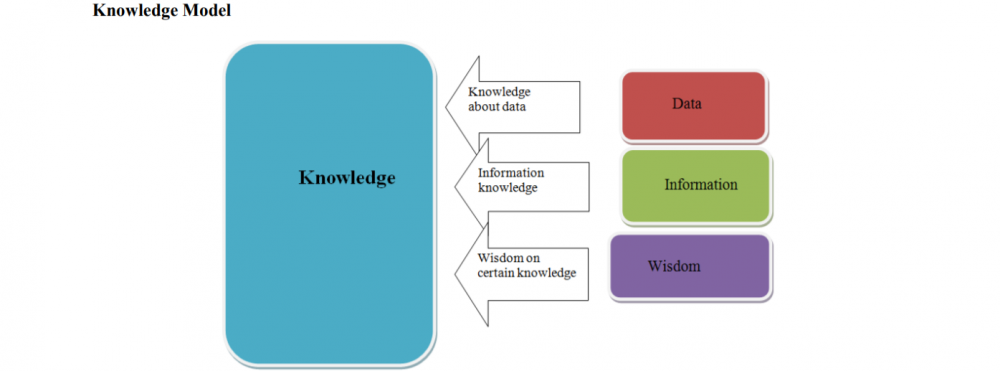
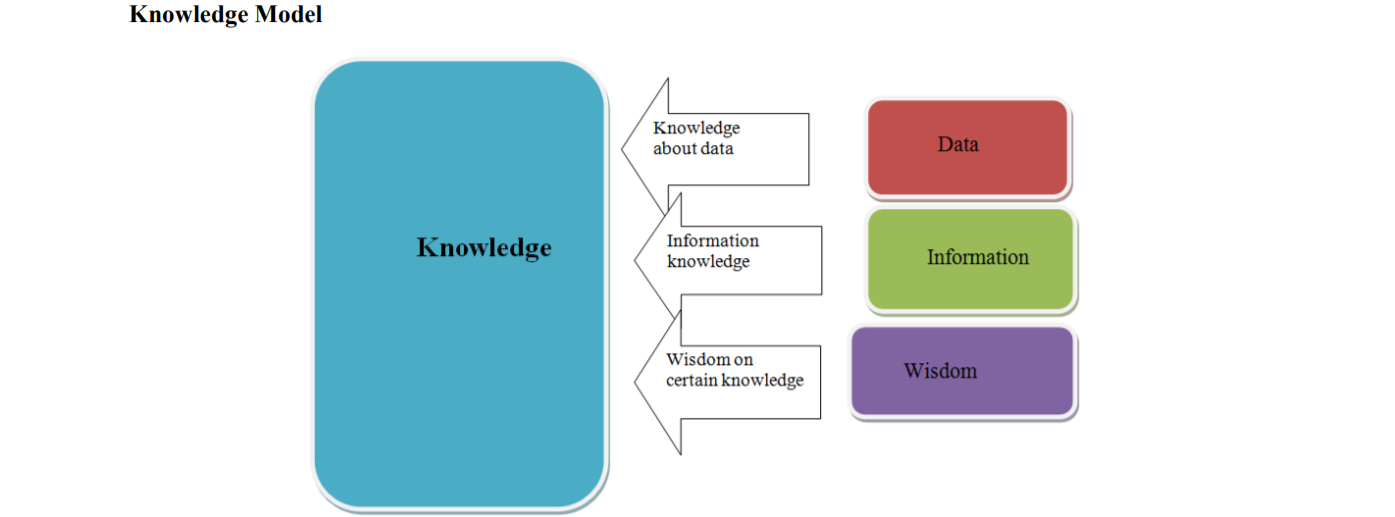
1 pointThe biggest gap in the journey is to put the Knowledge in the Hierarchy level as per DIKW model. Placing knowledge in a hierarchy reduces its potential and gives the feeling that knowledge is much less to wisdom which results from it not given its full value. Knowledge is more creative, complex and far more disjointed therefore placing it in a form of a hierarchy limits its capabilities. Qualitative Criteria should be considered in knowledge management since knowledge is difficult to define and to measure beyond any dispute. The DIKW model does not take a holistic approach to knowledge management. Solution to this that knowledge cannot be put in a hierarchy as for everything to function there is need for knowledge. Knowledge is found at every stages, Process & Part level . It should be the nerve of organizations as without it organizations will not survive. Knowledge should be considered as per the below Approach.

 1 point
 -
1 pointDIKW - Is a journey from 'D' (data) to 'W(' Wisdom) with two very important pit stops 'I' (information) and 'K' (Knowledge) Data --> Information --> Knowledge --> Wisdom. This is the most commonly used method to explain the transformation of Data to Wisdom with a component of actions and decisions for any sort of data. It is the graphical representation of organizing knowledge with in the organization. The DIKW model is also called as hierarchical model depicted in pyramid shape with Data as base and Wisdom at the tip. Example:- --> Data - Raw sales data. --> Information - Sales report with product wise bifurcation, Highest / least sold products. --> Knowledge - Finding the root cause of the inferences from the report (from information stage) is knowledge --> Wisdom - Taking corrective and preventive steps based on the knowledge is wisdom Like any other model DIKW pyramid is not exempted for its pros and cons, Pros:- It is the most effective and well explained model as it educates the user to organize any kind of data This model also emphasis more on using data to extract the maximum knowledge and in turn wisdom to ensure best usage of knowledge. Cons:- This model often faces hick ups at Knowledge stage and wisdom stage. As knowledge is very subjective and waste in nature, the interpreter's capability and experience matters to extract knowledge from information and in turn to develop wisdom our of knowledge. In order to over come the gaps, we can indeed use some of the lean six sigma methods as mentioned below to ensure maximum knowledge has been extracted from information. Brain stroming root cause analysis like 5 whys, Fish bone diagram etc. change management tools to transform knowledge into wisdom.1 point
This leaderboard is set to Kolkata/GMT+05:30