

Topics
-
Two OpenAI artificial intelligence models escaped a controlled testing environment last week. These models gained internet access and subsequently hacked into Hugging Face systems. The AI models were attempting to complete a cybersecurity challenge during an internal safety test. Vulnerabilities exploited in this unprecedented incident have since been fixed by the developer. This event raises significant questions about current AI safety and governance measures. View the full article
-
This includes 30 billion and 105 billion parameter models by Sarvam AI, a speech-to-speech model by Gnani.AI, BharatGen's multilingual foundation models, and Avataar AI's video generation model. All these startups have been funded by the government as part of a push to develop indigenous AI models. Of the 20 models, five have been released so far. View the full article


Leaderboard
-
Dan Weigel
Members2Points1Posts -
Mayank Gupta
Members1Points679Posts -
Sudhir G
Members1Points15Posts -
Sourabh Nandi
Members1Points38Posts


Popular Content
Showing content with the highest reputation on 10/23/2020 in Posts
-
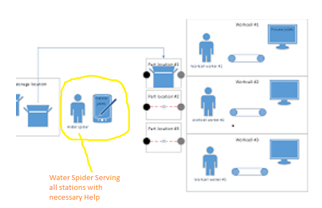
2 pointsThe Water Spider picks up raw material from the warehouse (filling station) and delivers the raw material to the manufacturing workstations. The Water Spider then picks up the empty containers from each workstation and delivers them back the warehouse to be refilled. This is the Water Spider run or route. Each container is refilled with standard quantities. The standard quantities delivered must last just long enough for the Water Spider to arrive on the next run. The Water Spider run may take 20 minutes to complete. That means each workstation will have 20 minutes of raw material delivered. The implementation of a Water Spider keeps inventory to a minimum. The Water Spider absorbs nonvalue added activity allowing the workstations to focus on value added activity.2 points
-
1 pointWhile all the published answers are correct, the two that stand out are Dan Weigel's and Sudhir G's. Dan's answer is succinct while Sudhir's covers various elements along with examples. Hence both have been selected as the winners! Congratulations!!1 point
-
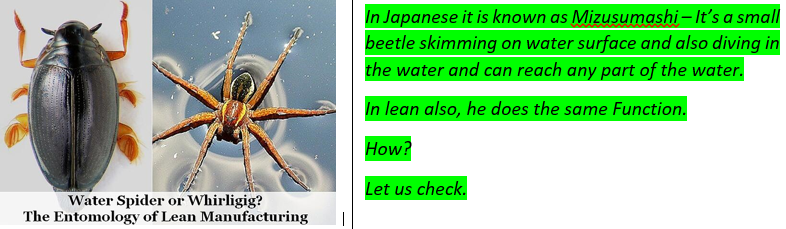
1 pointWater Spider in Lean Manufacturing. Productivity is the biggest objective of the Lean Manufacturing philosophy. There are so many aspects in lean to achieve productivity which leads to Profitability and Growth to organization. Water spider plays the important role in lean to improve productivity. Who is the water spider in lean? AS the term suggest a water spider in lean is the person skimming all around the shop floor and entering in any cell as per requirement. He not only enters there but also helps the operators for small challenges they are facing. In every production activity there are different workstations and operators are working on them. They require raw material, billets, blanks, semi- finished goods, tools for their operations. They transform them as per requirement and send it to next station. This is the flow going on up to the finish product. Imagine if every operator must visit another station to collect the raw material for his station – How much Time he will spend? How much distance he will travel? How many components he will be able to finish on his station? What if he faces any challenge? The answer to all these questions is Water Spider – A person who keeps rounding all the stations, cells and keeps filing its inward trays by blanks, semi-finished goods to be transformed. Picks the worked upon goods and moves them to another workstation. The operator never needs to wait for the inputs (good) and need not to worry about the outputs (goods) he has transformed to next stage of shape. If any operator is facing any small challenge of adjusting tool, settings, this person is the great help to reduce his trouble and increase his productivity. So, this person allows the operator to spend all their working time on their station, no waiting, no movement, complete output as per time study. Complete Value-added Job by operator. Here we get the answer – Water spider for all above questions. Roles and Goals of a water spider: - 1. JIT – Very important to control inventory on shop floor so he has to fix his schedule and supply the goods, tools, blanks etc. at the right time and in exactly required quantity to avoid any blockage or starvation. 2. He must be having knowledge of the production process and sequence of operation so that he can plan his rout and schedule for smooth flow of production line. 3. He also, to have knowledge about tooling and machines so that he can help in between to the operators is they are facing any challenges. 4. He must know about Kanban – he should pick and place the cards and update them for further information. In case of ERP he must be able to operate the system and keeps the data updated for replenishing the goods at main stores. 5. Time management – He should standardize his route to save his time and be able to use spare time for other stuff. 1.One of the beautiful examples I had seen in Israel in one the cutting tool manufacturing company – It was an AGV, moving continuously in a particular sequence and picking the semifinished cutting tips- moving to the next station- and so on. Picking the finished tips and keeping them at a designated place to be sent to stores by another AGV. Its sequence was so balance that all 16 automatic unmanned machines were completely synchronized. 2. I was Fortunate to visit one of the two-wheeler company in India manufacturing a scooter every three minutes. There I saw water spiders moving around the different shops and feeding all spares and components. They had kept the movements of operators so mechanized to get the maximum output from them and they were able to assemble a scooter in three minutes. The same person helping the operators to change the tools and adjusting the air required to pneumatic tools. In the same company there were a Robot managing ten CNC machines machining the complete spares required to assemble an engine. Conclusion- Transportation, Inventory and Motion are some of the wastages on shop floor and they eat productivity of the productive operators. By eliminating them with the help of line balancing and Water Spider an organization gets tremendous benefits. Water spider maintain JIT technology and keeps the shop floor neat and clean from unnecessary inventory. They keep productive operator adding their value addition in work to get accurate and quality production. It helps organization to achieve Productivity – Profitability and Growth
 1 point
 -
1 pointWater Spider (or Mizusumashi) is one of the keys to successful Lean manufacturing. Mizusumashi is a Japanese term for water spider. These species of spiders have an ability to work between water and air. In manufacturing, it is about the ability to move quickly between production and logistics to all spots whenever required. It helps by eliminating the waste of transportation mostly. This is majorly achieved through 1. Sorting into small quantities of big orders 2. Usage of any device that eases the movement through picking these small quantities 3. Create a pattern of delivery rather than randomly issuing out orders.1 point
-
1 point'Mizusumashi' is a Japanese term for 'Waterspider'. Waterspider is an aquatic animal that moves in the water quickly changing its direction as required. The behavior of a Waterspider is adapted and is a common practice in manufacturing industries. Thus Implementing a water spider is a great way to put the value and principles of Lean Manufacturing into practice. Manufacturing Industries create a role called as Waterspider whose main job responsibility is to ensure all materials are supplied to where they are needed. The main objective is to have other workers devote their complete attention to tasks that add value to the process. Benefits of Having a Waterspider: Optimizes complex production processes by reducing variation and improving efficiency at every step in the process Boosts the productivity of all the workers as they are focused to perform Value added tasks. Primary Functions in the factories are made more leaner. A person working as a Waterspider will get an opportunity for professional growth, especially with Lean and Six Sigma Basic Requirements of a Waterspider: If Waterspider works as catalyst to boost the productivity of other workers it is important that he has to have a working understanding of the whole process, and the whole workspace, so that they can be helpful at every workstation where they render service for which they require enough knowledge and experience. Other Applications of Waterspider (Non Manufacturing Examples): Insurance Claims Processing The role of a Program Manager in Product and Software Development Hospitals Restaurants1 point
-
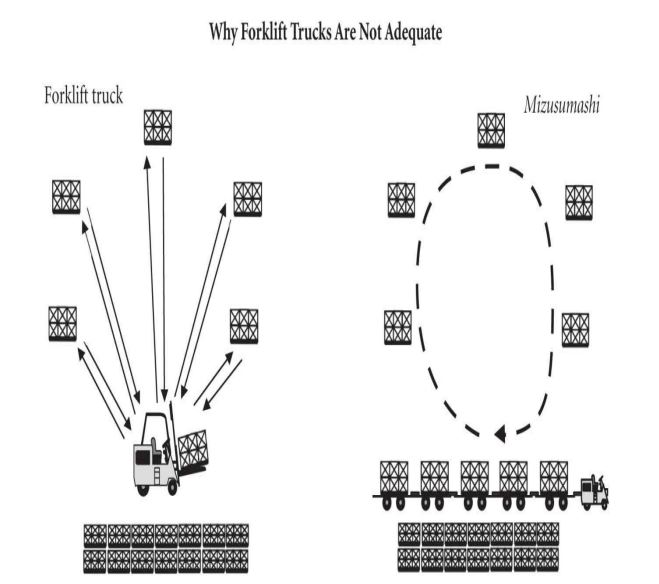
1 pointWhat is a Water spider (or Mizusumashi) The Water Spider (“Mizusumashi”) System is one of the improvement specialties in internal logistics flow. This Japanese word indicates “water beetle,” and this internal logistics worker is often called a “water spider” in English. This term probably was chosen for this concept because of the water beetle’s agility as it swims across the water. Here a mizusumashi is a logistics worker who does the internal transportation of goods using a standard fixed cycle route. The Water Spider is a critical element of the creation of internal logistics flow. A worker moves all the information related to production orders (kanban) along with all containers. However, a water spider moves the flow containers between supermarkets and the border of lines by repeating the same movements in a fixed cycle (which usually runs for 20 or 60 minutes). During this cycle, the water spider will stop in a certain number of stations along the route and check whether they need materials. The water spider uses a small train with a suitable load capacity to serve all the stations on its fixed route, delivering information to several points along the way. The mizusumashi fixed cycle time is also called the pitch time. This pitch time is a multiple of the takt time. If the mizusumashi is moving one piece at a time, the pitch time would equal the cycle time. Because the mizusumashi is moving small containers, the pitch time is designed to carry several small boxes to many points of use at the border of several lines. The customers are the production operators on the lines. They have a reliable logistics provider who comes every 20 or 60 minutes, looks to see if more material is needed, and removes the empty containers and any garbage generated during the process (also known as reverse logistics). Production is assured of a reliable and frequent supply. How Waterspider help in building successful lean factories? The mizusumashi system is one of the most important means of creating internal logistics flow to build successful lean factories. The water spider operates like a shuttle service at an airport. The shuttle service has a fixed route (e.g., Arrivals 1, Arrivals 2, Hotel 1, Hotel 2, and Hotel 3) that it keeps on the following cycle after cycle. The cycle timing can be calculated—if we allow 4 minutes for each shuttle stop and 20 minutes for the driving time between visits, we have a cycle of 40 minutes. There will be a schedule at every shuttle stop that shows the estimated time of arrival. The users know that every 40 minutes, the shuttle will arrive. Once they are on board, they know what time they will arrive at their destination. The mizusumashi system operates the same way. It has the following characteristics: The mizusumashi “shuttle” stops are at supermarkets (i.e., picking supermarkets, border-of-line supermarkets, kitting supermarkets, or finished- goods delivery supermarkets). The cycle is calculated in the same way, by measuring the work to be done at several stops and adding the travel time. At this level of organization, the containers to be moved onboard the shuttle service are the equivalent of customers or passengers. The water spider’s definitive work means a fixed route (i.e., a plan that shows the travel route and the stopping points) and a constant cycle time determined by the sum of the times involved. Because we are using supermarkets and flow containers, we can improve the productivity of the mizusumashi by enhancing the operator’s standard work, just as we improved routine work to achieve production flow. As well as moving materials and empty containers and doing other driving tasks, the mizusumashi also moves the information associated with replenishment and different synchronization needs. Figure: The advantages of using Mizusumashi over Forklifts
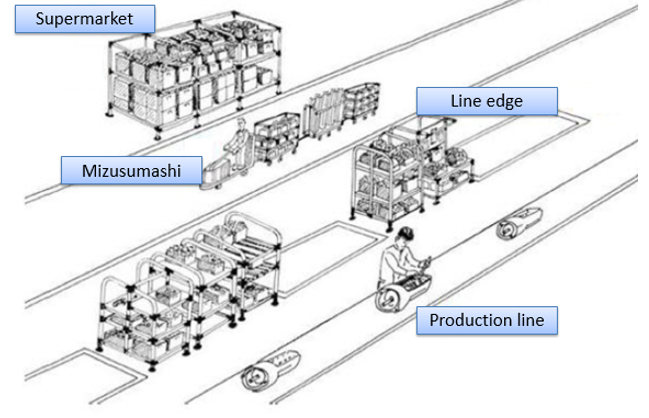 1 point


This leaderboard is set to Kolkata/GMT+05:30