

Topics
-
Fifty-five women engineering students completed an AI bootcamp focused on rural Karnataka. Participants developed AI-based solutions after visiting villages and conducting field interviews. The She Innovates bootcamp partnered with several organizations to achieve its goals. This initiative aims to boost women's participation in AI and entrepreneurship. It encourages AI applications for rural development and community-focused sectors. View the full article
-
Besi's quarterly orders more than doubled, fueled by AI and hybrid bonding technology. The company saw increased customer adoption of its advanced chip packaging solutions. Demand for AI applications continues to drive growth in data centers. Besi anticipates revenue growth between ten and fifteen percent. This strong performance aligns with other semiconductor sector reports. View the full article



Leaderboard
-
Natwar Lal
Members2Points50Posts -
Jayaram T
Members1Points17Posts


Popular Content
Showing content with the highest reputation on 09/24/2019 in all areas
-
1 pointNet Promoter Score is an index of customer loyalty & not customer satisfaction. True loyalty affects the profitability of an organization by reducing customer acquisition cost.no company can grow if their customer bucket is leaky, Loyal customers will arrest the leak and add more customers to the bucket. Loyal customers act as references and will risk their reputation by recommending a product or service from a company. Truly loyal customers bring in new customers at no cost to the company. The path for profitable growth for any organization lies on their ability to get its loyal customer to become its brand ambassadors. Right Measure of loyalty Because loyalty is so important to profitable growth, measuring and managing it make good sense. Frederick F. Reichheld, Bain & Company & Satmetrix after a research of 6-12 months came up with one question which will gauge the customer loyalty after framing the question it is important to arrive at a method to analyse the response which is easy and simple to understand without statistical knowledge. After finalizing the right question “How likely is it that you would recommend [company X] to a friend or colleague?” Fred & team worked upon a scale which is easily understandable by investors, regulators, employees and grasp the basic message without needing a handbook or session. Initially the scale was framed from 0-10 where 10 means extremely likely to recommend, 5 means neutral and zero means not likely to recommend. The customer responses and repurchase behaviours were examined along the scale and the three clusters were defined. Promoter - the customers with the highest rates of repurchase and referral, who gives a rating of nine or ten to the question. Passively satisfied who gives a seven or an eight classified as Passives Detractors- scored from zero to six. Upon more surveys and analysis it was concluded that a strong correlation existed between net-promoter figures and a company’s average growth rate. To have a common measure of customer loyalty which can be understood easily Fred and team Came up with a methodology which converts the ordinal scale (1-10) to a Categorical data and provides the customer loyalty index which is measured as NPS.1 point
-
1 pointMisuse of tools and techniques is a very common phenomenon. Misuse of a tool primarily happens because of two reasons 1. Intentional Misuse (it is better to call it as Misrepresentation) 2. Unintentional Misuse (due to lack of understanding of the concept) Pareto analysis or the 80/20 rule is a prioritization tool that helps identify the VITAL FEW from TRIVIAL MANY. 80/20 implies that 80% of problems are due to 20% of the causes. Intentional Top 20% causes might not be the ones leading to bigger problems - usually it is observed that causes with smaller effects occur more often. Applying the Pareto principle will divert the focus of the team to the causes that have a smaller effect on the customer while the actual cause might be languishing in the trivial many Prioritization without keeping in mind the goal - Pareto will help if the significant contributors identified help us achieve the goal. However, it is seldom checked whether the VITAL FEW will help us achieve the goal or if there is a need to take a larger number of causes. As an example, if our goal is complete defect elimination, we will need to consider all causes. If our goal is elimination of 95% defects, we will need to cover more of the cause. Unintentional Going strictly by the 80/20 rule - some people take the 80/20 principle in the literal sense. They will do a Pareto plot and blindly apply the 80/20 principle. What needs to be noted is that 80/20 is a rule of thumb and it is not necessary to always have 80/20 split. It could also be 70/30 or 90/10 Keeping the total to 100 = 80+20. This is one of the most common misunderstanding of the 80/20 rule where one beliefs that the sum should always be 100. It could be 80/15 or 75/25 as well Unclear about the purpose of using a Pareto Analysis. Pareto can be used while defining afocus area and also in Root Cause Analysis to identify significant contributors. In the former, data is for problems and their occurrence while in the later, it is causes and their occurrence. Due to lack of clarity of purpose, if problems and causes are clubbed together in the same Pareto, then meaningful inferences cannot be drawn. Treating Pareto as a non-living tool - Pareto is usually done once and the same result is treated as sacrosanct for a long period of time. Pareto chart only provides a time snapshot. Over a period of time, the defect categories or causes and their occurrence numbers might also change and hence if Pareto Analysis is done at different points of time, it might yield different results Some that could fit in both categories Small data set - Pareto Analysis will help if you want to prioritize vital few from a big data set. Doing a Pareto analysis on 4-5 categories will seldom yield a good result Completely ignoring the trivial many - Pareto analysis helps identify the vital few but it does not say that one should ignore the trivial many. It simply states that first fix the vital and then move on to trivial. However, most people consider that if they fix the top 20%, they do not need to work on the remaining. Pareto can be used to continuously improve the process by repeatedly prioritizing the causes that you need to focus on Doing Pareto at a high level only - Like most of the tools in Root Cause Analysis, Pareto can also be used to drill down. E.g. Pareto can be done first to identify the top defect categories and then a second level Pareto can be done for the top defect categories (using the causes)1 point
-
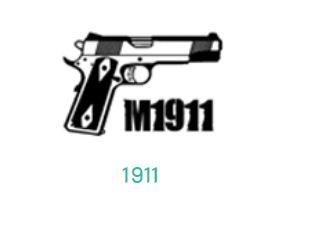
1 pointDFA - Design for Assembly Design for Assembly is one of the approaches in Design for Excellence (DFX). The X here can take many forms like Manufacturing, Safety, Cost, Service, Reliability etc. So how is DFA different from others and when should one go for it DFA should be the preferred if the product that we are designing needs to be assembled and disassembled often. Because in such situations more than anything else, it is more important that the assembly should be 1. easy 2. efficient 3. effective My top of the mind items that usually require to be assembled and disassembled are military guns and toys (especially track toys and Lego). Elements that you need to consider in DFA 1. Number of parts - product with lesser number of parts is easier to assemble. Therefore the number of parts should be kept to a bare minimum. Parameters to check if a part can be removed or not are a. Is it absolutely necessary to have the part made of a different material? b. Does the part has a movement relative to the other parts of the product? c. Is the part used as a fastener or for securing other parts? 2. Time taken to assemble or ease of assembly - there are quiet a few things that are considered here a. Easy to handle parts - neither too small nor too big b. Symmetry of the parts - symmetrical parts are easy to handle c. Remove flexible, slippery, sticky parts along with parts that have sharp edges d. Easy to insert - unidirectional, self inserting and easy to align For a given design (after considering the above parameters), one could also compare the options using DFA-index i.e. Design for Assembly Index. It is given by the below formula DFA = 100 Nm tm / ta Nm - theoretical minimum number of parts tm - minimum assembly time per part ta - estimated total assembly time Higher the DFA, better is the design for assembly. Taking a hypothetical example below to explain Soldiers are frequently required to disassemble and re-assemble their guns. Soldiers will not be using revolvers, but typically their guns are also without too many screws and fasteners. Most of parts are easily assembled using uni-direction motion and fit into one another. Considering two revolvers here Gun 1 - revolver with a rotating chamber for each bullet Gun 2 - revolver with a magazine holder for bullets Theoretical minimum number of parts in both the guns are same. Therefore Nm = 4 1. Barrel 2. Firing Pin 3. Ammunition Chamber (rotating or magazine) 4. Holder tm - minimum assembly time per part remains 4 seconds. ta - total estimated assembly time varies for each gun. In gun 1, it is 90 seconds because before closing you need to match the chamber with the barrel. In gun 2, it is 60 seconds. DFA for gun 1 = 100*4*4/90 = 17.78 DFA for gun 2 =100*4*4/60 = 26.67 DFA index for gun 2 is better, therefore as a manufacturer you should go for the design of 2nd gun. Gun 1 - Rotating Chamber Revolver Magazine Type Revolver P.S. - Images only for illustration

 1 point
This leaderboard is set to Kolkata/GMT+05:30