Dharanesh Mysore
Lean Six Sigma Black Belt
-
Joined
-
Last visited
-
Dharanesh Mysore replied to Vishwadeep Khatri's topic in We ask and you answer! The best answer wins!When auditing AI-integrated systems, transparency on how the model works, the security of the data, and whether the prompt logic system is working properly all need to be evaluated. AI systems should be evaluated on whether their decisions are traceable, if there are risks of bias, and if the system meets ethical standards. Examining the sources of the training data, monitoring model drift, and examining output consistency with given prompts constitute critical tasks. Employing accountability-enhancing tools such as explainability mechanisms, inline controls, and collaborative processes bolsters overall accountability. We will ensure proper and responsible use of the systems through regular alignment checks with the overarching business goals.
-
Dharanesh Mysore replied to Vishwadeep Khatri's topic in We ask and you answer! The best answer wins!Excellence roadmaps stress stability, resilience, and sustainable performance. In contrast, AI implementations anchored on rigid prompts, static decision trees, or circumscribed logic can become brittle when conditions in the world around them change. Shifts in user expectations, the introduction of new and unforeseen exceptions, or the slow decay of reference data can degrade effectiveness in ways that first appear only as small, cumulative declines. Below are the signs that an AI is failing to hold its grip: · An increase or sudden spike in incorrect outputs. Particularly when the input variability rises, indicates the underlying logic cannot adapt leads to increased errors. · Responses that mismatched with the latest facts or policies. It leads to determined data drift surfaces when outputs oppose acknowledged truths. · A Disintegration of end user trust and engagement. It is when people aggressively retreat from the interface and confidence is the first loss. · Unpredictable failures in edge cases. Fragile systems mishap when they confront circumstances not exhaustively rehearsed in training. To adopt sustained AI health over the long haul: · Launch a regime of continuous observability. Key performance indicators and usage patterns must be watched in real time to catch decay before it compounds · Training and reference data to be received in periodic and systematic refresh cycles. · Human judgment at critical junctions to be considered. Expert review of high-stakes outputs can recalibrate the model and strengthen decision-making in situations where logic alone risks error. · Opt for adaptable frameworks: Choose modular structures that can be easily reconfigured to meet shifting operational needs over time. · Protect ethical and governance principles: Keep transparency, fairness, and accountability front and center as systems expand and mature. Viewing AI as an ever-evolving asset—rather than a static instrument—guardians its ongoing effectiveness, reliability, and commitment to operational excellence.
-
Dharanesh Mysore replied to Vishwadeep Khatri's topic in We ask and you answer! The best answer wins!Using AI in significant ways that will advantage the business requires an understanding of its true priorities. The business can achieve that by applying the “Value- Feasibility Matrix” decision tool. This framework helps assess the strategic business value AI initiatives take against the cost, data requirements and technical complexity of execution. Before advancing on AI use cases, ask the following questions: “Which business goal or KPI does this solution measure and track?” The above alignment enforces measurable outcomes like boosting customer retention, cutting processing times, or increasing revenues. Filtering out technically interesting but value-add limited initiatives ensures that resources are spent on solutions that work and propel the business forward.
-
Dharanesh Mysore replied to Vishwadeep Khatri's topic in We ask and you answer! The best answer wins!The Swiss Cheese Model serves a purpose when it comes to visualizing how risks intersect with multiple processes in a system's defenses. In the scope of my process, let’s consider the HR onboarding process for illustration; it shows how multiple gaps—often thought of individually—at different stages can lead to a larger systemic failure if not remediated. Let’s consider this situation, ‘slices of cheese’ denotes to layers of security or defense within the onboarding processes which include: Pre-employment verification, Onboarding systems with automation features, Overview of HR policies, Configuration of IT systems for new employees and Review by managers and feedback systems Each layer contains some potential problems, gaps, or ‘holes’ as we may say. A few generalized ones are: Background verification holdups, Errors occurring on documents generated by the system and Communication of policies that are vague or too broad For example, lacking guidance from managers coupled with missing steps in hardware provisioning. When gaps are lined up in these holes, a pathway is created to error such as a new hire who starts without sufficient tools, lacks role clarity about their functions, and holds unclear ideas regarding the benefits processes. Grasping this form of risk alignment facilitates using strategies such as rigorous process mapping, continuous improvement practices (Kaizen), and root cause analysis to improve any gaps. Gaps can be narrowed by predicting where the most issues will arise, addressing them in a methodical manner, shoring up controls, or bolstering existing ones, improving process dependability and the employee experience simultaneously. This posture actively encourages proactivity. Instead of responding to issues, we seek to understand how problems can arise and take measures to eliminate those possibilities, achieving greater improvement in both service delivery and quality.
-
Dharanesh Mysore replied to Vishwadeep Khatri's topic in We ask and you answer! The best answer wins!Controlling Change in DMAIC: An Essential Success Factor Appropriate change management guarantees that any improvement is embraced, implemented, and maintained appropriately and DMAIC phases are depend on change management: 1. Define - Earning Support Engagement with stakeholders marks the beginning of their alignment and ownership. Resistance is minimized when the "why" of a project is communicated well. For example: In a hospital discharge project, doctors and nurse participation was solicited early on to align and ease s about workflow changes. 2. Measure - Establishing Trust Fear of data collection is real. Data collection participation can be enhanced through trust that volunteers will not be punished. For example: In one manufacturing project, operators assisted in data collection because they were assured that the objective was process not performance. 3. Analyze - Owning Accountability Insight accuracy is improved when teams are engaged in work ownership and root cause analysis. Example: A loan processing team helped reconstruct existing policy gaps, which improved prompt processing of loans by devising more relevant strategies. 4. Improve – Changing Slowly Stakeholder confidence is nurtured and resistance lowered when they are allowed to test the provided feedback. For example: Attitudes shifted from skepticism to support with automated workloads demonstrated by helpdesk IT pilots. 5. Control – Sustaining Results Reinforced behaviors are necessary for lasting change. This can be achieved through proper training, dashboards, and sufficient leadership backing. Example: A call center project embedded changes into daily operations through the use of daily huddles and visual metrics. Role of the MBB: The Master Black Belt integrates the necessary technical detail with human acceptance and key responsibilities are: 1. Resolving issues for the supervising teams. 2. Landing leadership sponsorship. 3. Accountability and control gaps. 4. Practical steps for complex changes. Example: An MBB created standard visual boards for several departments which enhanced inter-departmental transparency as well as momentum during enterprise-wide efforts. In Summary: Solutions need change management to achieve desired results. Best improvements are rendered useless in the absence of change management. The MBB is the change catalyst who guarantees the delivery of changes while ensuring acceptance and sustainability.
-
Dharanesh Mysore replied to Vishwadeep Khatri's topic in We ask and you answer! The best answer wins!During the Control phase of improvement processes like Six Sigma, it is quite common to observe that initial benefits tend to plateau over time. This often occurs when changes are not fully integrated into routines, people revert to old habits, or lack of continual analysis, ambiguous process stewardship, or unanticipated changes in business environment factors. To address the issue and ensure the improvements are long running, below are the set of actions and strategies to implement: 1) Control Charts – To track progress towards your goals and alert you of any breaches within set thresholds promptly and most impactful monitoring tools 2) Standard Operating Procedures (SOPs) – These create uniformity and standardization through documenting framework which helps in divergent process describe and communicate step accurately. 3) Training and Communications – training impacts compliance vastly if every team member understands the why and what behind changes, while strong communications support the adherence effort. 4) Process Owners and Accountability – clear assignments of roles ensure responsibility for monitoring, maintaining, and enforcing the change lie with someone. 5) Audits and Regular Reviews – Scheduled checks provide not only compliance with the processes, but also an opportunity to provide timely adjustments as needed 6) Visual Management Tools – Dashboards or scorecards make it easy to see the process is still performing as expected or not. Eventually, the key is to make the improved process part of the organization's culture and daily habits.
-
Dharanesh Mysore replied to Vishwadeep Khatri's topic in We ask and you answer! The best answer wins!To make sure an AI solution grows with ongoing process enhancements, we need to think of it as a living part of the improvement system—not just a one-time setup. This starts by putting AI into the same feedback loops that power Business Excellence, like PDCA, DMAIC, and A3. The main objective is to create a continuous learning system from which the insight collected from the process modifications is leveraged to refine the AI system. Ways to adopt AI to advance improvement 1) AI integration at the operational level: a) Integrate AI in prevailing improvement cycles like PDCA, DMAIC and A3 for implementation b) Adopt MLOps tools to retrain AI after process modifications c) Align process review periods with AI update implementations 2) Clear Feedback System: a) Record improvement data like KPIs and root causes in organized ways b) Enable checks to spot model drift or performance gaps c) Start model updates when real-world results don't match up 3) MBBs key role: a) MBBs to act as mediators for process owners and data science teams b) Define goals for both process and AI success c) Make sure AI models shows the latest process standards and improvements AI can evolve with continuous improvement if it's designed to learn continuously. This requires automated feedback mechanisms, structured data from improvement initiatives, and strategic leadership from MBBs to ensure alignment and sustainability.
-
Dharanesh Mysore replied to Vishwadeep Khatri's topic in We ask and you answer! The best answer wins!AI solution solving the wrong problem is due to the failure of managing the scope correctly. It delivers results that is irrelevant or misleading, wasting time, resources and poor decision-making. Hence, defining issues accurately is essential. For instance, a bank that utilizes AI to predict which customers shut their accounts. The AI spots those customers with accuracy, but the fix doesn't cut down on customer loss. Because the real issue was not about identifying who would leave the bank, it was getting to the bottom of why they were going and how to keep them around? When determining the problem, ask who will be departing instead of asking why they are departing and how we can keep them. AI answers might be spot-on, but they don't help the company achieve its true aim. The main cause gets missed, so any steps taken based on what the AI predicts don't deal with the actual problem. MBBs can play a crucial role by: 1. Asking the right question and probing, Are we dealing with the actual problem? 2. Using root cause techniques such as 5 Whys and Fishbone diagrams to examine more before rushing into AI modeling 3. Setting clear success criteria and focusing on results like keeping customers instead of just how well forecasts work MBBs ensure that AI solutions are both technically correct and practical by helping teams frame problems correctly.
-
Dharanesh Mysore replied to Vishwadeep Khatri's topic in We ask and you answer! The best answer wins!In today's AI-driven world, the traditional metrics like cost efficiency and average handling time are bit outdated. Many legacy metrics were created for manual workflows and don’t capture the evolving role of AI. Considering the capabilities of automation and its capacity to handle multiple tasks at a time, these old measures frequently miss the mark when it comes to identifying the strategic value that AI yield to business outcomes. Now it is time for organizations to adopt metrics that focus on trust, agility, and how well humans and AI work together in real time and accept indicators like AI Decision Accuracy and the Human-AI Collaboration Index which provide a better understanding of performance. We need to shift organizations performance metrics from just measuring how competent processes run to assessing intelligence, adaptability and innovation which is very much essential to truly be equipped for AI. Also, AI-enabled organizations should be cautious and watch over factors like model drift, ethical alignment, impact of decisions and the systems being evaluated on their ability to learn and adopt for creating excellence that is much required for success.
-
Dharanesh Mysore replied to Vishwadeep Khatri's topic in We ask and you answer! The best answer wins!Effective solutions can be created by Lean Six Sigma MBBs and AI teams by bring into line the business goals and combining structured problem-solving with data-driven insights. Lean Six Sigma MBBs add value by defining the scope and improve processes using DMAIC and other process improvement methodologies, whereas AI improves these with predictive insights and automations and deeper root cause understanding. Collaboration of both Lean Six Sigma MBBs and AI teams ensures effective hybrid solutions that improves process efficiency and intelligence. MBBs and AI teams collaboration contributes to: 1) Better data-driven decision making can be enabled by using AI insights on frequent patterns of concern related and to make more informed decisions based on the data collected by Lean MBBs and prioritize the areas of improvement by identifying process inefficiencies and root causes of problems 2) Optimize the process by automating repetitive tasks identified by the Lean MBBs to reduce variability, eliminate waste and streamline processes 3) Improved Efficiency, Workflow and Productivity through automation based on process inefficiencies identified by MBBs 4) Enhanced Customer Experience by understanding customer needs, delivering value, offer personalize experiences and predict future needs using AI
-
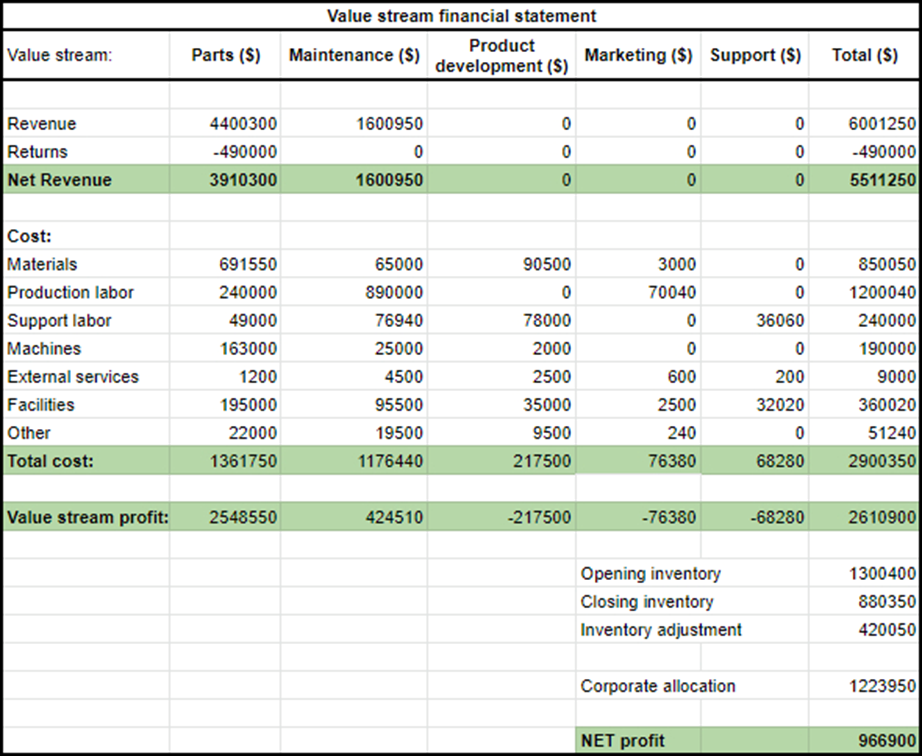
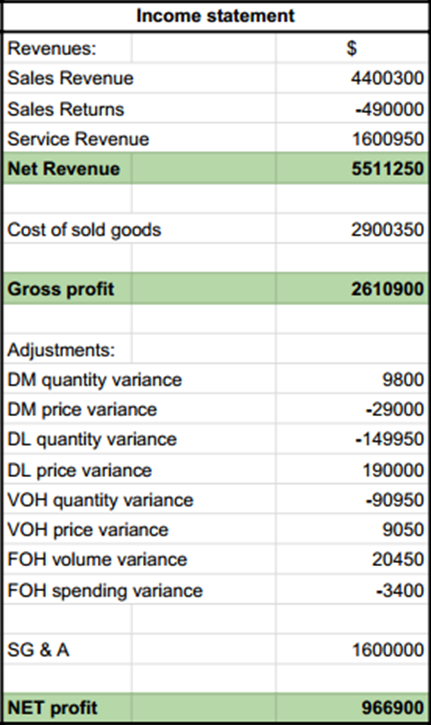
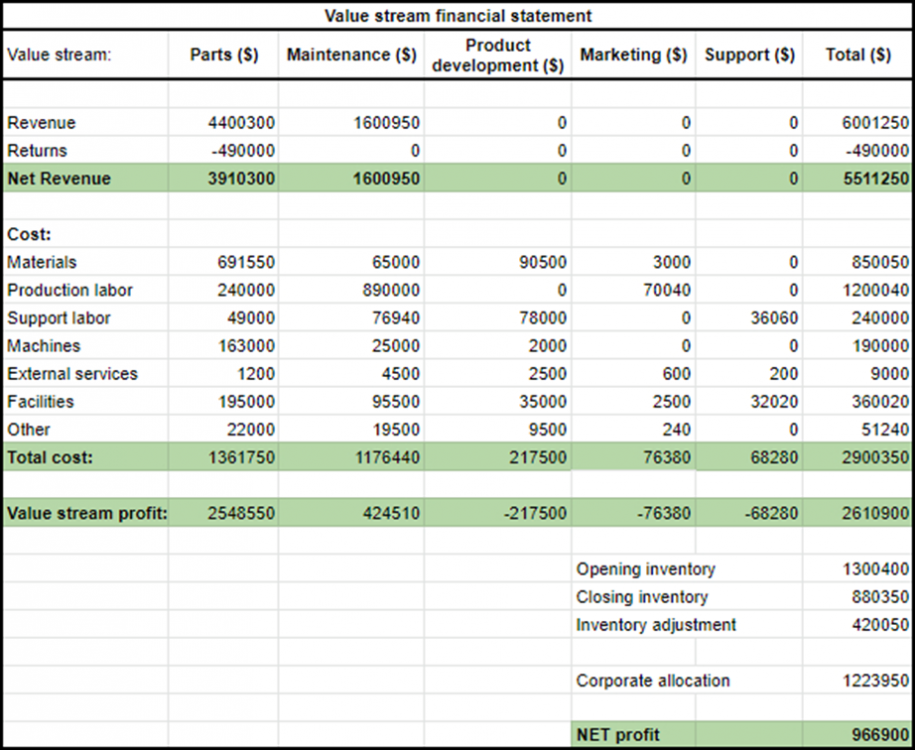
Dharanesh Mysore replied to Vishwadeep Khatri's topic in We ask and you answer! The best answer wins!Lean accounting is streamlining accounting processes within an organization to achieve maximum productivity, service, quality and profit. The purpose of Lean accounting is to collect, examine and communicate the entity performance, position, and cash reserves - all types of information utilized to make decisions on how to manage the business well. Lean accounting concentrates on two goals: 1) converting financial statements into “easy and plain English” and 2) eliminating waste by captivating the focus off the minutiae. The advantages of lean accounting: Less waste in the financial control practices, removal of cost allocation and more hands-on knowledge of business costs A better awareness of how the financial decisions influence the value stream and the client and vice versa: broader admission to business growth opportunities through the fast value-finance connection Mentioning of the organizations that initiated the implementation of Lean accounting include Toyota, Intel, Ford and Textron etc. Lean accounting vs Traditional accounting: Lean accounting will differ significantly from traditional accounting statements. Lean accounting recommends new approach of looking at numbers and calculating the health of a business. Traditional accounting is time consuming and transaction-driven, estimate cost of goods sold, standard cost accounting uses complex variance accounts such as purchase price variances, labor efficiency variances and overhead spending variances. Whereas lean accounting is relatively simple and flexible. Instead of lumping costs into overhead, lean accounting methods trace costs directly to the manufacturer’s cost of goods sold, typically dividing them into 4 value stream groups: 1. Materials cost 2. Procurement cost 3. Conversion cost (factory wages, equipment depreciation and repairs and scrap) 4. Occupancy cost Box score reports are frequently used in lean accounting to supplement profit and loss statements. Traditional accounting neglect such as scrap rates, inventory turns, on-time delivery rates, customer satisfaction scores and sales per employee. Traditional accounting frequently does not accurately capture the efficiencies of lean management techniques, where as lean accounting is designed to permit businesses to report financial data as value streams rather than the cost per unit with traditional cost accounting systems. Value streams permits businesses to see and report all the benefits of their modern lean management methods. Benefits of Lean accounting over Traditional accounting: Benefits of applying Lean Accounting right from streamlining the financial operations, increasing the level of understanding of financials and the impact throughout the value streams creating the ways of measuring the performance of financial statements to support decision-making and improving operational efficiency. Lean accounting is mainly “real-time, generates cost reports on a daily basis rather than historic reports. Lean accounting distinguishes available capacity as an asset not a liability. Traditional cost accounting identifies idle production lines. Traditional accounting compares the actual performance with set of standard variances by design. Lean accounting to support the real financial data with the operating performance. Lean accounting is also associated with the strategic goals of the business and provides improvement insights. Best practices: Lean accounting best practices help to reduce organizational and transactional costs. Most noticeable practices are listed below. • Mapping the value streams • Finding of cost and revenue cycles • Applying “box score” reports defining operational and financial results • Introducing “certified” vendors to decrease transactional costs • Utilizing yearly contracts that cover all expected purchases to reduce the amount of POs • Applying Electronic Funds Transfers (EFT) and electronic invoices Example: Let’s have a look at the traditional accounting statement and Lean accounting statement. Traditional accounting statement like the below, very often we will see notes and annexures explaining how costing calculations are distributed and how the variance is established. This limits the number of people that can understand it. Lean accounting statement changes this approach and making the report easier to grasp:
-
Dharanesh Mysore replied to Vishwadeep Khatri's topic in We ask and you answer! The best answer wins!Design of experiments (DOE) is a powerful data collection and analysis tool that can be used in many types of experimental situations with planning, conducting, analyzing, and interpreting controlled tests to assess the factors that control the value of parameters. The Shainin DOE indicates to a gathering of principles which make up the framework of a constantly developing approach to quality. Shainin DOE tools are used significantly to solve the problem of process optimization. The Shainin DOE delivers the simplest, easiest and most effective ways to get the solution. It is simple to be assumed by both the engineers and shop floor workers since its logical based on basic science and engineering knowledge. The methodology is divided into 4 steps: 1) Detection of factors and decision limits 2) Departure of significant and insignificant factors 3) Validation of important factors 4) Factorial exploration & optimal setting The Shainin DOE used to take the less number of runs to perform the test comparing to Classical DoE which is more complex in term of using high statistical analysis and need a lot of experiments to confident the conclusion. The ease of implementation of Shainin DOE is another added value than classical DOE approach. Shainin technique depends on nonparametric statistics (which make no expectations about the shape of a distribution). The disadvantage of Shainin DOE is the skill and knowledge required to carry out two tasks: (1) to identify the variables correctly and (2) to allocate those variables to the experiment.

-
Dharanesh Mysore replied to Vishwadeep Khatri's topic in We ask and you answer! The best answer wins!Juan Trilogy method is to manage a quality improvement cycle targeted at decreasing the cost of poor quality products/ services by planning quality into the whole process was presented by Dr. Joseph M. Juran in 1986. Juran sets out a process to focus on quality management and best practices to yield the best possible results for customers. The core focus is quality, when producing products/services it is important to ensure they are fit for the purpose they are created for. Juran based everything around three core processes or elements as below: 1. Quality Planning: Designing for quality to advance products and process quality. a) In this stage, it is important to define (1) who the customers are? (2) Define voice of the customer? b) After the customer needs are identified, define the desires for the product, process, service or system. c) Develop them for operations along with the corresponding stakeholder expectations d) Planning activities are finished through a multidisciplinary team, with the contribution of key stakeholders 2. Quality Control: Process evaluations aspect involved in production from process control to Regulatory requirements. Actions that adhere to a standard set of quality criteria concerned with identifying defects. a) In this stage, define what needs to be measured and set a goal for performance b) Gain feedback by measuring actual performance and act on the gap between performance and goal c) There are several tools that could be used like 7 QC tools and other statistical process control methods in this phase of the Juran Trilogy 3. Quality Improvement: Continuous Improvement using Lean Six Sigma methodologies. Eliminating all failure points is the purpose of quality improvement. There are 4 different approaches to be applied for improvements: a) Repair: Responsive approach - fix what is broken b) Refinement: Proactive approach - repeatedly improve the process that isn’t broken c) Renovation: Improve through innovation or technological expansion d) Reinvention: Abandon all current practices and start over with a new approach Juran’s diagram is always represented with time and cost of poor quality on horizontal and vertical axis. Juran model have been widely recognized, practiced and progressed over time to suit organizations with quality improvement plans/programs/initiatives: 1. Build awareness of necessity for improvement a) Survey the employees, find why mistakes or errors are made b) Select the top ten reasons after 1 week c) Take decision how mistake-causing steps are not repeated d) Have track of no. of mistakes being made and ensure they are decreasing 2. Set goals for improvement a) Decide specific goals and plans to be reached b) Allocate clear accountability for meeting the goals c) Base the rewards on outcomes realized 3. Organize to reach the goals a) Establish quality councils b) Identify problems and select projects c) Appoint teams and designate facilitators 4. Provide training a) Investment in education and training will fetch rewards 5. Execute projects to solve problems a) Break-through improvements through cross-functional teams b) Handle the chronic problems and vital few problems created the innovations 6. Document the progress a) Progress expected vs actual progress achieved b) Act to improve the operative status to decrease variance c) Provides confidence on quality improvement projects with Information on progress 7. Offer recognition a) Team/Individual Morale booster 8. Communicate outcomes a) Awareness on the approach used, likelihood to learn and improve further b) Imitate success in other areas 9. Retain score a) Observe progress, Report accomplishments and deficiencies 10. Sustain momentum with inclusion of annual improvement in the regular processes a) Individual and Team oriented

-
Dharanesh Mysore replied to Vishwadeep Khatri's topic in We ask and you answer! The best answer wins!Disney Creative Strategy is a simple brainstorming process to generate new products, services or solutions to problems. Each of the 3 phases (Dreamer, Realist, and Critic) is conducted distinctly with no overlap. The Disney Creativity Strategy is also popularly known as Disney’s Brainstorming Method or Creativity Method was proposed by Robert Dilts in 1994. The Disney strategy comprises 3 steps helps to identify project goals, clear paths and avoid risks as shown in the image below. 1. In the first thinking style, teams or individuals act as Dreamers to brainstorm ideal solutions by using divergent thinking to perceive creative and drastic ideas. In this group, thinking can be without limitations to propose the most astonishing product or the solution to a problem 2. From Realist viewpoint, teams or Individuals acts as logical thinkers and apply convergent thinking to review the ideas left by the dreamers to select the best idea and construct a strategy for it 3. Finally from Critics viewpoint, teams or Individuals review the plan prepared by the realists in order to recognize weaknesses, impediments or risks to improve the plan. Once the Critics are finished, teams may go back into the realist role again for the 2nd round of planning before returning to the Critic role for another round of feedback The dreamer without a realist cannot turn ideas into tangible terms The critic and a dreamer without a realist just become stuck in everlasting struggle The dreamer and a realist might create things, but might not achieve a high degree of excellence without a critic. The critic supports to evaluate and improve the products of creativity Advantages and disadvantages of Disney method over De Bono's Six Thinking Hats: Advantages: Disney method the sequence is constant and structured brainstorming & thinking by teams and individuals with more focus and effective to deliver innovative but practical solutions, whereas the Six Thinking Hats can be used in any appropriate order, probably lead to low focus thinking and discussions Disadvantages: Disney method may lead to increase conflict due to shift of roles and prolonged meetings, where as De Bono Six Thinking Hats recognized to reduce conflict, ensure a rounded view, speed up the meeting, faster and better decisions. It has been used in board room meetings and business discussions De Bono Six Thinking Hats helps teams to get better implementation buy-in because everyone would have participated and shared their inputs


-
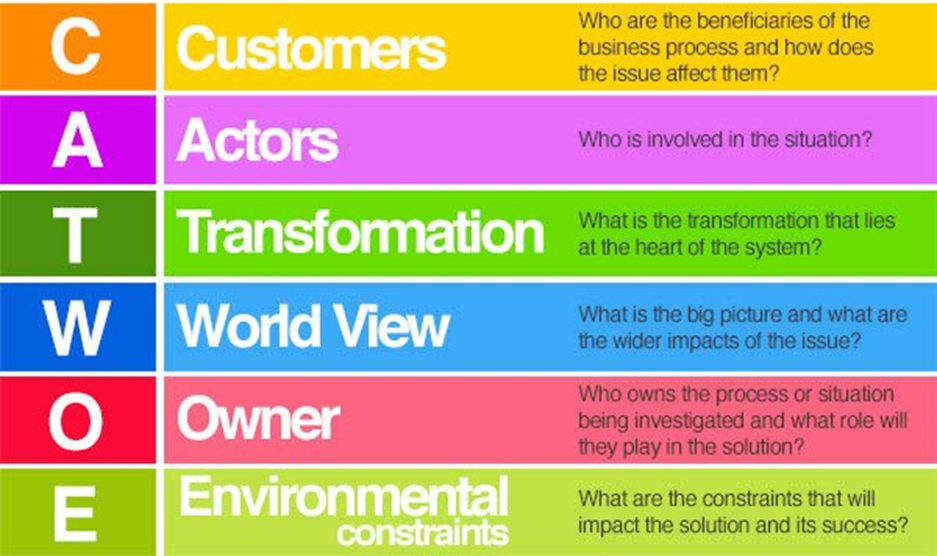
Dharanesh Mysore replied to Vishwadeep Khatri's topic in We ask and you answer! The best answer wins!CATWOE technique provides a framework for defining and analyzing business stakeholder(s) perspectives and interpretation and the impact that this interpretation will have on the direction of the business transformation. This technique is used by many business analysts to identify: (1) What the business is trying to achieve? (2) What are the problem areas? and (3) How stakeholder views affects the people involved in it? CATWOE stands for: · Customer: the receiver of the outputs from the business system · Actor: the roles that execute the business system processes · Transformation: the core process that provides outputs to the customer · Weltanschauung (or World-View): the fundamental theories and meaning that describes why the business activity exists · Owner: the stakeholder who could initiate change with the overall capacity for the business system · Environment: the rules and constraints imposed within and surrounding the business system CATWOE defined by Peter Checkland and David Smyth, it is used for motivate thinking to find solutions to problems. It offers amazing solutions and stimulates multiple approaches. Utilization of CATWOE bullet-point form is best for the actual analysis of the stakeholders’ perspectives before putting forward any recommendations, then turn the results into a root definition to present the perspective back to the stakeholder to check that it does, actually reflect their view of the situation.