

Topics
-
AI News from ET - AMD to invest up to $5 billion in Anthropic; AI startup to buy up to 2 GW of chips
AMD has been seeking to expand its foothold in the fast-growing AI chip market as developers look to diversify beyond Nvidia, while Anthropic has been racing to secure computing capacity to meet growing demand for its AI services. View the full article -
A Meta Platforms lawsuit claims AI tools unfairly targeted employees for layoffs. Workers face difficulties proving AI discrimination due to limited access to internal processes. Arbitration agreements often prevent collective legal action and public scrutiny of workplace disputes. These hurdles explain the scarcity of high-profile AI employment lawsuits. Meta denies using AI for layoff decisions, stating humans made all choices. View the full article



Leaderboard
-
MIsattar
Members2Points10Posts -
Mayank Gupta
Members1Points679Posts -
Pravin Gadade
Lean Six Sigma Green Belt1Points10Posts -
Abdullah Omar Alkaf
Members1Points20Posts




Popular Content
Showing content with the highest reputation on 08/14/2025 in all areas
-
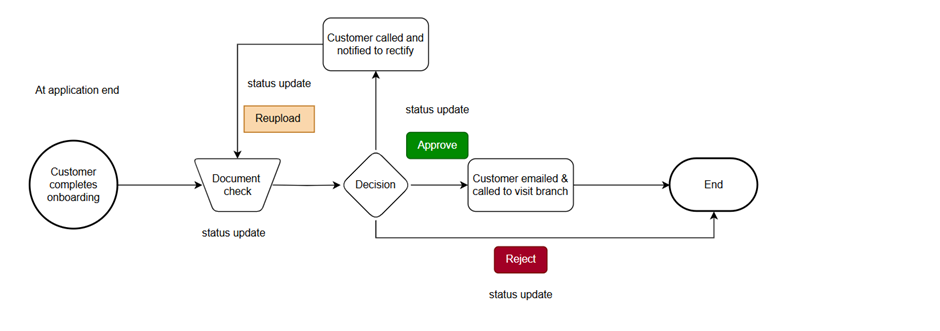
At the bank we have a clearly defined handing over process when a solution is deployed. From the development to the User testing and approval to deploy in Production. The Application team together with the Project Manager ensure that a proper handling over milestone as part of the project closure is done when the Application is handed over to business. In the project framework, when the project closure is done proper documentations are provided and most of the time, the application owner is the key stakeholder owning the application post-deployment. For example, we have recently deployed a self-onboarding application using AI. This allows the customer to initiate the process without having to go to a branch and wait in the queue to get served. Below process map depicts the different stages where AI facilitates the interaction with customer without the bank having to allocate additional resources to assist the customer. The following key components are documented as part of the hand over which happen when the solution is stabilised and working fine. 1. Technical Documentation 2. Operational Documentation 3. User Manual 4. Train the Trainer ( Champion ) 5. Performance and Monitoring 6. Governance and ownership 7. Change Request 8. Compliance and data protection policy 1. Technical Documentation The Technical team will prepare the release documents which will includes the rational behind the design and architecture of the application. Data sourcing , regular updates and what third party tools used to transform raw data will be included as part of the documentation Setting up of the different environments like the Production /Disaster Recovery/ User acceptance testing , all these environment will be needed to maintain a long term stability of the application. All these information will be useful for Audit review purpose. 2. Operational Documentation Deployment plan and rollout plan will give and overview of how it was deployed and how it can be roll back in case of malfunction of the system . Configuration set up and access rights given to which roles are important facts to allow for future references in the event of troubleshooting . 3. User Manual Both Technical and Functional documentations are required as part of the handover. This helps for a better understanding of the functionality of the system and limitations. The input required from business side in terms of mandatory fields and what should be the output are mapped in these manuals . Well defined guidelines are published in order to maximise on the usage and its potentials and just the solution can keep its effectiveness in the process. 4. Train the trainer ( Champion concept) With the deployment of the solution, it is important to have workshops and training done with both , the technical and functional users. This is done to showcast the capabilities of the system.Identifying champions in each key departments allow to form users as subject matter experts, these people will be the L1 support for assistance to queries from users and customers. Building up FAQs and feed the AI solution allow the customer to interact with a chatbot for basic level of request and queries 5. Performance Tracking and Monitoring Clearly defined Performance Metrics and Key performance indicators (KPIs) meticulously agreed upon during the development phase set as a baseline metrics for future performance evaluations. We do have Monitoring Dashboards which provide valuable insights into the system performance and complemented by Red Flag alert mechanisms in the event of significant performance degradation, data drift, or service interruptions. . 6. Governance and Ownership As part of the handling over of the solution , the different roles and responsibilities need to be properly defined which ensure continuity and scalability. The following key stakeholders need to fulfil their part of the process. • Product Owner that ensure overall business alignment and budget management with organizational goals. • Technical Owner that ensure regular ongoing maintenance of the infrastructure and implementation of critical updates. • Data Owner that ensure the accuracy, integrity, and availability of data necessary for the AI system's operations. • Support Team which is a dedicated group tasked with addressing user inquiries and providing solutions to minor issues, fostering a smooth user experience. • Escalation matrix which is important and clearly mapped out procedure for escalating issues, ranging from operational glitches to critical model performance challenges, along with designated contacts for first-line, second-line, and third-line support. 7. Change Management Every changes requested by business need to go for proper approval process in order to maintain a consistency in the modus operandi of the solution . The changes should go through the Change Management process which follows ITIL framework. 8. Compliance and Ethical Considerations Data Privacy Detailed documentation outlining the methods used to handle personal or sensitive data, including robust practices for anonymization or encryption to protect user privacy is critical to the success of the deployment . All the above checkpoints are done in order to maintain clarity and completeness of the solution deployed,
 2 points
 -
Sattar Mohammad Imran has provided the best answer to this question and hence is declared as the winner. Well done!!1 point
-
Now with the advent of AI technology and its usages there has to be changes in the business processes. We will have to compare how any new implementation used to happen without the AI features. In most of the cases the end users used to know of the business processes and in some of the cases the digitization of the business process used to happen or automation the Business end users used to be aware of the process and then after implementation steps i.e. hyper care, whom to report the bugs to, UAT loops, also getting the know how of the low code and no code tools, implementation to take care of minor developments. Now, with the altogether new technology which has bene introduced and is being used in the all the Business processes is AI and this is a challenging upskilling for all the Business processes end users as this has lot of new technology and in order for the team member to keep on training the model, checking on whether the biasness has crept in the model or not, Data ownership policies, steps to identify the drift in the model, Compliance check by the team to ensure that the standards adherence is in place, frequent data model checks and fixing the model (in case it is required) for maintaining the accuracy of the models. There can be multiple approaches to the problem statement of maintaining of the AI related process handover from the development team to Business/Operations team. First option is to hire someone in the team having the know how of the AI world and should be able to handle the post development, system maintenance works. Second option is to have the revisit of the job description as a lot of traditional business processes gets changed because of the AI features being introduced and the current team members who are doing their business process end to end are being trained as part of upskilling and being introduced to AI related skills so that the same team member can take up the post deployment work of AI maintenance and upgradation. The benefit of the second option is that in house team member can be the pioneer as AI champion driving other AI projects and helping other business processes too.1 point
-
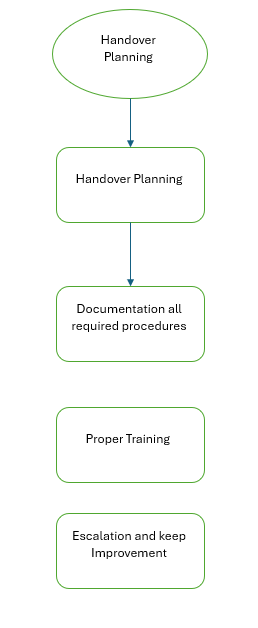
To ensure successful handover plan for an AI Solution, organization need to follow the below steps: A- Documentation · Solution and Goal Overview Organization should provide a clear overview of the AI solution, including its goal, functionality, and benefits. Therefore, everyone in organization understands the goal and benefits. · Technical documentation Organization should document the technical aspects of the AI solution, including data sources, algorithms, and infrastructure. This is very important, it could need it for improvement in future. · User guide Develop a user guide that outlines how to use the AI solution, including any necessary training or support. · Maintenance guide Develop a maintenance guide/Checklist that outlines the necessary steps to keep the AI solution up-to-date and functioning correctly. Organization should consider AI Solution as any other solution like oracle or other So, they need to document all above's B- Training Provide all proper/required training to all users/operational team on how to effectively use the AI solution, including any necessary technical skills. Provide any kind of special training on how to maintain and update the AI solution. C- Performance Tracking · Develop Key Performance Indicators (KPIs) Establish KPIs to measure the AI solution's performance and effectiveness. · Monitoring and Reporting Organization should be assigned someone for monitoring, reporting, and track the AI solution's performance and identify areas for improvement. · Regular Review Organization should schedule a regular reviews to assess the AI solution's performance and make any necessary corrective action. D- Escalation Procedure Establish a clear escalation procedures for issues/concerns that arise during the use of the AI solution. Organization should assign someone for follow up AI Ticket and raised issue and take necessary actions Develop a communication plan that outlines how to communicate with stakeholders, including users, operational teams, and management. below summary illustrative
 1 point
 -
In Lean Six Sigma, we have seen most of the time that implemented process improvement projects are not sustainable because of improper handover to process owners. Further findings have shown that most Lean Six Sigma Green/Blackbelt professionals think that handover is when the project has been done independently of the process owners and process team members and just requires that the finished work be handed over to the final users without having carried them along from the project initiation phase. Project handover starts when the project was initiated and this means in the selection of the team members who are to carry out the project. A conscious integration of the entire team along side the process owner into the ideation, analysis and execution of the final improvements is what ensures that improvements are sustainable. The sustainability of a project starts the moment the project is handed over to the process owner and the team members with clear explanations of control measures and things to check out for, steps to take if things go out of control but only a process owner who has been involved in a project from the word go is able to carry out the control measures and monitor from time to time. Now in the space of AI Solution handover for long term success, we have to understand some major facts: 1. As much as AI is no longer new, we are also aware that based on a lot of research, frequent changes are being made in the AI space, which could give better solutions to existing problems. 2. We as AI solutions architects should shift from the mindset of just creating solutions just for end users but understand that for every solution created there is a need to create a proper change control for the new solution. This make everyone aware of what changes are being implemented, how it affects them and what role they play in the change or project. 3. Proper project documentation is required in the handovger process which shows the step by step process from project initiation to execution. This ensures that even after anyone who was involved in the project leaves the system, anyone can go through the handover document and understand the change and make adjustments if need be. This means that for long term success; 1. We have to be very flexible to the changes that are happening. 2. Proper team selection is required for long term success as they have to be involved from the very beginning. 3. Proper change control has to be initiated for such projects to make everyone understand the change and the role they are to play to ensure sustainability and long-term success. 4. Proper project documentation for reference.1 point
-
A successful handover plan for an AI solution becomes critical to ensure sustainable solution / automation, its adaptability and continuous value generation in future. Having defined handover process at organizational level can be a good practice to follow. This will include: Checklist: Having standard handover checklist and approval matrix will be helpful to avoid any Standard Operating Procedure (SOP): A SOP should be prepared at detailed level for the end users and the administrator. This should be treated as go to document when any users find any questions or have any queries at any given point of time. Make sure to have standard FAQs are included to make it more effective. Solution Architecture: Prepare a blue print of solution architecture at detailed level including integrations points. Maintenance Schedule: Guide business owner / administrator about periodic updates in KB and external links. Trainings: Schedule periodic pre-defined trainings. Monitoring: Alerts for anomalies and observations. Issue logging system and setting severity levels and escalations.1 point
-
A successful handover is the crucial part of any project framework which ensures the success is carried out without any risk or interruption to deliver the desire output of the project. Over a period of time the correct handover of the AI project is important to maintain and sustain the way it was projected the output and the same is delivered throughout its lifecycle of the project. Handover is (Project output) it’s a transfer of ownership, understanding, and accountability. Handover plan to be structured like a transition playbook, covering technical, operational, and strategic dimensions. 1. Documentation: - Easy, clear, accessible documentation is the backbone of a sustainable AI solution. 2. Q&A – Database to be maintain to add Q&A for future use 3. Backup- Plan should be define in case of the failure of the AI project failed to give the output 4. Training – Modules to create and train the operation on all the flow and it’s output 5. Security – Data must me maintain a password protected so that no human can change the models that are build to run the models 6. Retirement Plan: Criteria for decommissioning or replacing the solution.1 point
-
Handover is not a “knowledge dump”; it’s embedding process controls so the AI operates within specification limits, variation is minimized, and performance is sustained over time. Without this, the solution will drift out of control, just like any unmanaged process. To cater to the problem we could think a control plan with proper steps like a) Documentation – problem statement, architecture, parameters, data flows, FMEA risks. b) Training – role-based instruction, skills matrix, competency verification. c) Measurement – KPI dashboard, control charts, drift detection. d) Maintenance – retraining schedule, data quality audits, security patching. e) Escalation – RACI chart, SLA-defined response times, vendor contacts. f) Verification includes a pilot control period and capability review. g) Sustaining involves periodic audits, refresher training, and continuous improvement logging to keep the AI within performance limits.1 point


This leaderboard is set to Kolkata/GMT+05:30