

Topics
-
Humanoid, a UK robotics firm, secured $152 million in Series A funding. This investment fuels the development of next-generation platforms and proprietary AI software. The company plans beta robot deployments at customer sites later this year. Humanoid has established partnerships with major technology and manufacturing companies. Bosch will serve as the contract-manufacturing partner for the new robots. View the full article
-
German authorities warned Tuesday of the "growing influence" of AI and digital technology on the sexual abuse of children, saying in a report that criminal abusers are increasingly using those tools. Sexual abuse of minors is "increasingly shifting to the digital realm," driving overall statistics "upward", said Holger Muench, the head of Germany's Federal Criminal Police Office (BKA). View the full article



Leaderboard
-
Vijay Kumar Tomar
Lean Six Sigma Green Belt2Points6Posts

Popular Content
Showing content with the highest reputation on 06/13/2023 in all areas
-
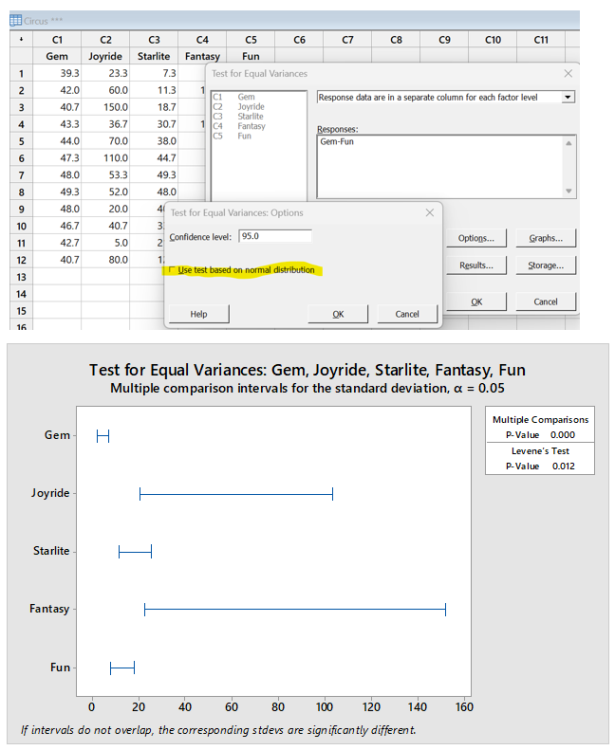
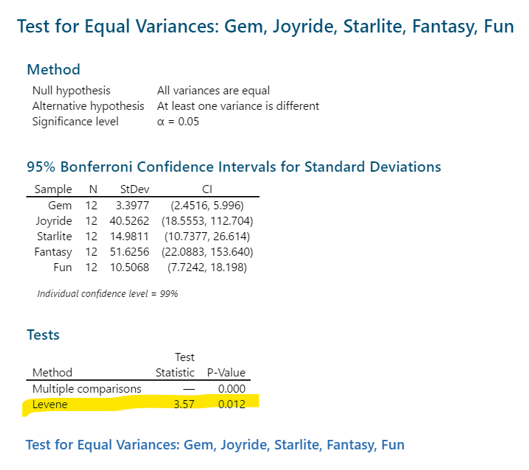
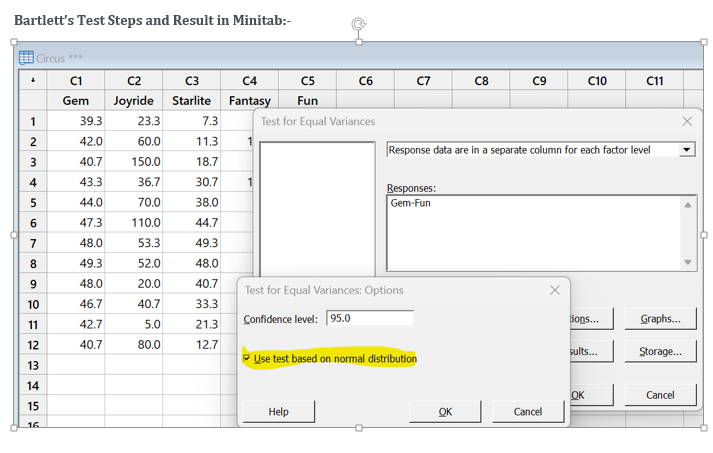
2 pointsThe Levene’s test is generally used to test for equality of variance in a dataset. It is used to determine if two or more samples have equal variances. If the results of the test indicate that the samples do not have equal variances, then it means that one sample has different variance than other samples. An advantage of Levene’s test is, it is highly stable for the data set which is not normally distributed. Null Hypothesis: - Data Groups have equal variances. Alternate Hypothesis: - Data Groups have different variances. If the p-value for the Levene’s test is greater than .05, then the variances are not significantly different from each other and assumption of equal variance is met however If the p-value for the Levene's test is less than .05, then variances for one or more sample data set is not equal. Difference Between the Levene’s test and Bartlett's Test: - Both tests are used to test the assumptions of variance equality. However, the main difference is Bartlett test requires data of each group to be normally distributed and Levene’s test to be used when data is not normally distributed. For Normality check Anderson Darling can be performed. Example: - Data of cost of tickets sold in thousands in as how for a month are tabulated for five different competent Circus groups. The P value for Levene’s test and bartlett test are highly different as Data is not normally distributed and Levene’s test is more stable for non-normal distribution. Gem Joyride Starlite Fantasy Fun 39.3 23.3 7.3 10 36 42 60 11.3 180 40.7 40.7 150 18.7 36 40 43.3 36.7 30.7 120 46.7 44 70 38 48 56 47.3 110 44.7 52.7 60.7 48 53.3 49.3 54 64.7 49.3 52 48 54 64 48 20 40.7 50 58.7 46.7 40.7 33.3 43.3 51.3 42.7 5 21.3 36 42.7 40.7 80 12.7 150 38.7 Levene’s Test Steps and Result in Minitab: - Levene's Test.docx

 2 points

This leaderboard is set to Kolkata/GMT+05:30