

Topics
-
Fifty-five women engineering students completed an AI bootcamp focused on rural Karnataka. Participants developed AI-based solutions after visiting villages and conducting field interviews. The She Innovates bootcamp partnered with several organizations to achieve its goals. This initiative aims to boost women's participation in AI and entrepreneurship. It encourages AI applications for rural development and community-focused sectors. View the full article
-
Besi's quarterly orders more than doubled, fueled by AI and hybrid bonding technology. The company saw increased customer adoption of its advanced chip packaging solutions. Demand for AI applications continues to drive growth in data centers. Besi anticipates revenue growth between ten and fifteen percent. This strong performance aligns with other semiconductor sector reports. View the full article


Leaderboard
-
Gopal Menon
Members1Points10Posts -
C V Satish
Members1Points10Posts -
Vishwadeep Khatri
Administrators1Points6,722Posts -
Gaurav_Mathur
Members1Points10Posts


Popular Content
Showing content with the highest reputation on 11/19/2021 in Posts
-
1 pointQ 420. Explain the salient features and benefits of Human Centered Design in problem solving. Quote examples where it has been successfully used. Note for website visitors - Two questions are asked every week on this platform. One on Tuesday and the other on Friday. All questions so far can be seen here - https://www.benchmarksixsigma.com/forum/lean-six-sigma-business-excellence-questions/ Please visit the forum home page at https://www.benchmarksixsigma.com/forum/ to respond to the latest question open till the next Tuesday/ Friday evening 5 PM as per Indian Standard Time. Questions launched on Tuesdays are open till Friday and questions launched on Friday are open till Tuesday. When you respond to this question, your answer will not be visible till it is reviewed. Only non-plagiarised (plagiarism below 5-10%) responses will be approved. If you have doubts about plagiarism, please check your answer with a plagiarism checker tool like https://smallseotools.com/plagiarism-checker/ before submitting. The best answer is always shown at the top among responses and the author finds honorable mention in our Business Excellence dictionary at https://www.benchmarksixsigma.com/forum/business-excellence-dictionary-glossary/ along with the related term1 point
-
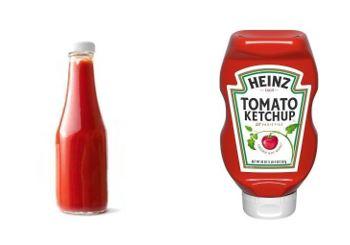
1 pointHuman Centred design is a providing a creative aspect or approach to problem solving. This is aimed at innovating with a human centred approach. There can be different approaches to problem solving, the way human centred design differs is that it has its focus on understanding the perspective of the person who experiences a problem, what they need, and whether the solution them is meeting the needs succesfully. This mainly has 5 key phases Empathize : Understanding the problem before designing Define : Defining the current process which will help in understanding better Ideate : Brainstorming to identify possible solutions for the problem in hand Prototype : This is the POC or sample of how the solution would look like Test and Iterate : The shortlisted idea/prototype to be tested and validated through multiple iterations Human-centered methods are advanced in problem solving and provide the following benefits · increase productivity and operational efficiency · easy to understand which helps in reducing training/support costs · increases accessibility · improves user experience · reduces discomfort/stress · provides competitive advantage You can find numerous examples in real life. Lets look at one. Inverted bottle design for shampoos : While using shampoos its difficult to get the last few drops from the bottle, that is when the companies had decided to give it a thought through human centred methods and came up with the inverted design. This new design ensures even the last drop also comes out as the bottle is kept inverted at all times through the design. Same applies for Ketchup as well.1 point
-
1 pointHuman-centered design (HCD) is a creative approach to problem solving where human perspectives are defined in all the steps. It’s a process that starts with the people you’re designing for and ends with new solutions that are tailor made to suit their needs. In the process of Human-centered design we start with building a deep empathy with the people you’re designing for, as an old UX adage does “walk a mile in the user’s shoes.”, generating multitude of ideas, building and testing prototypes with the people you’re designing for and putting the solutions into use. The design process generally can be divided into three phases. Inspiration Phase: In this phase designers learn directly from the people they’re designing and come to deeply understand their needs. Ideation Phase: In the Ideation Phase you’ll make sense of what you learned, identify opportunities for design, create concepts and develop prototypes of all possible solutions. Prototypes are tested by the users Implementation Phase: Solutions are finalized and implemented with a complete feedback loop. As the user and use cases evolve so does the solutions too. Examples Lets understand the concept of HCD by taking the example of couple of every day use products. TV Remote: Traditional TV remote has a multitude of buttons and functions and is generally very complex to understand and use. Usually the user uses the remote to change channels and control volume. Considering that most of us are technically challenged anyway designers applied HCD to create a simple interface for the remote. The resulting design is simple, elegant and very functional. Ketchup Bottle: This is another classic example of how HCD can be applied to obtain an innovative solution. With the traditional glass bottle it was always difficult to get the entire ketchup outside the bottle. Heinz designed a bottle that was not only inverted and made of plastic, thus making it easy to squeeze our the entire contents of the bottle. Benefits: 1. Customer complaints or issues are minimal since all aspects of the design has been tested and verified with the customer 2. NPS for such products is usually very high and therefore you will get a lot more customers via references 3. Customer retention is also very high since the design process itself would cement a long term relationship with the user leading to repeat orders

 1 point
 -
1 pointHuman centered design is one of the approach used in creating products or services by putting customers physical, emotional and psychological needs at the center of the design. This approach is used in designing new product or services and also solving existing customer problems. Some of the salient features are 1. Use empathy to understand customers needs 2. Use creativity to build smart and user friendly designs 3. Review with customer, seek feedback and modify the design in multiple iterations Examples - Designing tooth brush, shopping cart / trolley, walker for old people, mobile apps etc. Regards, Gopal1 point
-
1 pointHuman Centered Design can be also called as User Centered Design. This is an is an approach that focuses on solving problems by keeping user’s preferences and characteristics. This result in creating a useful, meaningful, and relevant product experience. Most of these designs are very simple but very effective. What I have experienced is China is focusing more on this approach. Many products which are made in China are user centric. To give few examples: · TikTok – This gives a sense of pride as they can lip-sync some of the famous songs and dialogues. We on our daily life also use this many a times. · Led Lights used during Diwali – We used traditional diyas with oil and then Chinese company came with candles which are easy to use. Then they came with the similar diyas with LED which are more convenient. Not only China, India market is also focusing extensively on human centric design. With the increase in Covid cases, the manufacturers targeted with lots of option on immunity related food. Various sanitizers' were manufactured with small bottles even if it came with higher cost so that person can carry in their pockets or purse. In IT industry as well we see lots of examples. There are many software designed to edit the pictures and videos and enable us to create some attractive videos for special occasion like birthdays or anniversary, etc. In short we have to be user centric to sustain in the market.1 point
-
1 pointHuman centered design is a very good approach to solve the problems which is mostly used in design and management frameworks which develops resolutions to the problems with an involvement of human thought process in all the steps in problem solving process. This is an approach which builds upon the involvement of participants to produce a solution to the problem. At the initial stages it needs brainstorming, observation where participants can submerge themselves with the problem and community. In later stages, its focus is on community brainstorming, creating the model and prototyping & implementing the solution in community spaces. Once it is implemented, collecting feedback to improvise the model is very much required. It is proven to be a compelling way to help organizations come at things from a different angle and reach better outcomes. Below are the five principles to get the effective results. 1. Empathize: You should understand the people experiencing the problem before going to conclude the problem statement. You should involve brainstorming, observing the problems before concluding. Always get clarity by asking questions instead of assuming anything. Involve the subject mater experts and those who are living with the problems. 2. Define: The problem statement should be well defined so that it is clear enough to understand and take actions instead of any generic statement. 3. Ideate: In this stage we need to collect and gather the ideas through brain storming, interviews with the people living with the problems and always welcome all the ideas from all the participants instead of thinking correct and incorrect ideas. 4. Prototype: After collecting and gathering the ideas to solution, designers should convert the ideas into the experiment to test them in UAT platform or live production to test for the people live with the problems to see if it works. The designer should think about multiple solutions and see the best among them. 5. Test and iterate: In this stage the designers give the prototypes to the end user to implement them in their workplace and come up with their feedback so that the designer can improvise the prototypes based on the feedback and make a final solution. It might require multiple test and re-test to come to a final solution which is accepted by the people facing the problem. Thank You!1 point
-
1 pointHuman Centered Design is an approach in problem solving that focuses, begins and ends with the actual people or end users of the product or solution while specifically built to suit their needs. I personally once used this principle to solve a particular process problem in my previous organization wherein I had to cultivate deep empathy with the end users of the team I am supporting at that time. The product design was solely focused on their wants and needs to both address the challenges and be user friendly at the same time. A couple of prototypes were built and the project took a bit longer than the estimated target closure date. But finally agreed on the final design before putting it in production or use.1 point
-
1 pointHuman centered design is a problem solving approach mostly used to design and develop solutions by involving human perspective throughout the problem solving process. The main objective of HCD is to develop solutions that are focused on the user needs and requirements which in turn improves the efficiency and the effectiveness of the solution. HCD is designed based on three important basics Empathy- be genuine and design keeping the user who would use your product. Creativity- be creative to solve user problems Business need- be cautious about the commercial success of your product or solution HCD is achieved following a 4-phase process. Inspiration- learn about people, their wants, needs, and find a problem that we need to solve to make their life better. Ideation- brainstorm ideas to solve and conceptualize the problem. Implementation- Develop a prototype to turn the idea into a tangible solution. Validation- Test the prototype with users, which will help in understanding what users say they need versus what they need. This approach will help us know the users at a deeper level which in turn will result in creating a solution or product that makes users' life exponentially better. This also helps us understand the difference between the problem and the symptom. This approach also helps to discover the problem before they emerge in real life resulting in fail fast and fixing early, making the solution cheaper to change. Examples of designs and solutions where HCD has been used successfully are, Push/Pull doors, inverted ketchup bottles to get the last drop from the bottle. Ring pull cap instead of concealed bottle caps.1 point
-
1 pointHuman centered approach in problem solving is keeping the customer or user in focus while providing solution. The basis of human centered approach is to have empathy towards the customer while designing and generating ideas for the problems faced by the user. The human centric approach in problem solving will have the below stages. Define the problem -empathizing with the user • Understand the problem and analyses its impact on the decision maker • Identify the potential beneficiaries of the solution • Identify the stakeholders and their motivations and behavior Solving the right problem • Prioritizing the solution for the intended beneficiary ,who is mostly impacted. • Identify the barriers in moving from present to ideal state Ideation • Providing possible solutions • Selection of ideas based on long term gain for the user. Implementation • Implementation of the feasible solution • Feedback collected and the changes incorporated before product release. Every innovative and successful product in the market has a human centric element, which would have let it to succeed. Some common examples of the human centered design in problem solving: • The health improvement applications and fitness trackers is an example of human centric approach in resolution of the problem on lack of motivation in maintaining fitness. • Automatic cars resolving the difficulty of the user in changing gears while driving.1 point
-
1 pointEvolving customer behavior and expectations requires innovative solution development approaches, to be successful. Human Centered Design is an approach for problem-solving that involves the customer from the inception of idea and places them at the center of solution design. The process starts with understanding the end-users need accurately and leverages innovative solutions/ technologies to address their needs. Human Centered design thinking is basically a combination of mindset, strategy, and tactical approach, that when adopted and applied can deliver transformative business results. Human Centered Design stages usually involves immersion, observation, and contextual framing around the customers to understand & frame the exact problem. This is followed by brainstorming, persona mapping, customer journey maps, prototyping and iterating on designs to develop the solution. Human Centered Design leads to better products that solve real-world problems for the customer. Apart from increased sales and profit margins, the technique when used properly can deliver increased brand loyalty & better customer retention. One of the product which leveraged this technique include the “Instant microwavable popcorn packet” which successfully resolved the problem of mixing the different contents and does not require any cooking/ storage vessel.1 point
-
1 pointKids tooth brush – A famous design company come up with novel design of tooth brush handle with fat - rubber cushion, cartoon - appealing emojis or characters on the handle with flexible head / bristles. This had changed the common tooth brush design for all ages and pioneered the child brush design thinking. Pull -push door (famously called Don - Norman) – PULL door with handle, Push door with NO Handle. This has solved normal cognitive behavior Ketch up bottle – A well-known company come -up with squeeze type package with bottom tomato ketch-up / sauce outlet pouring in limited amounts avoiding wastes, time in handling A Clinician programmer, a digital devise – A multinational medical device company making difference to the OT staff in their endeavor to serve patients, come up with single hand use devise. We can term many of above as · User experience · Customer experience · Patient Centricity · Employee orientation · Passenger delight In all these lines User, Patient, Customer etc have one thing common in them, that is “Human “and examples cited above are few among best product/ services in the world which are result of Human centered design ( HCD) approach in problem solving and arriving at solution. Human Centered Design ( HCD) : HCD goes beyond User Centered Design (UCD) approach by not just focusing on tangible, physiological needs but also emotional or psychological preferences. In nutshell HCD can be said as design in thinking in bringing solutions for People with immense EMPATHY. I5 (I-fi)- Important tenets of HCD Inspiration – What exact problem being faced, See / observe the NEED gap and to be felt by designer putting oneself into user position with full empathy Intuitiveness – Common cognitive behaviors, patterns en-grained in the problem / solution Innovation / Ideation – How quickly can come up with solution for above Iteration – Solutions are tested and improved until solution serves intended purpose Implementation – Finally execution Final comments: HCD – tackles contemporaneous problem and comes with solutions based on current needs, gaps if resolved would impact significantly HI/HX etc. Anything contemporaneous, has certain shelf life, things change and evolve into different requirement later. Question to ask one selves or designer in particular – How long lasting is the solution…. For Aaj bhi or Kal Bhi OR Aaj Bhi , Kal Bhi ( Today ond future also) PS : Any reference to product trade mark, company avoided by keeping essence in the examples cited above. However, any oblique reference to above is recognized, accepted. I5 (I-fi) – Coined for easy recall of HCD concept1 point
-
1 pointWhat is Human Centred Design? Human Centred Design is a problem-solving approach that develops solutions by taking the human perspective and behaviour into consideration at every level of the design. Its goal is to address and incorporate the preferences, pain points, likes, and dislikes of the user. It was first popularised by the global design firm IDEO who found that the Human Centred Design approach led to quicker, increased profits and fewer products failing to market. It starts with the end-user for whom the solution is being designed and ends with a tailor-made solution that is suitable to their requirements. A product may typically meet either a functional, emotional or social need. The functional need is the actual use of the product whereas the emotional and social needs come from the feeling one gets from possessing a product. For example, it could meet an aesthetic or status need. The Human Centred Design approach is akin to the ‘Jobs to be done’ theory by Harvard Business School Professor Clayton Christensen’s which states that people do not buy a product, but hire it to do a specific job or achieve a particular goal. The Human Centred Design approach looks at the design through this framework of the users’ motivations rather than demographic attributes such as income, gender, age, etc. The Human Centred Design is so popular in that it has been defined in ISO 9241-210:2019(E) as “an approach to interactive systems development that aims to make systems usable and useful by focusing on the users, their needs and requirements, and by applying human factors/ergonomics, and usability knowledge and techniques. This approach enhances effectiveness and efficiency, improves human well-being, user satisfaction, accessibility and sustainability; and counteracts possible adverse effects of use on human health, safety and performance”. It has three phases, viz., the inspiration phase, the ideation phase, and the implementation phase. The Inspiration Phase entails interacting with and learning from the end-user. The designer immerses himself totally into the lives of the people he is designing for, so as to understand their context and need. This will remove preconceived notions, biases, misunderstandings about what the customer actually requires. It sort of gets buy-in from the end-user. This stage requires empathy to understand the emotions and experiences of the customer. It is the designer putting himself into the shoes of the customer, getting a feel of the product asking questions that the customer would ask such as where, when, or the purpose for which they use the product. The ideation phase is used to generate various ideas and prototypes based on the experiences from the inspiration phase. The implementation phase would involve bringing the solution to the end-user. Salient Features The salient features of Human Centred Design are that it needs empathy, the generation of a large number of ideas through brainstorming or bodystorming, creation of a large number of prototypes along with the end-user. It caters to the functional, emotional, and social needs of the end-user right from the start. Product designs that follow the HCD approach are generally successful in the market. On the downside, these products have a long lead time for development. Benefits Even though the time to design and produce the product takes time, the likelihood of the product succeeding in the market is very high. Having been designed from the perspective of the end-user, the product has early acceptance in the market. Examples Zoom. Zoom realized the increased need for videoconferencing solutions not only for businesses but educational institutions, religious organizations, individual trainers, etc. Zoom created the virtual learning system through interaction with teachers and students and designed a system that met the varied end users’ requirements. Zoom ensured security and compliance requirements due to young students using its platform, they further build a whiteboard for easy interaction, dashboards to track student engagement, and integration with various learning management systems Products used during Commutes Designers of products used during commute such as coffee, milkshakes, mobile phones, music devices, etc, have interacted with the end-user to make their products more acceptable to the end-user. For example, Bluetooth-enabled hands-free mobile phones, music player controls on the steering wheel, cup holders in the car, increasing the thickness of the drink have been incorporated into the product based on the end-user requirements. Changing Users Requirements during Covid Payment and Logistics. With the onset of the pandemic, people had a need for reduced cash payments and increased home delivery of items. Payment and logistics processes have been redesigned to cater to these specific user requirements. Electronic Tablets. Tablets were basically being used by the designer community. However, during Covid, the customer base extended to teachers, students, managers, etc. Wacom identified this requirement and through interaction with the end-user incorporated various hardware and software changes in their offerings. References https://en.wikipedia.org/wiki/Human-centered_design#:~:text=Human-centered%20design%20%28%20HCD%29%20%5Balso%20Human-centred%20design%2C%20as,perspective%20in%20all%20steps%20of%20the%20problem-solving%20process. https://www.iso.org/standard/77520.html Ergonomics of human-system interaction — Part 210: Human-centred design for interactive systems https://www.designkit.org/human-centered-design https://online.hbs.edu/blog/post/what-is-human-centered-design?tempview=logoconvert https://online.hbs.edu/blog/post/jobs-to-be-done-examples?tempview=logoconvert1 point
-
1 pointIn Human Centered Design, understanding/perceiving the human emotional experience is the core element to discover a product or solution or a service. Many times, the Product/Solution designers are not hesitant to attend themselves living in the problem along with the people. This will help them to design “exactly what is needed and acceptable”. Most of us know about the history of Uber which was successful because of its human centered design. Let’s look at another example of an individual from an Indian Middle class family, born and brought up from remote areas of the country. As not much accessible to school, but skilled to code logically and likes to travel. Discovery time began between 17 to 20 years of age when he stayed in more than 100 hotels, guest houses and tasted various foods. A college drop out and just twenty turned entered the young entrepreneur’s club in the country. He is Ritesh Agarwal founder of OYO Rooms. Through OYO he offered good quality and affordable budget hotels. OYO presence is more than 23000+ hotels across 800+ cities in 18+ countries around the world. Ritesh Agarwal’s concept is a kind of Human Centered Design. Empathy ignites the creators to make “exactly what is needed and acceptable” with a deep desire to do meaningful. “Empathizing” what others feel or need and “Desire” to do something meaningful to solve, leads to Human centered Design.1 point
-
1 pointHuman Centered Design is a process of problem solving which starts with a deep empathy with the customer and identifying their needs and end in developing and delivering the solution to address their needs. The features and benefits of Human Centered Design are as follows- 1. Will be able to understand the user in a deep manner and create solution which will make their life much better. 2. Helps to ask lot of hard, but telling questions which will help identify the real problem. 3. The process involves to design and test before build , hence we can build with more confidence. 4. Leads to increase in brand loyalty and better customer relationship. 5. Reduce errors, development cost thereby positively impacting bottom-line. Some success stories of using this concept are as follows - 1. Genpact won a large contract to help a global manufacturing and sales company with its finance and accounting process. Genpact did human centered design sessions throughout the project with the clients starting from research to analysis and synthesis to execution. 2. BTPN, an Indonesian bank designed a customer centric digital savings account aimed specifically at low income category people. It resulted in creating a no-fees savings account accessed by a simple cell phone with single bar signal. The customers can also use the account to save money, pay bills, and buy phone credits.1 point
-
1 pointHuman-centered design revolves around a technique when focus is on the people who is experiencing the problem and identifying their needs/requirement. They are included at the centre of the development process with the objective of developing a solution which meets their needs as expected and more effectively. It is also considered as an extension of design thinking methodology. It also follows the below steps – Empathize – understanding the user needs Define – Clarifying and defining the problem Ideate – generating creative ideas with the help of brainstorming sessions Prototype – Create a prototype and adopts a hands-on experience Test – Develop & implement a solution1 point
-
1 point" Designing for the People With the People" The above phrase is the essence of Human Centric Design(HCD) whose sole purpose is to solve the problems of the human beings while they interact with various products and services. Every Product and Service has been designed to meet one or more human needs and they have been constantly evolving with the needs becoming more and more sophisticated and complex. The three phases of HCD are: * Inspiration or Sympathy * Ideation * Experimentation or Implementation. The Core principles of HCD are: * Focus upon the people- Who & What context? * Find the right problem-Focus on the core problem * System thinking- Think of big picture with all possible human touch points * Validation-Testing the solutions with the real people and iterations till the delight is experienced Some of the classic examples of HCD are: * The current day toothbrushes come friendly for all ages with better grip and well crafted bristles . * The honey now comes in a trendy squeezy inverted containers to do away with associated spill and mess. * The current day range of office furniture is a delight to the user with great ergonomics considering all dimensions of anthropometry.1 point


This leaderboard is set to Kolkata/GMT+05:30