

Topics
-
Fifty-five women engineering students completed an AI bootcamp focused on rural Karnataka. Participants developed AI-based solutions after visiting villages and conducting field interviews. The She Innovates bootcamp partnered with several organizations to achieve its goals. This initiative aims to boost women's participation in AI and entrepreneurship. It encourages AI applications for rural development and community-focused sectors. View the full article
-
Besi's quarterly orders more than doubled, fueled by AI and hybrid bonding technology. The company saw increased customer adoption of its advanced chip packaging solutions. Demand for AI applications continues to drive growth in data centers. Besi anticipates revenue growth between ten and fifteen percent. This strong performance aligns with other semiconductor sector reports. View the full article



Leaderboard
-
Vishwadeep Khatri
Administrators3Points6,722Posts -
Mohamed Asif Abdul Hameed
Fraternity Members2Points78Posts -
AmitKumar
Lean Six Sigma Black Belt2Points11Posts -
Johanan Collins
Members2Points72Posts



Popular Content
Showing content with the highest reputation on 11/01/2021 in Posts
-
1 pointNice responses from all. While Jahanan and Asif have both explored Hick's law with its implications on decision making in Project Management, the winner for this question is Jahanan, for having explored more perspectives and scenarios.1 point
-
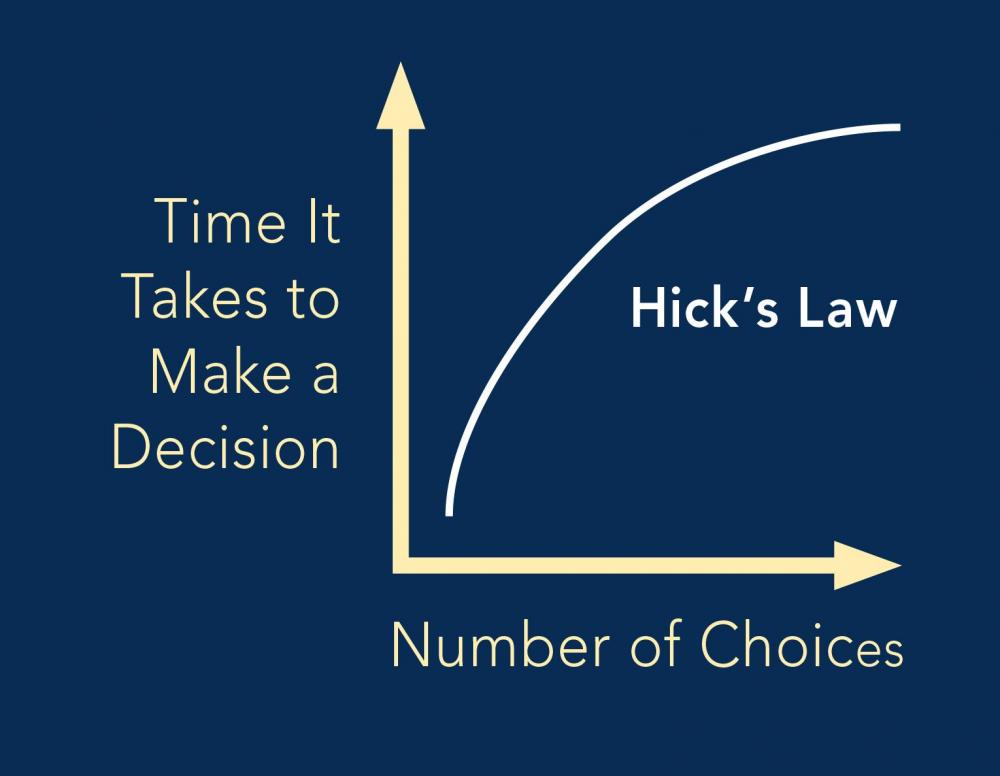
1 pointHick's law was named after British and American psychologists William Edmund Hick and Ray Hyman. In the year 1952, this pair had examined the relationship between the number of choices present and an individual’s reaction time for those given choices. Hick's Law states that the more choices users face, the longer it will take for them to come up a decision. This Law can help to reduce the complexity in any design or process to simplifying the decision-making process forgiven set of users. increasing the number of choices will increase the decision time also. This law is often being used in user experience design also. For example, one experiment showed that customers more likely to purchase jars of pickles when there were 6 flavors displayed rather than when there are 10 flavors shown. Benefits of Hicks Law: It reduces choices when resolution times are critical to increase the overall decision time. It generally uses progressive onboarding to minimize cognitive load for new users. It avoids overwhelming users by highlighting the adequate recommended options as well. It breaks complex tasks into smaller tasks to decrease cognitive load.1 point
-
1 pointHick's law subdivide the total collection of choices into categories, eliminating about half of the remaining choices at each step, rather than considering each and every choice one-by-one. It empowers project managers to subdivide the total collection of choices into categories while evaluating reaction time rather than considering each and every choice one-by-one.1 point
-
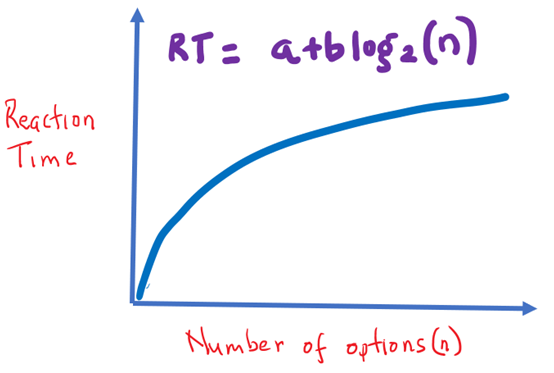
1 pointHick’s Law was named after Britisher, William Edmund Hick, and American Ray Hyman. Their background in psychology helped in framing this law. The law looks very logical in that it states that the more choices a person has, the longer the person will take to reach a decision. The beauty of the law is the mathematical equation that goes with it. That is the time a person takes to reach a decision is a logarithmic function of the number of choices. Since it is a logarithmic function of the number of choices, the increase in time diminishes as the number of choices increase. A picture that comes to mind is a child selecting an ice cream before a Baskin Robbins Ice-cream shop. Considering the implications of the law, it becomes more relevant when designing a short list and loses its significance as the length of the list increases. Hence Hick’s Law can be used in the design of User Experience (UX). Examples of short list are ‘Action Buttons’ or ‘Navigation Menus’ in an App or website. At times the designer thinks it is wise to include more functionality into his website or app, however, he should use Hick’s law to assess the number of functionalities that he should put into his design. A user of the app/website when encountering too many options is likely to get saturated with the choices available and leave the website quickly. This can be measured through various matrices such as the bounce rate, conversion rate, user engagement, time on site, page views, etc., using various analytics software such as Google Analytics. Hick’s Law helps in various design decisions, either in the design of physical products, such as the number of buttons on a TV remote, the number of controls in a washing machine, or in software products as the number of links in the header tab of a website. Hick’s law can be applied to the Tree Structure of a menu, to determine both the horizontal width and vertical depth of the menu. In order to apply Hick’s law, designers should put the choices in categories there by reducing the choices available. Designers can also obscure complexity by breaking down the process into manageable steps with fewer options in each stage. The formula is RT = a + b log2 (n) RT – Reaction Time n – Number of Stimuli a and b – constants that depend on the task/condition Applicability of Hick’s law to Project Management. Hick’s law applies to choices that have an equal probability of selection. This means that the user has no previous knowledge of the choices and is making a choice based on what is presented in front of him. If a user is specifically/intentionally looking for a specific choice or has a certain bias, Hick’s law will not be applicable to him. In this case, the time taken to act is likely to be less than the logarithmic function as calculated by Hick’s Law. In such cases, other decision-making tools such as Pugh Matrix or Analytic Hierarchy Process may be used. References https://www.interaction-design.org/literature/topics/hick-s-law
 1 point
 -
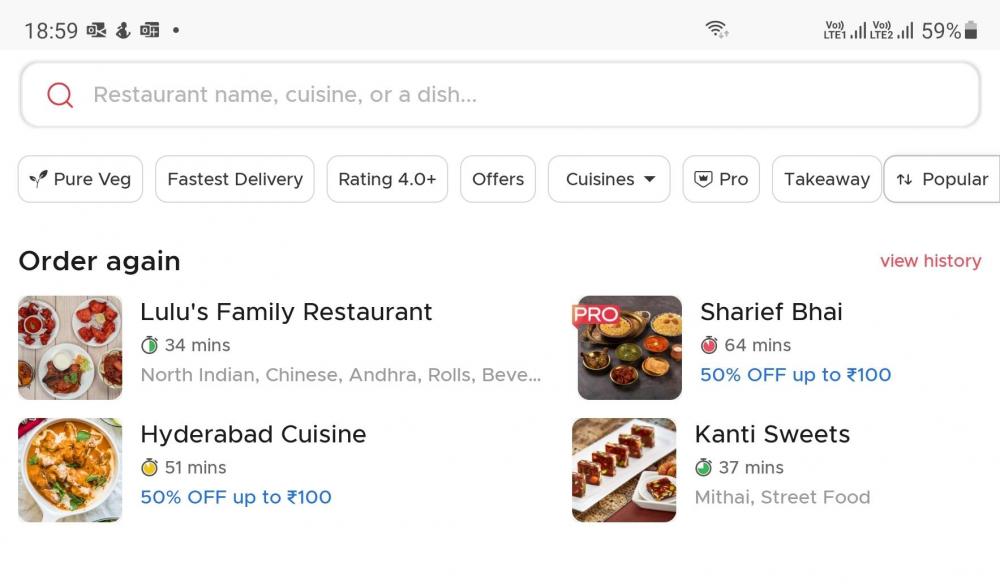
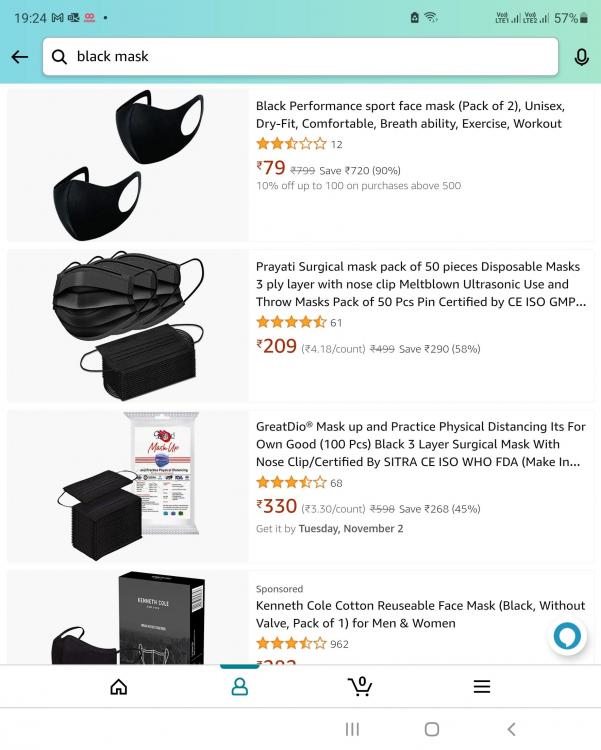
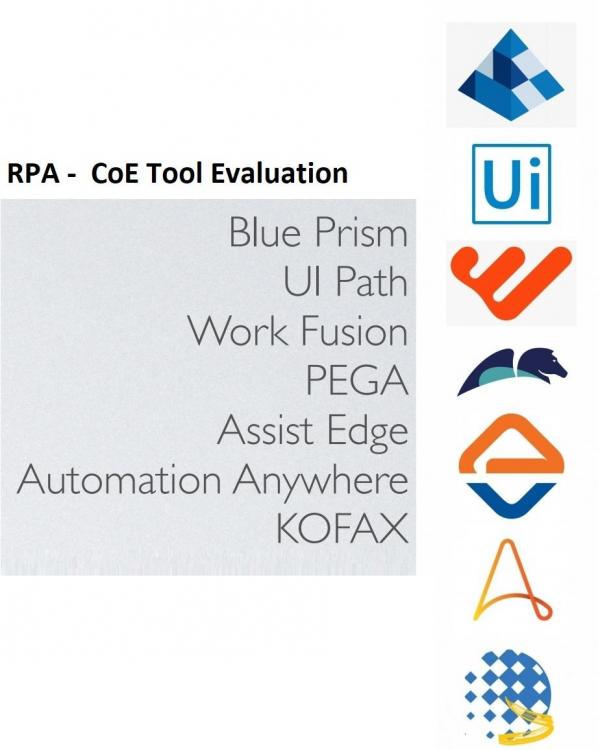
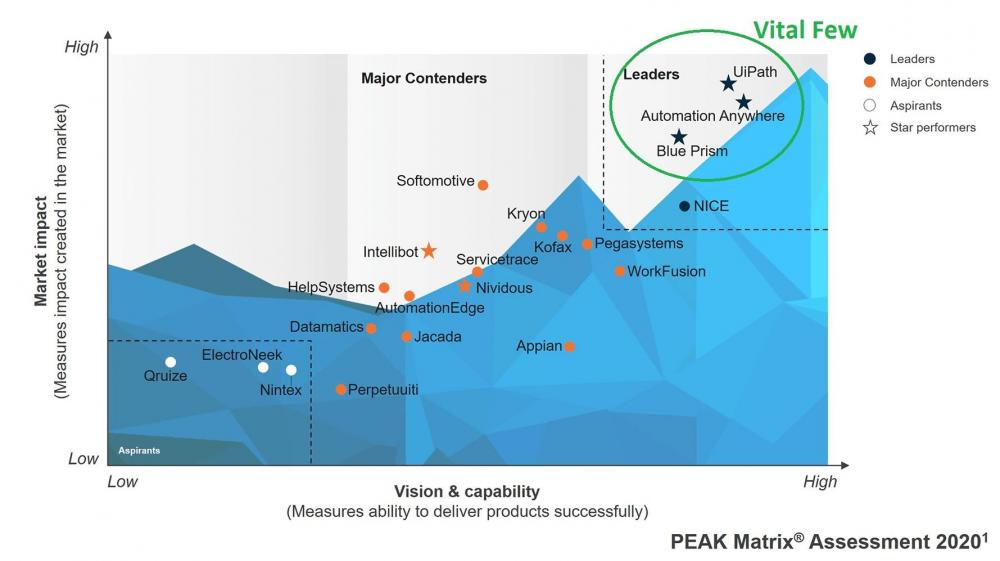
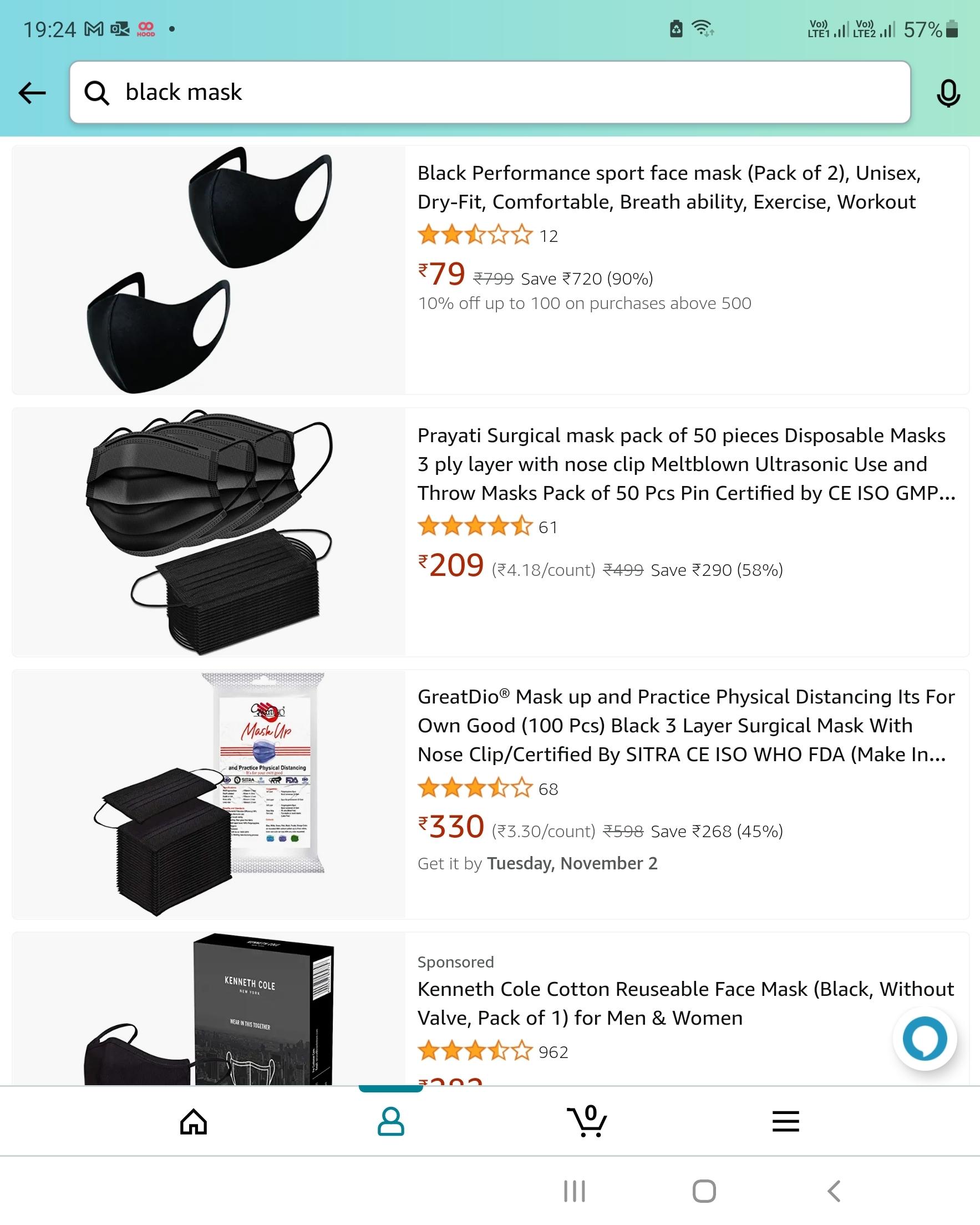
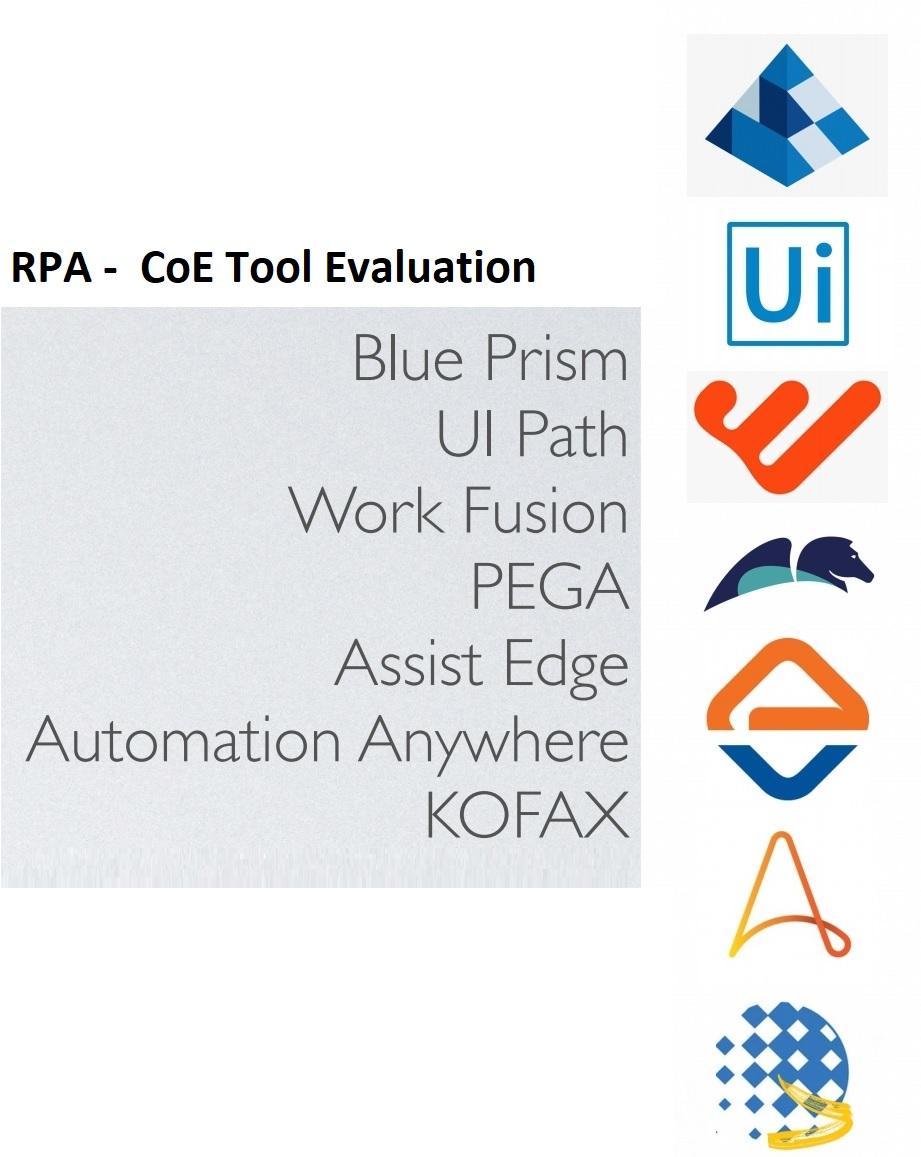
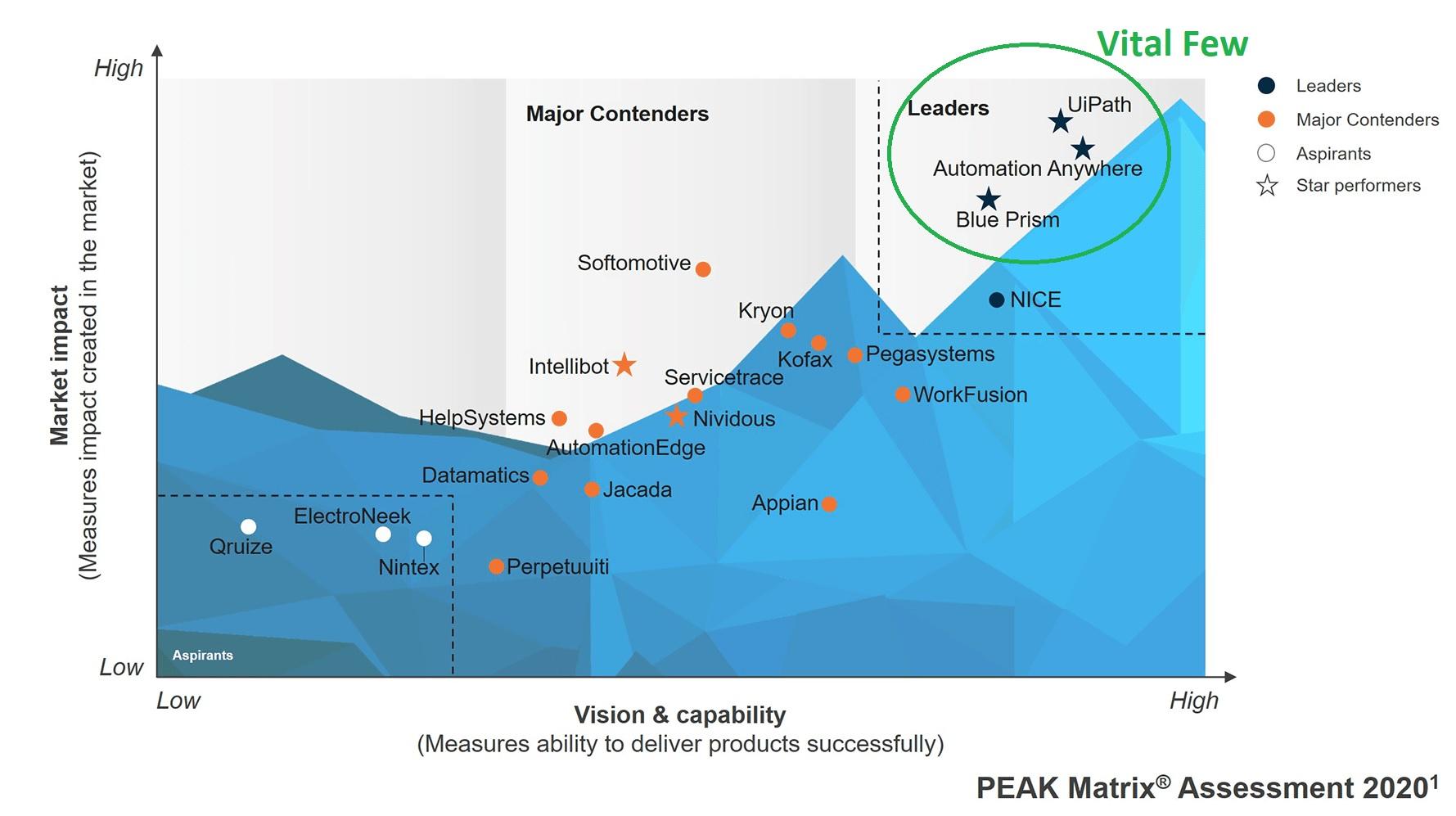
1 pointSimply to put forward, Hick’s law states that, it takes more time to make decision, when there are multiple options to choose from. Key metrics associated with this law is time, choices, and complexity Let me start with a classical example of Zomato As the hunger strikes, we get into the app to order food. nevertheless, more time is spent on exploring the options available by scrolling top down, rather than ordering quickly. This can be very well referred to the expression, “Spoilt for Choices” Besides, as there are multiple platforms and multiple options available within those platforms. It takes considerable amount of time to finalize a close a deal. Especially, in food industry, multiple choices are essential in order to keep the consumers engaged. Below is the reference from Amazon for buying a mask However, on time critical projects, situation can make us “frozen” and make us unable to select one option in the heat of the moment. To overcome this situation, when the options are limited, the response time to make decision can be quicker. Critics often discuss on the effectiveness of this approach as limiting the option, still this could be a lifesaver, when we will have to make wise and rapid decision. Example from IT service industry, in case of tool evaluation, when there are multiple options, it could be more challenging in arriving at the best tool with regards to cost, ROI, robustness, scalability, flexibility to change and adapt. As the assessment could sometime be misleading and can run through months. Rather Categorizing Choice can help out, selecting the category out of star performers, aspirants, contenders and leaders. We can quickly get into the target group and make quicker decision. Picking the Vital Few and Selecting the best option. From a B2C scenario, to have better connect and engagement with the consumers, wide choices are obligatory to influence and keep them involved. Lesson learned from hick’s law: Despite the fact, there is no double, consumers love to make choices, but then again, having too many options can confuse in arriving at a conclusion. “More is not better! Except sometimes” So, for time critical project, please KISS (Keep It Simple and Straightforward)
 1 point
 -
1 pointQ 412. Agile seems to be inspired by Lean Management. What are the key differences between Agile and Lean? Note for website visitors - Two questions are asked every week on this platform. One on Tuesday and the other on Friday. All questions so far can be seen here - https://www.benchmarksixsigma.com/forum/lean-six-sigma-business-excellence-questions/ Please visit the forum home page at https://www.benchmarksixsigma.com/forum/ to respond to the latest question open till the next Tuesday/ Friday evening 5 PM as per Indian Standard Time. Questions launched on Tuesdays are open till Friday and questions launched on Friday are open till Tuesday. When you respond to this question, your answer will not be visible till it is reviewed. Only non-plagiarised (plagiarism below 5-10%) responses will be approved. If you have doubts about plagiarism, please check your answer with a plagiarism checker tool like https://smallseotools.com/plagiarism-checker/ before submitting. The best answer is always shown at the top among responses and the author finds honorable mention in our Business Excellence dictionary at https://www.benchmarksixsigma.com/forum/business-excellence-dictionary-glossary/ along with the related term1 point
-
1 pointAll four answers are relevant. We would like to remember that Lean principles are put to good use not only in production/ operations but also in design of new product/ processes. The selected best answer for this question is the one by Mohamed Asif.1 point
-
1 pointDifference between Agile and Lean While Agile and Lean are sometimes thought of to be similar, they are different in their very approach. Agile had got more to do with Project Management in an environment of quick change and technology. It is generally used in software development, due to the quick improvement in hardware technology such as processor speeds, storage, etc, the software improvements automatically piggyback on this change. Due to this change, the End Users' requirements and expectations change. Using erstwhile methods of project management have failed in this fast-changing environment. The Agile methodology of project management is better suited for quick change, chaos, and uncertainty. Agile is developed using frameworks like Scrum or Kanban. Lean has got more to do with a process that may either be in the field of manufacturing or service. Lean looks at the removal of waste in the process and delivers increased value. Use of management principles and processes are used in Lean. Lean is used to improve the quality or the speed of delivery of the product. It has seven principles and aims at changing the flow of the process from batch to flow or also reducing the size of the batch.1 point
-
1 pointAgile Vs LEAN: Both Agile and Lean are flexible, quick and end-user-focused viewpoints which help teams to develop and produce high-quality products and services quickly maintaining the sustainability. Both the methods have the goal to provide customers a high-quality product rapidly, one iteration at a time. Only having a better understanding of both Agile and Lean can ensure that teams adopt the principles and accompanying practices of their selected methodology fully to establish a concrete foundation for implementing a mature Agile or Lean model. This is possible once it is accomplished across teams. Organizations can consider a more advanced hybrid scaled Agile and Lean approach allow them to enjoy the sensible and cultural benefits of the two methodologies. Let’s understand the differences between them. which will 1. The first difference is that the Agile methodology focus on the optimization of a development process, the Lean method concerns the optimization of a production process. 2. The Agile methodology is applied within a team. The Lean methodology is usually applied to enhance processes altogether organizations 3. Agile is about helping companies build better products. Lean is about improving the production process to achieve the good quality of the product as the intended outcome. 4. Agile focuses less on the process, and more on the process to make a better product. Lean is usually applied to a repetitive, predictable process, and aims to enhance the method so as to form a far better product 5. The Agile life cycle contains six phases, whereas the Lean life cycle includes seven principles 6. Agile is all about individuals and interactions, Lean is all about eliminating the waste 7. In Agile, dynamic requirement changes are effortless. Lean is not that much flexible for dynamic deliverable changes. Example for point 7: In Agile, change management process is available and easy where in-between we can add the customer requirement where in Lean management process, once we are done with the process designing, adding the customer requirement is difficult.1 point
-
1 pointBoth Lean and Agile methodologies are flexible and focuses on continuous improvement and share common goals and principles, however the workflow is more iterative in agile Key differences with regards to both the methodology is that, Lean focuses on maximizing the efficiencies whereas, agile is more of maximizing the effectiveness Another paramount difference is flexibility. Lean is not that flexible when is comes to dynamic deliverable changes. However, dynamic requirement changes are effortless in Agile Few difference in various toolkits used is listed below. Lean Management - Daily Huddle meeting, VSM, RCPS, 5S, Visual Management Agile - Daily Stand up, Backlog, Sprints Lean methodology delivers Value; Agile delivers Working Product (wherein, small batch size is preferred to deliver rapidly) Even though there are considerable difference between Lean and Agile, both methodologies complements each other in most of the working situations and some of the commonalities including Improving Quality, Amplifying learning, Continuously improving and empowering people makes both approach collaborative. Choosing one over other is not pivotal as exploring what principles better suits the working model in the organization and incorporating them in the software development process matters.1 point
-
1 pointLean: Lean originated from Toyota & focus mainly to deliver better customer value through continuous improvement with respect to products and processes both. Agile- Agile is majorly used in Software development lifecycle. It aims to build software as quickly as possible by dividing the total project in small parts & have daily governance around that. The major difference between Lean & Agile are listed below. Sl Lean Agile 1 Lean Started in 1940 Agile started in 1990 2 Lean can be used in any industry Agile major use is in Software Development industry 3 Lean talks about the optimization of production process Agile methodology talks about the optimization of development process 4 Lean can be applied all cross process within a company Agile Applies within a team 5 Lean applies to repetitive processes to improve Agile focuses on making a new product in a better way1 point



This leaderboard is set to Kolkata/GMT+05:30