

Topics
-
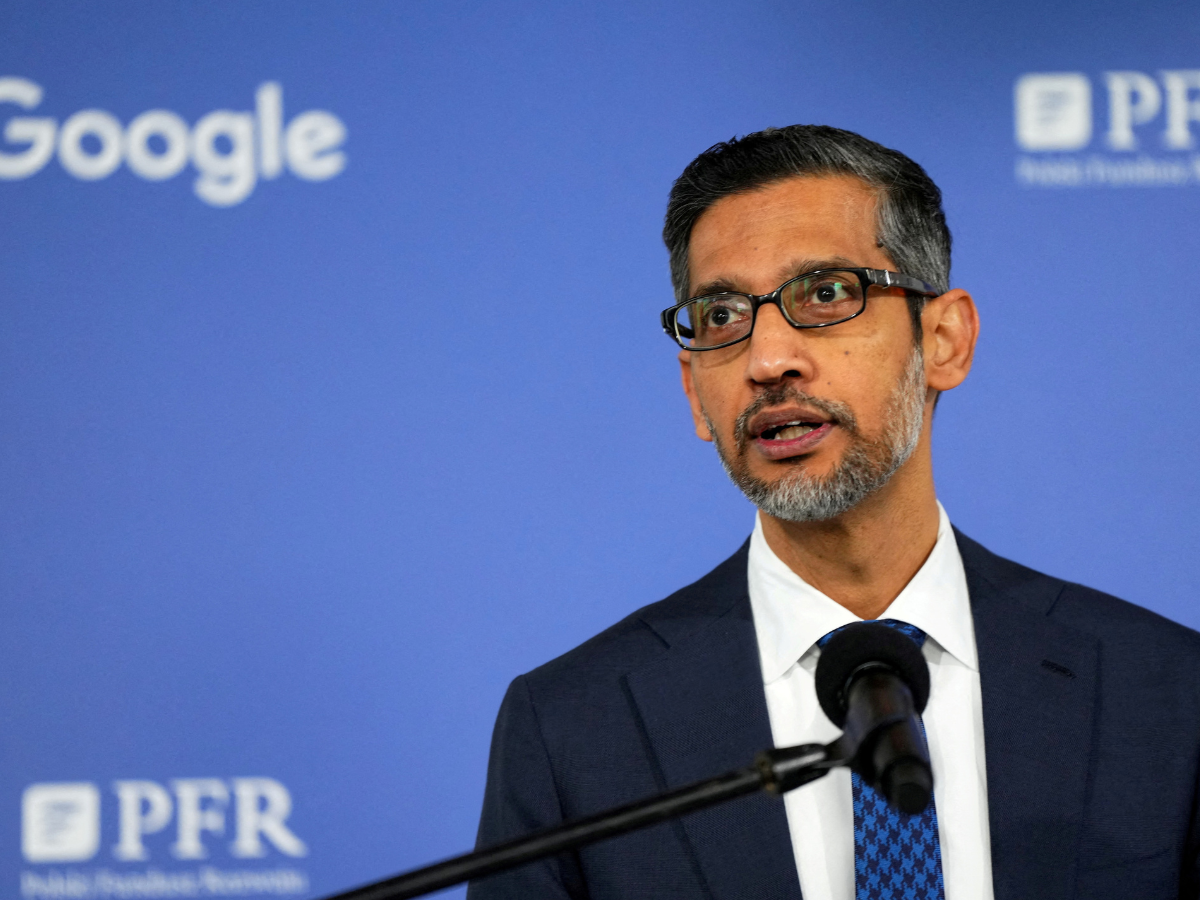
The latest setback has fueled worries that Google was losing momentum just as OpenAI and Anthropic and a host of Chinese rivals have accelerated the pace of model releases. On the call on Wednesday, Pichai struck an unusually defensive tone as analysts pressed him on the state of Google's frontier models and whether they could still compete at the cutting edge of AI development. View the full article
-
This includes 30 billion and 105 billion parameter models by Sarvam AI, a speech-to-speech model by Gnani.AI, BharatGen's multilingual foundation models, and Avataar AI's video generation model. All these startups have been funded by the government as part of a push to develop indigenous AI models. Of the 20 models, five have been released so far. View the full article


Leaderboard
-
Vishwadeep Khatri
Administrators1Points6,717Posts -
Mohammad Mahmudul Hassan
Members1Points10Posts

Popular Content
Showing content with the highest reputation on 09/14/2021 in all areas
-
Q 400. Upto which Phase of D-M-A-I-C, should we allow a change in the project scope? Provide reasons for your answer This question is inspired by a recent question by Wg Cdr CV Satish on Benchmark Six Sigma Linkedin Page. For this question, the reason (justification) for your answer is going to be most important. Note for website visitors - Two questions are asked every week on this platform. One on Tuesday and the other on Friday. All questions so far can be seen here - https://www.benchmarksixsigma.com/forum/lean-six-sigma-business-excellence-questions/ Please visit the forum home page at https://www.benchmarksixsigma.com/forum/ to respond to the latest question open till the next Tuesday/ Friday evening 5 PM as per Indian Standard Time. Questions launched on Tuesdays are open till Friday and questions launched on Friday are open till Tuesday. When you respond to this question, your answer will not be visible till it is reviewed. Only non-plagiarised (plagiarism below 5-10%) responses will be approved. If you have doubts about plagiarism, please check your answer with a plagiarism checker tool like https://smallseotools.com/plagiarism-checker/ before submitting. The best answer is always shown at the top among responses and the author finds honorable mention in our Business Excellence dictionary at https://www.benchmarksixsigma.com/forum/business-excellence-dictionary-glossary/ along with the related term1 point
-
The purpose and scope of DMAIC project: By implementing the DMAIC Six Sigma methodology, an organization can enhance the efficiency of their products, processes or services. The purpose of Define phase is to understand customer’s needs, identify the problems and opportunities for improvement in the current process and create high-level view of process. Project charter is created to officially start the project that authorizes to apply organizational resources to project activities by the project leader. It also provides direct link between project and strategic objectives of the organization. Project Charter ensures alignment by the stakeholders about the deliverables, milestones, roles responsibilities of everyone in the project. When the project is approved and signed the project is officially authorized. The charter can have a long term impact on Six Sigma DMAIC projects ultimate success. Project should focus on proper changes, right deliverables, on time accomplishment Project scope is a vital part of the project charter in the Define phase of the DMAIC project. Scope describes the product, service, result boundaries and accepted criteria. Scope management is more concerned with defining and controlling what is included and what is not included in the project, the scope may include: The start time and stop time often outlined in SIPOC diagram The project duration The process boundaries, within scope or out of scope The sub processes involved The locations such as the states, the territories, the countries, continents Necessity to Change in Scope: Change request is a formal proposal to modify deliverables or baseline. When issues found when project is being performed then Change request can be raised. Project change request are needed when it is deemed necessary to change the scope of the DMAIC project. Most of the scope changes will affect the budget and schedule of the project. Project leader, sponsors, steering Committee and stakeholders with the standard process for managing changes. Steps of Change approval: 1. The Project Leader will make decisions to analyze to proceed with scope changes. 2. Changing impact on scope will be forwarded to the Steering Committee for review. The Steering Committee will give input and suggestions to the Project Sponsor. The Project Sponsor will make the final decision, based upon the information provided by the Project leader and the input of the Steering Committee Project Management Lifecycle & Six Sigma DMAIC methodology both are working on the principle of Plan-Do- Check-Act (PDCA) cycle. In Project Management Life cycle allows to generate proper change requests initiating phase to control phase. Approved scope changes are controlled and ensured the project remains on schedule, within budget and provides the agreed deliverables to internal and external customer. • Upon direction from the appropriate authority process change requests executed • The impact of changes is communicated to appropriate personnel • Small changes allowed to be managed with a minimum of overhead cost. In conclusion, in DMAIC project allows to change & manage change (proper & justified) from Define through to Control in every phase of the DMAIC upon proper approval. Scope management with properly defining and controlling what is included and what is not included in the project is necessary to avoid unnecessary scope changes.
 1 point
This leaderboard is set to Kolkata/GMT+05:30