

Topics
-
Jeff Bezos is pushing Prime Video's overhaul to highlight Amazon's AI. The project, known as Lighthouse, aims to showcase AI for millions of users. This initiative seeks to elevate Amazon's standing in the competitive AI landscape. New features will improve content recommendations and respond to spoken requests. Bezos' personal involvement underscores the strategic importance of this AI integration. View the full article
-
Advanced Micro Devices is launching new artificial intelligence hardware on Thursday. This new hardware aims to compete directly with Nvidia's offerings. AMD is targeting the growing data center inference computing market. The company also announced significant deals with AI labs Anthropic and OpenAI. These agreements position AMD for substantial future revenue in the chip sector. View the full article


Leaderboard
-
Vishwadeep Khatri
Administrators1Points6,727Posts -
Dhirendra Singh.
Members1Points16Posts -
Chetna
Members1Points11Posts


Popular Content
Showing content with the highest reputation on 06/25/2021 in all areas
-
1 pointQ 376. Some Lean Six Sigma projects in sales and marketing focus on customer retention. Customer Lifetime Value (CLV) is a key metric for such projects. Explain CLV along with an example. Note for website visitors - Two questions are asked every week on this platform. One on Tuesday and the other on Friday. All questions so far can be seen here - https://www.benchmarksixsigma.com/forum/lean-six-sigma-business-excellence-questions/ Please visit the forum home page at https://www.benchmarksixsigma.com/forum/ to respond to the latest question open till the next Tuesday/ Friday evening 5 PM as per Indian Standard Time. Questions launched on Tuesdays are open till Friday and questions launched on Friday are open till Tuesday. When you respond to this question, your answer will not be visible till it is reviewed. Only non-plagiarised (plagiarism below 5-10%) responses will be approved. If you have doubts about plagiarism, please check your answer with a plagiarism checker tool like https://smallseotools.com/plagiarism-checker/ before submitting. The best answer is always shown at the top among responses and the author finds honorable mention in our Business Excellence dictionary at https://www.benchmarksixsigma.com/forum/business-excellence-dictionary-glossary/ along with the related term1 point
-
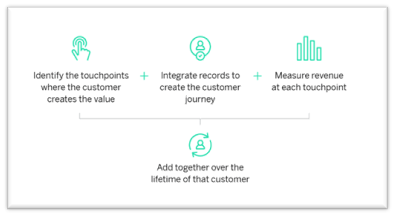
1 pointCustomer lifetime value (CLV) is on the metric to track as part of a CX program ( Customer experience). CLV is measurement tool to know how valuable a customer is to any organization , not just on a sales basis but across the whole relationship. CLV is different metric compared to NPS & CSAT because it is connected to tangible benefits linked to revenue rather than a somewhat intangible promise of loyalty & satisfaction. CLV can be measured as shown below Simple calculation with example for customer lifetime value. Customer X’s revenue/ year = $1000 Customer relationship duration = 10 years Cost of acquisition = $100 Cost to serve = $100 per year ($1000 over 10 years) So the math looks something like this: $1000 x 10 = $10,000 $10,000 – $1000 - $100 = $8900 CLV for Customer A = $8900 CLV goes hand in hand with important associated metric CAC ( Customer acquisition Cost) , example , if the CLV of an average Tea Shop customer is $1000 but to acquire them ( via advertising , marketing , offers , etc) the Tea chain could be losing money unless it considered its acquisition cost Key importance of CLV. It is important metric as it cost less to retain the existing loyalist customer than it does to acquire the new customer. Increasing value of the existing customer is more helpful to drive growth. CLV helps organization to build strategies to acquire new customers and retain the existing customer while maintain good profit margins. How to Improve CLV Invest in customer experience (CX) :- Start a loyalty program Recognize and reward best customers Close loop with unhappy customers So in short by understanding customer experience and measuring feedback at all touch points organization can understand the key driver to CLV and plan improvement accordingly. Example, Paid OTT subscription or mobile plan which is basically multi-year relation shift with customer. It is good to spot the early sign of attrition i.e they playing less and less on services over the year.
 1 point
 -
1 pointCustomer Lifetime Value (CLV) is a metric that shows the total revenue any business can expect from a single customer account throughout their business relationship. This metric considers a customer’s revenue value and compares it to the company’s predicted customer lifespan. This is a prediction model which have varying levels of complexity and accuracy, from experimental to the use of complex predictive analytical techniques. Below is one of a simpler example to understand the CLV formula Assumptions: · Profits generated by Customer A each year = $1000 · Number of years since they are customer of the brand = 5 years · Cost to acquire the customer = $2000 The CLV of this customer would be: Annual profit x # of years they are customer – acquisition cost $1000 x 5 - $2000 = $3000 Another detailed example of CLV formula with more complexity by changing the initial assumptions: · Annual revenue per average customer = $2000 per annum · Product costs associated with Avg customer’s purchases = $500 per year · Firm spends additional $100 an year per customer for Customer Services · Annual retention rate or loyalty rate = 80% · Average costs to acquire new customer = $1000 In such a case, we have similar challenge to the previous example but the information needs to be modified from above data to feed into the CLV formula. As a first step, we will calculate the averahe annual profit per customer by deducting the two sets of costs i.e. product & service costs from the annual revenue. $2000 - $500 - $100 = $1400 The acquisition costs here are $1000 but we don’t have the average lifetime of the customer in years. We have the Annual retention rate. This is a common situation in workplace as it is relatively easy from customer databases to calculate the retention rate. So we will now convert a retention rate to the avg number of years that the customer will deal with firm. 100% divided by (100% minus the annual retention rate) or (1/1-annual retention rate) So for 80% loyalty rate, the average customer lifetime will be: 100% / (100% - 80%) = 100% / 20% = 5 years avg customer lifetime period Now we have all inputs for simple customer lifetime value formula, we can calculate CLV as: $1400 (profit) X 5(years) = $1000 (acquisition) = $60001 point
This leaderboard is set to Kolkata/GMT+05:30