

Topics
-
Fifty-five women engineering students completed an AI bootcamp focused on rural Karnataka. Participants developed AI-based solutions after visiting villages and conducting field interviews. The She Innovates bootcamp partnered with several organizations to achieve its goals. This initiative aims to boost women's participation in AI and entrepreneurship. It encourages AI applications for rural development and community-focused sectors. View the full article
-
Besi's quarterly orders more than doubled, fueled by AI and hybrid bonding technology. The company saw increased customer adoption of its advanced chip packaging solutions. Demand for AI applications continues to drive growth in data centers. Besi anticipates revenue growth between ten and fifteen percent. This strong performance aligns with other semiconductor sector reports. View the full article



Leaderboard
-
aritradasgupta187
Lean Six Sigma Black Belt1Points26Posts -
premkumar thirunavukkarasu
Members1Points10Posts -
Sourabh Nandi
Members1Points38Posts


Popular Content
Showing content with the highest reputation on 09/02/2020 in Posts
-
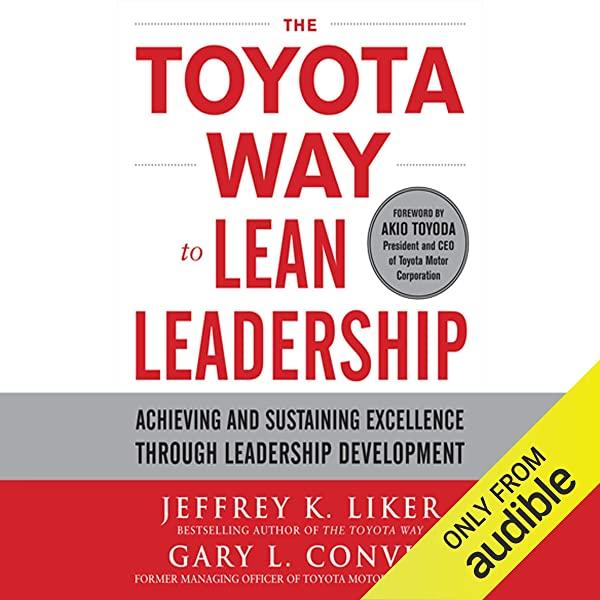
1 pointWhat Is ShuHaRi? The concept of ShuHaRi originates from the Japanese Noh-theater. It is a model practiced to illustrate the pathway a beginner requires to take from each moment someone expresses the interest to study something until that person becomes a master. Though this theory began from the world of theater, it became famous in martial arts. Numerous people still believe today that this is a martial arts technique. + The ShuHaRi principle describes the 3 main stages of learning. Shu, ha, and ri are the various stages of learning. The belief is that each person who embarks the new learning journey will progress through these three stages to become an expert or master. These three terms refer to three stages of learning for the student and three levels of involvement for the teacher: shu means "to protect," ha means "to break away," and ri means "freedom to create." Step 1 – Shu: to obey In the shu phase, the student, under the watchful eye of the master, learns the fundamentals by repeatedly performing tasks to precise standards. At this stage, the student is observed by the teacher, who is, in a sense protecting him, and the work product, from failure. Step 2 – Ha: To liberate oneself In the ha stage, the student has more freedom to practice unsupervised, although the master checks on her; the student can apply the rules creatively, but still follows the standard form quite rigidly. Step 3 – Ri: Separate In the ri stage, the rules and behaviors have become so ingrained that they no longer think about them consciously. The actions come naturally, and the student is then in a position to develop the understanding and to improve on what she has learned. This cycle continues throughout the individual's life. It is a learning cycle because the student is going through ShuHaRi over and over, more and deeply, periodically returning to the basics. + Implementing Lean Six Sigma with ShuHaRi This simplistic but effectual concept can be seen in any learning context, whether in one's personal life or the workplace or implementing Lean Six Sigma. Embracing ShuHaRi will allow us to more efficiently drive change and adopt Lean Six Sigma techniques more effectively. + ShuHaRi applies as follows to the Lean Six Sigma projects : For the first project: The project leader (Lean Six Sigma Master Black Belt), considered as the expert of the subject, is the single decision-maker of the operations to be performed. The whole team is then considered as protegés. For the second project: The project leader (Lean Six Sigma Master Black Belt) intervenes only as an assistant and advises the Black Belt or Green Belt of the different projects. For the subsequent projects: The expert is no longer in the projects and lets them manage the projects themselves. Black Belt / Green Belt, who become experts now, will carry forward the methods they wish to use. The expert is then available to answer problems, guarantee concrete results, and advise if essential. + Example from Toyota The basic principles of Toyota learning can be traced to the teachings of Zen Buddhism, but they are not unique to Toyota. Toyota's teaching methods and the Japanese concept of kata are inline. The core of kata is the layered learning cycle, which is called in Japanese ShuHaRi. While it is easy to see how ShuHaRi applies to manual tasks like those on an assembly line, we might question how this approach works beyond the shop floor. However, at Toyota, ShuHaRi is the fundamental premise for all workers' training and development, including leaders. To understand in detail, the conglomeration of ShuHaRi principles with Lean, refer to or listen to "The Toyota Way to Lean Leadership: Achieving and Sustaining Excellence through Leadership Development" (Book by Jeffrey Liker). Can Six Sigma and ShuHaRi Coexist? Many companies are using approaches like Six Sigma and ShuHaRi in their business. Strategies such as ShuHaRi and Six Sigma allow companies to contend the consumer market's pressures and demands and even outshine in their businesses. However, these two methodologies are different in their intentions and implementation. ShuHaRi and Six Sigma should be seen as parallel strategies. The answer is in getting the right balance between rigidity and adaptability. While ShuHaRi is unquestionably not a lazy approach, combining it with Six Sigma, uniquely for areas where process enhancement is the goal, can help bring a more structured framework to problem-solving, ideation, and process optimization. ShuHaRi and Six Sigma are proven and tested to help companies to achieve better results. However, to successfully implement Six Sigma and ShuHaRi together, companies must not be focusing on the methodologies. Alternatively, teams need to look at the system as a combination and find how ShuHaRi and Six Sigma principles can effectively create a product or service that customers will enjoy.
 1 point
 -
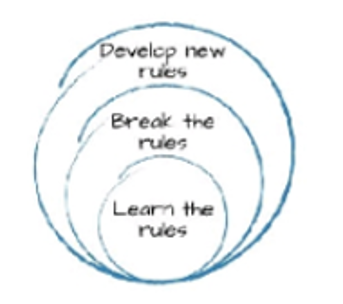
1 pointWhat is ShuHaRi Principle? To get into the stages of ShuHaRi & usage of its during Lean Six Sigma Implementation, lets first try to understand it… There are number of real life examples around us for demonstrating ShuHaRi Principle, for ease understanding let’s consider the scenario of a Coach and the player (trainee). Stage 1 - Sachin Tendulkar at his early age learned & followed the teachings by his coach Ramakant Achrekar Stage 2 – In his middle one-day cricket career, after 70 one day matches became the opener in one-day cricket and broken the rules for first 15 overs Stage 3 – At his later career, he developed the new rules against world’s leading bowlers Shane Warne, Glen Mc Grath… Same as in the above real life example, there are 3 stages in Shu Ha Ri. ShuHaRi is a Japanese martial art concept which describes the stages of learning to mastery. The translation of Shu Ha Ri from Japanese to English as follows "to keep, to fall, to break away". ShuHaRi can be demonstrated in concentric circles, with Shu within Ha, and both Shu and Ha within Ri as below. The fundamental techniques and knowledge don’t change. In the first Shu phase the student should follow the coach in a strict and loyal way; at this stage the student is not ready to innovate. The other way of interpretation of this concept is “To become a leader, first he should be a follower first” Now will see, how this concept is used in implementation of Lean Six Sigma: Stage 1 – “Shu” - During the start of First project, the team should follow the Lean Six Sigma Expert. This approach ensures the positive result of project in turn it creates confidence for the team members. Stage 2 – “Ha” - (Second) project, the team should consider the Lean Six Sigma Expert only as an adviser in other words assistance to the project. Through this approach the team learnt by doing in a practical way in other ways it’s a hands on approach. Stage 3 – “Ri” - Moving forward (Third) project and following project, the team will manage individually the project without the Lean Six Sigma Expert as a team member or leader. Now they are creators of their own project. As indicated in Chinese proverb “give a man a fish and you feed him for a day; teach a man to fish and you feed him for a lifetime”. By using ShuHaRi concept its better to teach the team to solve the organization problems on their own instead in other way. The growth of an organization is also depending on growth of each individual in an organization, the individual growth ensured through ShuHaRi principle.
 1 point
 -
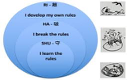
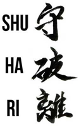
1 pointShu Ha RI – Shuhari is a Japanese concept coined and used in martial arts. It can be described the entire cycle of a students training and how his relation evolve with his teacher .Though the concept is used in martial arts the principal can be used in any improvement project. SHU – SHU in Japanese means to “Obey” or to “Protect”. This is the phases when the teacher teaches his students the rules And regulations .the student tries to add year to all the rules and regulations it's the teachers duty to ensure that he assists the student in his learning process. This is just like a parent teaching their child. This will also from the foundation of the students’ knowledge and will help in is future . How SHU can be used in Implementing Six Sigma in an organisation - In an organisation SHU can form the first stage where 6 Sigma leaders take initiative across the organisation to train employees and create a solid foundation so that use this knowledge in the projects which will help in achieving organisational goals. they will assist the employees in clarifying all doubts and support them so that they have a strong capability in practically applying the knowledge . Ha - At this stage a student has achieved certain proficiency an expertise in his art. He starts applying the same and uses a certain amount of freedom while he's doing the same. he also starts question and tries to break free of the rigid instruction of his teacher. This is a time where he will ask a lot of questions from the teacher . In this stage the student has achieved proficiency and he himself teaches while his teacher Is already known as a master of his art. How HA can be used in Implementing Six Sigma in an organisation - This is a stage sufficient employees who are trained and they successfully started implementing there knowledge in the various projects and have seen positive results . They might question their leaders regarding the rigidity of the instructions which they were earlier taught and might question then on an ongoing basis. This can be considered as a positive phase as the student is now trying to Excel in what he's been taught and has started is journey of inner quest. RI - This is a stage where is student now has become a high ranking Black belt and he has acquired expertise .This is a stage where he sets free ,the relation between the student and the teacher is more like a grandparent where The grandchild has a child of his own. This is a phase where the student listens to his creative inner self and embarks on his own journey of creating something new. This is his contribution to his field of knowledge. He is no more guided by anyone rather he starts creating something unique based on his character and personality. How RI can be used in Implementing Six Sigma in an organisation -This is phase where the employees who are now experts come out with innovative solutions which can be in form of methodology ,process this leads to series of new techniques ,innovation and this leads to a complete transformation of the organisation. Cause the students are using there knowledge and expertise of the process to come out with some unique solutions which can radically change the business . The student should surpass the skills of the teacher cause only then there will be overall improvement .In case if the skills of the students are not at par with the master then the overall improvement will deteriorate. If the student is able to equal his master but not surpass him then there will be stagnation.
 1 point
This leaderboard is set to Kolkata/GMT+05:30