

Topics
-
Fifty-five women engineering students completed an AI bootcamp focused on rural Karnataka. Participants developed AI-based solutions after visiting villages and conducting field interviews. The She Innovates bootcamp partnered with several organizations to achieve its goals. This initiative aims to boost women's participation in AI and entrepreneurship. It encourages AI applications for rural development and community-focused sectors. View the full article
-
Besi's quarterly orders more than doubled, fueled by AI and hybrid bonding technology. The company saw increased customer adoption of its advanced chip packaging solutions. Demand for AI applications continues to drive growth in data centers. Besi anticipates revenue growth between ten and fifteen percent. This strong performance aligns with other semiconductor sector reports. View the full article



Leaderboard
-
Mayank Gupta
Members2Points679Posts -
Mohamed Asif Abdul Hameed
Fraternity Members1Points78Posts -
Natwar Lal
Members1Points50Posts


Popular Content
Showing content with the highest reputation on 08/11/2019 in Posts
-
Who does not like a pat on the back!! We also like it and hence we would like to hear from you. Your positive feedback helps us stay motivated and continue to deliver excellent workshops. Please click on 'Reply to this Topic' and share the comment that you want to be displayed on this forum as your positive feedback? We value your opinion!!!2 points
-
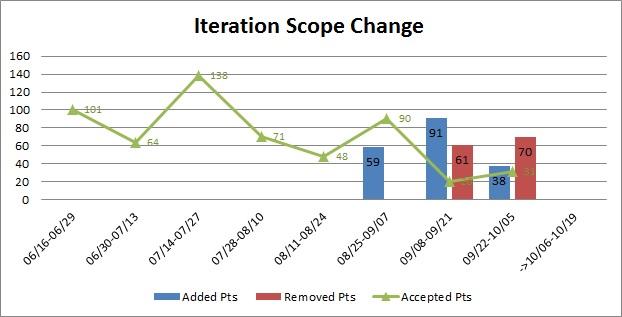
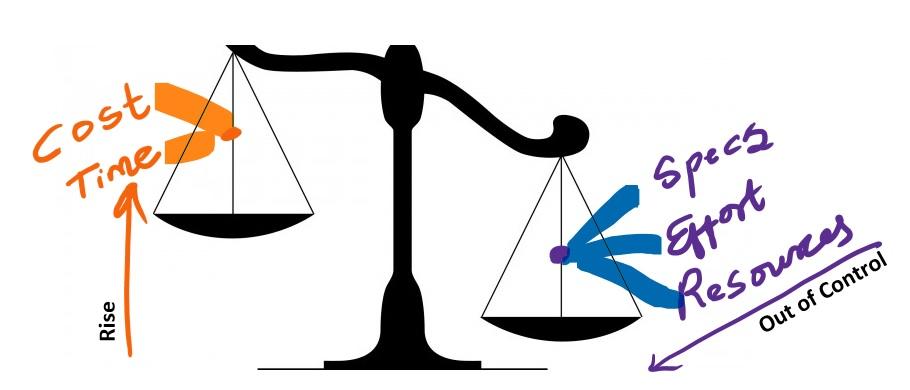
1 pointScope Creep: When we start any project, one of the key initial steps that we take is defining scope (What is in-scope and what is out of the boundary, i.e., out of scope) Change is unavoidable so Change in scope is also inevitable based on current performance and situation. Anything (additional features, requirements, considerations to existing) that is added over and above the accepted/agreed upon scope is Scope Creep. Would like to quote an example from software development (traditional - Water Fall and agile) or even in an DMAIC six sigma project scope creep can happen at any of the phases. Below image gives a view of scope change iterations in each sprint delivery in an agile environment Iteration scope change along with Scrum Master’s expertise will allows better management of scope change and control it. Simple definition of Scope creep would be any changes that is introduced to the project post requirement gathering phase. CHANGE is not usually Bad !!! Change is necessary in order to sustain competition When do we usually have scope creep? It can be Market Demand, New Technology, Change in Business Need, Development Constraints Some of the additional scenarios would be When change control is uncommon Poor scope identification (initial analysis) and definition during project charter stage When communication is not apparent When there is external Influence Bad project planning and deployment Dynamic market change Quick change over / Late point differentiation (Usually for a matured process/product) When Project Manager is frail When initial scope definition is no more applicable Impact of Scope Creep: Project cost overrun Mix-up / Misunderstanding of new requirement How do we identify Scope Creep: Scope definition itself is not a simple process, it has various below steps / documents, viz., Scope Planning, Scope Definition, Scope Work Breakdown Structure Scope verification & Scope Change Control. So scope definition is obviously critical and vital step.. so when ever there is deviation or when there is a scope creep, we will have to rapidly take necessary immediate actions. Identify scope creep by when there is misalignment with objectives, deviation from deliverables, multiple change request from external stake holders, and most importantly anticipate and ensure availability during scheduled project connects [Do NOT wait for situations to come up, Be Proactive] . How do we avoid Scope Creep: Document the requirement details Create SMART objectives Deploy Change Control Plan Prepare Clear and Attainable Project Schedule Verify, Validate and get SING-OFF from Stakeholders (before project start) Engage the team Create SOW (Statement of Work) to outline the work and monitor development progress How do we manage Scope Creep: If we are not managing Scope Creep, it could possibly have Negative impacts. Use a good project management tool/applications at your disposal (such as JIRA, Trello, Easy-projects) and In order to manage the changes some of the below best practices / actions can be taken Define / Re-define the project scope Re-baseline / measure change difference (Work re-estimation. Agile Eg., T-shirt sizing exercise with the development team) Keep all stake holders informed Update project cost document (Request for extra resources / cost if required..) Update new target dead line / milestone document / Gantt Chart and communicate with project team, sponsor and supplier Reprioritise WIP Managing Key Project team Members, Stake Holders and Users: Keeping everyone informed is critical and is necessary in projects. so keep customers, users, members and stakeholders engaged. Be Agile Create 2 ways communication channel (Through tool/application/forums/meetings) Ensure regular updates and information is available to all stakeholders at any point of time Ensure time schedules for meetings are feasible and if required Re-schedule and Do not cancel meetings with out reasons Keep RACI Matrix updated and Key SPOC's defined during the project Maintain relationship and request sign-off whenever required Get USERS using the product or service at early stage It is Ok to say "No" when it not possible to accept scope change (final stage, 11th hour feedback, when change doesn't make sense,...) Keep developmental progress and details transparent. This would ensure team members are not demotivated and diverted from the objectives.

 1 point
 -
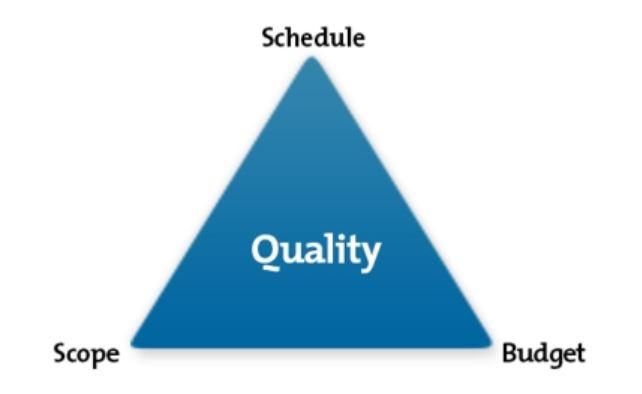
1 pointScope is one of the vertex of the "Holy Trinity" of a successful project. The other two being Schedule and Budget. For any project to be successful, the trinity has to be maintained. Scope Creep is changing the original boundaries of the project which adversely affects either the schedule or the budget of the project. Even though scope is decided early in the project, there are times when scope is kept intentionally fluid and may be it gets finalized mid way through the project. E.g. In a Six Sigma project, even though scope is part of Define phase, it may get revised until the early Analyze phase. Having said that, scope should get finalized and signed off by all relevant stakeholders as early as possible in the project. Scope revisions lead to rework and with each passing phase the cost of rework increases 10 times (rule of 10). Some e.g. of Scope Creep 1. In a Six Sigma project: additional process steps are added to original SIPOC 2. In an IT project: additional functional points or product features get added 3. In a construction project: Change in the flooring design of a multi floor building 4. In a marriage project: addition of another function or expansion of the guest list at the last minute Ways in which you could identify scope creep are 1. Customer / stakeholders / team members keep on changing the requirements resulting in a higher number of Change Requests 2. You find yourself going back to the drawing board 3. Repeated revisions to SIPOC and/or project charters 4. Changes to the project timelines and/or budgets PMBOK prescribes the following ways in which Scope Creep can be prevented 1. Exhaustive requirement collection, documentation 2. Requirement trace-ability matrix across the various phases of the project 3. Create an efficient Work Break Down Structure 4. Validate the scope with all stakeholders 5. Control the scope - limit the number of change requests once scope is frozen unless the sponsor is ready to bear the impact on schedule and/or the budget 6. Change Management principles of effective communication and periodic reviews (tollgates for important milestones). Continuously evaluate the actual delivered scope vs the baseline (original) scope
 1 point

This leaderboard is set to Kolkata/GMT+05:30