

Topics
-
OpenAI, which is expected to need about 3,200 megawatts (MW) of power for its new facility, has agreed to provide up to 1,000 MW to the Southern Co subsidiary Georgia Power's systems in times of high demand. View the full article
-
The affected startup, Hugging Face, said it had turned to Zhipu AI's open-source GLM-5.2 model last week to analyze data from the hack after leading US AI models declined the task, unable to distinguish between a defender and an attacker. View the full article



Leaderboard
-
Akkul Dhand
Members2Points18Posts -
Smith Roy
Members1Points8Posts -
Sumukha Nagaraja
Fraternity Members1Points23Posts -
R Rajesh
Members1Points160Posts



Popular Content
Showing content with the highest reputation on 07/21/2025 in Posts
-
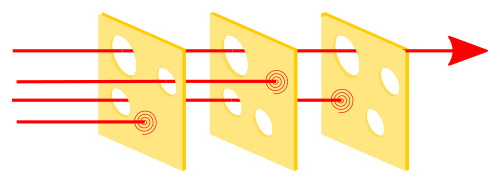
2 pointsThe Swiss Cheese model is a risk analysis and management model developed by James Reason. The model illustrates how accidents or failures can occur due to a combination of various factors. Think of a stack of Swiss cheese slices with the slices representing layers of defence, such as safety procedures, training or system design within a process or an organisation, and the holes representing the potential weaknesses or failure points in those defences such as human errors, system malfunction or a procedural flaw. In isolation, the holes may not create an issue; however, when they line up, they create a clear path for failure. Used in various industries such as healthcare, aviation, engineering, etc., the model helps 1. Analyse past accidents and identify areas for improvement. 2. Spot individual failures as well as systemic vulnerabilities 3. Understand that a single safeguard is never enough 4. Focus not only on adding additional layers, but also improving the quality of the existing ones (i.e. shrinking the holes) In my organizational processes, the cheese slices or the layers of defense are, 1. Process Documentation - Standard Operating Procedures for clarity on what needs to be done and how. 2. Technology and Tools - CRM, project trackers, automated reporting. 3. People Structures – Skilled team members and role clarity. 4. Audits & Reviews -Regular Check-ins, internal audits and client feedback loops 5. Training & Capability Building - Internal or external training programs, onboarding procedures, or process trainings. 6. Governance Frameworks - Approval systems, decision rights or escalation ladders And the holes i.e. the weak spots are, 1. Process Documentation: Outdated or poorly communicated procedures 2. Technology & Tools: Incorrectly implemented or data not updated 3. People: Poor Delegation, lack of ownership or unclear roles 4. Training: Theoretical but no practical implementation, old training systems or irrelevant modules 5. Governance - Micromanagement, or too much red tape, or unclear escalation If the holes line up, there can be client delivery issues, missed deadlines, and miscommunication, leading to business losses. However, by using Business Excellence principles, pitfalls can be avoided, as below, 1. Map your defences – Document all the defence mechanisms in the workflows by assessing where you rely on people, where on technology and where the decision-making is slow. 2. Identify and Prioritize risks – Run a FMEA analysis to spot where the holes might align, which layers are the weakest and which ones overlap. 3. Close the gaps – Use the PDCA, DMAIC to tighten each layer (shrinking the holes) such as, · Improve SOPs - standardise, train, test understanding, periodic reviews · Review CRM or reporting dashboards for data accuracy · Audit the impact of training, not just attendance 4. Design for resilience – Set up redundancy where needed by implementing backup approvers, escalation triggers, or multiple checkpoints so that even if one layer fails, another catches it. 5. Imbibe a culture of prevention – Encouraging teams to look beyond firefighting and ask what hole in our process allowed this to happen, and how can we patch the holes? For Eg: During any transition, · One layer is the communication plan. · Another is the handover process · Third is the data access and permissions · And fourth is internal task tracking If the comms aren’t clear or the handover isn’t fully documented or someone forgets to update access – that’s a failure chain. Final thoughts The Swiss Cheese model helps us see failure as a whole system and not just someone’s screw up. When combined with Business Excellence tools, you not only patch holes but build stronger and smarter slices.2 points
-
1 pointFirst of all, let us understand what this concept is all about. Swiss Chess Model Wikipedia definition says “The Swiss cheese model of accident causation illustrates that, although many layers of defence lie between hazards and accidents, there are flaws in each layer that, if aligned, can allow the accident to occur “ Wikipedia example: In this below diagram, three hazard vectors are stopped by the defences, but one passes through where the "holes" are lined up.” A Wikipedia diagram How can the Swiss Cheese Model help you identify risks and strengthen the reliability of that process? The model portrays the fact that cause of a failure may not be necessarily attributed to a single factor but it could be due to multiple factors. This model essentially helps in identifying probable risks at every layer and gives an opportunity for us to improve/strengthen the defence of each layer and thereby improving the overall reliability of the process. As you can see in the above diagram, you can see the 2nd, 3rd, and 4th arrows (see the arrows from the top of the screen to the bottom for the order to be correct) getting blocked in their same/subsequent layer or at the final layer. But 1st arrow alone passes through all the defence layers and then becomes a failure!! Here the holes (we are passing through) are the weaknesses and they provide the opportunity for us to identify them as risks The cumulative effect of passing through all the holes in all of the layers successfully result in a failure. This model helps in identifying the risks at the holistic process as well. What would represent the “slices of cheese” (defence layers) and the “holes” (potential weaknesses) in your process? Slices of Cheese (Defence Layers): These are the protecting walls for the process without which we will not be able to achieve our objectives Holes (Potential Weaknesses): These are the loopholes through which costly mistakes/errors can happen because of which negative impacts occur -such as bad quality, reputation hit, revenue loss, business loss, material &/or personnel safety and hazard issues, market competitive edge loss… How can this understanding guide improvement efforts using Business Excellence principles ? As this model is in constant look out for risks, at every layer, and tries to address them, it helps the system to be continuously evolving and improving itself. The model also focuses its defence layers based on the customer objectives and therefore is highly customer focussed. As a team wants to ensure that every defence layer in its process needs to be equipped properly, the process should be guided ably by strong, vibrant and proactive leaders.. Example: Now as we understand, as what this model is about, let us see with a practical example on this: Process: IT Product Development process – The IT team wanted to ensure good quality with on-time delivery. In this example, let us focus only on the Coding and Testing aspect Holes (Potential Weaknesses): Manual - IT Dev Process (Low Maturity) Manual + Automation - IT Dev Process (High Maturity) AI Based IT Process Poor Quality code that could resulting in memory leaks, SQL injections leading to hacking, erroneous data, Turning off automation for existing features (maintenance/support work) can result in code quality issues when being worked upon Longer Initial learning curve for AI or AI prompting can result in some mental hurdle and that may prevent us from depriving some quality code output response Poor test cases written resulting in allowing of erroneous data or not well-formed data Lack of adequate knowledge on Test automation tool while writing complex test case scenarios Poor AI prompt can lead to ambiguous AI response which can make to have an average code /test quality which can fall into the manual /manual+Automation category response Application not working properly as an integrated system resulting in isolated modules not working Lack of time in investing for automation tool learning, resulting in manual intervention and hence human error inducement, while dealing many test case scenarios AI outcome cannot be simply taken for granted. Human oversight may be needed. Potential chance of human oversight is possible Slices of Cheese (Defence Layers): Manual - IT Dev Process (Low Maturity) Manual + Automation - IT Dev Process (High Maturity) AI Based IT Process Code self-review Code review by a Static Code Analyzer tool AI Tool based review Code review by Peer Code review (Functional knowledge) by SME/Architect AI based Unit Test case generation Customer Architect doing code review Unit Test case automation AI based Functional Test case generation Unit Test case self-review by Developer Functional Test case automation AI based Regression Suite generation Functional Test case self-review by Tester Regression Test case automation AI based Integration Test suite generation Function Test case review by Test lead Integration Test case automation AI based seamless deployment In this example, have consciously put the holes first and the Slices of cheese as the next. The reason being, in my experience (& IMHO), have seen that these holes have been addressed properly typically by these layers. Conclusion: The example that is listed here calls out succinctly the defence layers and holes in the process. As this model supports, continuous exploration/analysis of risks, it gives an opportunity for the servicing providing organization to look for improvements in process optimization, customer focus, Value creation etc... Reference (for definition and diagram) : Wikipedia for Swiss Cheese Model
 1 point
 -
1 pointBy executing Swiss Cheese model in the process for Operational Excellence. OpeEx is a philosophy for delivering value to the customers and stakeholders by utilizing principals of Lean, Six Sigma, TOC to optimize the processes and improving quality, productivity and reducing cost. Swiss Cheese model identifies how multiple layers can prevent failures. Considering process for Order Fulfillment. Defense layers are: 1. SOP's - Defines How to perform a Task 2. Training - Ensure employee understand SOP's. 3. Quality Checks - Inspection at each stage. 4. Automation - Bar Code scanning for mistake proofing's. 5. Customer Feedback - Captures issue's for continuous improvement. Holes in the Cheese are: 1. SOP's may not be revised. 2. Training not effective. 3. Human error in inspection. 4. Automation may fail. 5. Feedback may not be analyzed properly. This understanding helps in guiding improvements for driving business excellence as follows: 1. Executing FMEA's for proactive risk assessment. 2. Kaizen - driving continuous improvement projects for closing holes such as improving SOP's, training effectiveness and upgrading automations. 3. Improve process reliability by using Lean Six Sigma projects by reducing errors and variations in the process. 4. Performance management - developing KPI's to measure the effectiveness of processes and improve them. 3.1 point
-
1 pointThe Swiss Cheese model initially developed for risk management and safety, is a powerful tool for understanding how multiple layers of defense symbolized by “slices of cheese” can prevent errors or points of failure represented by “holes” in complex systems or processes. When holes across multiple layers align failures can occur. Having been a part of contact centers, inside sales and customer support teams and applying the SCM has allowed stakeholders such as myself to identify vulnerabilities and guide improvement efforts using Business excellence principles. Below, I shall outline the most relevant use cases of the SCM in the sales process, providing examples of the defense layers (“slices of cheese”) and potential weaknesses (“holes”) and also how this understanding has allowed to drive process improvements. Swiss Cheese Model in Sales Processes In a sales process, the SCM helps visualize multiple layers i.e. the members / teams / systems that work together to ensure successful customer acquisition. Each layer aims to prevent errors, however weaknesses can still exist. Let’s break down the Sales process to identify the "Slices of Cheese" - Defense Layers and the "Holes" - Potential Weaknesses to better understand the SCM. Step 1 - Lead Generation and Qualification - Layer’s Purpose - Reaching out to and qualifying potential customers. - Holes - Poor lead quality, inadequate qualification criteria, ineffective lead scoring. - Scenario - Vaguely defined target audience might result in unqualified leads being passed to sales agents, wasting time and resources. Step 2 - Sales Training and Scripts - Layer’s Purpose – Equip the sales teams with the necessary tools and knowledge. - Holes - Outdated scripts, insufficient training, lack of product knowledge. - Scenario – Agents using outdated scripts or non-updated KB’s may end up providing incorrect information, leading to customer mistrust and lost sales. Step 3 - Customer Interaction and Engagement - Layer’s Purpose - Building customer rapport and effectively communicate value proposition. - Holes - Poor communication skills, unable to handle customer objections, failure to build rapport. - Scenario - An agent unable address customer concerns might fail to convert a qualified lead into a sale. Step 4 - Follow-up and Closure - Layer’s Purpose – Maintain follow ups to secure the sale and ensure customer engagement. - Holes - Ineffective closure techniques, lack of persistence, poor follow-up tracking processes. - Scenario – Non-compliance to follow up on a prospective / potential lead may result in the customer choosing a competitor. SCM guiding improvement efforts using Business Excellence principles The efforts to minimize and eliminate errors and potential failures would be directed towards - Identifying Weaknesses – By using process mapping and RCA (e.g., Fishbone Diagram) to pinpoint holes in each layer. Prioritizing Improvements - Applying tools like FMEA to prioritize high-impact weaknesses, such as inadequate lead qualification. Implementing Controls - Using LSS DMAIC methodology to address holes, e.g. refine the lead qualification criteria basis data analysis and monitor its impact. Monitor and Measure - Tracking KPIs such as Conversion% and leads quality to ensure improvements are effective. Improvement continuity - Regularly updating sales scripts and training programs based on VOC and market trends.1 point
-
1 pointAs part of Continuous Improvement team and integrating Swiss Cheese Model into Continuous Improvement assists in visualizing how defense layers will work together in preventing failures even if the layers had flaws individually. It is all about creating a resilient system and not isolated quality checks where individual weaknesses cause the issues. The Slices of Cheese and the Holes represent various factors which strengthen the overall process: Slices of Cheese (Defense Layers): · Six Sigma / Lean practices; · SOPs (Standard Operating Procedures) · Gemba Walks · Poka-Yoke · Visual Management · KPIs · Qualitative Feedbacks · Continuous Learning · Training & Upskilling Holes (Potential weaknesses): · Improper application of methodologies or lack of buy-in from all stakeholders · Outdated documents in workplace or no proper accessibility of documents · Very high level observations missing the actual problems · Outdated processes or easy to skip the steps · No proper visibility of actual progress · Metrics are not aligned with strategic goals · Feedback responses are minimal · Lessons learnt are not converted into actions · Skill gaps observed due to more generic sessions Example: Process Standardization & SOP updates Slices of Cheese (Defense Layers) Holes (Potential weaknesses) SOP Review measure Not updated regularly. Updated only if issue occurs Training on SOPs No active participation or improper knowledge transfer Audit mechanism Focusing only on compliance of stated requirements, but missing to check any potential gaps in the system Business Excellence reinforces systemic, data driven and people centric approach. · Leader’s involvement to visibly support the Continuous improvement practices makes all levels more robust. · Integrate processes to align SOP’s & KPIs · Improve feedback response rate & bring the customer feedback into regular reviews. · Promote best-in class solutions through Benchmarking · Promote a cultural change to stop & fix wherever required.1 point
-
1 pointTHE DEFENSE LAYER Screening operation is an integral part of KYC’s end-to-end value chain. It is consisting of four lines of defense. The First Line-of-Defense (1LoD) comprised of screening investigator professionals who facilitates the name screening, transaction screening, and adverse media screening. They follow stringent rule-based approach to distinguish clean alerts from false-positives, unable-to-eliminate (UTE), and true hits. The Second Line-of-Defense (2LoD) is the Money Laundering Reporting Officer (MLRO). These are money laundering experts following risk-based approach of decision-making and address escalations from 1LoD like UTE and true hits. The Third Line-of-defense (3LoD) is the Quality Assurance (QA). These are group of subject matter experts (SME) who strategically facilitates sampling check of all screening alerts. Despite only doing sampling, these group of SMEs are still able to detect gaps from both 1LoD and 2LoD. The Fourth and last Line-of-Defense is CAS Audit. CAS Auditors facilitates periodic process and systems audit to ensure that all procedures, policies, regulatory requirements, and commitment to regulators were uphold and complied. LAYERS OF DEFENSE POTENTIAL WEAKNESS The 1LoD inherent risk can be attributed to its investigator’s level of competency and razor-sharp focus. Undetected true hits and UTE is risky and compromises banks’ KYC objectives and potentially cause integrity issue in the eyes of the clients and regulators alike. Both 2LoD and QA process poses a risk of wrong or misled decision-making due to marginality of the case. Breach within KYC system is very costly through regulatory penalties and compromises banks’ integrity as a whole. IMPROVEMENT BASED ON BUSINESS EXCELLENCE Rigorous training is provided to the first three layers of defense, and they must pass all examinations before going-live in operations, MLRO, and QA alike. They maintain a common repository of all procedures and policies in a Confluence page. Regular alignment call (i.e. Bi-weekly, monthly, etc.) were facilitated by MLRO and QA in different occasions to discuss quality and process related topics. In this forum, root-cause analysis (RCA) and corrective actions were tackled to prevent potential misses, go into best practice discussion, and promote continuous improvement. Future Reality Tree can also be a good introductory tool to use to improve the Screening end-to-end process. A good AI solution is a future-tilt breakthrough to mistake proof the entire value chain.1 point
-
1 pointWhen I look at how things can go wrong in our process, the Swiss Cheese Model actually paints a clear picture. Even when you have got all the right checks in place, mistakes still manage to happen. That’s because it is not just one thing failing, it is usually several small gaps that all line up. Layers of Defense: For us, the layers of defense are things like SOPs, training programs, tool validations, QA checks, and so on. They are solid on paper, but in real-time operations, none of them are perfect. And they don’t always catch everything. SOP: It can go outdated if no one is keeping them up to date. Training: Training is given, but sometimes people don't get enough hands-on time with the tools, like the decision tree. QA Review: QA reviews are there, but if the sampling isn't representative, the biggest risks can be missed. I have also seen cases where a payers update came in, but our system or team didn’t catch up fast enough. It creates a real gap. Holes: So the “holes” are these small flaws, and if they happen to align, that is when an issue gets through. What helped me is shifting focus from individual errors to looking at the process as a whole, it makes me to ask, where did the system allow this? Business Excellence point of view: This model fits well with the tools we already use. For example, FMEA helps flag the areas where a failure is likely. SIPOC diagrams help me map where each control sits. And when something does go wrong I usually dig into it using the 5 Whys or fishbone just to see which layer didn’t do its job. When I am using DMAIC, this model naturally blends in. I first look at where the most vulnerable is. Then I check how often issues are slipping through. In the Analyze phase, I focus more on connections between gaps than on a single root cause. During Improve, it is usually about tightening up the controls; maybe refreshing training, rewriting an SOP, or adding a validation. Control, to me, is more about ongoing monitoring to make sure things dont drift back. What I like about this model is that it reminds me that it is not about blaming people. It is about designing a system that is strong enough to catch mistakes before they become problems.1 point
-
1 pointEnhance automation to flag DPI violations more accurately Train designers to validate DPI independently of software flags Introduce an additional pre‑print verification layer Refine procedures and learn from customer feedback looping back into the system Together, these actions embody the core of excellence layering defenses smartly, reducing system failures, learning from every incident, and elevating robustness at every stage. This ensures that even when one layer has a problem, others remain intact—and organizational failures become preventive rather than fragile.1 point
-
1 pointHow the Swiss Cheese Model Helps The Swiss Cheese Model helps me spot where things can go wrong and understand how multiple safeguards can still fail if their weaknesses line up. Imagine each layer of protection in a process as a slice of Swiss cheese. The slices (defenses) try to block mistakes or failures, but each has some holes (weaknesses). If the holes in several layers line up, a problem can slip through all defenses and cause a failure — like a system crash, data leak, or customer impact. In My Work: Slices of Cheese (Defense Layers) These are the safeguards I put in place: Code reviews – to catch errors early. Testing (unit, system, integration) – to find bugs. Monitoring tools – to detect issues in real-time. User feedback loops – to improve the system over time. Documentation and SOPs – to guide teams. Holes (Weaknesses) These are the risks or gaps in those defenses: Rushed code reviews – can miss subtle bugs. Tests may not cover all edge cases – letting bugs through. Monitoring can be misconfigured – failing to alert us. Users might not report issues clearly – delaying fixes. Outdated documentation – can lead to confusion.1 point
-
1 pointThe Swiss Cheese Model is a great way to figure out how mistakes and failures happen in systems that are hard to understand. If we think of a process as a series of layered defenses, we can find the holes (weaknesses) that let failures go through the system without being stopped. There are holes in each layer (or "slice of cheese"). How to Use the Swiss Cheese Model in Your Work 1. Getting the cheese slices (the layers of defense) These could be parts of any structured process, such as a data pipeline, an investment study, or the life cycle of a product. Standard Operating Procedures (SOPs) are written rules and steps that show you how to do things. Training and Competence: How much the workers know and how good they are at their jobs. Automated Checks or Validations: Scripts, dashboards, or algorithms that look for strange behavior or things that don't fit in. Peer evaluations or Sign-Offs: These are times when teams can check on quality, evaluations, or approval. The platforms that are used to manage data or tasks are called tools or systems for technology. Audit and Compliance Processes: Regular checks, both inside and outside the business. Each of these layers helps stop mistakes from getting worse. 2. Knowing the Weak Points (Holes) in Each Layer There are always gaps in defenses; none are perfect. People make mistakes when they don't know something, are tired, or don't know enough. There isn't enough documentation because the SOPs are either old or not finished. Technical Issues: Software bugs, issues with integration, or limits on automation. Process Gaps: things that need to be done but aren't, or duties that aren't clear. Being too trusting of tools or being too sure that they would find all the problems without checking them by hand. The holes are all different sizes and not in the same place. When they line up across layers, a failure happens because it lets a threat through every barrier. Using the Principles of Business Excellence to Make Things Better Business Excellence (BE) frameworks like EFQM or Baldrige can help the Swiss Cheese Model analysis by making things better all the time and focusing more on systemic thinking. Taking processes into account and lowering risks Make a map that shows the whole process from start to finish. You can see all the steps and where the layers of defense are. Find out why there are gaps and how to fix them by doing a root cause analysis. You can use tools like 5 Whys or Fishbone Diagrams to do this. Be smart about using redundancies: don't add backup checks or verifications everywhere; only do so where the risk is highest. Learning and giving feedback in cycles KPI dashboards and event logs can help you find new threats. Make it a habit for everyone on the team to talk about what went wrong and what they learned from it. Getting better at things Pay for regular training, courses that cross departments, and ways for people to share what they know to make up for mistakes or gaps in knowledge. Always improving You can make each layer stronger and lower the risk of failure in a planned way by using PDCA (Plan-Do-Check-Act) or DMAIC (Define-Measure-Analyze-Improve-Control). Example from real life If your method involves making fake money, Some parts could be automatic data imports, checking models, internal audits, and getting leaders' permission. Some holes could be old data sources, assumptions that weren't tested, or approvals that were given too quickly. You could: Check your validation scripts more often, Tell workers about the dangers of using newer models, Make a dashboard that shows how your model is doing at the moment. Final Words People use the Swiss Cheese Model to find risks and make systems better by thinking about layers and holes. When used with Business Excellence, it changes the focus from blame to resilience, which makes any process more stable and effective over time.1 point


This leaderboard is set to Kolkata/GMT+05:30