

Topics
-
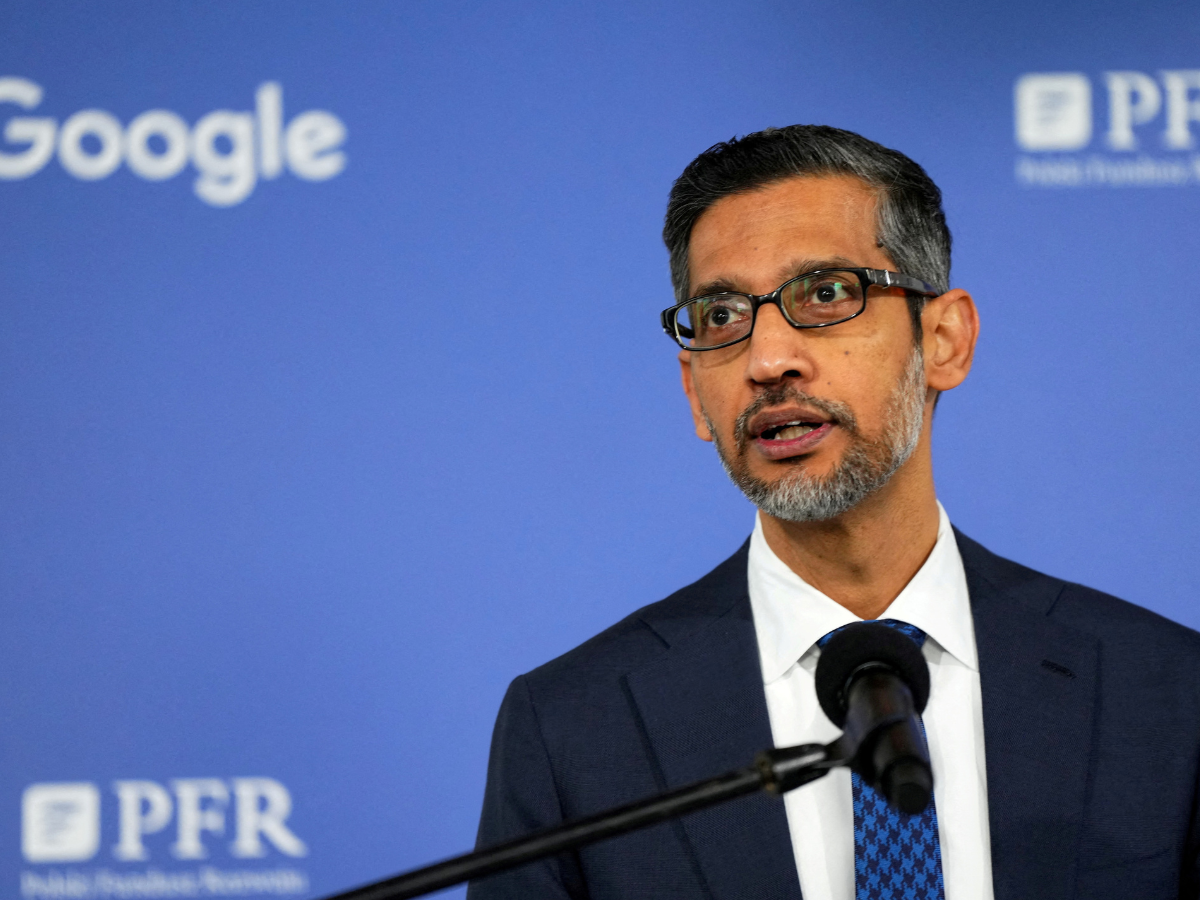
The latest setback has fueled worries that Google was losing momentum just as OpenAI and Anthropic and a host of Chinese rivals have accelerated the pace of model releases. On the call on Wednesday, Pichai struck an unusually defensive tone as analysts pressed him on the state of Google's frontier models and whether they could still compete at the cutting edge of AI development. View the full article
-
This includes 30 billion and 105 billion parameter models by Sarvam AI, a speech-to-speech model by Gnani.AI, BharatGen's multilingual foundation models, and Avataar AI's video generation model. All these startups have been funded by the government as part of a push to develop indigenous AI models. Of the 20 models, five have been released so far. View the full article


Leaderboard
-
Johanan Collins
Members1Points72Posts

Popular Content
Showing content with the highest reputation on 10/09/2021 in all areas
-
1 pointIceberg Theory The Iceberg Theory is also called the theory of Omission. It is a writing theory that was made popular by journalist and writer Ernest Hemingway. He used his style of writing as a journalist in the writing of his short stories. In doing so, he focused more on the immediate events which were evident on the surface and less on their context. His writing style caused the reader to understand the context of the story in an implicit manner. His minimalistic style of writing caused each reader to contextualize the story within the readers' framework. Quoting from Oliver, Charles M “If a writer of prose knows enough of what he is writing about he may omit things that he knows and the reader, if the writer is writing truly enough, will have a feeling of those things as strongly as though the writer had stated them. The dignity of movement of an iceberg is due to only one-eighth of it being above water. A writer who omits things because he does not know them only makes hollow places in his writing.” The key to the quote by Oliver Charles M is that when the writer omits what he knows the reader is likely to strongly pick up the things omitted by the writer. This adds to the authenticity of the writer. However, when a writer omits things that he does not know, the reader is naturally unable to pick up the things omitted by the writer and it leads to a hollowness and in his writing. Application of the Iceberg Theory Leadership/Management. Questions such as “Are leaders born or made” or “Is Management an art or science” have been asked through the ages. Advancement of knowledge and technology has shown that through training, patience, and discipline leaders are made and management is more of a science than an art. Leadership qualities span a vast array of attributes such as professional knowledge, integrity, empathy, etc. This inward focus of character and knowledge and an outward focus on people takes time and effort to build making a leader authentic. Consultants. Successful consultants are those who have a wide range of knowledge and experience spanning various fields including understanding human behavior. With processes crossing numerous functions, consultants who are experts in a very specific area are unable to optimize solutions. Actors. Great Actors spend months or years researching their part. Good examples of this are Tom Hanks who plays the life of a physically disabled and low intelligence man in the movie “Forrest Gump”, Freddie Highmore who plays the part of a young autistic savant surgical resident in the series and Darsheel Safary who plays the part of a dyslexic child in “Taare Jameen Par”. Teachers, Professors. Similarly, teachers and professors with a deep knowledge of not only their subject but related subjects are generally more successful and popular. Doctors. With the human body being a diverse spectrum of various systems that interact with each other and with the external environment, a doctor with a deeper knowledge of not only the human body but other external factors is more likely to be successful. Conclusion. The Iceberg Theory brings out the fact that when a person with in-depth knowledge over a wide array of subjects speaks, the information appears to be authentic. On the contrary, when a person with superficial knowledge speaks, his lack of in-depth knowledge, of confidence, of authenticity, etc. will betray him and he will be easily found out. References https://en.wikipedia.org/wiki/Iceberg_theory Oliver, Charles M. (1999). Ernest Hemingway A to Z: The Essential Reference to the Life and Work. New York: Checkmark. ISBN 0-8160-3467-2.1 point
This leaderboard is set to Kolkata/GMT+05:30