

Topics
-
Jeff Bezos is pushing Prime Video's overhaul to highlight Amazon's AI. The project, known as Lighthouse, aims to showcase AI for millions of users. This initiative seeks to elevate Amazon's standing in the competitive AI landscape. New features will improve content recommendations and respond to spoken requests. Bezos' personal involvement underscores the strategic importance of this AI integration. View the full article
-
Advanced Micro Devices is launching new artificial intelligence hardware on Thursday. This new hardware aims to compete directly with Nvidia's offerings. AMD is targeting the growing data center inference computing market. The company also announced significant deals with AI labs Anthropic and OpenAI. These agreements position AMD for substantial future revenue in the chip sector. View the full article


Leaderboard
-
Mayank Gupta
Members1Points679Posts -
Rajesh Chakrabarty
Members1Points87Posts -
RahulGarg
Members1Points28Posts -
MaheshKumar
Members1Points7Posts


Popular Content
Showing content with the highest reputation on 05/25/2021 in Posts
-
1 pointA North Star Metric (NSM) is one measure that is most predictive of a company’s success in long term. A Metric would be truly a "North Star" metric if it can encompass these three aspects into it : Lead to revenue, Reflect customer value, and Measure progress. If any metric that ticks well on these three points, and every department contributes to improving it, the company is going to grow in long run. This metric term was coined by start up investor Sean Ellis. It is very important to have a North Star Metric so that everyone in a company is aligned towards a ONE common goal and also it helps in reduction of duplication of work in different department due to no clarity about the common goal. Examples of North Star Metrics from some of the renowned companies: Airbnb: Number of Nights Booked Facebook : Daily Active Users Quora : Number of questions a user answers WhatsApp : Number of messages a user sends Spotify : Time spent on Listening Amazon : Number of Purchases per month Uber : Rides per week A major reason Myspace (American social networking service) failed and Facebook succeeded is correlated to NSM they focused on. Myspace focused on Registered Users (a vanity metric) as their North Star Metric. At that moment, Facebook focused on Monthly / Daily Active Users as their NSM. This difference in focus finally led Facebook to succeed whereas Myspace failed badly. Social media apps must be aware of the changes in registered user numbers over a period of time. But Myspace failed because Registered Users means that it will show only who have signed up. It doesn’t show if these users are continuing to use their platform (a sign users continuing to receive value from it). Users who don’t get value from a product will stop using it and churn over a period of time. By tracking Monthly Active Users, Facebook could monitor changes in user numbers and see which users are finding the value from using the platform. North Star Metric (NSM) must not be confused with OMTM (One Metric that Matters) in Lean as NSM is the number on which your entire company focuses to achieve long-term growth during a period of several years to infinity in comparison to One Metric That Matters (OMTM) is the number on which one team focuses to achieve rapid growth for a period of 2 to 6 months. How to Select your NSM ? Five points to keep in mind when deciding your North Star Metric: i) The metric shall indicate what your user experienced the core value of the product ii) It should reflect user’s engagement and activity level. iii) It points out to “one thing” that indicates if your business is heading in right direction iv) Ideally, the metric should be easy to understand and communicate across teams v) Don’t fall into the trap that you have to have a perfect North Star Metric. What you are trying is to find is a metric that makes the most sense for complete business to focus on. It might take a few iterations as well to get a final NSM Believe the crux and intent for North Star metric is rightly explained below : “It is important to keep in mind that NSM is not an end solution in itself. Its a key metric gives focus on growth efforts and can serve as a seed to grow in a company's ecosystem that gives you deep insight into your customer’s behavior and create levers to drive future growth. It leads to understanding your customers and integrating your team on how to better bring value.” – Andrew Miller To correctly define your NSM, it requires understanding your customers, including what kind of value they get from your product and how they use your product to get that value. With that information, you can make better product to help customers get the value they’re looking for which will increase customer lifetime value, decrease churn rates, and increase revenue and growth. How North Star Metric can help generate Long term value for Customer ? Taking Example here of Airbnb whose North Star Metric is - Number of Nights Booked. So, company would be focusing on it heavily and will be on company's radar on real time / weekly / monthly monitoring and continuous efforts will always be there to improve the performance of this metric. To improve the metric, company must be rolling out frequent customer friendly offers (discounted price), improvement in its current service and hygiene of its current properties, providing superior locations, bundled offers (Meals / Amenities / Facilities / certain nights free if you book for more than say 5 nights), loyalty / membership cards etc.. By focusing on NSM, a company would be always working hard and continuously to get the night booking done (Its NSM) and which will lead better value to customer with better and better services over a period of time at lesser / same price OR more benefits will be passed on to customer even if the company increases the price to stay ahead of competition and maintaining the growth momentum in its business. Also, company would never think of loosing a customer as cost of acquiring a new customer is always quite high (5-10X) than retaining an existing customer. Finally to Summarize, Revenue is the price that your customer pays however NSM is the value your customer gets in return of that price. So please always keep on maximizing that value over time to get more and more growth in your customer base and which will finally lead to growth in your revenue.
 1 point
 -
1 pointThe North Star has always been a source of direction for travelers during the dark night- it always remains still and points towards the north. This celestial design depicts a symbolic beacon of hope and direction for many when there is darkness and many distractions all around. It is a landmark that helps to determine the direction or single path towards a defined purposeful destination. On similar lines, in the business environment, A North Star Metric (NSM) is the One Single Measurement that most indicatively extrapolates the long term success of the business or Organization. This metric is the one single metric that keeps the top management engaged towards strategic direction for the business/organization. The said concept that emerged from Silicon Valley is best applied by organizations that believe in investing in long-term sustainable growth. To qualify as a Direction provider –a North Star Metric(NSM), must; 1) Lead to revenue – Core purpose, but cannot be a North Star Metric by itself, as Revenue is the price that the customer pays for the value it perceives in the product /service, whereas NSM is the value itself 2) Reflect Customer Value – The value the customer perceives in the product/services, drives their long-term engagement 3) Be a numerical measure and reflection of progress of the organization – Only that which is measurable can be improved 4) Indicate the customer’s success or need fulfilment – The customer must come back to you for it for a long term basis 5) Be time bound- so that you can compare periodically and clearly see if there is growth 6) Grow Periodically- growth measured in a fixed frequency provides a trend and enables a feedback mechanism for due analysis and preventive & corrective action 7) Be in total control of the organization- There should not be any external influence as it should be ONLY the effect of the bond between the organization and the customer. Thus, any modification in operations is easier and controllable. 8) Involve all levels of work – everyone (People/department/function) must feel involved and their performance metrics should contribute to the NSM. The Metric with the above said properties is employed as a focus by an organization for growth. It gives direction to the organization’s long term growth. Most matured organizations draft a NSM, keeping the above pointers in mind. Having said that, an organization or an SBU should ideally have only one NSM so that there is a single focus for all teams within the organization/ SBU. Some well-known, Global Examples of NSM which are commonly used by us, as customers; - Facebook- “Monthly Active Users (MAU)” – A versatile platform like Facebook has a very specific NSM that allows them to check growth on a monthly basis and take corrective measures wherever required, to maintain the growth trends. - Amazon- “Number of purchases per month” – Absolute logical NSM covering Customer engagement and revenue - LinkedIn – “Monthly Active Users (MAU)” – Similar to Facebook. - Uber- “Rides per week” – Being a two sided platform, both the buyers and the sellers must derive value from the platform - WhatsApp- “Messages sent” – absolute indicator of usage and value received by user All the above mentioned successful organizations have great customer base and is only growing because of their focus on their well thought of NSM. They have laid down the foundation for the belief on how and why the NSM helps to generate long term value for customers. - Enables to draft a North Star Strategy (NSS)– It is basically a way in which the organization is focussed on the NSM in all its strategic planning. The NSS quantifies the value that is provided to the customers. This helps in aligning all teams in the organization, as well as all other stakeholders and the use of all strategic assets - Customer Focus – The organization is committed to add value for the customer and hence all processes and activities across the organization are intended for customer retention. - Focus Across the Organization- When all performance metrics at the different levels of the organisation are linked to the NSM, the Top-Down and Bottom-Up approach both work together efficiently and effectively. Fantastic grounds for Kaizen and continuous improvement. Benefits of business excellence is experienced by all stakeholders. - Clarity – Every stakeholder understands how the organization and their effort & performance stands at a single glance The crux of the concept is that if the organization consistently provides more value to the customer, the growth of the company is guaranteed ,as then, the customer will be loyal and buy more and refer the organization’s product or services which enables business growth. Given that the NSM is a direct indication of the focus on providing value to the customer, the growth of business is directly proportional to the growth of the NSM1 point
-
1 pointA North Star metric is the one measurement that’s predictive the long term success of the company. The idea behind the North Star Metric is that if the business brings more value to your clients, then the growth of your business has to go positive. It also gives the direction to the company’s long-term growth versus short-term growth. It enables the teams to focus more on impact and sustainable, product-led growth. If your clients receive a lot of value obviously they will stay longer, buy more and provide the reference to their friends to your business. Overall North Star Metric defines the relationship between the customer problems which product team is trying to resolve and the revenue that the business aims to generate by doing so To qualify as a “North Star”, the metric must do three things. Focus Your entire business has the same focus. At the team level, you still focus on a different number, but the goal is same for everyone. Clarity Everyone can see at a glimpse how the company is performing. Customer focus The Business is more concerned with adding value for the client than low-priced value, so automatically make room to be busy with retention. Checklist for a good North Star Metric 1. When your customers reach end result? (equals your client’s ‘success’ moments) 2. Does this apply to all your customer? (expresses value to the customer) 3. Measurable? (North Star Metric is measurable) 4. Best frequency (day/week/month) (North Star Metric is time-bound) 5. External factor have minimal impact? (North Star Metric is within your control) 6. North Star Metric growth tied to business – growth? (North Star Metric is a direct reflection of your growth) 7. Full pirate Funnel impact North Star Metric(North Star Metric has mutual effect on the entire Pirate Funnel) 8. North Star Metric change frequently (North Star Metric is growing with some frequency) Some of the Sample for North Star metrics are · Amazon : Number of purchase per Month ; · Uber – Rides per week; · Spotify = Time spent listening · Airbnb = Number of Nights booked · Facebook = MAU (Monthly Active Users)1 point
-
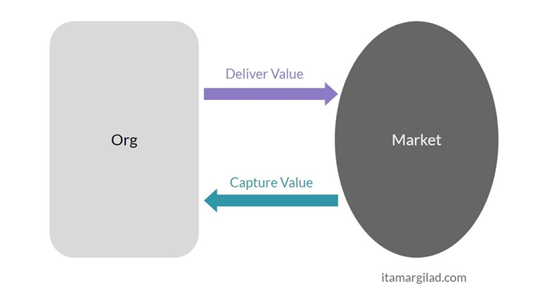
1 pointWhat is a North Star Metric? A True North Star metric is one of the measurement that’s tells about company’s long-term success. A good "North Star," metric include three things: revenue growth, customer value and measure the progress. If a metric include those three points, and each department contributes to improving it, the company is on the right path. Why is a North Star metric important? Main aim for defining true North Metric is to align teams around the singular goal of growth. The name North Star metric taken from the common name for Polaris, the star that lies directly above the Earth’s Northern pole. Companies can have multiple North Stars, and any given North Star metric is composed of sub-metrics anyway. Companies should review their North Star metrics at an suitable intervals to make sure they still point the right direction, and align them when they feel appropriate. How a North Star metric works? For better monitoring a North Star metric is divided into smaller metrics that drive accountability and ownership at the functional/team level. It is for batter alignment between individual and departmental metric. For example e commerce company with the North Star metric “the number of new customers purchasing each week.” A sales employee at that company could contribute to that main goal by improving sales in his/her category. How to find your North Star metric? To find relevant North Star metric, companies must focus what is truly important to their business. Companies are succeed and fail for lots of reasons, But pillars to the business that are load-bearing should be identified? If they failed, would destroy the company? A metric like revenue without satisfying customers will fail in the long run, as will a company that satisfies customers without being profitable. There is no use of such metric that doesn’t measure progress in a way that allows teams to act on its insights and change their behaviors isn’t useful. A North Star metric must reflect all three factors, considering business nature. To find your North Star metric: 1. Ask, what is essential to the business’ functioning? Prioritize a list. 2. Ask, which KPIs and metrics measure the top few, key factors? 3. Ask, which metric captures all of the above? 4. Build a metric hierarchy, with the North Star metric at company level target How 'North Star Metric' can help generate long term value for customers? Main force behind the North Star Metric is that if your company provides more value to your customers, then the growth of your company has to go positive. The logic is that if your customers receive a lot of value, they will stay longer, buy more and refer more friends to your company. Company will focus more on customer to deliver value, In turn will have more finetuned relations with customers. Company will have KPI which are impacting customers directly for Eg. Order delivery time, Customer satisfaction index , Customer surveys, Product and Service feedback and communication back to customers after improvements. All these healthy activities will improve customer experience. Customers will have long term relation ship with suppliers. The main mission of every org is to deliver value, ideally to a big market, and to capture value back. The more value organization deliver to their customers, the more they will able to collect back. The more value you capture the more revenue you generate, data and other resources you have to invest in delivering yet more value to the market. To build a healthy value loops around your product you have to define what value you deliver and what value you want to capture. Then you have to measure both.
 1 point
 -
Hi Junaid Feel free to convert DPMO to DPBO (Defects Per Billion Opportunities) if you feel like. DPMO is only a unit of measurement and hence can be changed if required. Having said that, I guess a more practical question could be why did someone come up with per million and not billion. In my opinion, it is based on the highest magnitude imaginable at the time of inception. Six Sigma got started in 1980s at Motorola and maybe they could imagine million opportunities better than billion opportunities1 point

This leaderboard is set to Kolkata/GMT+05:30