

Topics
-
Jeff Bezos is pushing Prime Video's overhaul to highlight Amazon's AI. The project, known as Lighthouse, aims to showcase AI for millions of users. This initiative seeks to elevate Amazon's standing in the competitive AI landscape. New features will improve content recommendations and respond to spoken requests. Bezos' personal involvement underscores the strategic importance of this AI integration. View the full article
-
Advanced Micro Devices is launching new artificial intelligence hardware on Thursday. This new hardware aims to compete directly with Nvidia's offerings. AMD is targeting the growing data center inference computing market. The company also announced significant deals with AI labs Anthropic and OpenAI. These agreements position AMD for substantial future revenue in the chip sector. View the full article


Leaderboard
-
RahulGarg
Members1Points28Posts

Popular Content
Showing content with the highest reputation on 05/21/2021 in all areas
-
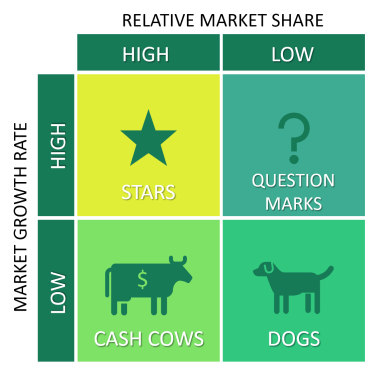
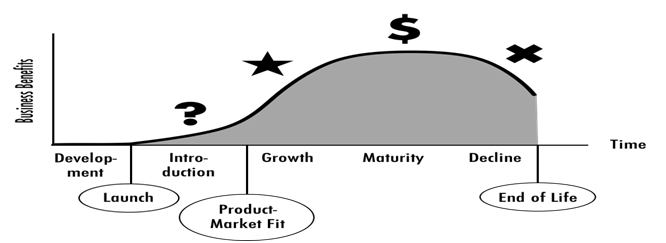
1 pointProduct Portfolio Matrix is a very famous tool used by most of the companies to decide the product portfolio of their products basis the market share of products and growth rate potential. This tool is also known as the BCG (Boston Consulting Group) Matrix and was developed by Bruce Henderson (Founder and CEO of BCG) in 1968. This matrix is used by more than half of Fortune 500 companies and is still one of the central point in business school teachings on strategy. This matrix helps businesses to develop the long term strategic planning and is a torchbearer in deciding products to keep and invest, discontinue or develop in the long run. It is divided into four quadrants (2*2) based on market growth and relative market share as depicted below (It's also known as Growth Share Matrix) : 1. Dogs: These are the products with low growth and low market share. Normally, expert advice here is to remove dogs from your portfolio as they are a drain or waste of resources. For example, Sony Digicam can be placed into 'Dog' category at present because every phone has a good camera now a days and hardly anyone buys them now. However it may not be always true and to quote an example here from automobile sector, in case company decides to discontinue some of the car models (dogs) however there is still a need of the spare parts and hence spare parts production operations can be continued with very less efforts and investments which may emerge as a new revenue stream for the company.To avoid over-investing in your question marks, ensure that all products in your portfolio have clear business goals and use the right KPIs to track product performance. 2. Question marks : These are products in high growth markets with low market share. As the name suggests, these products can be in early stage of development and we are not sure (question mark) if they will turn into stars or may also end up falling into the dog quadrant. These products often require significant investments to push these into the star quadrant. For example, while working on a new car model, the design department works on a large number of design options and out of those only a few or one only go for the final production. Then, there are marketing and advertising expenses involved to move this new product to 'Star' quadrant. However, on the other hand if design chosen is bad and is launched without doing proper pre launch study, it may end up falling into 'Dog' quadrant too. 3. Stars: These are products in high growth markets with high market share and these products are usually the market leaders. However, significant investment may be required in them to sustain the 'Star' position. E.g. Google which is a leader in many of its services e.g. Search, Marketing & Advertising etc. and is in 'Star' quadrant, however Google keeps on investing in their R&D efforts and new technologies to stay ahead of the competition and keep on launching the new products & features and enhancing the existing ones with help of new technologies like AI, Machine Learning etc. (Recommendations display while doing Search) 4. Cash Cows: These are products in low growth markets with high market share. Approach here that is often followed is - Milk the cow as much as possible without killing the cow ! These products are often well established products. E.g. In FMCG sector, we have certain soft drink brands (Pepsi, Coca Cola etc.) which have high market share in India but as people are becoming more and more health conscious and are avoiding eating junk food and taking these drinks, these companies are milking these well established products as much as possible by spending on Advertising, Packaging, Offers etc. Though this tools is popularly used and huge benefits for deciding the right product portfolio mix, there are certain limitations / drawbacks as well as given below (one shall keep in mind while using this) : i) This neglects the effects of synergies between business units / streams ii) High market share is not the only success factor for decision iii) Market growth is not the only indicator for attractiveness of a market iv) A high market share does not necessarily lead to profitability every-time v) The model uses two dimensions only – market share and growth rate. This may result into emphasize on a particular product, or to divest prematurely. vi) A business with a low market share can be profitable too so what to be done in that case vii) The model neglects the small competitors those have rapidly growing market share In my opinion, Six Sigma Projects can be taken up in any of these categories as Six Sigma methodology is an approach of problem solving and it can be used at any stage of product life-cycle (figure below) : In Dogs category, six sigma principles (DMAIC / DMADV) can be utilized to identify the root causes of low market share and appropriate solutions post analysis can be deployed to address the same however as business benefits will be quite less in this category due to low growth potential; companies may not be really interested in taking up such projects. For Questions Marks Category, DMADV / DAMIAC approaches can be used for better design of the products and increasing their potential to become stars. Here the potential is high with high business benefits, therefore most of the organisations will be interested in launching such projects at this stage to attain the leader position for their new products. For Stars Category, Six Sigma projects (DMAIC / DMADV) can be initiated to retain or increase the high market share with development of new design / concept that can help the product to retain the leader's position in long run by generating the higher revenues. As Business benefits are again high here, companies would be very much interested in launching such projects. For Cash Cows Category, since company already has the high market share for the product; six sigma projects can be taken up to reduce the cost and also to improve the design if possible which may help the product to retain its high market share. So if I have to order the priority of the projects, Question Marks & Stars must be top priority due to huge growth potential ahead followed by Cash Cows and Dogs (We may not even take up for 'Dogs' category due to less benefits but high costs involved) .
 1 point
This leaderboard is set to Kolkata/GMT+05:30