

Topics
-
Fifty-five women engineering students completed an AI bootcamp focused on rural Karnataka. Participants developed AI-based solutions after visiting villages and conducting field interviews. The She Innovates bootcamp partnered with several organizations to achieve its goals. This initiative aims to boost women's participation in AI and entrepreneurship. It encourages AI applications for rural development and community-focused sectors. View the full article
-
Besi's quarterly orders more than doubled, fueled by AI and hybrid bonding technology. The company saw increased customer adoption of its advanced chip packaging solutions. Demand for AI applications continues to drive growth in data centers. Besi anticipates revenue growth between ten and fifteen percent. This strong performance aligns with other semiconductor sector reports. View the full article



Leaderboard
-
Sourabh Nandi
Members2Points38Posts -
aritradasgupta187
Lean Six Sigma Black Belt1Points26Posts -
Prakash Mesta
Members1Points1Posts


Popular Content
Showing content with the highest reputation on 09/11/2020 in Posts
-
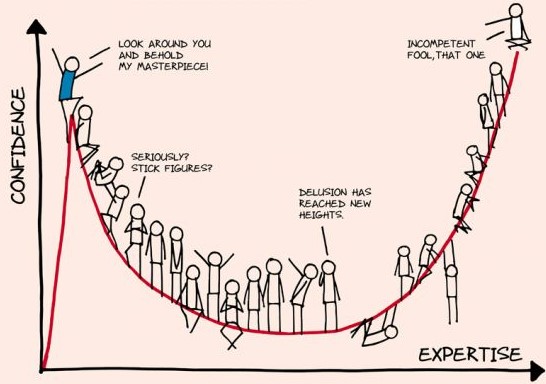
2 pointsDunning Kruger Effect The Dunning Kruger effect is some cognitive bias in which people wrongly exaggerate their understanding or ability in a specific area, which tends to occur because a lack of self-awareness prevents them from accurately assessing their skills. Understanding the Dunning-Kruger Effect The Dunning-Kruger effect concept is based on a 1999 paper by Cornell University psychologists David Dunning and Justin Kruger. The duo tested participants on their logic, grammar, and sense of humor, and found that those who finished in the bottom quartile rated their skills notably above average. For example, in the 15th percentile, they self-rated their expertise to be average in the 60th percentile. The researchers connected the trend to a problem of meta-cognition, which is the capacity to analyze one’s thoughts or performance. Causes for Dunning Kruger effect Confidence is so highly appreciated that many people would rather pretend to be smart or skilled than risk looking inadequate and losing face. Even smart people can be affected by the Dunning Kruger effect because having intelligence is not the same thing as learning and developing a specific skill. Many individuals mistakenly believe that their experience and skills in one particular area are transferable to another. Opposite of the Dunning Kruger effect? If the Dunning Kruger effect is being overconfident in one’s knowledge or performance, its extreme opposite is imposter syndrome or the feeling that one is undeserving of success. People who have imposter syndrome are plagued by self-doubts and constantly feel like impostors who will be exposed any moment. Examples of the Dunning-Kruger effect at Work The Dunning Kruger effect can make it difficult for people to identify and correct their poor performance. That is why employers conduct performance reviews, but not all employees are receptive to constructive criticism. Overcoming Dunning-Kruger effect During their 1999 research, Dunning & Kruger found that training allowed participants to recognize their ability and performance more accurately. Here are a few other tips for applying the Dunning-Kruger effect is at play: Take adequate time. A person tends to feel more positive when they make decisions swiftly. If we want to avoid the Dunning-Kruger effect, stop and take the time to investigate snap decisions. Challenge the claims. Do we have assumptions we tend to take for granted? Do not rely on the gut to tell what is right or wrong. Change the reasoning. Do we apply the same logic to every question or problem we encounter? Trying new things can help us break out of patterns that will increase our confidence and decrease our meta-cognition. Learn to take criticism. At Work, take criticism seriously. Investigate claims that we disagree with by asking for evidence or examples of how we can improve. Question longstanding views about self. Have we always considered ourselves a great listener? The Dunning-Kruger effect suggests that we should be critical when it comes to assessing what we are right. How do we fix the Dunning-Kruger effect? Question what we know and pay attention to those who have different viewpoints. Seek feedback from people we can trust whom we know are highly skilled in our area of interest. Be open to constructive criticism and resist the impulse to become defensive. Try not to pretend to know something we do not. Please make it a priority to continue learning and improving. The Takeaway The Dunning Kruger effect is a type of cognitive bias that suggests incomplete evaluators of gaps in our understanding. Curiosity, openness, and an enduring commitment to learning can help us minimize the effects of Dunning-Kruger in our everyday life.
.jpg.32aedc9643df700101a7c80502cb863a.jpg)
 2 points
 -
1 pointDunning Kruger Effect is applicable in almost all fields. Also everyone goes through this in one or the other situation. Let’s take an example of a new process being transitioned to off-shore. At first when the process overview is given (especially in a layman language), the team members feels confident and think that they know almost everything about the process. As they start going through detailed trainings, the doubts (also self doubts) start coming up. Whenever they are not able to connect dots, they start loosing confidence. This is the main reason why people take up initiatives with high confidence and then give up when self-doubts get overpowered. Supervisor needs to realize that there are mainly two pitfalls in this journey. They are: When there is high false-confidence in the beginning. This might result in over investment of resources and over-commitment on deliverables. With half knowledge, the team might end up saying Yes to many things that might be difficult or impossible to deliver. In such situation, the supervisor should encourage team members to quickly know the things that they don’t know yet. ‘Knowing what we don’t know’ itself converts the false-confidence into mindful-confidence. The second pitfall is when the confidence is reducing. This is where team members start loosing interest and think of giving up. This might result in attrition in the team too. In this situation, the supervisor should make team members realize that they are in learning curve. The supervisor should help team members see the future state clearly. Showing relevant success stories can help team members see possibilities. ‘Knowing-possibilities’ can reduce doubts and create motivation to continue the journey. Being aware of this rise and fall concept itself can make a supervisor (and also the team) complete the journey in shorter period of time. Linking it to process improvement: Many employees initiate process improvement initiatives (like lean six sigma) as soon as they attend a quick idea generation session or when they get some motivation from management. However over a period of time they start realizing that they are hitting many road-blocks, especially around data analysis or usage of tools/concepts. Many eventually lose interest and give up. Those who continue to learn and continue to take their initiatives forward would succeed. And as they keep moving towards success, the confidence level goes up. Org culture and mentoring support play a major role in helping employees succeed though this.1 point
-
1 pointDunning Kruger effect is a cognitive bias where a person feels he is more intelligent than others and understand the particular Task much better than the others. This kind of understanding might be there in any person because he hasn't got in depth knowledge about a particular field which makes him believe that is an expert in something which he might not be in reality . This phenomenon is named after two social scientists who carried this experiment . They were David Dunning & Justin Kruger. The study was conducted on a group of 65 people who were tested on various fields which ranged from grammar , logic, humor. People who scored lowest in all 3 felt that they have great knowledge about each of the particular field. Like for humor the jokes that they cracked were really poor and much of there set back was they did not understand that this was not funny. Whereas they felt that they had cracked a hilarious joke . These set of people who scored the lowest not only did they feel they were exceptional, but they didn’t even know that they had actually performed poorly. This is like an agent who has failed in an examination but feels he deserves a better score because he evaluates himself as a person who is intelligent and can easily clear the exam. The reason can be explained because of 2 factors . Due to the lack of skills, acumen in the particular field a person is unable to perform at the desired level. Secondly due to his Limited knowledge he does not realise what is the skills , and abilities which are required to meet and exceed the performance. There can be other factors like little knowledge in the particular field which might make the person believe that is exceedingly well in a particular task . The problem might arise due to meta cognition which is every person’s judges himself from his limited knowledge and perception which might be flawed and biased. This might result in him evaluating himself as much superior when in actual he might be underperforming . A superior can deal the in removing this problem in 3, different ways :- 1. Learning and practice — By constantly teaching and guiding the person as to what are the required expectation and skills for a particular task .this will help a person to realise where he stands as compared to the required expectation and once he realizes this gap he will try to breach the same by gaining knowledge and practice . 2. Providing constant feedback — supervisor should provide constant and ongoing feedback which will help the person to understand how well is adapting and learning the new skills , and weather he's meeting the desired expectation .often this might not be liked by the person but if there is constructive feedback provided this can be very helpful for the person to meet and exceed the desired skill. 3. Questioning what the person Knows- even when a person starts to learn something new he might only absorb things which he is already familiar with. The supervisor should constantly ask a question and also an encourage the person to challenge and ask himself the question as to what is known and unknown to him . This will help the person to constantly strive for excellence, and he will exceed the desired job which he was unable to perform.
 1 point
This leaderboard is set to Kolkata/GMT+05:30