Vishwadeep Khatri
Administrators
-
Joined
-
Last visited
Everything posted by Vishwadeep Khatri
-
Vishwadeep Khatri replied to Vishwadeep Khatri's topic in We ask and you answer! The best answer wins!🏆 Q832 Evaluation — “When AI Speeds Up Decisions, Do We Risk Making Worse Ones?” Top 3 Adil Khan — Best fit to the prompt. Very specific process (RFQ bid/price decisions), shows where speed helps (hit quote windows, capacity visibility) and where it hurts (novelty risk, margin erosion, loss of “war-story” checks). Safeguards are practical and measurable. ✅ Apoorv — Strong banking example (instant credit decisions). Clear “speed wins vs blind spots” framing + solid safeguards (human review bands, outcome monitoring, challenge sessions). ✅ Sri — Two concrete finance processes (credit approval + invoice approval). Clearly identifies blind spots and proposes realistic controls (confidence thresholds, HIL, trend monitoring, periodic validation). ✅ ✅ Also approved Mohammad Riyadh — Good risk framing and safeguards, but lighter on one single anchored process. Nageshwaran — Strong safety-critical example (brake parts) with balanced “speed vs context” and relevant checks. Sandeep Saha — Good principles, but too generic and not anchored tightly to one process. Sundeep Kailwoo — Interesting points, but largely generic and drifts into industry commentary rather than one process. ❌ Not approved Venkatesh Lakshmipathy — Too generic and assumes “data = always correct,” with no process-specific risks or safeguards beyond “provide correct facts.” Sandeep Saha - High AI content
-
ByteDance, is planning major 2026 spending on AI infrastructure, signalling the TikTok owner’s growing push into advanced artificial intelligence systems. View the full article
-
New Delhi is using AI for an array of services but a consolidated approach is needed for deeper adoption, write Twesh Mishra and Subhayan Chakraborty. View the full article

-
According to Dealogic data, global tech companies issued $428.3 billion of bonds in 2025 through the first week of December. U.S. firms accounted for $341.8 billion, while European and Asian tech companies issued $49.1 billion and $33 billion, respectively. View the full article

-
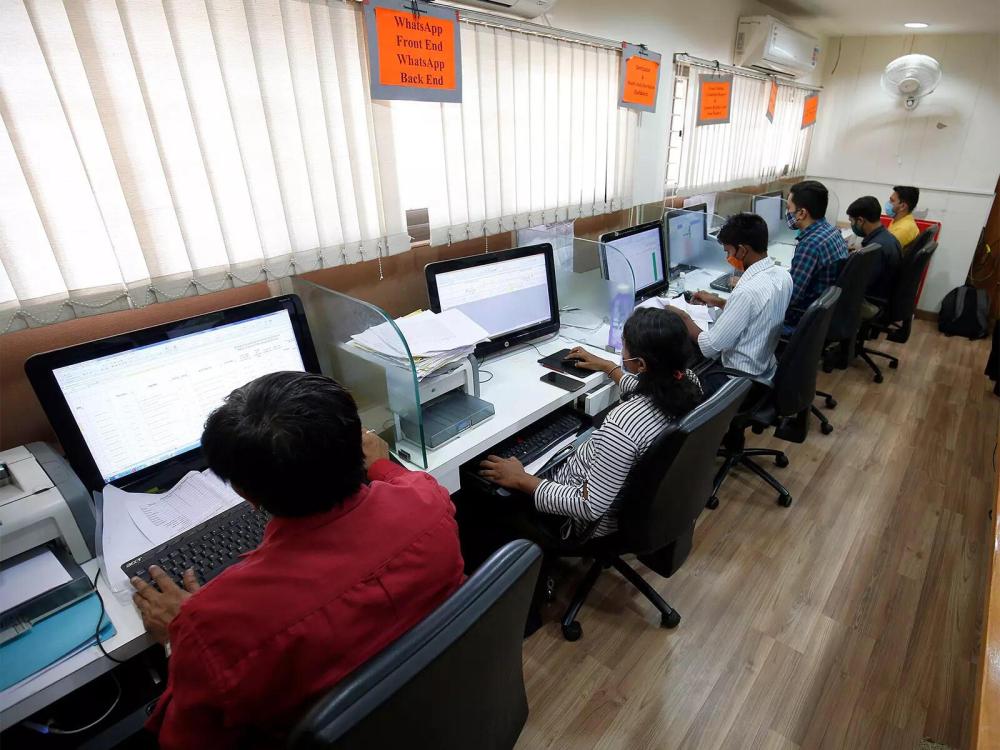
Career-related anxiety rose by 50 per cent in 2025 as concerns regarding artificial intelligence grew among employees. Data from Astrotalk reveals that "Is AI going to take my job?" became the most common question on the platform this year. This trend shows a significant increase in worry about job stability compared to 2024. View the full article
-
Taiwan's HTC is launching new AI smartglasses. These glasses let users pick their favorite AI models, unlike competitors. HTC plans to expand sales across Asia, Europe, and the US. The company emphasizes user privacy. This move signals HTC's return to consumer hardware. Global smartglasses shipments are growing rapidly. View the full article

-
OpenAI is boosting profits from its paid AI services. The company has significantly improved its compute margins this year. This comes as OpenAI faces tough competition and high operational costs. It is also in talks for a major funding round. The focus is on making its popular AI models more financially sustainable. View the full article

-
India is gearing up to incorporate artificial intelligence throughout its curriculum. The NCERT is actively crafting new AI textbooks aimed at empowering Grade 11 and 12 students. Additionally, from Grade 6 onwards, students will gain exposure to AI concepts in vocational education. View the full article

-
This update is set to give users more direct control over the chatbot’s tone, possibly addressing the popular debate around ChatGPT’s sycophantic and overly flattering conversations. View the full article

-
Microsoft CEO Satya Nadella during his visit to India earlier this month had announced plans to invest USD 17.5 billion here to help build infrastructure and sovereign capabilities for the country's AI-first future - the bold commitment marking the tech giant's largest investment ever in Asia. View the full article

-
India stands on the brink of an artificial intelligence revolution. According to Reliance Chairman Mukesh Ambani, it's imperative that India takes the helm in this groundbreaking field. Imagine a future where innovation is paired with compassion, and success is measured by meaningful impact. This vision can redefine global development standards. View the full article

-
Google has extended the lifespan of its Assistant on smartphones until early 2026, delaying its planned replacement by Gemini. This adjustment aims for a smoother user transition, with Gemini gradually integrating its advanced AI capabilities. While Gemini has been progressively rolled out across various Google products, the established Assistant will continue to be available for a while longer. View the full article

-
Indian women are turning to AI to lighten their household and caregiving duties. Tools like ChatGPT help manage daily tasks, from meal planning to summarising school notes. This technology offers a much-needed support system for women juggling family and professional lives. View the full article

-
TikTok’s recommendation system is under scrutiny after ByteDance agreed to a US-focused joint venture to avoid a ban. Uncertainty remains over who controls the powerful algorithm at the heart of the app’s success. Researchers say its strength lies in interest-based, short-video recommendations that keep users engaged. View the full article
-
This comes in the wake of growing concern over the impact of GenAI on children and adolescents. Per OpenAI, its new U18 Principles are designed to ensure a safe and age-appropriate experience for users aged 13 to 17, focussing on prevention, transparency, and early action. It lays down rules on how ChatGPT should respond when conversations with teens raise safety concerns. View the full article

-
Jaipuria, Chairman of the Seth Anandram Jaipuria Group of Educational Institutions, said the purpose of education is to nurture knowledgeable, skilled, conscientious and emotionally strong individuals who go on to make a positive impact on society, but the rat race defeats it and pushes students to take extreme steps. View the full article

-
India faces risk as AI power concentrates in few firms and countries, leaving chip and compute access uneven. Cheap generative tools rival human coding, threatening India’s software edge and pushing engineers to beat the bots. Singh urges homegrown AI infrastructure, new deployment roles, and less reliance on foreign platforms globally. View the full article

-
The company, which develops high-performance processors for artificial intelligence workloads, withdrew its prior IPO filing in October, days after announcing it had raised over $1 billion in a fundraising round that valued the AI chipmaker at $8 billion. View the full article

-
Data centre deals have hit a new record this year, surpassing previous highs. This surge is fueled by the massive demand for computing power needed for artificial intelligence. Tech giants are investing billions to expand their infrastructure. Financial sponsors are actively seeking these assets, but high-quality properties are scarce. View the full article

-
According to a Sensor Tower report, active ChatGPT users in India have jumped a massive 607% year-on-year between 2024 and 2025. A separate Bank of America Securities’ (BofA) report states that as of December 17, ChatGPT had over 65 million daily users in India, more than double the number in the US. View the full article

-
OpenAI has launched an app store inside ChatGPT, allowing developers to submit tools for use within the chatbot. Existing connectors have been rebranded as apps, expanding how users access external services and data. The move supports OpenAI’s push to turn ChatGPT into a broader platform with better in-chat features. View the full article

-
OpenAI, Google, and Perplexity are offering free access to their premium AI tools in India. This move aims to capture a larger user base in the rapidly growing digital market. India's large smartphone population and affordable data make it an attractive region. Daily active users for ChatGPT have seen a significant surge. View the full article

-
Travel planning is set to transform with agentic AI. Imagine intelligent digital agents handling all your bookings, from flights to hotels. This technology will reduce the stress of planning and managing trips. It will offer personalized experiences, aligning with your preferences. AI will also manage disruptions seamlessly, ensuring a smooth journey. View the full article

-
Q832 When AI Speeds Up Decisions, Do We Risk Making Worse Ones? AI often accelerates decision-making—approvals happen faster, recommendations are instant, and actions are triggered in real time. But speed can sometimes mask poor assumptions, incomplete context, or weak judgment. Think of a specific process in your domain where AI could significantly reduce decision time. How might this increased speed improve outcomes—and where could it introduce new risks or blind spots? What checks would you put in place to ensure faster decisions are also better? ⚠️ Only answers that are specific and connect with a relevant process will be approved. 🏆 The best answer will be selected on the basis of Relevance and clarity of the chosen process Depth of insight into speed vs. decision quality Practicality of the proposed safeguards Note for website visitors— This platform hosts two weekly questions, one on Monday and the other on Thursday. All previous questions can be found here: https://www.benchmarksixsigma.com/forum/lean-six-sigma-business-excellence-questions/. To participate in the current question, please visit the forum homepage at https://www.benchmarksixsigma.com/forum/. The question will be open until Tuesday or Friday at 9:00 AM Indian Standard Time, depending on the launch day. Responses will not be visible until they are reviewed, and only non-plagiarised answers with less than 5-10% plagiarism will be considered for winner selection. If you are unsure about plagiarism, please verify your answer using a plagiarism checker tool such as https://smallseotools.com/plagiarism-checker/ before submitting. All correct answers shall be published, and the top-rated answer will be displayed first. The author will receive an honourable mention in our Business Excellence dictionary at https://www.benchmarksixsigma.com/forum/business-excellence-dictionary-glossary/ along with the related term. Some people seem to be using AI platforms to find forum answers. This is a risky approach, as AI responses are error-prone because our questions are application-oriented (they are never straightforward). Please take a moment to review this amusing example—https://www.benchmarksixsigma.com/forum/topic/39458-using-ai-to-respond-to-forum-questions/ We also use an AI content detector at https://app.originality.ai/. Only answers with less than 45-50% AI-generated content will be considered for winner selection.
-
Vishwadeep Khatri replied to Vishwadeep Khatri's topic in We ask and you answer! The best answer wins!🏆 Q831 Results — When AI Shifts (or Creates) the Constraint Strong, system-level thinking across responses. Clear theme: AI accelerates flow → the bottleneck migrates to data, governance, trust, or upstream decision velocity. Top 3 🥇 Adil — Aerospace: AI removed the shop-floor constraint and exposed a front-end order intake & decision bottleneck. Classic TOC shift, brilliantly articulated. 🥈 Apoorv — Retail banking: Decision speed improved, but the real constraint became data readiness + governance trust. Clear signals and balanced AI vs human view. 🥉 Juma — Revenue & tax: AI sped up detection, but data pipelines and explainability became the new limiting factors. ✅ Also approved (worth reading): Sri Ramana, Puneet, Nageshwaran, Mohammad Riyadh, Sundeep Kailwoo. Key takeaway: AI rarely “breaks” constraints — it reveals the next weakest link faster. Watch for rising exceptions, governance queues, idle capacity, or trust-related delays.