Vishwadeep Khatri
Administrators
-
Joined
-
Last visited
Everything posted by Vishwadeep Khatri
-
Mohit Aron, founder of Nutanix & Cohesity, tells ET that the AI hype cycle could be distorting fundamentals and pushing the ecosystem to unsustainable zones View the full article

-
When discussing modern operating models, Amazon provides one of the clearest examples of how scalability + customer obsession can transform a company far beyond traditional boundaries. Toyota is a master of operational discipline — stability, flow, waste elimination, and world-class manufacturing maturity. But Amazon shows what happens when a company builds its entire operating system around rapid scale, digital mechanisms, and relentless experimentation. The results speak for themselves. A Market-Cap Perspective That Tells the StoryToyota, with decades of excellence and global infrastructure, sits near US $250–260 billion in market capitalization. Amazon, founded in 1994 as an online bookstore, has grown to over US $1.8–2.0 trillion. A younger company, with no manufacturing legacy, outpaced one of the world’s most respected industrial giants — not by doing similar things better, but by building a system designed to scale infinitely. Why Amazon’s rise matters for modern operations1️⃣ Scalability is not an outcome — it is an operating philosophy.Where Toyota optimized stability and flow within manufacturing, Amazon built “mechanisms” that work across functions, products, geographies, and customer segments. A well-designed mechanism scales automatically. 2️⃣ Customer obsession drives continuous reinvention.Amazon doesn’t improve processes for efficiency alone — it redesigns them based on what customers value next. The entire operating system adapts around the customer, not around internal structures. 3️⃣ Amazon treats speed and learning as assets.Fast experiments → fast feedback → fast decisions. This cadence allows Amazon to outperform competitors even in industries it enters late. 4️⃣ Digital leverage multiplies growth beyond physical limits.Toyota’s excellence scales linearly with capacity additions. Amazon’s excellence scales exponentially because digital capabilities amplify every operational gain. The Big Insight:Amazon and Toyota represent two different eras of operational excellence. Toyota = Mastery of discipline, stability, and continuous improvement. Amazon = Mastery of speed, mechanisms, and scalable reinvention. Both are legendary. But Amazon’s trajectory proves a powerful point: 👉 In the digital age, companies that design for scale outperform those that design for efficiency alone. Scalability is not the reward at the end of growth — it is the engine that makes exponential growth possible.
-
When we talk about reinvention and scalability as competitive advantages, few examples are as striking as the rise of Tesla. In 2010, Tesla went public with a valuation of around US $1.7 billion. Fifteen years later, its valuation stands around US $1.4–1.5 trillion, making it several times more valuable than Toyota — a company with decades of manufacturing excellence, global operations, and an unmatched legacy of Lean discipline. What took Toyota generations to build, Tesla surpassed in just over a decade. This is not a story about electric cars. It’s a story about velocity and scalability. Why Tesla’s rise matters to modern operations:1️⃣ Reinvention beats optimization when the environment shifts. Tesla did not improve the traditional automotive model. It challenged the entire architecture — from drivetrain to software to manufacturing flow. 2️⃣ Speed of learning became a competitive weapon. Tesla compresses experimentation cycles and updates products continuously, something legacy models cannot match easily. 3️⃣ Scalability was baked into the system from Day 1. Software-driven design, vertical integration, and platform thinking allowed growth that compounds rather than slows down with scale. 4️⃣ The market rewarded capability, not history. Investors valued Tesla not for what it had already done, but for the operating system it created — one that could grow exponentially. The big lesson:Modern value is created not by improving the legacy world, but by reinventing it — and building systems that scale faster than competitors can adapt. Toyota represents excellence built over decades. Tesla represents velocity built through reinvention. Both matter. But only one explains why the world is moving in a new direction.
-
Most teams stay forever in “improve what exists.” But high-performance companies consciously switch between three modes: 1️⃣ Stabilize: Make it predictable.Standardize, remove variation, create flow. Without stability, nothing else works. 2️⃣ Reinvent: When improvement is not enough.Challenge assumptions. Rethink architecture. Redesign for what the system should become — not what it has been. 3️⃣ Scale: Make it repeatable.Mechanisms, clarity, modularity, customer-centricity. This is how breakthroughs grow instead of collapsing under pressure. The real leadership capability today? Knowing which mode the system needs right now — and having the courage to shift. Engagement Question: 👉 Which mode is your organization strongest in? Which mode is the hardest?
-
Velocity and scalability are. Organizations once won through cost, stability, and waste reduction. But today’s environment punishes slow systems and rewards those that can move fast and grow fast. Here’s why: 1️⃣ Customer expectations now shift faster than improvement cycles. If your operations can’t adapt quickly, efficiency won’t keep you competitive. 2️⃣ Complexity has exploded. More integrations, more data, more cross-functional dependencies — all of which demand faster decision-making. 3️⃣ Scalability has become a fundamental requirement. A solution that works for one team must work for 100. A process that works at 1,000 customers must work at 100,000. 4️⃣ Efficiency improves the present. Velocity and scalability determine the future. High-performing companies design for growth, not just smooth daily operations. The organizations pulling ahead treat speed and scale as core design principles — not optional features. Engagement Question: 👉 Which is harder for your organization right now — velocity or scalability?
-
Sometimes teams keep applying Lean tools, yet performance barely moves. That’s a sign the problem isn’t the process — it’s the architecture behind the process. Here are the classic indicators: 1️⃣ Improvements deliver smaller and smaller benefits. This means you’ve reached the ceiling of the current design. 2️⃣ The real constraint lies outside the area being improved. Handoffs, approvals, technology, or data issues block progress. 3️⃣ The process is built on assumptions from another era. If the world around the process changed, its structure may no longer make sense. 4️⃣ Speed matters more than efficiency. If velocity is critical, and the process can’t accelerate, reinvention becomes necessary. 5️⃣ Scaling exposes weaknesses rather than amplifying strengths. A sign that the design was never meant to support growth. Improvement is essential… But knowing when to stop improving and start rethinking is an advanced leadership capability. Engagement Question: 👉 Which of these signals have you personally experienced?
-
Companies like Tesla and Amazon aren’t just efficient — they operate with breakaway speed, adaptability, and scale. Classical Lean alone doesn’t explain their performance. So what sets them apart? 1️⃣ They don’t just optimize processes — they question them. Where Lean asks “How do we improve this?”, they ask: Why does this process exist at all? What assumptions can we delete? What would this look like if we designed it today? 2️⃣ They operate in rapid learning cycles, not long PDCA loops. Shorter feedback → faster decisions → compounding momentum. 3️⃣ They design for scalability from Day 1. Amazon builds mechanisms that ensure consistency across teams, sites, and volumes. This combination — questioning assumptions, learning fast, scaling reliably — creates an operating rhythm that outpaces traditional improvement. Engagement Question: 👉 In your view, which of these three differentiators is the hardest to develop inside traditional organizations?
-
Lean builds stability, clarity, and flow. But in many organizations, teams hit a point where waste reduction and Kaizens stop producing meaningful gains. Cycle times remain stubborn. Improvements shrink. The system feels… stuck. Why does this happen? 1️⃣ The biggest barriers today are constraints, not waste. Modern processes struggle due to dependencies, data delays, approvals, tech limitations, and cross-functional bottlenecks — problems classical Lean tools don’t fully address. 2️⃣ Many workflows were designed for a world that no longer exists. When the underlying architecture is outdated, incremental improvement reaches diminishing returns. 3️⃣ Efficiency alone cannot keep up with modern velocity demands. Lean optimizes the present, but today’s environment demands the ability to learn and adapt faster. 4️⃣ Leaders feel the plateau but can’t always see the structural causes. Everything looks Lean… but something is holding the system back. Engagement Question: 👉 Have you seen this plateau in any organization? What did you notice first?
-
President Donald Trump said on Monday he would sign an executive order this week related to the artificial intelligence approval process to avoid having different rules in each US state. View the full article

-
Broadcom is reportedly in talks with Microsoft for a significant AI chip deal, which could greatly benefit the former's custom chip division. The company is also expected to report strong numbers in its upcoming Q4 earnings. These prospects have made analysts optimistic about Broadcom's future, with some predicting it could outperform Nvidia in AI revenue by 2026. View the full article

-
By 2029, just 5% of automakers will maintain strong AI investment growth, down from over 95% today, technology research firm Gartner said in its report on 2026 predictions for the sector. View the full article
-
AI spending is soaring, but Anthropic’s CEO warns that mistimed investments could cause major problems. He defends circular financing deals yet cautions against extreme risk-taking. Amodei says scaling will drive ever-stronger models, urging tight regulation and limits on advanced chip sales to China to prevent national-security and economic dangers. View the full article

-
Centre cautions against indigenous foundational AI models spewing out historical stereotypes on caste, gender or regional differences. View the full article

-
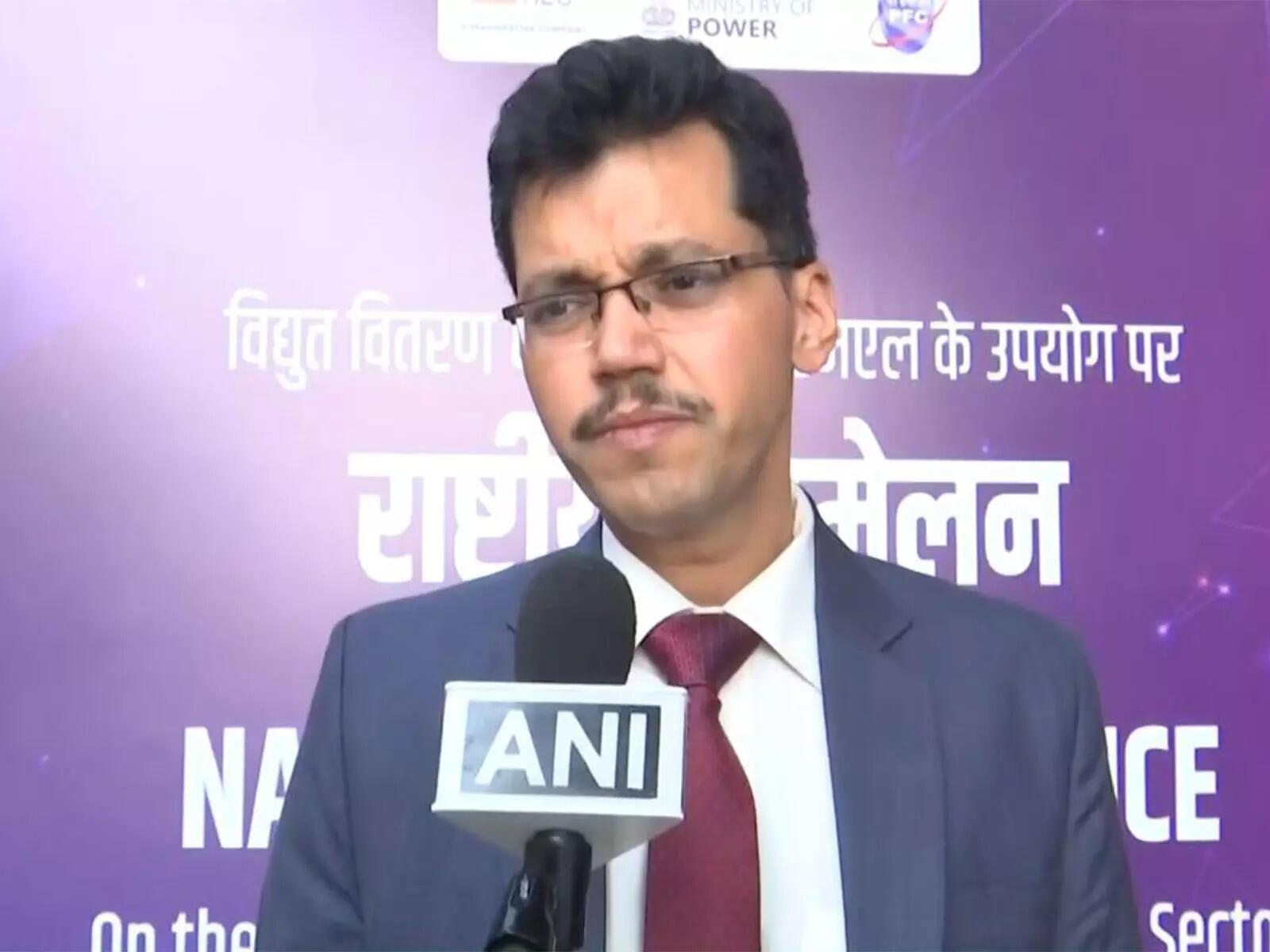
On the sidelines of the National Conference on the Use of AI/ML in the Power Distribution Sector, Shashank Misra, Joint Secretary at the Ministry of Power, said that the government is pushing AI tools to help distributors detect theft-prone zones more accurately and respond faster. View the full article

-
A deflating AI bubble could spur innovation. Scarcity forces efficiency, pushing companies to build energy-saving, chip-efficient models that actually learn and advance. Historical crises show constraints drive breakthroughs. Without such pressure, AI risks stagnation. A cooler market would reveal durable ideas and produce smarter, more sustainable systems. View the full article

-
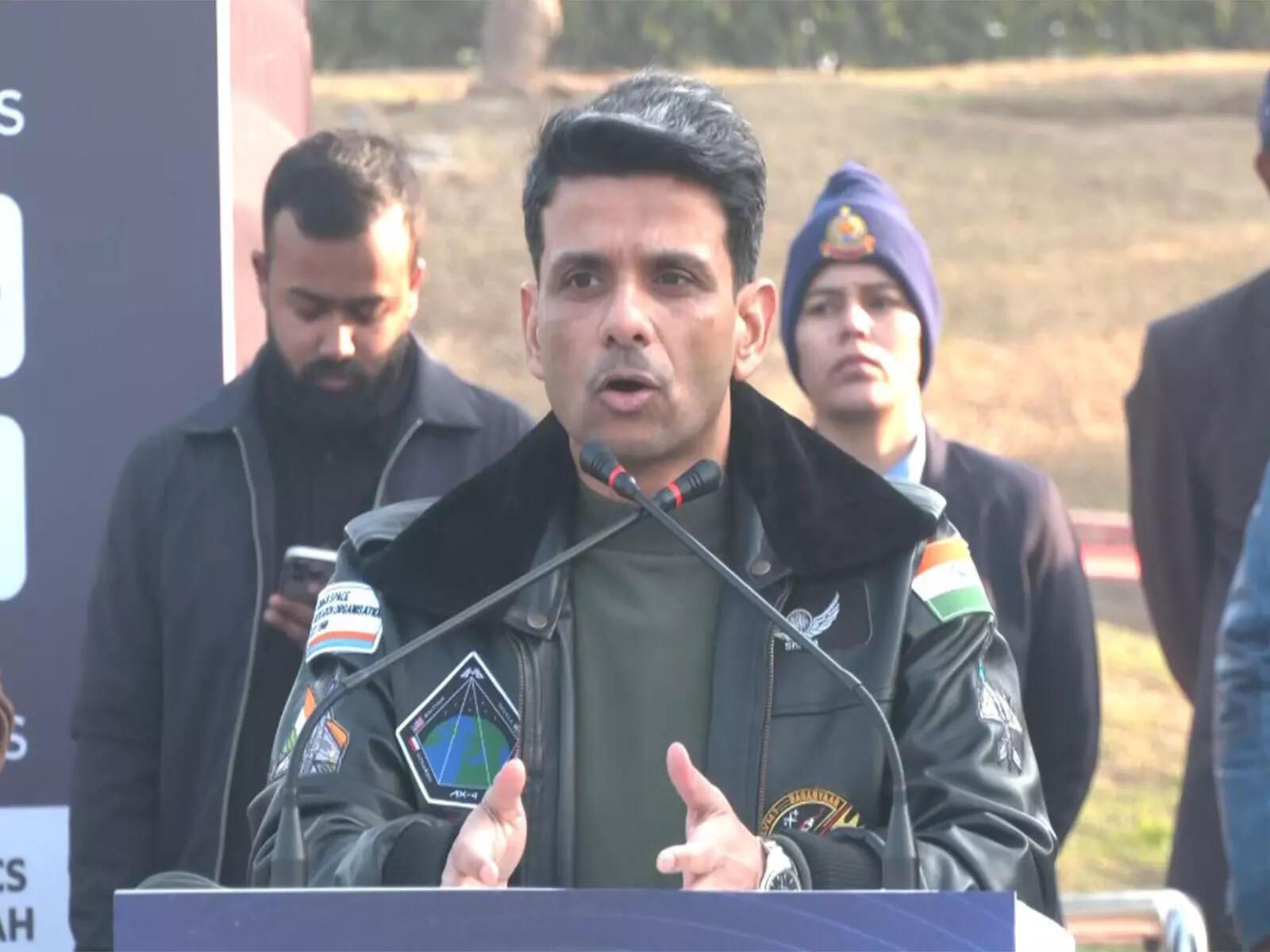
Astronaut Shukla highlighted the importance of political will and a focus on such issues, saying that initiatives like the Delhi AI Grind could help achieve the dream of Viksit Bharat. View the full article

-
Google has begun releasing Gemini 3 Deep Think mode to AI Ultra subscribers on the Gemini app. The feature is designed for demanding maths, science and logic tasks, supported by advanced parallel reasoning and strong benchmark scores. Users can enable the mode by selecting “Deep Think” and choosing Gemini 3 Pro. View the full article

-
Amazon says its planned $12.7 billion investment in cloud and AI infrastructure will support 15 million small businesses in India by 2030. The company also aims to provide AI training to 4 million government-school students. Amazon notes it has already equipped over 6.2 million people in India with cloud skills since 2017. View the full article

-
AI’s rapid expansion is fuelled by massive infrastructure spending, but real progress often comes from scarcity, not abundance. When resources tighten, innovation tends to accelerate, as seen in past energy and agricultural crises. A cooling AI investment bubble could push the industry toward creating more efficient, smarter systems. View the full article

-
Meta is acquiring US startup Limitless, which makes an AI-powered wearable pendant that records and summarises conversations. The five-year-old Denver-based firm, valued at $368 million in 2023, will help Meta advance its AI-enabled wearables and personal superintelligence goals. Financial terms of the deal were not disclosed. View the full article
-
The New York Times has sued Perplexity AI, claiming the startup used millions of its articles without permission to train chatbots. The newspaper alleges copyright violations, reputational harm, and unauthorised commercial use, despite prior warnings. This dispute is part of a wider conflict between publishers and AI firms over content rights. View the full article

-
Cristiano Ronaldo has joined AI company Perplexity as an investor and brand ambassador. He launched the Ronaldo hub, a custom AI assistant for fans to explore his archive, ask questions, and relive goals. Perplexity aims to expand AI adoption globally, leveraging Ronaldo’s 650 million-plus social media followers. View the full article

-
SoftBank chief Masayoshi Son told South Korea’s president that future artificial super-intelligence could be thousands of times smarter than humans — leaving people “like fish” by comparison. He joked AI might even win a Nobel Prize in Literature. Son said ASI wouldn’t threaten humans, though President Lee admitted the idea was unsettling. View the full article

-
Q829. AI systems can generate artwork, write scripts, solve problems, and even propose new concepts — but does this count as creativity, or is it simply recombining patterns learned from human data? Think of a specific creative task in your domain — such as designing training experiences, crafting customer communication, solving process problems, or generating improvement ideas. Based on how AI behaves in that task, do you believe AI is being creative, or merely remixing what it has seen before? Support your view with a concrete example. ⚠️ Note: Any answer that is generic or does not connect with a specific, relevant creative task will not be approved. 🏆 The best answer will be selected on the basis of: Relevance of the chosen creative task Depth of insight into whether the AI outcome is creative or remixing Clarity and strength of the reasoning and example Note for website visitors - This platform hosts two weekly questions, one on Monday and the other on Thursday. All previous questions can be found here: https://www.benchmarksixsigma.com/forum/lean-six-sigma-business-excellence-questions/. To participate in the current question, please visit the forum homepage at https://www.benchmarksixsigma.com/forum/. The question will be open until Tuesday or Friday at 9:00 AM Indian Standard Time, depending on the launch day. Responses will not be visible until they are reviewed, and only non-plagiarised answers with less than 5-10% plagiarism will be considered for winner selection. If you are unsure about plagiarism, please check your answer using a plagiarism checker tool such as https://smallseotools.com/plagiarism-checker/ before submitting. All correct answers shall be published, and the top-rated answer will be displayed first. The author will receive an honourable mention in our Business Excellence dictionary at https://www.benchmarksixsigma.com/forum/business-excellence-dictionary-glossary/ along with the related term. Some people seem to be using AI platforms to find forum answers. This is a risky approach as AI responses are error-prone because our questions are application-oriented (they are never straightforward). Have a look at this funny example - https://www.benchmarksixsigma.com/forum/topic/39458-using-ai-to-respond-to-forum-questions/ We also use an AI content detector at https://quillbot.com/ai-content-detector. Only answers with less than 45-50% AI-generated content will be considered for winner selection.

-
OpenAI and Australian data centre operator NextDC plan to build a major AI hub in western Sydney under a new memorandum of understanding. The multibillion-dollar project will house a GPU “supercluster”, run on renewable energy and create thousands of jobs. Australia’s government says the venture strengthens the nation’s AI ambitions. View the full article