Vishwadeep Khatri
Administrators
-
Joined
-
Last visited
Everything posted by Vishwadeep Khatri
-
Apple celebrates its 50th anniversary as artificial intelligence challenges the Silicon Valley legend to prove it can deliver yet another culture-changing innovation. "Apple was founded on the simple notion that technology should be personal, and that belief - radical at the time - changed everything," chief executive Tim Cook said in an anniversary letter posted online. View the full article
-
Agent Smith by Google: Unlike conventional AI coding assistants, the system is capable of planning and executing workflows autonomously, marking a shift toward more independent AI agents. Agent Smith can reference internal documents and access employee profiles to complete assigned tasks. It is built on Google’s earlier platform, Antigravity, but offers significantly greater autonomy and workflow integration. View the full article

-
AI layoffs: Referencing the Lump of Labor Fallacy, Andreessen argued that fears of AI-driven job scarcity are rooted in a flawed assumption that the amount of work in an economy is fixed. In reality, he said, productivity gains from technologies have expanded economic output and led to job creation in other areas. View the full article

-
AI-generated deepfake political ads are increasingly used in US campaigns, often misleading voters with fabricated content. With limited regulation and weak safeguards, experts warn these tools could erode trust in elections, as their realism makes them persuasive and difficult for audiences to detect. View the full article

-
The company first rolled it out in December last year, integrating Gemini’s translation capabilities into Google Translate for text. As of December, the Translate app supported more than 70 languages. View the full article
-
Anthropic Outage: The incident, which lasted for nearly five hours, is one of the longest for the platform. While users reported widespread issues with the Claude API and models such as Opus 4.6, Claude for Government remained largely unaffected. This is the second outage at Anthropic’s Claude within a week. View the full article
-
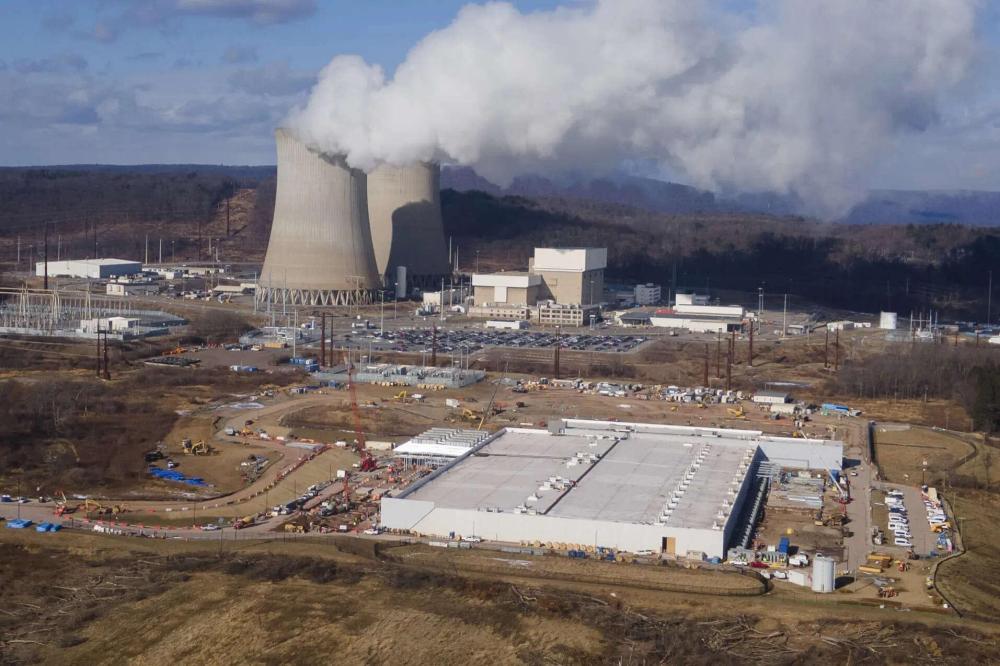
AI-driven data center expansion is derailing Big Tech’s climate goals. Despite record renewable purchases, emissions at companies like Google, Amazon, Microsoft and Meta have surged. Power shortages, policy shifts and urgent AI demand are increasing reliance on fossil fuels, especially natural gas. View the full article
-
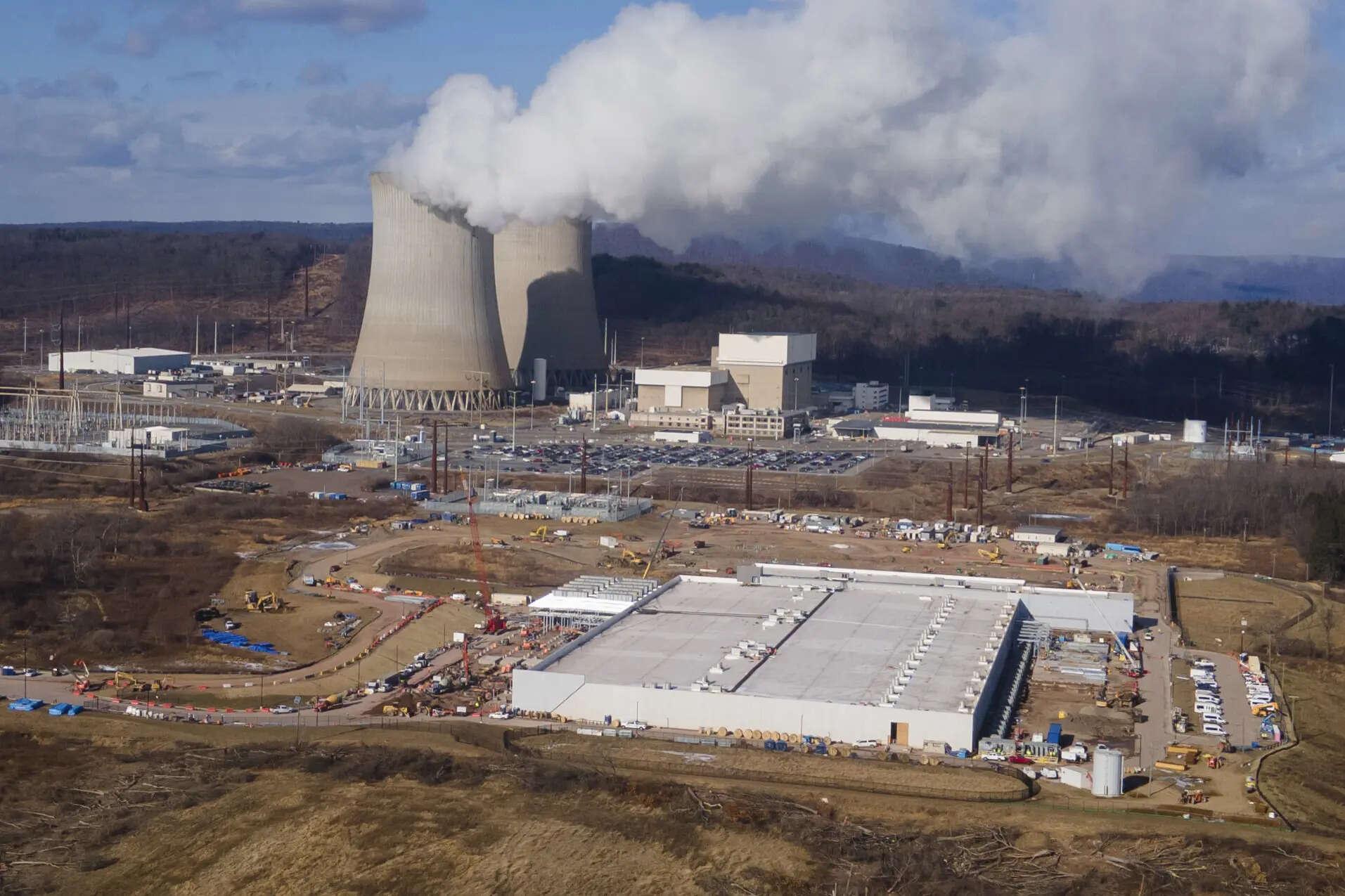
AI data center startup Crusoe said on Friday it will build a new 900-megawatt campus to run artificial intelligence workloads for Microsoft in Texas, as tech companies aggressively expand generative AI capacity. Located next to Crusoe's existing AI facilities in Abilene, Texas, the new campus will bring the site's total projected capacity to 2.1 gigawatts. On average, one gigawatt is enough to power 750,000 homes. View the full article

-
CAISA Forum Question 858 When AI flags a potential defect before it occurs, should the process be stopped immediately? In a manufacturing or service delivery process, an AI system predicts a high probability of defect or failure based on early signals — such as process variation, input inconsistencies, or pattern deviations. The system operates at 85–90% predictive accuracy, with a 12% false positive rate documented over 18 months of deployment. A process stop takes 15–40 minutes to investigate, reset, and resume — during which downstream stages may also stall. The cost of a defective batch reaching the customer (rework, warranty claims, reputational damage) is estimated at 8–12× the cost of a single unplanned stoppage. The AI flags an average of 3–4 potential defect events per shift — meaning if every flag triggers a stop, the cumulative flow disruption becomes operationally significant. This creates a real dilemma: View A — Stop the process immediately. If there is credible, AI-validated risk of defect, prevention should take priority. Given that downstream failure costs far exceed stoppage costs, a disciplined stop-and-inspect protocol is the rational, data-backed choice. Tolerating risk to protect throughput is a short-term trade-off that routinely produces long-term loss. View B — Continue unless failure is certain. At 3–4 flags per shift with a 12% false positive rate, automatic stoppages erode flow efficiency, demoralise operators, and create a "cry wolf" dynamic that reduces trust in the AI system itself. A risk-tiered response — where only high-confidence, high-severity flags trigger a stop — protects both quality and operational continuity. Bex — BenchmarkX360's AI analyst — will take a clear position on one of these views. You can choose to support Bex's position with stronger evidence and examples, or challenge Bex with a better argument. Either approach can win. Which view do you support — and why? Provide a specific process or industry example to support your position. 🏆 The best answer will be selected on the basis of: · Clarity of position taken · Quality of reasoning and argument · Relevance of process or industry example · Ability to go beyond or against Bex's analysis
-
Vishwadeep Khatri replied to Vishwadeep Khatri's topic in We ask and you answer! The best answer wins!🏆 Winner — Dibyojoti ChoudhuryDibyojoti's answer is the strongest across all three judging criteria. The position is unambiguous from the first line, the reasoning is the most fully developed — including a structured 4-step process with named roles (HR Business Partner, Wellness Manager) and specific interventions — and it is the only answer that directly anticipates and rebuts the opposing View B argument. The additional analogy to safety-critical industries (aviation, healthcare, manufacturing) gives the argument broader credibility and makes it the most persuasive and complete submission in the thread. Roma_Raigagla_9k3I — ❌ Not Approved Does not take a clear position between View A or View B, instead straddling both with vague principles like "act early but with empathy." No specific process, role, or industry example is provided. Dinesh_Tiwari_WBim — ❌ Not Approved While View A is stated, the answer contains only generic statements and fails to provide the required specific process, role, or industry example. Without a concrete context grounding the argument, it does not meet the stated conditions. Vinay Parsatwar — ✅ Approved Clearly supports View B with a well-grounded IT services/BPO example and a vivid contrast between an AI-triggered conversation and a genuine human check-in. The reasoning is practical and logically coherent. vijay_wadhekar_WYf9 — ❌ Not Approved Does not explicitly name View A or View B, and the five-point framework provided is a generic best-practice checklist rather than an argument tied to a specific industry or role. No concrete scenario or example is given. Lee — ❌ Not Approved Explicitly adopts a "balanced approach" without committing to either view, which the question directly disqualifies. No specific industry, role, or process example is provided. Pratik Dilip Gawande — ✅ Approved Clearly positions View A and grounds it in a payroll and shared services environment, linking burnout to concrete operational risks like data accuracy and compliance. The asymmetry-of-risk argument ("a false positive leads to a harmless conversation; a false negative leads to a preventable breakdown") is a particularly strong addition.
-
Despite a government campaign to encourage the use of domestic semiconductors, the Shenzhen-based firm struggled to persuade big tech firms in the private sector to adopt its current flagship chip, the Ascend 910C, in large quantities, industry sources have previously told Reuters. View the full article

-
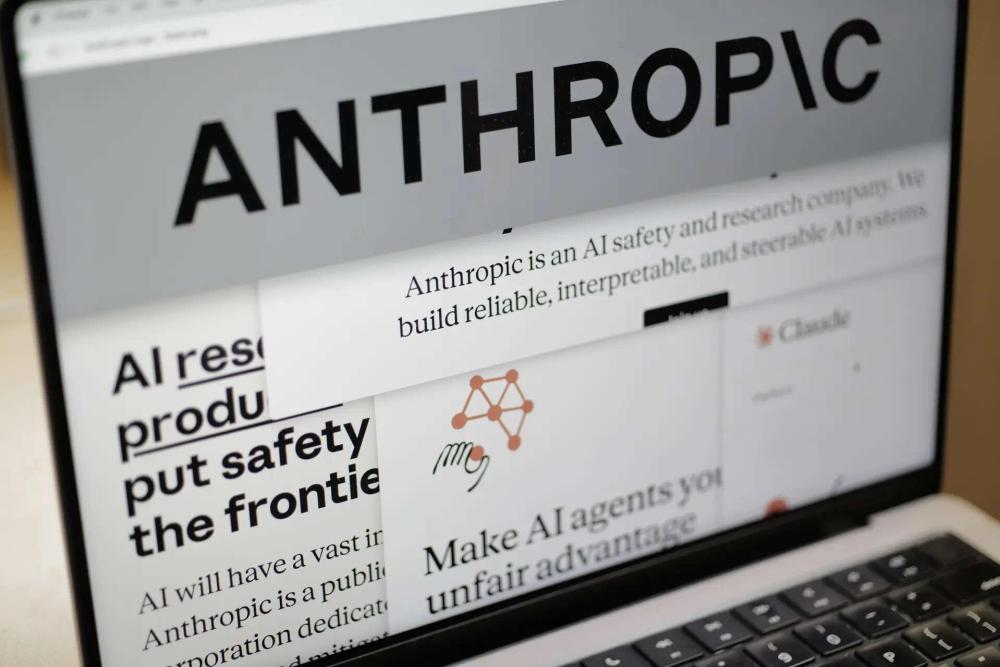
A data leak revealed Anthropic is developing “Claude Mythos”, its most powerful AI model yet, now in early testing. Exposed files showed details about the new models and cybersecurity risks that may result from it. The company blamed human error for the data leak. View the full article
-
The decision sparked outrage in China, which is locked in an intensifying race with the United States to develop the most cutting-edge AI models. NeurIPS provides a crucial forum for researchers and companies worldwide to submit peer-reviewed research, discuss the latest breakthroughs in AI and recruit the best talent in the industry. View the full article

-
Chinese universities have previously acquired restricted chips in servers made by Super Micro and other manufacturers, Reuters reporting from 2024 shows. But the continued practice, particularly by institutions with links to the PLA, is likely to stoke concerns of some U.S. lawmakers. View the full article

-
Sycophancy or behaviour that was overly agreeable and affirming is complicated. While few people are looking to AI for factually inaccurate information, they might appreciate - at least in the moment - a chatbot that makes them feel better about making the wrong choices. View the full article
-
Google launched “switching tools” in Gemini, letting users import “memories” and full chat histories from other AI apps. The feature quickly transfers preferences and context, making adoption easier. The move targets to attract users of rivals like OpenAI and Anthropic and make them switch to Gemini. View the full article
-
Some account owners use artificial intelligence to manipulate real images of non-disabled women, making them appear to have Down syndrome, a genetic condition caused by an extra chromosome. "This is a scam and is not only in bad taste but is potentially offensive and hurtful to people who have Down's syndrome," the charity said in comments sent to AFP. View the full article

-
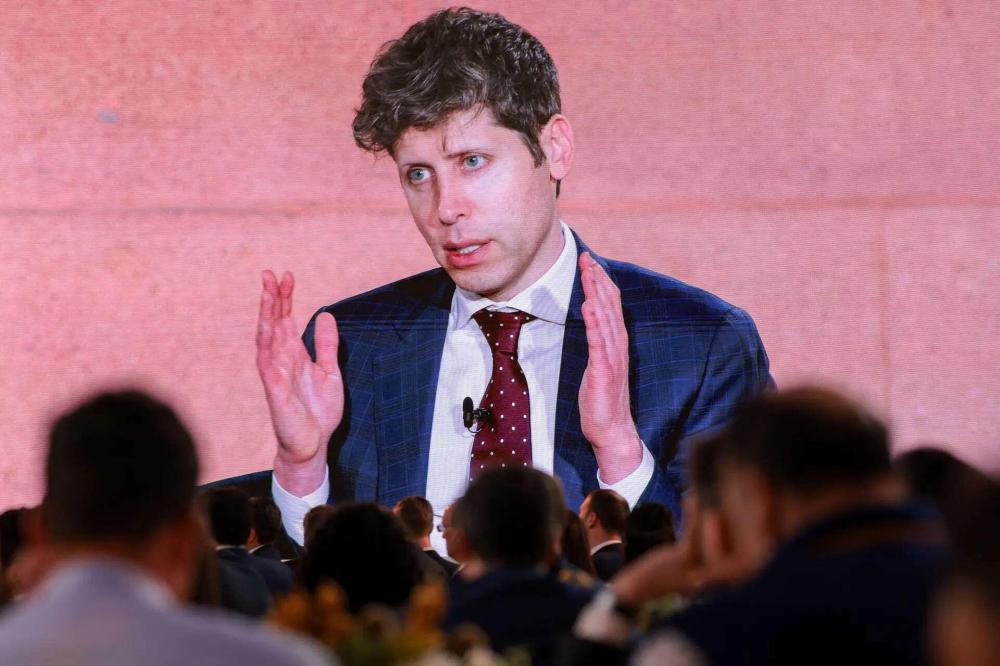
OpenAI's ChatGPT ads pilot in the United States has crossed the $100 million annualised revenue mark within six weeks of launch, a company spokesperson said on Thursday, pointing to robust early demand for the AI startup's nascent advertising business. View the full article
-
David Sacks was appointed to his role in December 2024, but under US rules, special government employees are limited to 130 days of work in a 12-month period. The cap applies to days worked rather than the overall length of the appointment. View the full article
-
Meta said it will raise spending on its El Paso Texas AI data centre to $10 billion to reach one gigawatt by 2028. Big tech firms are racing to build AI infrastructure. The El Paso facility will lead to the creation of 300 new jobs once operational, with over 3,000 construction workers expected onsite at peak construction, Meta said in a blog. View the full article
-
Apple is developing tools to let chatbot apps installed via its App Store work with Siri and other features under its Apple Intelligence platform, Bloomberg News reported. Users would be able to choose which AI service handles each request. The overhaul could also help Apple generate more revenue by taking a share of subscriptions sold through third-party AI services, the report said. View the full article

-
The subscription plan offers users faster access to base-level AI images and videos. These videos will have a 480p resolution and a maximum duration of six seconds. View the full article

-
OpenAI's GPT models can often be fooled into declaring that "pseudo-literary" nonsense is great, a German researcher has found. His research presented the models with increasingly far-fetched variations of a simple text, asking them to rate sentences out of 10 for literary quality. View the full article

-
According to the company, even for those using the Writing Help option, the chats will remain private. The update will let users manage storage, move chats between phones and use two WhatsApp accounts on one phone. View the full article

-
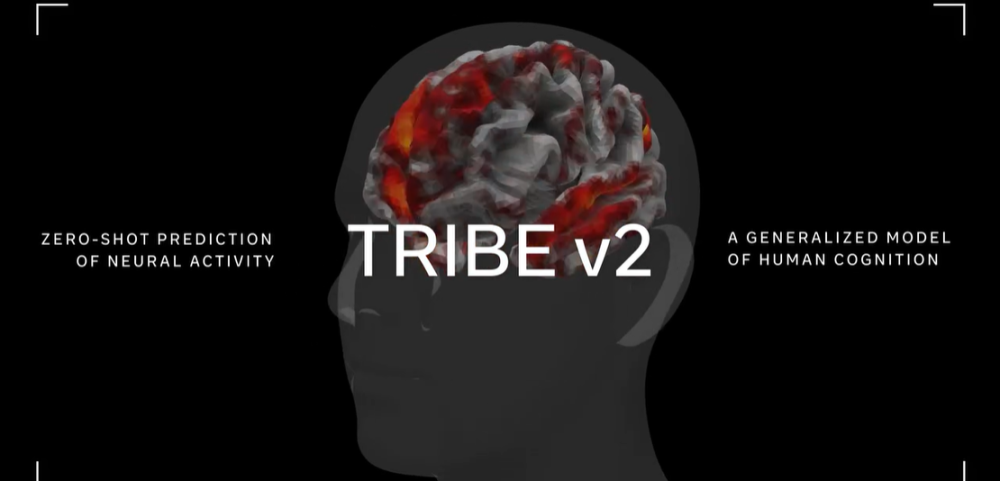
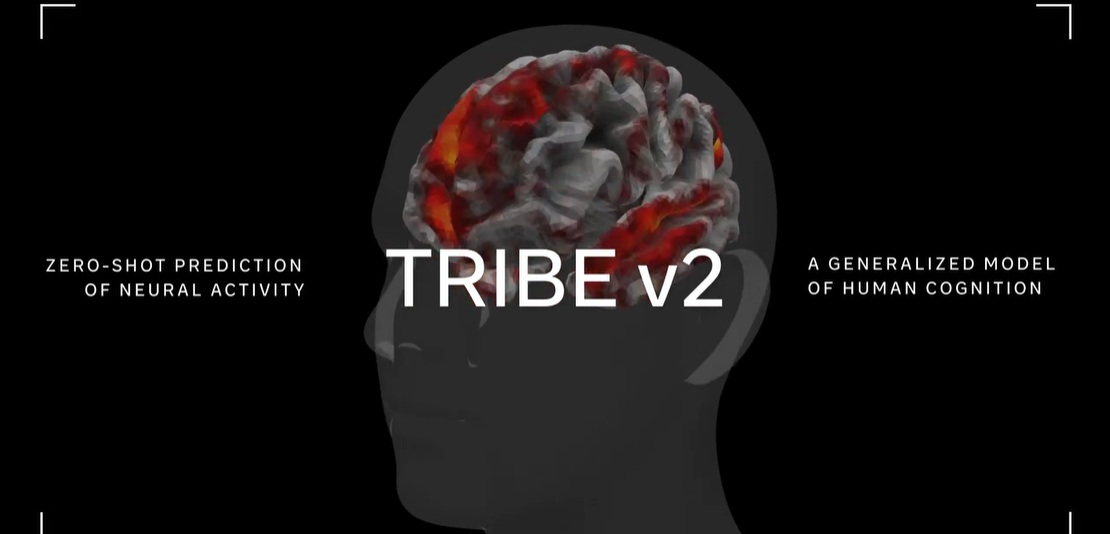
The Trimodal Brain Encoder (TRIBE v2) allows users to create a digital twin for neural activity. To build it, 700 volunteers were exposed to a wide range of media, including podcasts, films, images, and written text, while their brain activity was recorded using functional magnetic resonance imaging (fMRI). Per Meta, the model delivers a 70-fold increase in resolution over comparable systems, besides significant gains in speed and accuracy. View the full article