Vishwadeep Khatri
Administrators
-
Joined
-
Last visited
Everything posted by Vishwadeep Khatri
-
Experts at an IIM Calcutta Innovation Park event emphasized India's potential to lead in AI by focusing on affordable, accessible, and impactful applications in key sectors. Startups received hands-on training in Google's generative AI tools, connecting with engineers and investors to build AI-first ventures. The collaboration aims to fuel innovation for sustainable development and livelihoods. View the full article

-
The panel featured Prof Vimal Kumar M of IIM Calcutta, angel investor Deepak Daftari, and SuperProcure Co-founder Manisha Saraf, and was moderated by Gaurav Kapoor, Chief Business Officer of IIM Calcutta Innovation Park (IIMCIP). View the full article

-
SoftBank's ambitious Stargate AI project is facing unexpected delays. The $500 billion collaboration with OpenAI is taking longer than expected. SoftBank is working to build consensus with partners like Oracle and MGX. Concrete negotiations for the first Stargate datacenter site are expected soon. Market volatility and trade policy uncertainties are contributing to the slowdown. View the full article

-
OpenAI is set to unveil ChatGPT-5 in a livestream event, promising a significant update. CEO Sam Altman hinted at the model's impressive capabilities, recounting an experience where it surpassed his own abilities. He also expressed both excitement and caution regarding AI's transformative potential, drawing parallels to historical moments of scientific breakthroughs with profound implications. View the full article
-
The move is intended to help Krutrim leverage data and AI to enhance operations, improve user experience, and support development of large-scale data engineering and AI model development, AI training and inference. View the full article

-
According to a report by Bloomberg News on Tuesday, ChatGPT creator OpenAI is in the early stages of discussions regarding a potential secondary share sale for current and former employees, which could value the company at around $500 billion. View the full article
-
Amazon plans to provide OpenAI's AI models to its users. This marks the first time Amazon will offer products from the AI startup. The models will be available on Bedrock and Sagemaker platforms. These models can perform complex tasks. Amazon aims to compete with other tech giants in AI. Amazon shares saw a rise. View the full article

-
OpenAI has introduced two open-weight language models, gpt-oss-120b and gpt-oss-20b, designed for advanced reasoning and optimized for local use. These models, the first open releases since 2019, demonstrate performance comparable to OpenAI's proprietary models in coding, math, and health-related tasks. Trained on a text-only dataset emphasizing science, math, and coding, they aim to provide accessible AI capabilities. View the full article
-
Elon Musk reposted creatives made by users experimenting with the app. Grok Imagine, which is currently in an early beta phase, can recreate historical events and make posters and animated memes. Users can update their X app and request access to the waitlist by navigating to the “Grok” section in Settings and selecting “Imagine.” View the full article
-
The move by the General Services Administration, to be announced Tuesday, will speed up the adoption of AI tools in the federal government by making them available through its Multiple Award Schedule. GSA officials said the models from the three companies — OpenAI’s ChatGPT, Google’s Gemini and Anthropic’s Claude — were evaluated by several performance and security measures. View the full article

-
Q 794. AI agents can sometimes go off-topic, provide unnecessary details, or misinterpret what the user wants — especially during multi-step or emotionally charged interactions. Imagine a process in your domain where an AI agent is responsible for guiding a user through a complex or sensitive task (e.g., escalations, onboarding, complaints). What techniques — such as prompt framing, flow constraints, checkpoints, or clarifying questions — would you use to keep the interaction focused, helpful, and efficient? The best answer will be selected on the basis of: Relevance and complexity of the chosen process Practicality of the techniques used to control the AI’s flow Clarity and completeness of the solution approach Note for website visitors - This platform hosts two weekly questions, one on Monday and the other on Thursday. All previous questions can be found here: https://www.benchmarksixsigma.com/forum/lean-six-sigma-business-excellence-questions/. To participate in the current question, please visit the forum homepage at https://www.benchmarksixsigma.com/forum/. The question will be open until Monday or Thursday at 5 PM Indian Standard Time, depending on the launch day. Responses will not be visible until they are reviewed, and only non-plagiarised answers with less than 5-10% plagiarism will be considered for winner selection. If you are unsure about plagiarism, please check your answer using a plagiarism checker tool such as https://smallseotools.com/plagiarism-checker/ before submitting. All correct answers shall be published, and the top-rated answer will be displayed first. The author will receive an honourable mention in our Business Excellence dictionary at https://www.benchmarksixsigma.com/forum/business-excellence-dictionary-glossary/ along with the related term. Some people seem to be using AI platforms to find forum answers. This is a risky approach as AI responses are error-prone because our questions are application-oriented (they are never straightforward). Have a look at this funny example - https://www.benchmarksixsigma.com/forum/topic/39458-using-ai-to-respond-to-forum-questions/ We also use an AI content detector at https://quillbot.com/ai-content-detector. Only answers with less than 45-50% AI-generated content will be considered for winner selection.
-
Coding was the first breakout application of generative AI, adopted by companies across sectors. Major hyperscalers, including Amazon, Microsoft, Google, and Nvidia, have launched AI-powered coding agents that automate large parts of the development cycle. These tools can generate, review, troubleshoot and even deploy code with minimal human intervention. View the full article

-
Apple has formed a new team, known as Answers, Knowledge and Information (AKI), to develop a ChatGPT-style AI app, according to Bloomberg's Mark Gurman. The team is working on an “answer engine” using web data, alongside plans for a standalone app and improvements to Siri, Spotlight, and Safari search functions. View the full article

-
Generative AI tools like ChatGPT are reducing traffic to news websites by providing direct summaries, threatening media revenue models. As publishers block AI crawlers or adapt with Generative Engine Optimisation, the dilemma remains: protect content or risk obscurity. Legal battles and partnerships may shape the industry's uncertain future. View the full article

-
ET’s Tanya Pandey examines how the market capitalisation of leading companies in India and the US has evolved over the past two years, highlighting the contrasting valuation trajectories of tech firms across both economies. View the full article

-
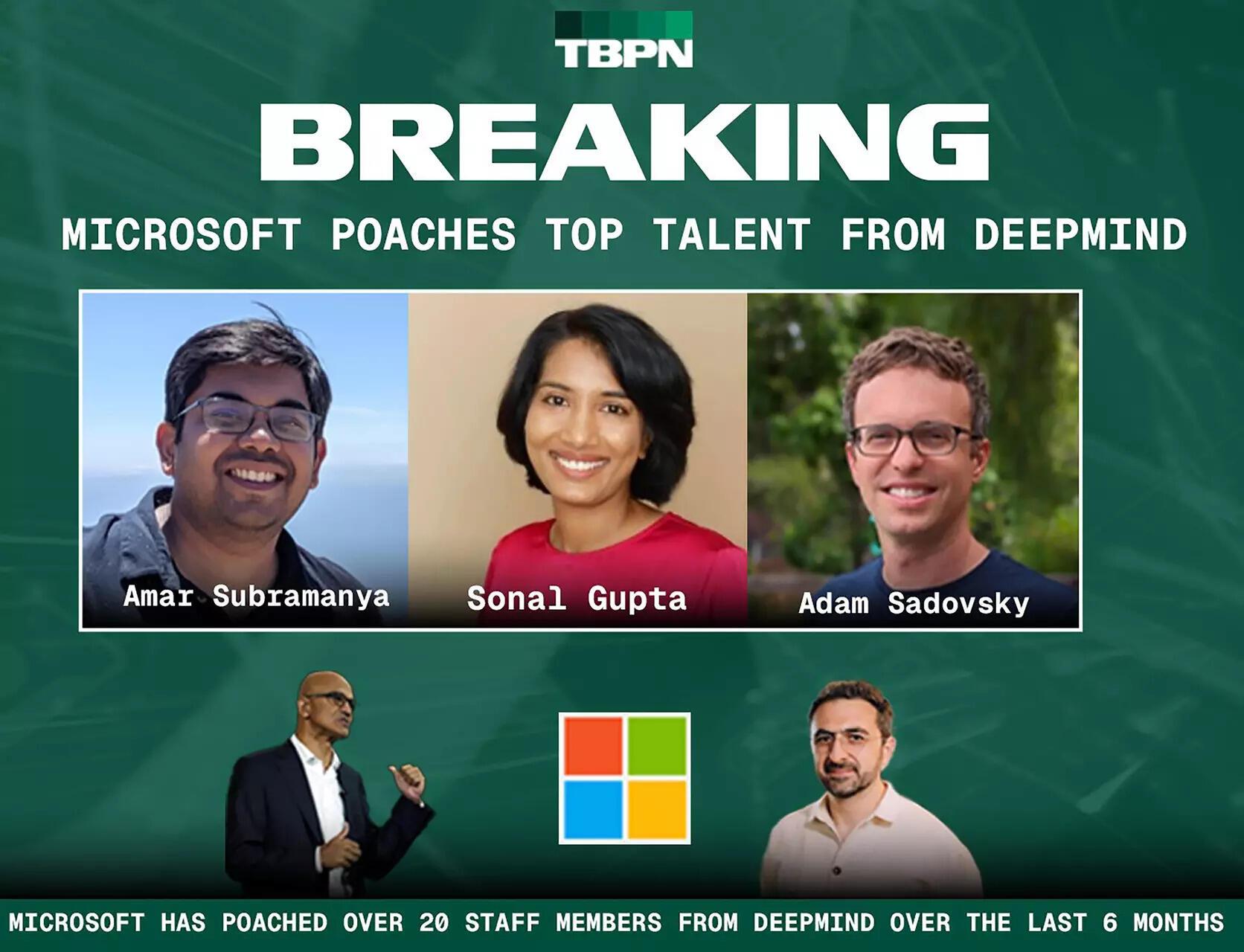
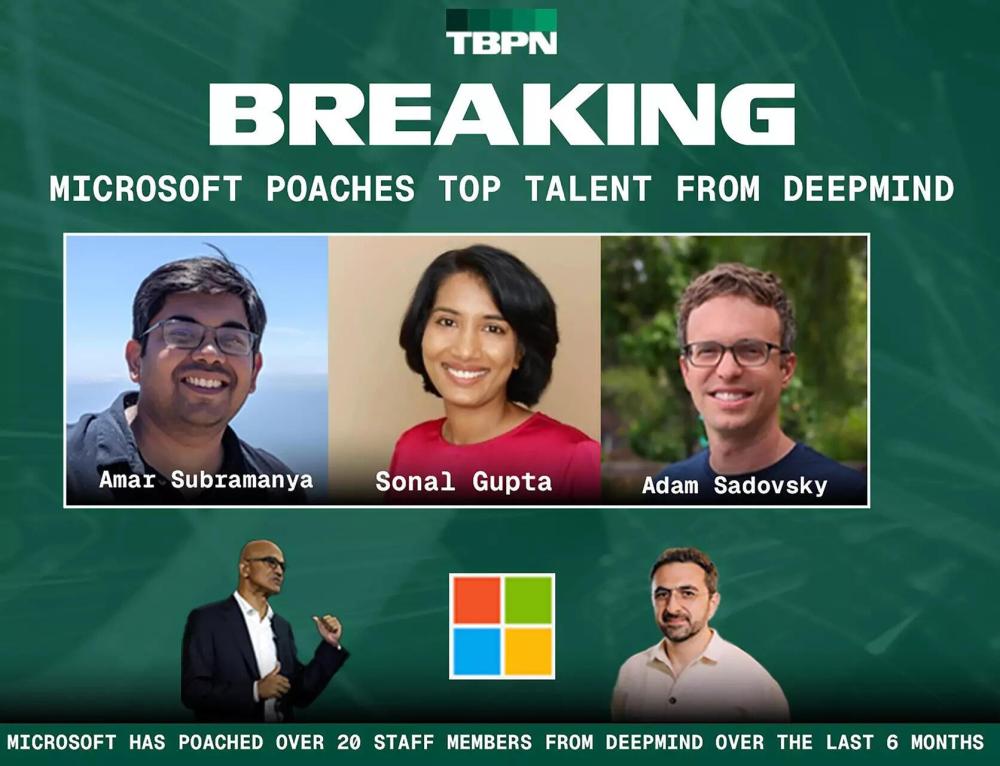
Over the past few weeks, recruiting AI free agents has become a spectacle on social media, much like the period before a trade deadline in sports. As Meta, Microsoft, Google and OpenAI have poached employees from one another, job announcements have been posted online with graphics resembling major sports trades, made by the online streaming outlet TBPN, which hosts an ESPN-like show about the tech and business world. View the full article
-
TresVista collaborates with Model ML to create AI agents. These agents will transform investment services. The partnership combines Model ML's AI platform with TresVista's financial expertise. This aims to deliver advanced AI tools with human oversight. The initial deployment focuses on investment research. Sudeep Mishra from TresVista joins Model ML's advisory board. View the full article
-
Amazon, Apple, Meta, and Microsoft all beat earnings expectations, boosted by strong AI investments. Microsoft and Meta saw major gains, with Microsoft hitting a $4 trillion valuation. Amazon’s profits rose 35%, while Apple managed solid iPhone sales despite heavy US tariffs. AI spending remains a key focus across all firms. View the full article

-
Apple CEO Tim Cook said the company is ready to spend more on AI, including building data centres or buying larger firms. Unlike rivals Microsoft and Google, Apple has been cautious with spending. However, delays with Siri and rising AI competition may push Apple to change its approach. View the full article

-
Q 793. In many AI-enabled workflows, the prompt is the actual instruction that guides the model’s behavior — from extracting insights to responding to customers. A poorly framed prompt can lead to confusion, hallucination, or biased responses, even when the model itself is powerful. Think of a process in your domain where AI is expected to make or support a decision. How could the quality of prompt design influence the accuracy, tone, or trustworthiness of the outcome? Share an example (real or hypothetical) where a small change in prompt wording could make a big difference. The best answer will be selected on the basis of: Clarity of the process and decision involved Insight into how prompt design affects results Practicality and creativity of the suggested prompt improvement Note for website visitors - This platform hosts two weekly questions, one on Monday and the other on Thursday. All previous questions can be found here: https://www.benchmarksixsigma.com/forum/lean-six-sigma-business-excellence-questions/. To participate in the current question, please visit the forum homepage at https://www.benchmarksixsigma.com/forum/. The question will be open until Monday or Thursday at 5 PM Indian Standard Time, depending on the launch day. Responses will not be visible until they are reviewed, and only non-plagiarised answers with less than 5-10% plagiarism will be considered for winner selection. If you are unsure about plagiarism, please check your answer using a plagiarism checker tool such as https://smallseotools.com/plagiarism-checker/ before submitting. All correct answers shall be published, and the top-rated answer will be displayed first. The author will receive an honourable mention in our Business Excellence dictionary at https://www.benchmarksixsigma.com/forum/business-excellence-dictionary-glossary/ along with the related term. Some people seem to be using AI platforms to find forum answers. This is a risky approach as AI responses are error-prone because our questions are application-oriented (they are never straightforward). Have a look at this funny example - https://www.benchmarksixsigma.com/forum/topic/39458-using-ai-to-respond-to-forum-questions/ We also use an AI content detector at https://quillbot.com/ai-content-detector. Only answers with less than 45-50% AI-generated content will be considered for winner selection.
-
The rise of AI song generators like Suno and Udio is transforming the music industry, prompting debates about transparency and authenticity. Methods to detect AI-generated music include background checks on artists, examining song tags on platforms like Deezer, and using AI song scanners. View the full article

-
As per the report, despite the generous offers, none of the 50 people on Murati’s team accepted offers by Meta. While Meta may have missed the mark with this one, it has already recruited a host of leading experts from major firms such as OpenAI, Google, Apple, and others. View the full article

-
AI played a bigger role in driving demand across internet search, digital advertising and cloud computing in the April-June quarter, powering revenue growth at technology giants Microsoft, Meta, and Alphabet. View the full article

-
Elon Musk's AI startup, xAI, announced Thursday it will sign the European Union’s voluntary code of practice, a framework that guides companies in aligning with the bloc’s artificial intelligence rules. View the full article

-
The partnership, called Stargate Norway, will be fully powered by renewable energy, Norwegian conglomerate Aker said in a joint statement with Nscale and OpenAI. The gigafactory will be fully powered by renewable energy from local hydropower production, the companies added. View the full article