Vishwadeep Khatri
Administrators
-
Joined
-
Last visited
Everything posted by Vishwadeep Khatri
-
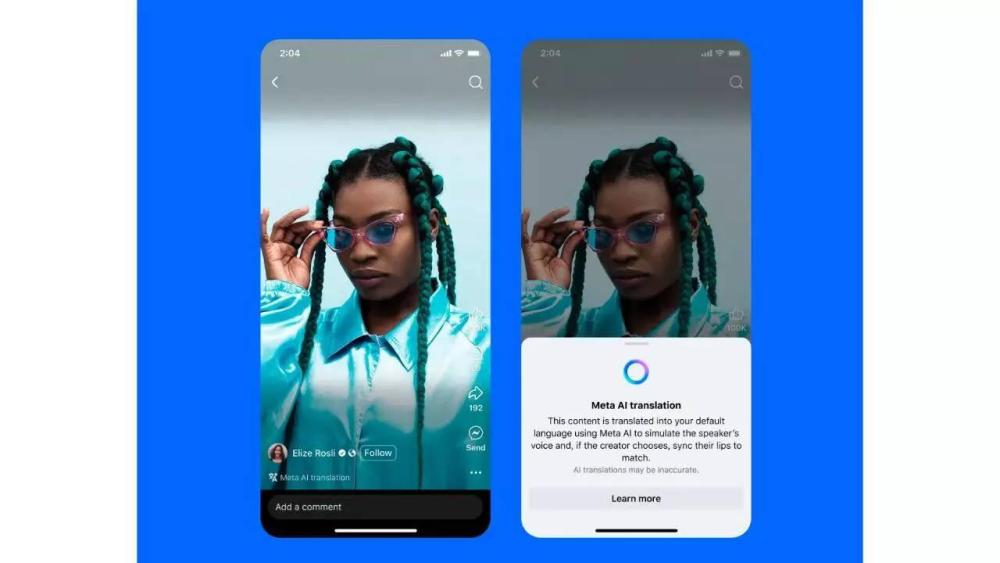
Meta has launched an AI-powered voice translation tool for Facebook and Instagram reels, allowing creators to translate their voice into Spanish or English with lip-syncing. The feature offers full control, audience insights by language, and supports global reach. More languages and enhancements are expected in future updates. View the full article
-
On Tuesday, Meta announced internally that it is splitting its AI division -- which is known as Meta Superintelligence Labs -- into four groups, two people with knowledge of the situation said. One group will focus on AI research; one on a potentially powerful AI called "superintelligence"; another on products; and one on infrastructure such as data centers and other AI hardware, they said. View the full article

-
HDFC Bank has made its first investment in generative AI by funding Bengaluru-based CoRover, the developer of BharatGPT. This move highlights HDFC Bank's focus on India's linguistic diversity and AI innovation. The partnership aims to scale BharatGPT's reach, providing AI solutions in multiple Indian languages across critical sectors, especially in areas with limited internet access. View the full article
-
Coforge CEO Sudhir Singh said AI-led deflation is pushing clients to renew IT contracts at 30-50% lower rates, squeezing outsourcing firms. Yet, transformational tech spending is rising. View the full article

-
AI startup founder Parminder Singh outlines how AI can boost clarity and focus without replacing human judgment. AI tools like Microsoft Copilot, Notion, and Gemini can act as a personal “Chief of Staff,” helping users reflect, prioritise, and think clearly. View the full article

-
Datadog CPO Yanbing Li told ET that enterprises face new challenges in monitoring AI systems, where observability extends beyond uptime to model accuracy, data integrity, hallucinations, and agent behavior. View the full article

-
ET traces the major LLM launches of 2025 — dubbed as the Year of AI model breakthroughs — and decodes the big hits and misses of the year so far. View the full article

-
In a blog post, the company said it has doubled the AI credits for Google AI Ultra subscribers, bringing the monthly allocation from 12,500 to 25,000 to allow users to generate more videos on the platform. View the full article

-
The study, conducted by Google and The Harris Poll, surveyed 615 game developers in the US, South Korea, Norway, Finland, and Sweden in late June and early July. View the full article

-
Q 798. How Transparent Should an AI Agent Be With Its Users? In many processes, AI agents make decisions or generate responses that feel like a “black box.” Sometimes users just want the answer quickly, but in other cases, they need to understand the reasoning behind the AI’s output to trust it. Think of a process in your domain where an AI agent is used. How much transparency should it provide to users — and in what form (e.g., short rationale, audit trail, confidence score)? Where would you draw the line between explainability and simplicity? The best answer will be selected on the basis of: Relevance and practicality of the chosen scenario Thoughtfulness in balancing trust vs. usability Clarity and creativity in the transparency approach Note for website visitors - This platform hosts two weekly questions, one on Monday and the other on Thursday. All previous questions can be found here: https://www.benchmarksixsigma.com/forum/lean-six-sigma-business-excellence-questions/. To participate in the current question, please visit the forum homepage at https://www.benchmarksixsigma.com/forum/. The question will be open until Monday or Thursday at 5 PM Indian Standard Time, depending on the launch day. Responses will not be visible until they are reviewed, and only non-plagiarised answers with less than 5-10% plagiarism will be considered for winner selection. If you are unsure about plagiarism, please check your answer using a plagiarism checker tool such as https://smallseotools.com/plagiarism-checker/ before submitting. All correct answers shall be published, and the top-rated answer will be displayed first. The author will receive an honourable mention in our Business Excellence dictionary at https://www.benchmarksixsigma.com/forum/business-excellence-dictionary-glossary/ along with the related term. Some people seem to be using AI platforms to find forum answers. This is a risky approach as AI responses are error-prone because our questions are application-oriented (they are never straightforward). Have a look at this funny example - https://www.benchmarksixsigma.com/forum/topic/39458-using-ai-to-respond-to-forum-questions/ We also use an AI content detector at https://quillbot.com/ai-content-detector. Only answers with less than 45-50% AI-generated content will be considered for winner selection.
-
🔍 Latest Insights from CAISA Experience What’s exciting is that these expectations are not just theory—we’re already seeing professionals step into this role right after CAISA. Driving AI at Work: Participants like Michael Navin Xavier (Virtusa) and Rahul Arora (Optum) have already begun applying AI solutioning to real projects. Shifting to Architect Mindset: Dixon Dominic Palett (Aviva) is preparing for an AI Product Owner role, while Sumukha Nagaraja (MSCI) is actively driving AI initiatives through solution design & execution. Building Real Prototypes: With two full Capstone sessions in the August 2025 batch, participants will now graduate not only with knowledge but with a working AI prototype to showcase. 👉 This proves that the role of an AI Solution Architect is no longer futuristic—it’s here, and professionals are already transitioning into it. CAISA provides the structured, hands-on path to make that shift possible. 🚀
-
🌟 What inspires me the most from the feedback above is how many participants have already moved from learning to actively applying AI solutioning at work. A few highlights: Michael Navin Xavier (Virtusa) – already solutioning with AI at work. Rahul Arora (Optum) – driving a high-priority LLM & ML project. Sumukha Nagaraja (MSCI) – leading AI initiatives in his role through solution design & execution. Joshua Anderson Thomas (MH Alshaya Co) – building AI solutions for retail challenges. Meenakshi Jeevanandan (Sonata Software) – applying AI solutioning at the organizational level. Ravnish Wesley (People Strategists) & Sahil Anand (TR Chadha) – automating and integrating workflows using AI. This proves that CAISA is not just about concepts—it’s about empowering professionals to become real AI Solution Architects who can deliver immediate business impact. 🚀
-
And what’s exciting is that we’re already seeing this play out with our CAISA graduates. From the recent batches: Participants like Michael Navin Xavier (Virtusa) have already started AI solutioning at work. Rahul Arora (Optum) is working on a live, high-priority LLM & ML project. Sumukha Nagaraja (MSCI) has begun to drive AI initiatives in his role through solution design and execution. Joshua Anderson Thomas (MH Alshaya Co) is building AI solutions for retail problems in his company. Meenakshi Jeevanandan (Sonata Software) is applying the program knowledge to organizational-level AI solution building. Others are shifting their career mindset too—like Dixon Dominic Palett (Aviva), who sees himself stepping into an AI Product Owner role soon, and Sushil Gawande (Tietoevry Sweden), who is seeking roles to apply AI solutioning techniques. 👉 This shows that CAISA is not just about learning concepts—it’s about creating AI-ready professionals who are already acting as architects of change in their organizations. 🚀
-
🚀 Update: The Excellence Navigator Agent is now ready! What started as a work-in-progress has matured into a functional RAG-powered Knowledge Agent. It now retrieves insights directly from our Business Excellence Library and delivers enriched, contextually relevant answers. ✅ Try it out here: Excellence Navigator We’ll continue expanding its coverage, but it’s already a practical demonstration of how CAISA participants learn to design working AI solutions.
-
On top of all these differentiators, the next CAISA batch comes with something even more exciting: 👉 Two full sessions devoted to a guided Capstone Project. Participants will: Design strategic AI solutions aligned with real business challenges. Build and test a working AI prototype using no-code platforms. Present their solution to peers and receive structured feedback. By the end of the program, you don’t just have a certificate—you walk away with a functional AI agent you created yourself + a portfolio of applied projects to showcase your expertise. 🚀 That’s what makes CAISA not just different, but transformational.
-
The answer to the sixth question above is now modified as per the changes in the August 2025 batch of CAISA 6. Capstone Project – Is There One? Q: Does CAISA have a capstone project like other certifications? A: Yes. Starting August 2025, CAISA includes a guided Capstone Project spread over two full sessions (Sessions 8 & 9). In these sessions, you will design and build a functional AI prototype for a real business use case and present it with your team. Unlike other programs that rely on a single end-of-course project, CAISA also integrates mini-projects and solution-building activities throughout the program, so by completion, you will have both: A working Capstone prototype to showcase, and A portfolio of applied exercises that demonstrates your versatility.
-
We are thrilled to announce what’s new in the August 2025 batch of CAISA (Certified AI Solution Architect) program! CAISA has always stood apart as the most hands-on and practical AI program for non-technical professionals. Now, we’re making it even more powerful. 🚀 🔥 What’s New in the August Batch: 1️⃣ Two Full Sessions on Guided Capstone Project This August, the Capstone experience goes bigger and deeper. For the first time, two complete sessions are devoted to your Capstone project. Here’s what you will do: Session 8 – Strategic AI Solution Design You will evaluate AI suitability for business challenges, design knowledge bases, draft BRDs, create sequence diagrams, and apply Agentic AI design patterns to structure your solution. Session 9 – Prototype Development & Final Presentation You will translate your design into a working AI prototype using Voiceflow, integrate knowledge bases and LLMs, and finally present your functional AI agent with your team. And don’t worry—these sessions are fully guided. Step by step, you will be coached to design, build, and test your AI agent prototypes. By the end, you won’t just learn—you’ll have a working solution to showcase. 🎯 2️⃣ From Idea to Working Prototype Unlike typical programs that stop at theory, CAISA now ensures you leave with a functional AI agent that solves a real business use case. This means you’ll have both the skills and the evidence to prove your AI readiness. 3️⃣ Peer Review & Feedback Your prototype will be tested, reviewed, and refined with feedback on scalability, compliance, usability, and real-world fit—preparing you to confidently take your solution to stakeholders. 💡 Why this matters? This enhancement makes CAISA the most outcome-driven AI program available. You won’t just understand AI—you will have hands-on proof of your capability to design and deliver working AI solutions without coding.
-
Anthropic framed the move as part of its ongoing research into AI welfare. When Claude ends a conversation, the user can no longer send new messages in that thread. View the full article

-
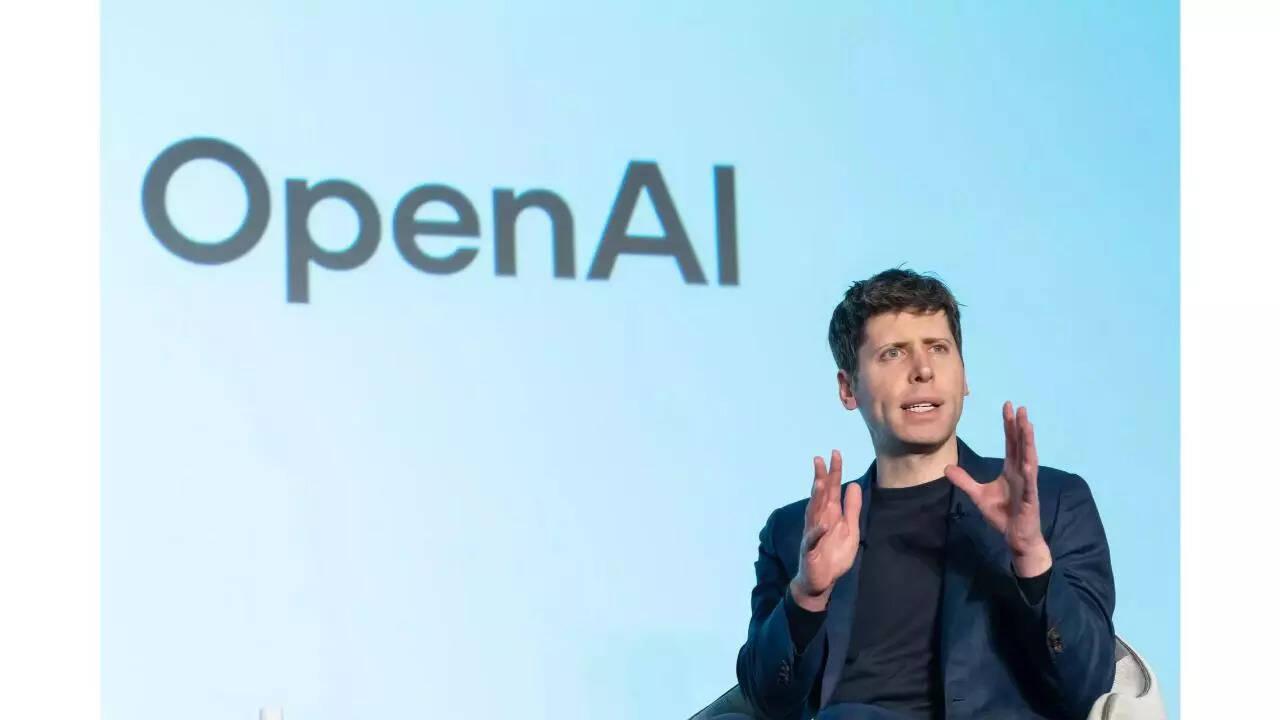
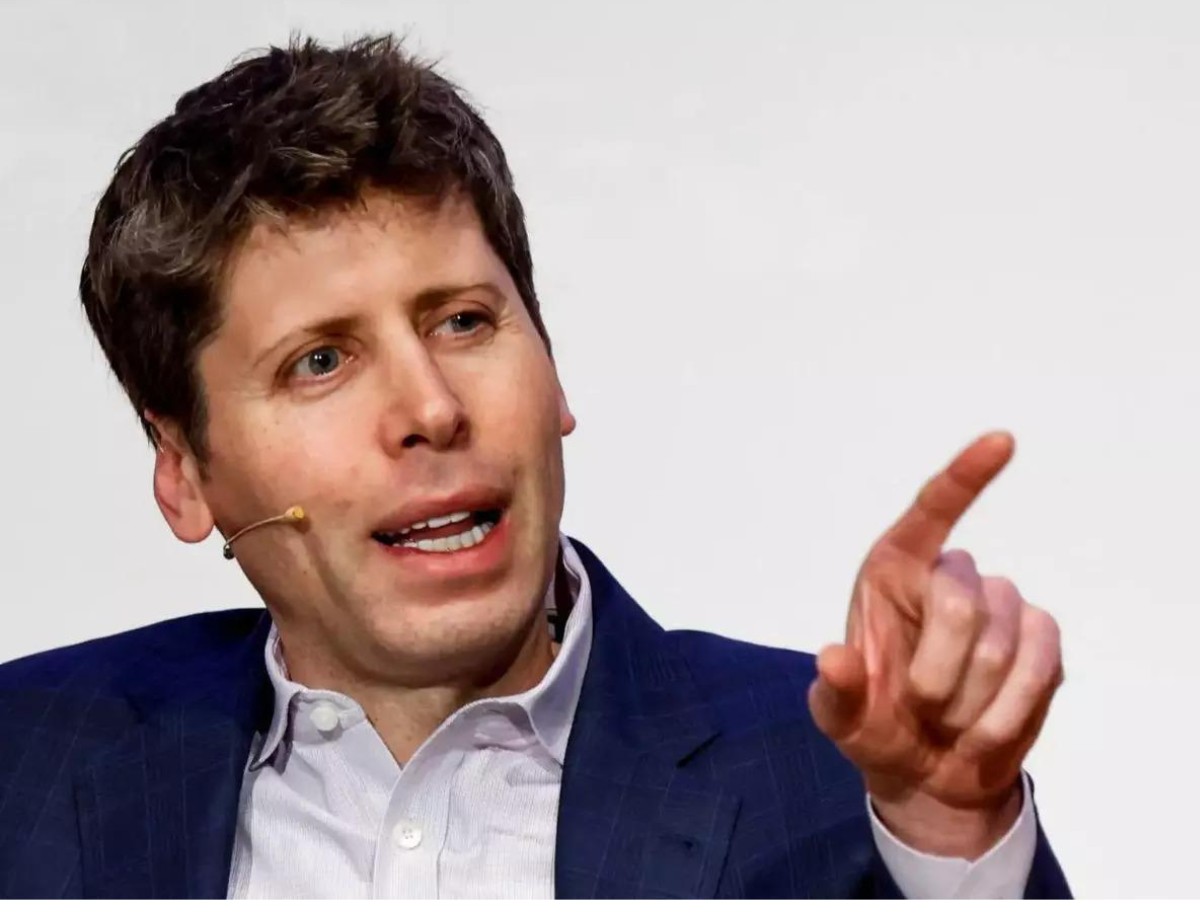
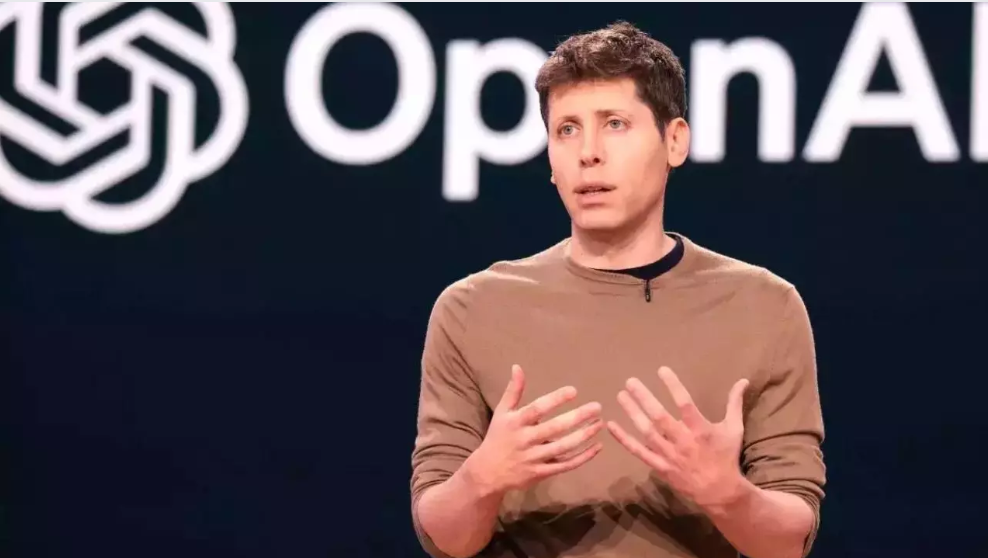
OpenAI CEO Sam Altman said the company could invest trillions in AI infrastructure, exploring novel financing methods to fund massive data centers. Despite delays in the $500 billion Stargate project, OpenAI is pursuing major funding rounds. View the full article
-
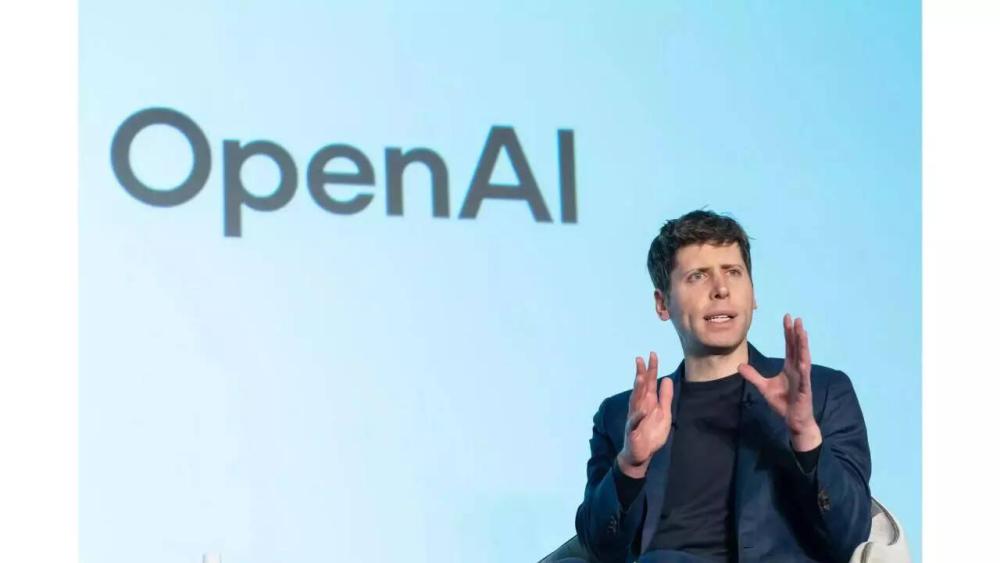
Altman said he wants to be able to think something and have ChatGPT respond to it. The company is looking at an approach involving gene therapy that would modify brain cells. In addition, an ultrasound device would be implanted in the head that could detect and modulate activity in the modified cells. View the full article
-
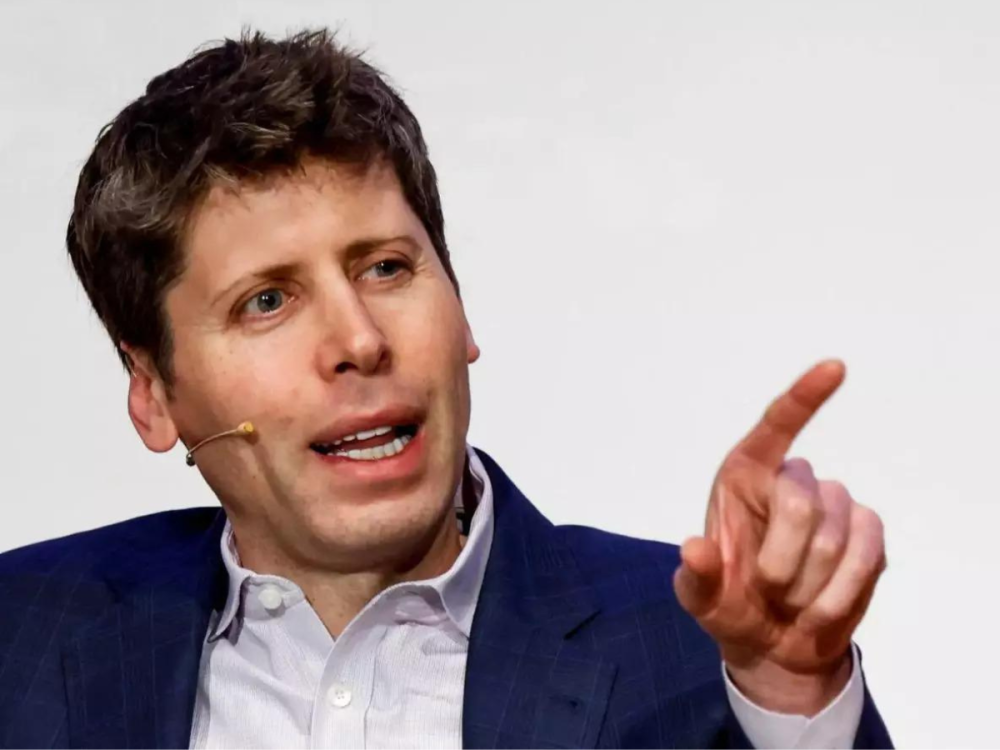
OpenAI CEO Sam Altman ruled out an imminent IPO, saying he isn’t suited to lead a public company, despite trillion-dollar infrastructure ambitions. OpenAI, valued at $500 billion, is expanding into research, hardware, and brain-computer interfaces while aggressively hiring talent. View the full article
-
Top executives are struggling to adopt AI tools despite recognising their transformative potential. CEOs are experimenting with ways to encourage hands-on use among senior leaders, including demos and team exercises. Younger staff tend to engage more naturally, prompting companies to bridge the gap through exposure, experimentation, and shared learning. View the full article

-
'My Freedom Anthem' is a web-based tool that allows users to generate personalised Independence Day anthems in Hindi or English across multiple music genres. It is accessible at infyfreedomanthem. com. View the full article

-
The deal, similar to one that Oracle struck with Elon Musk's xAI in June, will let software developers tap Google's models to generate text, video, images and audio while using Oracle's cloud. View the full article
-
The ‘Responsible enterprise AI in the agentic era’ report by Infosys Knowledge Institute, the research arm of Infosys, took inputs from 1,500 executives in the US, Canada, the UK, Germany, France, and Australia and New Zealand (ANZ). Privacy violations, systemic failures, inaccurate or harmful predictions, and ethical violations were the most common incidents that executives sampled for the survey reported. View the full article