


Roshini Vijayan
Members
-
Joined
-
Last visited
Everything posted by Roshini Vijayan
-
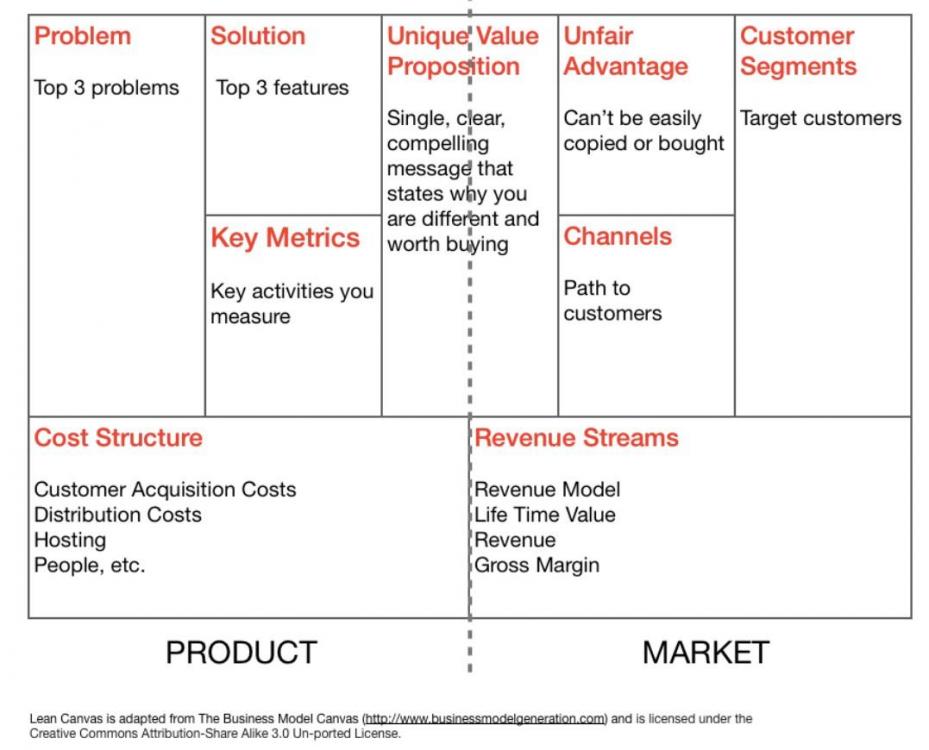
Roshini Vijayan replied to Vishwadeep Khatri's topic in We ask and you answer! The best answer wins!A lean start-up is a scientific approach in creating and managing start-up companies focused on faster product release. This method is used as a green field initiative to setup a new company or introduce a new product on behalf of an existing company advocating development of products that consumers have already confirmed or demonstrated their desire such that the market already exist by the product launch time itself. Unlike regular concept of developing a product hoping to create or emerge demand post product launch/ company setup. The approach helps understand and drive start-up with faster turn around and proposed when to grow business with maximum acceleration. Lean Start-ups imbibes the lean concept of Build and Measure and Learn from the experience in a faster pace. The approach focus on lean principles like 1. Keeping the principle and workflow simple- Understand what is perceived as “Value “ by the customers, design your workflow lean by eliminating the non-value added processes and ensure that the process runs efficiently 2. Build, Measure and learn faster: the major focus of start-up is to turn ideas into products, measure customers response, and then learn whether to pivot or persevere the product launched. 3. Understand the customer through feedbacks - All successful start-up processes are designed to accelerate the feedback loop Lean Canvas is a simple and efficient approach to develop a single page business plan for planning and segregating the business idea into key assumptions for better analysis. It creates strategic document to helps managers to accumulate hypotheses of a particular business model for any start-up / new product launch. The main focus of the Lean Canvas is to provide actionable and entrepreneur-focused business plan focused on problems and solutions, key metrics, competitive advantages etc. A business plan usually takes long to write , plan and execute while Lean Canvas is designed to create quick visualization of any idea, hare it and get a feedback quickly which is essential for a start-up environment.
-
Roshini Vijayan replied to Vishwadeep Khatri's topic in We ask and you answer! The best answer wins!Methodologies like Six Sigma, Agile or Design Thinking always helps the project and program teams to focus on customer priorities and needs. When targeting potential customers during the design thinking process, it's important to figure out the customer journey since facts and Data at times may miss to reveal the actual behavior, expectation, or frustrations of a customer. Customer Journey Map is of the best story telling tools that can trace all the interactions of the customer with respect to the product/ service offered. A customer journey map is a very simple idea or a research-based tool which examines the story of how a customer relates to the, brand or product or business over time and illustrates the steps the customer(s) go through in engaging with your organization. It could be sketching the customer interaction whether it be a product, an online experience, retail experience, or a service, or any combination. It is widely used design teams use to reveal typical customer experiences over time and visualize the many dimensions and factors involved and see how customer experiences meet customer’s expectation and find areas where design improvements are required. Customer journey maps however can be helpful beyond the UX design and marketing teams by helping to facilitate a common business understanding of how every customer should be treated across all sales, logistics, distribution, care or channels which in turn can help break down organizational silos and perceptions and start a process of wider customer-focused communication in a business. The tool can also help educate stakeholders as to what customers perceive when they interact with the business, explore what customers think, feel, see, hear and do and also raise some interesting “what ifs” and the possible scenarios to them. For creating the customer journey the team usually identifies steps a potential customer (preferably, in the form of a concrete persona) experiences before, during, and after using a product or service. It is important to create a description of the target person using the Persona method, and supplement it with an empathy map. The team members also examine all possible tasks and questions including the what if scenarios and how product/ service design meets /fails customer needs and ensures to include the tasks and subtasks including the timeline. The goal of a customer journey map is provide an understanding of how the customer experience develops over time and depict it in a way everyone in the organization can understand and work towards improvements and allows to identify all possible problems and improve the design so it’s more likely to exceed customers’ expectations across all touchpoints. Customer Journey Map Components 1. User Persona Identification 2. Timescale – Defined journey period with selected areas from awareness to conversion and beyond (1-week etc) 3. What if Scenarios – the context and sequence of events in which a user/customer must achieve a goal (e.g., a user wants to buy a ticket from Web), from first actions (problem identification) to last actions (e.g., subscription renewal). 4. Touchpoints – what customers do while interacting and how they do it. 5. Channels – where they perform actions . 6. Thoughts and feelings -what the customer thinks and feels at each touchpoint (Empathy Map can help bring clarity) Steps for Customer Journey Map Creation : 1. Business Goal for the Customer Journey Map / Purpose – The team is required to understand who will use your map and what user experience it will address. 2. Research – Use customer research to determine customer experiences at all touchpoints for user personas identified 3. Align with analytical/statistical data and anecdotal evidence to understand customer expectation e.g., customer interviews, surveys, social media listening and competitive intelligence. 4. Map Touchpoints and Channels – List customer touchpoints (e.g., pay a bill) and channels (e.g., online) 5. Make an empathy map – helps to understand what the customer does, thinks, feels, says, hears, etc in each scenario , determine his/her needs and how he/she feels throughout the experience. Understand the source of frustration 6. Sketch the Journey – Sketch or put together all of the above (touchpoints, timescale, empathy map output, new ideas, etc.) this will depict the customer’s course of motion through touchpoints and channels across the timescale, including his/her feelings at every touchpoint. 7. Iterate and Refine – Revise and transform your map to best depict the ideal customer journey. 8. Share with Stakeholders – Ensure all stakeholders have your map, understand it and appreciate how its use will bring beneficial changes to customers and across the organization. Online Shopping Company trying to Understand the online purchase experience of the customers during festive season 1.User Persona Identification – Online Shopping User – retailer or wholesaler etc. 2.Business Goal for the Customer Journey Map - Online Shopping Company trying to Understand the online purchase experience of the customers during festive season 3.Research – Online Purchaser trying to access site and purchase a product 4.Align with analytical/statistical data and anecdotal evidence to understand customer expectation E.g., Gather and analyse data on Page Hit Rates/ Sales volume turn over , Payment failures etc, competitor turnover , search data basis Facebook/ Instagram suggestions erc,, Payment Gateway failure data etc) 5.Map Touchpoints and Channels – List customer touchpoints (e.g., pay a bill) and channels (e.g., Mobile, Web online etc) 6.Make an empathy map – helps to understand what the customer does, thinks, feels, says, hears, etc in a given scenario Then, determine his/her needs and how he/she feels throughout the experience. Understand the source of frustration 7.Sketch the Journey – Sketch or put together all of the above (touchpoints, timescale, empathy map output, new ideas, etc.) this will depict the customer’s course of motion through touchpoints and channels across the timescale, including his/her feelings at every touchpoint. 8. Iterate and Refine and Share with Stakeholders for driving improvements across the organization. Thus customer journey map is a very insightful way through which businesses steps into their customers' shoes to gain a view of product/ brand performance from customer's perspective. Once the business gets insight from customer pain or joy points, they can work on how to keep working on improving the customer experience continuously.

-
Roshini Vijayan replied to Vishwadeep Khatri's topic in We ask and you answer! The best answer wins!Project Charter also known as Project Initiation Document is a high level document created at the starting phase of the project and referred throughout the project life cycle. This document is the foundation of the project basis which the project is selected prioritized and evolves as it gives information on all aspects of the Project starting from simple information such as the Project Title , the Purpose , Main objectives, Vision for this project to detailed information on the Cost Benefit Analysis of the Project. The PC provides all important aspects of the Project in a crisp format that can be easily understood, reviewed and approved by the stakeholders. Thus, a strong Project Charter will help business and management stakeholders take faster and positive decisions. It also supports planning and goal setting realistic to be achieved by Team Members to complete the Project successfully. 1. Helps in On time decision-making or Reduce Risk of delayed decision making : Many times, with multiple projects in pipeline, securing management and sponsor commitment and sign off projects becomes difficult. PO defines clarity on Project sponsor and campion to signoff the project and savings, without a PO the team ends up with risk of no one to champion for the project and responsibility gets passed around 2. Challenge in Expectation Setting and Management. Without mutual agreement on charter, there may be frequent disagreements and disruptions from stakeholders on project object goal etc and with multiple stakeholders or change in management etc there could be differing intentions, opinions and understanding of the project's outcomes. 3. Failure Risk. Without signoff statement of a project's goals, team lacks objective to peruse and hence more prone to fail. The project charter includes the business case and other additions, which serves as a constant reminder of the project's vision, mission and critical success factors. 4. Lack of authority. The project manager will be stuck with problems from lack of authority to spend the budget, the ability to acquire and assign resources, and a authority needed to make day-to-day decisions and actions. This will also make it harder for him to attract good suppliers, vendors, and resources to work on the project. 5. Lack of Vision leading to Team demotivation. Without signoff PC there is lack of clarity of objective, vision and sponsorship and this can create a culture of dissatisfaction and apathy within the existing project team due to confusion and change in plan by creating a collective vision 6. Subject to scrutiny, delay and bureaucracy. The project may end up with many changes, deviations, which increase the risk of not delivering and reaching the projects goal and eventually become a financial burden to the organization. 7. Risk of diminished value and importance of a project, if its purpose and strategic benefit are not documented, agreed and formally recognize The project chart creation therefor is a best practice that gives the team clarity on the objective of the project being executed and clear vision on execution and helps eliminate many problems and issues down the line, it saves the team from multiple risks in project execution.
-
Roshini Vijayan replied to Vishwadeep Khatri's topic in We ask and you answer! The best answer wins!A balanced design is said to be used in ANOVA and Design of Experiments, if it has same no of observations for all possibilities in level/ group combinations, while an unbalanced design, can have unequal number of observations. The Levels or groups are referred as different groups of observations for the same independent variable considered Eg: A balanced design with 30 Sample Calls being monitored for each category of Issue type base calls monitored while an unbalanced design may have say 28 calls of diff issue category like Network issue call , Billing Issue call etc. Balanced designs are usually preferred while performing statistical tests, because 1. The test statistic is less dependent or insensitive to small deviations from the assumption of equal variances 2. The power of the test is maximized if the samples are of equal size i.e The test will have larger statistical power 3. The factors are independent and so the variance can be decomposed into the individual contributions without confounding. But practically much ever researchers attempt to set up a balanced design for an ANOVA/ DOW , there are several reasons why unbalanced design could pop in • People opting out of the study in-between • Organization level changes in Team and Departments or processes • The plat being shutdown and not being able to provide required samples to make the size equal. Etc. With all the above reasons Balances Design is prefered for ANOVA and DOE, but incase of circumstances where Un balanced design is to be used it requires to be treated with a lot more care than balanced designs.

-
Roshini Vijayan replied to Vishwadeep Khatri's topic in We ask and you answer! The best answer wins!Multivoting is a method used to narrow down or minimize the output from ideation workshops or sessions when there is huge list of ideas to be narrowed down and prioritized. It allows team to quickly come to a consensus on issues, problems, or solutions by accounting for individual importance rankings in a team's final priorities. This method • Helps build commitment with in the team through equal participation in the process • Team can rank the ideas/ issues without being pressured by others • Brings up non vocal team mates also to contribute • Helps discuss difference in opinion or reach consensus Steps for Multivoting 1. Create the list of problems, issues, or solutions to be prioritized. 2. Pen statements on a flipchart or board. 3. Clarify issues by eliminating duplicate and/or clarify meanings of any of the statements. 4. Record the final list of statements on a flipchart or board. 5. Rank issues Types of Voting Dots. Show of Hands or Ballots Advantage of Multivoting 1. The major advantage of the technique is producing a large number of ideas and providing a means of closure which is often not found in other less-structured group methods. 2. This techniques is particularly useful in narrowing down when here is a huge list of items generated part of ideation . 3. The technique is very simple process and structured to execute. 4. The techniques also ensures participation across the group which is he major advantage of the technique, especially with people who are reluctant to speak up in a crowd either shy or worries about being criticized or may be don’t want to get into a conflict. 5. It hence ensures relatively equal participation across the team. Disadvantages of Multivoting 1. Major limitations of the technique would be the huge preparation time for this activity and also the fact that it lacks the flexibility of dealing with only one problem at a time. 2. The team should be comfortable and should have some about of mutual flexibility in reaching consensus 3. The process unlike other methods lack spontaneity and needs to be facilitated and planned in advance and appears too mechanical. 4. Opinions may not be discussed in detail or covered in the voting process in interest of time and restricted to only vote. 5. The technique also is not data driven except from opinions on relevant group of people are collated and voted for prioritization, hence is more group perception driven 6. Since Opinions may not converge in the voting process, cross-fertilization of ideas may be constrained in this process Conclusion : Hence Multi-voting techniques is a great decision making or prioritization method extremely useful in scenarios with large list of options needs to be pared down to to those that are the most popular among the group or most important to be addressed with out hurting anybody.
-
Roshini Vijayan replied to Vishwadeep Khatri's topic in We ask and you answer! The best answer wins!In quality management, key holistic approaches are defined as the 14 Principles by Deming and the 14 Steps by Crosby. Although both above models of quality management are focused on end goal of achieving highest quality of goods, the most important factor is the customer itself and quality is governed by consumer feedback, Crosby on the contrary highlights that the organizations set a standard of quality and it is not governed by customer perception. Deming’s approach points to how quality is all about exceeding and meeting customer expectation while for Crosby states quality is continuous improvement the production process. While there are differences, both approaches agree on the concept of how quality can be improved through the approaches. Both Deming and Crosby state that responsibility of quality management needs to be top driven, hence highlights the importance of the defining the vision governing the business operates in the quality front. Similarities between the philosophies are majorly on the following: -Both Deming’s and Crosby advocates that Quality requires a strong upper management commitment and needs top-down drive. -While Deming defines Quality as Non-Faulty Systems, Crosby defines it as conformance to requirements, but both agrees that Quality saves money. -Responsibility of Driving quality and improvement initiative in both approaches is deemed to be placed on managers, not workers for improved success of the program across the organization. -Most of the Quality Management approaches defines Quality as a continuous improvement and that it is a never-ending process -Both are Customer-orientation approach, Deming’s approach points to how quality is all about exceeding and meeting customer expectation. -Both approaches state the need for shift in culture for achieving required quality improvements -Quality arises from reducing variance which can be defined as Non Faulty Systems in Deming to Conformance to requirements in Crosby Approach. W Deming’s P Crosby Orientation Towards Quality Technical Motivational Quality Definition Non Faulty Systems Continuous Improvement Conformance to Requirements Emphasis Tools/ System Motivation (Behaviour) Types Of Tools SPC Minal Use Quality Responsibility Management Management Importance of Customer Requirements as Standard Very Important Very Important Goal Of Quality Meet/ Exceed Customer Needs Continuous Improvement Continuous Improvement Zero Defects Methods of Achieving Quality Statistical, Constancy of Purpose Continual Improvement collaboration between functions 14 point Framework Chief element of implementation 14 Point Program 14 Step Program Cost of Quality , Quality Management , Maturity Grid Role of Training Very Important to Managers and Workers Very Important to Managers and Employees User of Goals & Targets Not Used Posted Goal for workers The major differences in opinion are around Nature of Organization where Deming believes focus on Social Responsibility and moral conduct can solve problems with industry and society while for Crosby a better approach is to focus on Organization-wide, team building approach. Demining has no defined Implementation Processes with a defined start or steps while Crosby provides a very user friendly prescriptive with defined obvious starting points and clear steps. Although Deming requires a radical shift in values, both the approaches are holistic quality management approaches Deming is very dogmatic and uncompromising in handling resistance to change ; depends on facts, however Crosby the resistance is normal and need not be an obstacle. Depend on facts to unseat criticism. Deming is perceived a threat to most managers and requires an admission of incompetence while requires very little shift in view of workers and managerial roles. Deming feels variance is largely unaffected by workers’ activities. Organization exists in large part to develop and provide for workers. While Crosby believes workers can be motivated to improve quality and not produce defects.
-
Roshini Vijayan replied to Vishwadeep Khatri's topic in We ask and you answer! The best answer wins!LSS Project success depends largely on how change management is driven at each stage and how the improvements are sustained to drive continuous improvement and as as a leader for driving the successful closer of LSS projects in an organization effective change management is key to success of the projects. Kotter's guidelines effective change management through 8 steps including: Creating a sense of urgency, Forming powerful guiding coalitions, Developing a vision and a strategy , Communicating the vision, Removing obstacles and empowering employees for action, Creating short-term wins, consolidating gains and Strengthening change by anchoring change in the culture and to stick to it can be integrated at all of DMAIC stages. The integration of Change Management model at every stage ensures alignment to business goals and to ensure sustained behavior change through the application of a structured change management approach across phases .Kotter’s 8 step model can be explained with the help of the illustration given below DMAIC KOTTER How LSS CM can be success be achieved through integration of the approaches DEFINE PHASE Define – Scoping 1. Highlight the Urgency Understand the need for Change which makes the need for change pressing to the user to focus and lessen the inertia to resist Define- Team Building 2. Forming Powerful Guiding Coalitions Identifying the effective change leaders in your organizations and the key stakeholders, requesting their involvement and commitment Define – Vision 3. Developing Vision and Strategy Ensure that the change leaders can describe the vision effectively for the people to easily understand and follow (clarity in Vision to team) MEASURE & ANALYSE Measure – Set Goals 4. Communicate and Hight Light Urgency basis current state and Set Performance Goals basis current baseline Focus on constant communication to create urgency on where we stand against the set goal Analyze Communicate for Buy in ( 2 way for insights) Communicate focus areas and priorities constantly IMPLEMENTATION Implementation 4. Communicate/ Share Vision to people involved Communicate change in vision very often powerfully &convincingly. Connect the vision with all the crucial aspects like performance reviews, training, etc. Handle people concerns /issues 5. Removing obstacles Encourage to act Act as Scrum master facilitating to remove impediments 6. Empowering employees for action Enable people to drive change and act 7. Creating short-term wins Pick up Quick wins and Celebrate CONTROL 8. Anchoring Change Create successful stories related to change initiatives on every given opportunity. Ensure SUSTAINING of the change by making it integral part of the organization culture

-
Roshini Vijayan replied to Vishwadeep Khatri's topic in We ask and you answer! The best answer wins!In an Agile Project Environment there is requirement for codes to be released every couple of weeks, hence there is a critical need to keep the codes or development process lean. The Agile delivery teams needs to move quickly to solve challenging problems that involve complex coding, where factoring helps maintain a greater level of code hygiene and enables team to deliver a high-quality product at faster pace Code refactoring is a process practiced by a development team to clean up existing source code without changing the code’s functionality or behavior, which ensures getting the codes into a desirable state of reuse by the development team and hence very critical technical practice for the success of agile adoption. Overtime across the agile release cycles the code complexity increases and it becomes difficult to maintain sustain the standard coding practicing and eventually harder to change. It’s extremely important to keep code clean and refactoring help the dev team to constantly respond to the code’s evolution. The potential benefits of adopting this practice of include removal and reduction of technical Debt and code smell, improving code readability, a better QA experience, and overall improved structure and functionality, These together helps organizations save time and money. The best time to consider refactoring is : 1) Before adding any new feature or updates or new requirement to existing code. Going back and cleaning up the current code before adding in new programming will improve the quality of the product and make it easier for future developers to build on the original code. 2) Another time to think about refactoring is soon after the product release to market. Since the Dev Team will now have more availability to work on refactoring before moving to next sprints. Standard practice is to write unit tests before moving ahead with code refactoring and execute them before and after refactoring to validate that the external behavior of the software system is not interrupted with this practice. There are times when refactoring can be avoided Visa Via: 1) when an application is getting completely revamped from the start, refactoring is not necessary, as it would be much more efficient to simply start from scratch without effort wastage. 2) Another situation to skip refactoring is when trying to get a product to market within a set time frame when Refactoring can become quite time-consuming. Adding any additional coding or testing to an already tight timeline will lead to frustration and additional cost for the client and hence avoided
-
Roshini Vijayan replied to Vishwadeep Khatri's topic in We ask and you answer! The best answer wins!Invest is widely accepted checklist/ set of criteria to access the completeness and quality of a User Story. If the any of the user stories fail to meet any one of these criterion, the team is directed to rework or rewrite to ensure alignment to guideline. The criterion was coined by Bill Wake and stands as an acronym for simple rule set that is advised to be used in creating a well frame user story. Independent defines that Stories should not be dependent on other stories. The user should try to make sure that stories or the specific feature are not interdependent as it leads to prioritization and planning problems. Independent and logical order of developing things are distinctive. For example, for credit card payment related user story and we want to support payment by ICICI, Mastercard and Visa and if we had a story for MasterCard and another for Visa, then the estimates will depend the one prioritized and implementing the other story will just be a replication . hence there needs to be clarity and have one story stating primary payment option using VISA and the other can then change to “provide a secondary payment option using ICICI. Negotiable emphasize to capture the essence of the requirement to encourage ongoing conversation and scope negotiation between the customer and the developers and should not represent a contract on how to solve it. Valuable require the stories to be clear in illustrating the value delivered to the customer ie If a customer cannot think of a value statement, then we should de-prioritize the story or will lead to effort wastage later The value statement represents why the feature is being built. Presenting the team with the Why implies the value delivered and not just the What which defined the feature and can trigger different ideas of alternate features easier and faster to develop and still meet thesame goal and deliver the same business value. Since story is delivering a piece of functionality, the customer can figure out the ROI of the functionality i.e. its costs and then decide if its is needed Estimatable requires to provide just enough information so that the stories can be estimated. It is not important to know the exact way that a particular problem will be solved but must only be understood enough to provide a high-level estimate. Small – Stories should strive to be granular enough in scope that they may be completed in as little time as possible, from a few weeks to a few days. Testable – requires testability of the user story to help determine completeness The criterion required to have a acceptance criteria which has to be objective and to avoid using criteria like easy to use, fast or bug free but to write criteria that can be measured and tested (ideally automated). For example, test that payment verification responds in 1 second or less at least 95% of the time. Many times getting the crux of what the user requires in itself is challenging and required multiple levels of discussions to frame the product vision and then driving the features and the value these deliver to enable the product vision. For a stakeholder all the user stories will be critical and hence asking them to substantiate the value delivered from each of the user story and prioritizing these may be challenging. They perceive all the user stories to be critical to product delivery. However the Negotiable criterion also many times leads to discussions between the development team and the product owner at later point of time as it becomes challenging to capture the essence of the user story.
-
Roshini Vijayan replied to Vishwadeep Khatri's topic in We ask and you answer! The best answer wins!Need theory was proposed by David McClelland and is also known as Three needs theory. The Mc Clelland Theory provides a great motivational model that helps to understand personal drivers within a Team into main 3 means – Achievement drive, Affiliation, and effect of power. The theory evaluated the impact of how the needs for achievement, affiliation, power affect the actions of people from a managerial standpoint. Thus, theory is very helpful models for discovering the key drives for your team members and to help manage the team effectively. For a project/ program manager, it's essential to know what motivates your tea, and McClelland's Human Motivation Theory allows to identify people's motivational drivers which can help to manage the team either by appreciating or through effective feedbacks and in suitable task allocation. The theory is hence a very effective model to help keep the team motivated basis their individual motivators and not team behavior.
