

Topics
-
Jeff Bezos is pushing Prime Video's overhaul to highlight Amazon's AI. The project, known as Lighthouse, aims to showcase AI for millions of users. This initiative seeks to elevate Amazon's standing in the competitive AI landscape. New features will improve content recommendations and respond to spoken requests. Bezos' personal involvement underscores the strategic importance of this AI integration. View the full article
-
Advanced Micro Devices is launching new artificial intelligence hardware on Thursday. This new hardware aims to compete directly with Nvidia's offerings. AMD is targeting the growing data center inference computing market. The company also announced significant deals with AI labs Anthropic and OpenAI. These agreements position AMD for substantial future revenue in the chip sector. View the full article



Leaderboard
-
ajitpathania
Members2Points10Posts -
Dhirendra Singh.
Members1Points16Posts -
RahulGarg
Members1Points28Posts -
Archana Handa
Members1Points10Posts


Popular Content
Showing content with the highest reputation on 06/11/2021 in Posts
-
2 pointsCost-benefit analysis (CBA) is a simple tool used to compare the total investment on a programme/project with its benefits. For any project/programme to be successful or even picked up for implementation requires budgetary support. Not every project sees the light of the day and in large organization or team there are lot of identified projects to enable where the budgets will be spent for implementation. This is critical to know what will be the overall spend on a project. And it’s not just the cost which matters even though there is budget available, but we will not start project randomly. Very important is to know what is the benefit from the project. Benefit is not just hard dollar save or FTE in case of service industry but nontangible outcomes or improvement in a business metric which drives overall goal of the organization example CSAT improvement. Every programme or project before implementation, the sponsor wants to see the ROI for which the Cost Benefit Analysis becomes very important to take the decision. It is very important to note what all comes under Cost, Benefit and overall duration to calculate ROI. Cost: Costs should include all the spends on the project. Cost can be further divided under broad 2 heads: · Capital Expenditure · Operational Expenditure Benefits are the outcomes from a project which are essential to pick it up for implementation. Different types of benefits in a project: · Hard Cash Saving · Capacity Creation / Cost Avoidance · Stakeholder impact · Reduction of Risk Exposure · CSAT Improvement Once all the cost and benefits are computed, they are compared, and this analysis is done to decide whether to proceed with project or reprioritize it. If benefits outweigh the total cost. During this, it's important to consider the payback time, to ascertain how long will it take to reach the break-even point or what is the duration any solution will be deployed or contract period. For simple examples, where the same benefits are received each period, you can calculate the payback period by dividing the projected total cost of the project by the projected total revenues: Total cost / total benefit = length of time benefit will be yields. Below if cost benefit analysis grid to prioritize the project. Different projects are placed in 2*2 grid to be picked up for implementation based on ROI. Example: Implementation of Automation Project for a service industry client Cost: Development effort (one time cost) USD 45,000 IT Enablement Cost (one time cost) INR 15,000 Recurring Annual Infrastructure Cost License INR 60,000 Total Cost (1st year) INR 120,000 Benefit FTE save per annum due to Automation 9 FTEs Cost of 1 FTE USD 15,000 Total savings per annum USD 1,35,000 In the given example, project will be break even in first year itself and advisable to go ahead with this project. But while selecting a project benefit accumulation and recurring cost is equally important. In many a cases benefits are carried forward to every year till the product/service is useful and in some cases it might be one time utility hence the cost benefit is to be seen for the shorter period only. Irrespective of a negative Cost Benefit we still go ahead and do certain projects which are strategic in nature and may not have direct hard cash savings but can have soft benefits which might be critical for organisation to pursue for its strategy. For example implementing a reconciliation platform like BlackLine it may not yield significant FTE benefit or hard dollar save as the work is getting done in excel also serves the purpose but the controllership it brings to the process brings confidence in a controller to go ahead with the project. Even though CBA is negative but still the project will be prioritized for implementation due to non-tangible benefits it yields.2 points
-
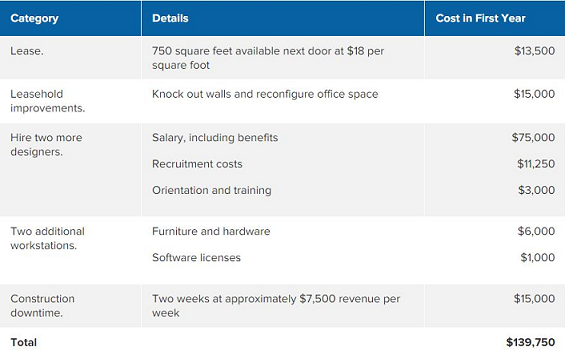
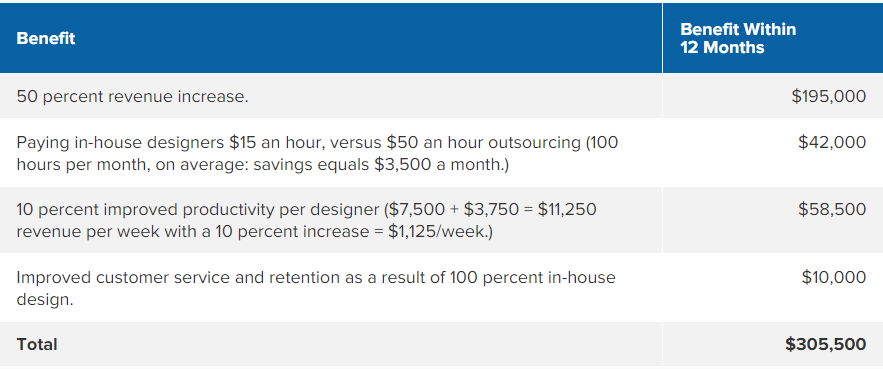
1 pointCost Benefit Analysis is a powerful financial management and decision making tool. It provides a systematic approach to measure the benefits of a decision or taking action minus the costs associated with taking that action. Applications of Cost Benefit Analysis : It involves measurable financial metrics like revenue earned, costs saved etc. as a result of the decision to pursue a project. This monetary evaluation method helps to identify effective and favorable options and helps to take informed decisions. This technique also values intangible aspects in benefits and costs or effects from a decision such as employee satisfaction and customer experience. The results of the analysis are often expressed as a payback period which means that this is the time it takes for benefits to repay costs. Mostly, people who use it look for payback in less than a specific period for example three years. This technique can be used in a wide variety of situations like hiring decisions, evaluating a new project or initiative, or ascertaining the feasibility of a capital purchase. Tools or methods used in Cost Benefit Analysis : When carrying out the analysis, there are two main methods to arrive at the overall results. These are Net Present Value Model (NPV) : The NPV of a project refers to the delta between the present value of the benefits and the present value of its costs. If we observe NPV > 0, then it follows that the project has economic justification to proceed ahead. Benefit Cost Ratio: Benefit-Cost provides value by calculating the ratio of the total of the present value of the benefits associated with a project against the total of the present value of the costs related with a project. Higher the value above 1, higher are the benefits associated with the alternative considered. When using the Benefit-Cost Ratio, the analyst has to select the project with the greatest Benefit-Cost Ratio. Other tools & methods that can be used are regression modeling, valuation and forecasting techniques. There is a possibility to increase the reliability of the assumptions in a cost-benefit analysis by incorporating a sensitivity analysis and adding the discount rate. Let us take an example of the cost-benefit analysis suggesting a comparison between the two choices: Illustration 1 - Dynamic Graphic Works has been operating for just over a year, and sales are exceeding targets. Presently, 2 designers are working full time, and the owner is evaluating increasing capacity to meet demand. This would involve leasing more space along with hiring two additional new designers. The owner decides to complete a Cost-Benefit Analysis to explore the choices. Key Considerations : 1. Presently, the owner of the company has more work than he can cope with, and he is outsourcing to other design firms at a cost of $50/hour. The company outsources 100 hours of work on an average basis each month. 2. He anticipates that revenue will grow by 50% with increased capacity. 3. Per person production will grow by 10% with more working space. 4. The analysis horizon is one year: that is, he expects benefits to accrue within the year. Cost : Benefits : Lets calculate the payback time as given below: $139,750 / $305,500 = 0.46 of a year, or approx. 5.5 months Undoubtedly, the estimates of the benefit are subjective and there is a degree of uncertainty involved with the expected revenue increase. Regardless of this, the owner of Custom Graphic Works decides to go ahead with the expansion and hiring, given the extent to which the benefits outweigh the costs within the first year.
 1 point
 -
1 pointCost-benefit analysis is the method used to measure the benefits of a decision minus the costs associated with taking that action or decision. In 1772, Benjamin Franklin wrote of its use. But the concept of CBA (Cost Benefit Analysis) dates to Jules Dupuit, a French engineer, who put forward the process in an article in 1848. This concept become quite popular in 1940-1950s in US and was vastly used in U.S. Flood Control Act to prove that benefits of flood-control projects largely exceed their costs. A Cost Benefit Analysis involves measurable financial values such as revenue earned or costs saved as a result of the decision to pursue a project. Also intangible benefits are considered into the cost benefit analysis like customer satisfaction, Employee Satisfaction etc. In today’s competitive world, its very important to conduct the Cost Benefit Analysis and take the decisions as per that. It helps in identifying the projects which are generating the higher benefits (revenue / sales) than the cost incurred on them and will be beneficial for the company from the financial standpoint. Also sometime opportunity cost (Opportunity costs are alternative benefits that could have been realized when choosing another alternative over the selected one) is also included in this analysis. How Cost Benefit Analysis is Conducted? Step1 : List down the direct costs involved in the project like Raw Material, Labor, Manufacturing Expenses, Machinery Cost etc. Step2 : List down the indirect costs like electricity, overhead costs from management, rent, utilities etc. Step 3 : List down the intangible costs too like impact on customer satisfaction, employee satisfaction, or delivery timelines etc. Step 4 : List down opportunity costs associated with decision as well like purchasing a new machine vs taking the same on rent. Step 5 : List down the potential risks as well regulatory risks, competition, and environmental impacts etc. as well. Step 6 : List down the benefits e.g. Revenue / Sales etc. Step 7 : List down the intangible benefits as well like impact on customers, employees, or faster delivery etc. Step 8 : List down the competitive advantage gained as result of this decision like Market Share. Step 8 : Do the sensitivity Analysis and consider the risks and uncertainties in projections. Step 9 : Take the decision Example : Lets say Company ABC Plans to Start a New Production Plant with details as below. Lets see if they shall set up the new plant or not basis the cost and benefits listed below. Costs and Benefits Involved : Cost Heads Cost Amount (INR) Benefits Type Benefits Amount (INR) Land Cost 1000000 Revenue 4000000 Raw Materials 200000 Scrap 1000000 Machinery 1000000 Client Satisfaction 100000 Labour 1000000 Electricity, Water etc. 100000 Inventory 100000 Manufacturing Expenses 100000 Total Costs 3500000 Total Benefits 5100000 So If we see in example above, total costs are 3500000 INR and Total Benefits out of it are 5100000 INR and hence there are benefits of (5100000-3500000) = 1600000 INR and hence company can take the decision to setup the new plant. Limitations of Cost Benefit Analysis : i) There are number of forecasts built into the process, and if any of the forecasts are inaccurate, the results may be called into question. E.g. Cost of Machines, Land, Expected Revenue etc. ii) Cost Benefit Analysis works well for short term to mid term projects with low to medium complexity but it fails for long term and complex kind of projects as there is always some elements of uncertainty in the long run e.g. costs may go up, interest rates may change and technology may become obsolete. iii) Cost Benefit Analysis of concept does not take into account the NPV concept (Net Present Value) and IRR (It is the rate of return at which the net present value of a project becomes zero or rate at which your investment is expected to generate the money, higher the IRR, more attractive is the investment because of higher rate of return) of money while calculating the Benefits as Costs would be incurred in near future but the benefits will be realized in long run or say 2-3 down the line OR even if it is taken into account the assumptions may not be correct because of inflation, time value of money / interest rate fluctuations. One of the benefits of using net present value (NPV) for deciding on a project is that it uses an alternative rate of return that could be earned if the project had never been done. That return is discounted from the results. Or we can say, a project needs to earn at least more than the rate of return that could be earned elsewhere or the discount rate. So to avoid the same NPV shall be taken into consideration : NPV = F / [ (1 + r)^n ] where, PV is Present Value, F is Future payment (Cash Flow), r = Internal Rate of Return and n = the number of periods in the future is based on future cash flows. iv) There is always subjectivity involved in Quantifying the Intangible costs and benefits and may not be totally true and accurate. v) Sometime Cost Benefit analysis done is taken forward as the budget of the project and which may not be actually true and hence the stakeholders are pressed hard to meet these numbers like cost / sales etc. vi) Wherever the assumptions / forecasts are involved, person doing the analysis has the tendency to assign more weights or values to factors / elements which he wants to go with basis his instincts and hence it may cause bias in the results. vii) The supposed clarity in determining and listing costs and benefits can prove harmful as the actual outcome is dependent on several variables that you can only know with time. Can organizations take decisions in favor of unfavorable Cost Benefit Analysis ? Yes, organizations sometimes may take decisions in favor of the projects where Cost Benefit Analysis is not in favor of them. Some Examples are as listed below : 1. Corporates are going for its own vaccination drives for the safety and health of its employees. If we see here there are lot of costs involved in setting up the system, softwares, vaccination, facilities etc. with no direct immediate benefits for the company but companies do so for the benefits and wellness of their employees. 2. An organization taking a project to plant 10000 trees to make the environment better. If we see here there are no direct benefits to company but they do so for their responsibility towards society or nature. 3. An Organization taking a project to install the safety devices / equipment. If we see here, there will be cost involved to company but still they do so for the safety of their staff. 4. Twitter to appoint additional staff in India to comply with the Government Regulations - Though this may not be required or beneficial from company standpoint but they have to do so (Cost) to adhere to government rules and regulations. 5. Organisation providing free transport, food, gifts etc. to employees to their employees to increase their employee satisfaction though these results in cost to the company.1 point
-
1 pointCost benefit analysis is basically benefits from any initiative ( Process improvement , Automation ,etc) subtracting the associated development & maintenance cost. Example CBA = Total Benefits ( 1 Lakh) – development cost ( 20K) = 80K Actual benefit. Cost benefit analysis in financial terms means revenue earned or cost saving as a results of the decision, initiative pursued on projects. Below are the some of the associated tools for estimation which will help in cost benefit analysis. Benefit-cost ratio (BCR) :- It shows relationship between the relative costs and benefits of a proposed project Regression modelling :- It shows relationship with one dependent variable (X) with series of independent variables (Y) Expert Judgement :- Taking expert people judgement as they will have prior knowledge on similar kind of projects and they can suggest valuable insight based on their experience. Analogous Estimation :- Analogous estimation uses the technique of estimating project with prior similar project completed in the organization using the parameters scope, budget, duration, size, weight and complexity. Parametric Estimation :- This technique uses the algorithm to calculate the cost of current project using historical data of other project variables. Bottom-Up Estimation :- Bottom up estimation technique starts collecting data from lower level and it rolled up to higher level. Three-Point Estimation :- In this technique various scenarios of risk is also considered i.e mostly to complete, optimistic ,pessimistic. Reserve Analysis :- In this technique some fund is allocated as contingency reserve to deal with uncertainty of the project. Cost of Quality:- In this technique we do estimation of cost of both conformance and non-conformance expenses. Project Management Software :- Here we can use the tools such as software application, spreadsheet, simulation and statistical tool. Vendor Analysis :- Here we try to compare cost from various vendor to arrive at optimal cost. Group Decision Making Techniques :- Here we involved group of technical people who are going to execute the projects. Yes in some situation organization give an exception and still take up projects that do not have favourable cost benefit analysis. Example :- Give go ahead to run addition employee benefit programs ,adding budget to run employee engagement activity, force leave programs to reduce stress in the system these will not give direct financial benefit but will have notional benefit like less attrition , employee satisfaction score increasing. Giving go ahead to run audit programs , people safety ,deploy addition security & firewall in system.1 point
This leaderboard is set to Kolkata/GMT+05:30