


ajitpathania
Members
-
Joined
-
Last visited
-
Sponsor: Is a senior business leader or executive who sponsors the Six Sigma engagement. Responsible for signing of objectives of the project and approver of business case in the project charter. Sponsors and promotes the initiatives throughout his span of control for implementation. He is responsible for ensuring resources are available for projects and required funding is arranged. Champion: is a functional head of a team in whose area the Six Sigma project is getting implemented. He is responsible to ensure availability of resources required for the project. Responsible for driving actions or working with upstream or downstream processes to get their commitment if required in the project. Generally, approver who will approve the different critical tollgates. Doesn’t get involved in day to day activity of the project. Champion is the liaison between the project team and senior management including Sponsor and thus responsible for securing subject matter experts and non-Six Sigma resources critical to the success of the project. Black Belts go to person for any troubleshooting. Responsible to communicates the plan for business success In a typical Lean Six Sigma Project both sponsors and champions are critical to drive actions for successful completion of a project. At times Sponsor and Champions can be the same person. Sponsor and Champions get mapped as per ARMI tool to drive change on the process where both are at approver level. Only Variation is the severity of decision where they are required to approve. It is very important to have both Sponsor and Champion for a project to ensure project closure on time. Lets take an example- A Manufacturing company has Finance Shared Service Centre. A project is to be driven to improve the First Pass Yield(FPY) of the invoice processing. Improving the FPY there are different parties involved from Procurement teams, vendors, Requisitioner, Business Users, IT teams(SAP, Workflow, Scanning Solution) and Accounts Payable Team. While the Invoice Processing happens at Accounts Payable team but will require the other functions to improve the process. To undertake this process Black Belt will need funding and resource alignment. To even this project to start, this must be approved by Sponsor so the required funds can be made available. In this example head of Shared Service Centre is the Sponsor who will provide all the resources, alignment from different functions is made and funding required for the project is provided. Sponsor will approve the project charter and approve the DMAIC tollgates. In the above example head of Procure to Pay(P2P) team is the champion under him the project will be executed. Will provide and align resources (Sponsors, Black Belts / Green Belts) and ensures cross functional collaboration. Will ensure accountability for results is there. Will be responsible to ensure change is accepted well. Will be approver as per ARMI.
-
Customer lifetime value (CLV) is the metric that indicates the total revenue a business can expect from a customer account throughout the business relationship with an organization. It is an important metric to measure growth at any company. It is really important to know CLV in relation to cost to acquire, companies can measure how long it takes to recover the investment required to earn a new customer which includes cost of business development, sales and marketing. This metric considers a customer's revenue value during the predicted lifespan of customer with company. Businesses use customer lifetime value to segregate customer into segments for them to prioritize. Longer a customer continues in a relationship with the company, the greater their lifetime value will be as all the effort and money in setting up a customer will get distributed over the life cycle. Customer Lifetime Value is Important for business: 1. It identifies specific customers which contribute the most revenue to the business. This allows company to serve these existing customers with products/services they like and appreciate, resulting in them spending more money at your company. 2. It helps in boosting customer loyalty and retention. When a company optimizes its CLV and Strives to provides value by means of excellent customer support, products, or a loyalty program — it leads to increase in customer loyalty and retention. 3. It helps you target your ideal customers. By knowing CLV, a company knows the lifetime value of a customer, also know how much money they spend with your business over a period of time. Knowing this will help to develop a customer acquisition strategy which targets customers who will have more potential to spend in your business. 4. CLV reduces customer acquisition costs. Cost of acquiring new customer is significant expense a company has to spend. CLV helps business identifying and nurture the most valuable customers that are on company’s customer list. This helps in earning higher profit margins, increased customer lifetime values, and reduced customer acquisition costs. Formula to calculate CLV Customer Lifetime Value = (Customer Value* or revenue generation * Average Customer Lifespan) *Customer Value = Avg Purchase Value * Avg Number of Purchases Example A Manufacturing company has decided to outsource it Accounts Payable work to this Large IT/ITES organization. The work which service provider will do and charge its client will be on FTE basis. If the deal is for a period of 3 years and based on FTE model in the first year 100 FTEs are given. Every year service provider will provide an efficiency of 6% and there will be cost of living adjustment(COLA) for 4%. Cost of one FTE on an annual basis is USD 20,000. Total revenue for the 1st year will be 20,000*100= USD 2,000,000 Second Year- Cost FTE(1.04%*20,000) FTE Count(100-6%*100) Total revenue for the 3rd year will be 20,800*94 = USD 1,955,200 Second Year- Cost FTE(1.04%*20,800) FTE Count(94-6%*100) Total revenue for the 3rd year will be 21,632*89 = USD 1,925,248 Total customer value will be USD 2,000,000 + USD 1,955,200 + USD 1,925,248 = USD 5,880,448
-
A quality circle is a team connect where all employees working in the team doing similar set of activities to identify, analyze and solve process problems. Typically, a team leader or Black Belt facilitate the discussion for the issues highlighted by teams and find solutions to improve. A quality circle in a service industry is largely focused on how we can reduce the errors in the process, how we can reduce the waiting time in the process, how the overall Turnaround Time(TAT) be improved? How teams can be cross skilled, how work can be scheduled for effective utilization, small automations which makes activities simpler, leaner and automated. Quality Circles are still relevant in the organizations which are practicing Lean Six Sigma. When staff is trained on Lean Six Sigma concept, they know how they should be seeing the problems in the process. While ideas can be free flowing and as in when they have, they will work with Black Belt to implement. But in the present times organizations have innovation tools to drive tracking of these ideas where every idea goes through a cycle. But implementing a tool may not drive the timely closure of ideas and dissemination of best practice to everyone. Quality circle becomes important as every idea, every implementation is brainstormed before implementation. The idea gets enriched and has better utility and adaptation. Very recently in one of the teams in my organization where we had a innovation portal but ideas were not getting moved from one stage to the other. We introduced Quality Circle where all team members and innovation teams came together every week for one hour to discuss these ideas, issues encountered by the team. This helped in getting timely closure of ideas at the same time enrichment of ideas for scaling them up.
-
MoSCoW Method While creating a product or running a project there are lot of specifications and solutions which the project team can drive to achieve the outcomes or the desired objectives. While it is desirable to get all the recommendations or specifications implemented but practically is not feasible to achieve availability of resources and time available in hand. Running and Managing a project is all about making a choice and managing what you will, and you won’t get done in the given schedule. Without prioritization a project can become a list of endless tasks and no control over the timelines and benefits may shrink due to inclusion of non-critical deliverables being prioritized. There are different approach and methods to prioritize deliverables. One of such method is MoSCoW method. It is used for defining and managing requirements, tasks and deliverables in a project. Under MoSCoW method requirements/deliverables are categorized into 4 buckets: Must-Have Deliverables/Deliverables · This is the minimum outcome which a project must deliver. Even if the project has to undergo changes or cut due to other business requirements or demand these are the minimum deliverables which the project must deliver on the target date for the project to be closed as successful. Delay on these deliverables will jeopardize the project. It is either going to take the project off track and may not meet the end goal. Question to be asked while reviewing “must have” requirements- Will this project be successful without this feature? If answer is no then the requirement or feature is “must to have”. Example Implementation of a Sourcing system- It should provide a functionality to raise purchase requisition, create or amend purchase order Should-Have Requirements/Deliverables · This type of deliverable is almost as important as a Must Have, but it’s not vital to the success of the project. The project doesn’t solely depend on this deliverable. As a project leader you might not want to leave it out, as it has a significant impact on the project, but in the end, it can be done if the need arises. Again, leaving out this deliverable from scope means a lot of work from managing stakeholders to finding alternate solution as it may have dependency on must have goal. Question to be asked while reviewing “should have” requirements- Is this requirement important and this requirement wait and picked up later or in subsequent release? If answer is yes, then the requirement or feature is “should have”. Example Should provide a workflow or vendor portal where purchase order can be shared with vendor and all the queries between vendor and procurement happens over the vendor portal Could-Have Requirements/Deliverables · The difference between a should-have requirement and could-have requirement is just the degree of benefits it delivers or alignment to the overall goal. A could-have deliverable is something which is nice to have, and you may like but is less important than a should-have. In case of contingency could have deliverables and requirements can be dropped easily. Question to be asked while reviewing “could have” requirements- Is this requirement necessary for the core function of the project or product? If answer is no then the requirement or feature is “could have”. Example E invoicing to happen from the tool itself via PO flip Will Not Have · These are all the requirements and deliverables those are collected at the brainstorming stage but are not finalized due to priorities or are not feasible to be picked up for implementation. These are all noted down so that can be attacked during subsequent releases. It is important to place all these requirements under “will not have” to ensure teams and stakeholders know that these are not a priority for this project and if these come up later can be shown that they are kept out. This allows team to focus on the requirements that are important to the project. Question to be asked while reviewing “will not have” requirements- Will this requirement has any importance to be prioritized with the current release? If answer is no then the requirement or feature is “will not have”. This is Wishlist for the team. Example Catalogue purchase through the system or implementation of P Card which can be picked up as next release or addition Another approach for prioritization while gathering requirements or defining deliverables for a project is Kano Model. Again these requirements can be categorized into Delighters, Wants and Musts. Here Delighters are good to have, Musts are Must Have and Wants are Should have.
-
Most companies fail in implementing a solution or a project not because solution was bad, but they did not engage stakeholders in the change. Hence for a change to be effective, change management becomes critical for successful adoption of the solution. One of the tools used by GE widely to successfully implement project was CAP-Change Acceleration Program Change Acceleration Program talks about the equation which is important to understand how change will be effective. Q x A = E Q = Qualitative/Technical Solution A = Acceptance/Engagement E = Effectiveness For any solution to be successful and adopted, acceptance from stakeholders is important. Engaging them in the project journey is important will make better adoption of the project/solution. Few key reasons for failures of major change efforts: - Decision-driven and behavior-dependent change. Failure to mobilize and engage pivotal groups. Over reliance on structure and systems to change behavior. Inability and unwillingness of Leaders to change. Criteria for performance not clear. Lack of a winning strategy. Failure to make a compelling and urgent case for change. Not willing to confront how they and their roles must change. Having the right strategy is only one of these factors; others relate to poor implementation and execution. Change Acceleration Process Model Leading Change: Having a champion who sponsors the change. Creating A Shared Need: The reason to change, reason to drive project or solution should be communicated well within the organization and should be pursued through data, assessment, demand from business and not anecdotal. The need for change should be acknowledged so that resistance is reduced. Shaping A Vision: The desired outcome of change should be clear to everyone and adopted widely. Mobilizing Commitment: There is a strong commitment from key stakeholders, understanding their role and ensuring they are invested in the change, make it work. Forums in the organization to ensure management are updated periodically to get their support on time. Making Change Last: Change is not about implementing a project/solution or a change but ensuring enough controls and owners who will own it and enable adoption of change. Monitoring Progress: Tracking the progress to ensure the changes and expected benefits are getting delivered. Setting KPIs/KRAs and other indicators to ensure accountability Changing Systems and Structures: With change getting implemented and to ensure they are long lasting and permanent, existing practices, system and structures should change. Modifying and updating the management practices which complement and reinforce change to executed. Commonly used CAP tools to help create a shared need and drive change are: Stakeholder Analysis ARMI Model Stakeholder Analysis Stakeholder Analysis is an important change management tool. It helps analyze various stakeholders getting impacted with the change and their role. It helps in planning to onboard stakeholders who may not be pro change. Below are the steps that done to map the stakeholders and plan actions to ensure they are onboarded · Plot where you think individuals currently are with regard to desired change (ü = current). · Plot where you think individuals need to be (X = desired) in order to successfully accomplish desired change – identify gaps between current and desired. · Plan action steps for closing gaps to move from current to desired. ARMI (Approver, Resource, Member, Interested Party) Model ARMI model is another CAP tool used to assess each person’s role in the project during different phases of the project. ARMI is an acronym which stands for: A - Approval of team decisions R - Resource in the team whose expertise will be required M - Member of team, with the authorities to execute steps as per charter I - Interested Party, someone in business who needs to be informed on direction and findings ARMI helps in defining the role of everyone in the project team. It helps in clearly defining the roles and responsibilities of each individual to avoid any ambiguity. Below is an example of ARMI:


-
Cost-benefit analysis (CBA) is a simple tool used to compare the total investment on a programme/project with its benefits. For any project/programme to be successful or even picked up for implementation requires budgetary support. Not every project sees the light of the day and in large organization or team there are lot of identified projects to enable where the budgets will be spent for implementation. This is critical to know what will be the overall spend on a project. And it’s not just the cost which matters even though there is budget available, but we will not start project randomly. Very important is to know what is the benefit from the project. Benefit is not just hard dollar save or FTE in case of service industry but nontangible outcomes or improvement in a business metric which drives overall goal of the organization example CSAT improvement. Every programme or project before implementation, the sponsor wants to see the ROI for which the Cost Benefit Analysis becomes very important to take the decision. It is very important to note what all comes under Cost, Benefit and overall duration to calculate ROI. Cost: Costs should include all the spends on the project. Cost can be further divided under broad 2 heads: · Capital Expenditure · Operational Expenditure Benefits are the outcomes from a project which are essential to pick it up for implementation. Different types of benefits in a project: · Hard Cash Saving · Capacity Creation / Cost Avoidance · Stakeholder impact · Reduction of Risk Exposure · CSAT Improvement Once all the cost and benefits are computed, they are compared, and this analysis is done to decide whether to proceed with project or reprioritize it. If benefits outweigh the total cost. During this, it's important to consider the payback time, to ascertain how long will it take to reach the break-even point or what is the duration any solution will be deployed or contract period. For simple examples, where the same benefits are received each period, you can calculate the payback period by dividing the projected total cost of the project by the projected total revenues: Total cost / total benefit = length of time benefit will be yields. Below if cost benefit analysis grid to prioritize the project. Different projects are placed in 2*2 grid to be picked up for implementation based on ROI. Example: Implementation of Automation Project for a service industry client Cost: Development effort (one time cost) USD 45,000 IT Enablement Cost (one time cost) INR 15,000 Recurring Annual Infrastructure Cost License INR 60,000 Total Cost (1st year) INR 120,000 Benefit FTE save per annum due to Automation 9 FTEs Cost of 1 FTE USD 15,000 Total savings per annum USD 1,35,000 In the given example, project will be break even in first year itself and advisable to go ahead with this project. But while selecting a project benefit accumulation and recurring cost is equally important. In many a cases benefits are carried forward to every year till the product/service is useful and in some cases it might be one time utility hence the cost benefit is to be seen for the shorter period only. Irrespective of a negative Cost Benefit we still go ahead and do certain projects which are strategic in nature and may not have direct hard cash savings but can have soft benefits which might be critical for organisation to pursue for its strategy. For example implementing a reconciliation platform like BlackLine it may not yield significant FTE benefit or hard dollar save as the work is getting done in excel also serves the purpose but the controllership it brings to the process brings confidence in a controller to go ahead with the project. Even though CBA is negative but still the project will be prioritized for implementation due to non-tangible benefits it yields.
-
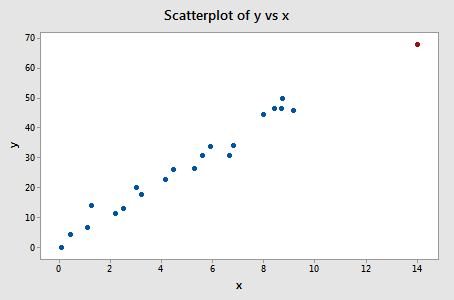
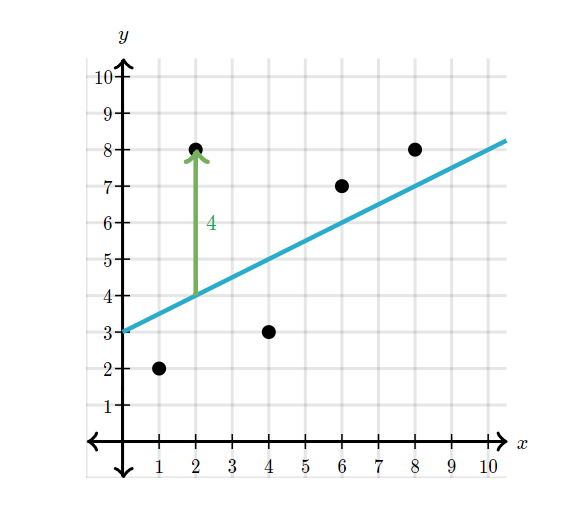
Linear regression is a linear approach to model the relationship between a dependent output variable(y) and one or more explanatory independent variables(x). When there is a single input variable (x), the method is called as simple linear regression. When there are multiple input variables it is referred as multiple linear regression. Linear regression consists of finding the best-fitting straight line through the points. The best-fitting line is called a regression line. Leverage is a data point whose independent variable(x) is unusual and dependent variable(y) follows the predicted regression line. A leverage point looks fine as it falls on the predicted regression line. It is a measure of how far an independent variable deviate from its mean. Leverage points have no impact on the coefficients because the point follows the predicted regression line. High leverage points can lead to a great amount of effect on the estimate of regression coefficients. In the attached scatterplot of y vs x red data point follows the general trend of the rest of the data. Therefore, it is not considered an outlier here. However, this point has an extreme x value, so it has a high leverage. But this can fit into best fit line. Residual is the difference between the predicted value (based on the regression equation) and the actual, observed value. Large residual points in a linear regression are outlier. It is a deviation from the sample mean. It is an observation whose dependent-variable(y) value is unusual given its value on the independent predictor variables(x). In the attached scatterplot point(2,8) is 4 units above the best fit line. This is large residual point. Point(6,7) is closer to the best fit line, its an outlier but residual is less.
-
Decision Balance Sheet is a tool to shortlist and prioritize a solution by making correct choice using this approach. What this approach does is doing bifurcation between solutions by listing their pros and cons, which helps the project team to weigh the options before they make final selection. For any successful solution it is very important we make certain criteria's which are measure of success for the solution and meet the requirements. Decision Balance sheet what it does is, list the all features expected of the solution and perform rating against what are the plus and minus against these parameters for the solutions in consideration. The scoring helps in making the final decision to shortlist the solution for adoption. Example of Decision Balance Sheet: Team is working on transforming a vendor helpdesk process and one of the identified opportunity is need of a workflow solution as in the current process requests are received in an email and tracking is a challenge. There are 2 options which project team has leverage a BPaas Solution or platform like SNOW/Enate etc or internally the automation team can build a customized solution in SharePoint. Now how PM should decide which one to go with and Decision Balance Sheet helps making the choice by comparing the pros and cons of both the solutions. Here are the factors to be considered and team can use a 5 point scale to rate both the options for these parameters: Factors SNOW or 3rd Party Platform Home Developed Ease of Implementation Time it requires to operationalize the solution Scalability of the solution Business Analytics Cost of implementation Maintenance Recurring cost So overall score will help us making the choice and informed decision. This is what Decision Balance sheet makes decision very easy and objective.
-
Every organization or even individual has multitude of goals to measure their success. While every goal is important but achieving all of them may not be possible and may not have bandwidth to focus on all of them. In such situation it becomes imperative for the organization to be focused on one goal(which encapsulates smaller ones in it) which considers realized value to the customer and measure of success is called as North Star Metric and all other goals aligned as the sub metric. Why north star metric is important: Imagine if each team/department/function in the organization defines goals differently, they will end up work against each other and duplicate effort. It simplifies the goal and its measurement for everyone in the organization and their is alignment between the teams. How to identify North Star Metric: Companies need to decided what is essential and critical for the business You can only improve what you measure hence it is very important to know and measure all KPI and metrics for the business. All which is essential and critical in first bullet should be measurable Look for broad themes and bucket them to see which metric encapsulates most of them. Do a prioritization of metric while looking at the key goals for the business to shortlist north star metric How can it help generate long term value for customers? Without a north star metric all you have is cocktail of KPI's and every KPI has equal weightage irrespective of their criticality. North star help focusing on key goal for any organization which is revenue and customer value it generates to be relevant, sustainable and long term in the market. Product and service delivered are dependent on many factors but we fail if our north star metric doesn't connect directly to the customer value. A true north star metric is created from a good understanding of what leads to value delivery to customer. Revenue and profit are important as growth indicator but what my customer wants from my product and if that is not met then Revenue and Growth will start fizzling out as customer will move away as due to poor focus on value delivered.
-
Lean's biggest principle is simplified process and simplification will be achieved when everyone follows a standard process. In an organization different people, teams, departments create their own processes. By means of standardized work we tend to baseline and find the requirements fitting to everyone and disseminate it to entire team, organization to eliminate variation. Standardized work helps in eliminating dependency on individual and make process streamlined and on a journey for continuous improvement. Standardized process will be a stable, predictable process with less variation. There are 3 pivots in standardized work: TAKT time: Takt time is a word coming from manufacturing world. Takt time is the rate which one need to produce to meet the customer demand. It is also calculated as available production time/ time required to meet the customer demand. Sequencing of Work: Work sequence is important way of standardizing work by looking at the sequencing of work, arranging it in an order by looking at dependency on the upstream and downstream process which eliminates MUDA in the process Standard in Process Inventory: Ensuring optimal inventory which meets the demand of the customer. Also ensuring at every step inventory doesnt gets piled up which leads to waiting which becomes NVA.