

Topics
-
Jeff Bezos is pushing Prime Video's overhaul to highlight Amazon's AI. The project, known as Lighthouse, aims to showcase AI for millions of users. This initiative seeks to elevate Amazon's standing in the competitive AI landscape. New features will improve content recommendations and respond to spoken requests. Bezos' personal involvement underscores the strategic importance of this AI integration. View the full article
-
Advanced Micro Devices is launching new artificial intelligence hardware on Thursday. This new hardware aims to compete directly with Nvidia's offerings. AMD is targeting the growing data center inference computing market. The company also announced significant deals with AI labs Anthropic and OpenAI. These agreements position AMD for substantial future revenue in the chip sector. View the full article


Leaderboard
-
Mohamed Asif Abdul Hameed
Fraternity Members1Points78Posts -
Nikhil Bangera
Members1Points1Posts -
Felix Ayegba Negedu
Members1Points1Posts -
Osheen Oliver
Members1Points1Posts




Popular Content
Showing content with the highest reputation on 08/19/2020 in Posts
-
1 pointThe various tools that can be used for CTQ drill down are: 1. VOC/VOB- identifying the critical customer requirements 3 .QFD- quality function deployment1 point
-
1 point
-
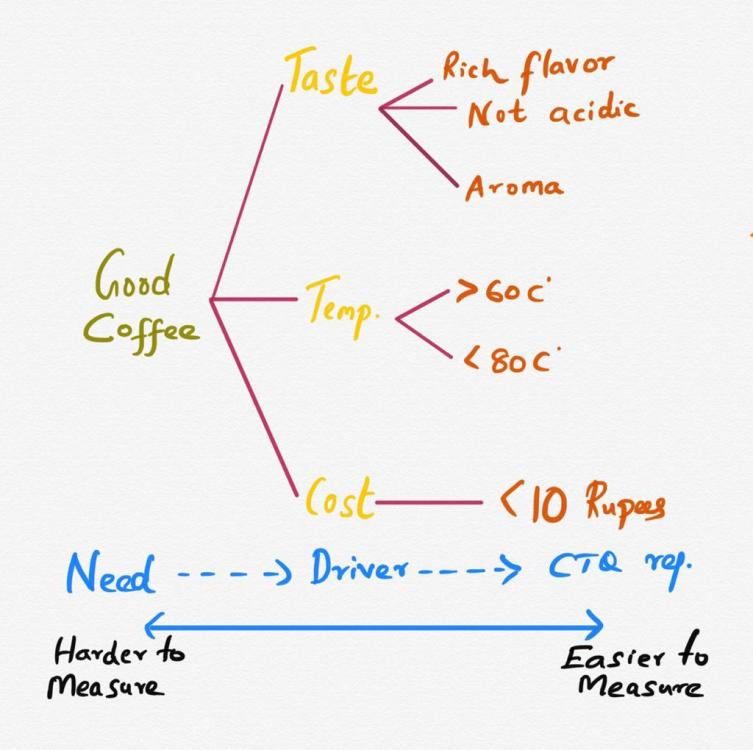
1 pointCTQ (Critical to Quality) Tree is used to drill down to a more concrete project goal. It starts with wider project goal and works downwards to identify “Critical” factors that is required in achieving the goal. In simple words drill down generic goal, identify specific and measurable necessities to improve performance. It translates customer needs to Meaningful, Measurable, and Actionable metrics. Approach: Step 1: Identify Critical Needs "What is critical for this product or service?" Brainstorm needs with key stakeholders Step 2: Identify Quality Requirements Identify the specific quality drivers Identify all the requirements that are important Step 3: Identify Performance Requirements Identify the measurable performance requirements Points to remember before getting in CTQ tree. Identify customers Collect Voice of Customer data Analyze VoC data Prepare a list of CTQs Choose one CTQ and prepare a CTQ tree only for that CTQ. Components of CTQ Tree: Need it is the origin of CTQ tree, and it highlights the customer requirements Driver Drivers are the parameters on which a customer judges the quality of product. Requirements These are the measurable performance specifications that have to be met by drivers to satisfy customers. In order to make an effective and efficient CTQ tree, it is necessary to identify all the above components perfectly. Below is an example of CTQ drill down for a Good Coffee Benefits of CTQ: It highlights any weak areas in an organization where performance is below standard and helps in root cause analysis. It helps to identify private needs of the individual customer and recognize measurable performance requirements needed for specific customer’s satisfaction. Helps in the quality improvement of a product or service. Do’s while doing CTQ drilldown: Have Specific and measurable CTQs. Reflect input from primary and secondary customers (direct and indirect or stakeholders). Discuss business value of capturing and reporting a specific metric vs. cost (time and effort) of capturing that data. Delineate between metrics that exist currently vs. recommendations. For recommended metrics, discuss how they will be measured and reported. If a CTQ has no clear quantitative metric, discuss alternative ways of measurement (qualitative, other indicators). Common CTQ Errors: Missing elements of Speed, Quality, Cost, or Risk Metrics do not reflect measurement of the process product or outcome Metrics do not have solid Operational Definitions Metrics do not demonstrate how it is calculated Metrics are not at the appropriate level of detail Information in artifacts is not consistent Artifact created individually without consultation Artifact was created but no analysis was conducted CTQ helps to understand the customer’s general requirements in more specific terms.

 1 point
 -
1 pointProblem definition tree diagram, Goal-means diagram and decision tree diagrams can serve the purpose of CTQ drilldown. When VOC is vague and not specific, Quality Function Deployment (QFD) can be used to translate VOC into measurable goal statement. For example, a customer can ask you to "improve your system". Improve your system is a vague language that can be translated as more productivity in terms of output, faster productivity in terms lead time, better quality delivery with reduced defect rate and cheaper productivity and cost of quality. It is the three approaches or tools mentioned above that can help you define a specific goal to satisfy your customer.1 point
-
1 pointVarious Approaches would be: 1. Project Definition 2. Parameters 3. Customer Perspective Taking an example of Mobile Phone manufacturing it is defined what it could deliver. There are parameter which are set to match the demands on market. Features are included or modified on customer feedback.1 point


This leaderboard is set to Kolkata/GMT+05:30