Swapnil Madhav Chaukar
Members
-
Joined
-
Last visited
-
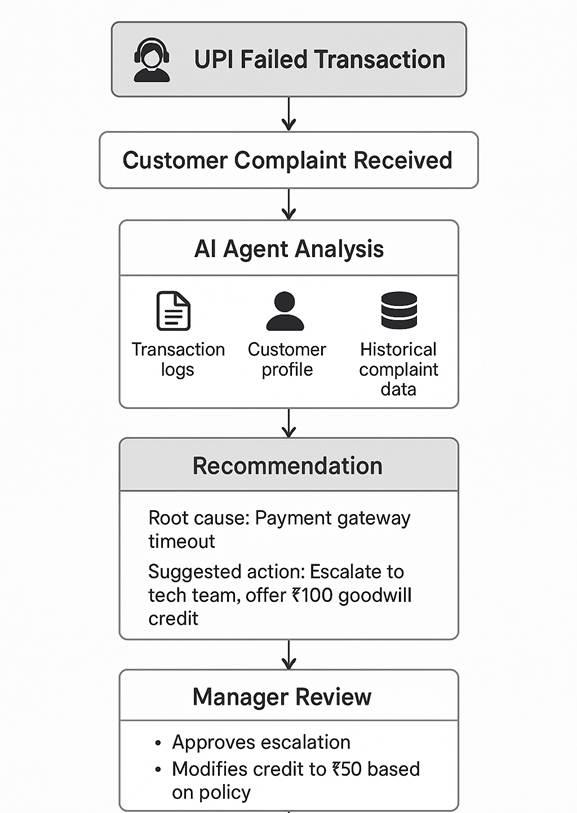
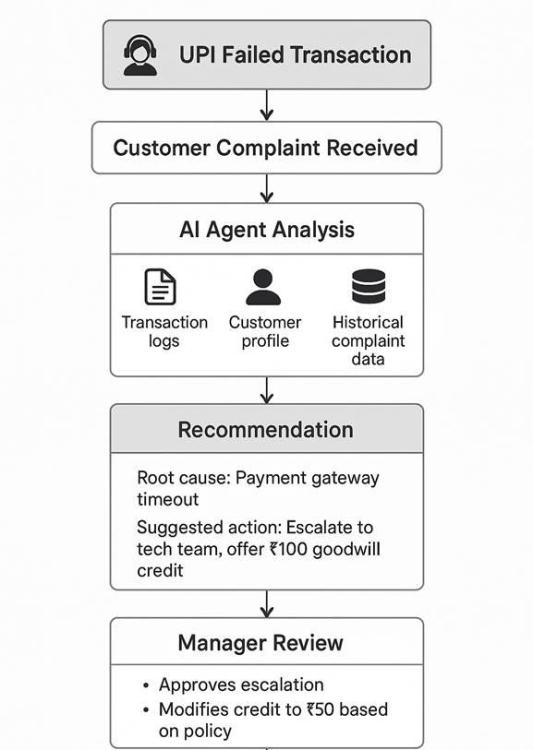
Swapnil Madhav Chaukar replied to Vishwadeep Khatri's topic in We ask and you answer! The best answer wins!Decision making by leaders is traditionally a competency that comes with years of experience and analytical thinking. Now, in today’s world can the leaders make use of AI in decision making. There are different type of decisions, executive decisions, decisions to add or not add HC, should we invest more in labour or technology or data security, usually all this is based on need of the hour, business goals, budget, urgency and risks. This is also beneficial in day to day manager decision making in operations. For example in a banking customer service environment, especially one dealing with queries like UPI failed transactions, balance inquiries, or standing instructions not honored, an AI agent can be a powerful decision-support tool for managers. Here's how it can assist and what checks should be built in to ensure reliability and alignment with organizational goals. What decisions the AI can assist 1. Prioritization of Customer Queries E.g: A UPI transaction failed for a high-value customer vs. a routine balance inquiry. AI Role: Use customer segmentation, transaction history, and sentiment analysis to prioritize cases. Manager Decision: Approve escalation or fast-track resolution. 2. Root Cause Analysis E.g.: A customer complaining that a standing instruction was not honored, maybe a customer lost an investment opportunity in an IPO — is it due to insufficient funds, system error, or third-party failure? AI Role: Aggregate logs, transaction data, and system alerts to suggest probable causes. Manager Decision: Decide whether to initiate a technical fix, customer compensation, or policy review. 3. Reversal or credit recommendations E.g.: UPI failure caused a missed payment for a premium customer. AI Role: Analyze customer value, historical issues, and policy thresholds to recommend goodwill credits or fee waivers. Manager Decision: Approve or modify compensation. 4. Process Optimization Example: Frequent failures in standing instructions from a specific bank. AI Role: Detect patterns across customer complaints and suggest process or partner bank reviews. Manager Decision: Initiate cross-functional investigation or vendor engagement. What checks can be inculcated to ensure reliability and alignment to business objectives 1. Transparency and Explanation Soln.: AI must provide a clear rationale for its recommendations (e.g., “Customer has 3 prior complaints and is in the top 5% revenue bracket”). Benefit: Builds trust and helps managers make informed decisions. 2. Human involvement Soln: AI suggestions should be reviewed and approved by managers, especially for financial or reputational decisions. Apply HITL Benefit: Ensures accountability and prevents blind reliance on automation. 3. Policy Alignment Engine Solution: Embed business goals, organizational policies and ethics into the AI’s decision logic (e.g., compensation caps, escalation rules). Benefit: Keeps AI recommendations compliant with internal standards. 4. VOC Solution: check success and failures of AI assisted decisions, track outcomes and feed them back into the model to improve accuracy. Benefit: Continuous learning and refinement of decision quality. 5. Biasness audits Solution: Regularly audit AI outputs for bias (e.g., favoring certain customer segments unfairly). Benefit: Promotes ethical decision-making and regulatory compliance. In a banking customer service process workflow: UPI Failed Transaction Customer Complaint Received AI Agent Analysis: Transaction logs Customer profile Historical complaint data Recommendation: Root cause: Payment gateway timeout Suggested action: Escalate to tech team, offer ₹100 goodwill credit Manager Review: Approves escalation Modifies credit to ₹50 based on policy Outcome Logged for Learning Customer Query Intake – UPI failure, balance inquiry, etc. AI Analysis – Transaction logs, customer profile, sentiment. Decision Support – customer credit rating, prior history, Prioritization, root cause, compensation suggestion. Manager Review – Human validation based on pre-decided bank criteria Action & Feedback – Resolution, learning feedback loop for AI. Policy Alignment Matrix for Banking Customer Service AI Query Type AI Recommendation Scope Policy Constraints Escalation Criteria UPI Failed Transaction Root cause analysis, retry suggestion, goodwill credit Credit limit ₹50 per incident; max 3 credits/month High-value customer, repeated failures Balance Inquiry Provide latest balance, detect anomalies Must verify customer identity; no financial advice Suspicious activity or mismatch in balances Standing Instruction Not Honored Identify failure reason, suggest manual payment, notify customer No auto-compensation; notify customer within 24 hrs Recurring failures, regulatory breach Card Block/Unblock Request Confirm identity, initiate block/unblock Must follow 2FA; no override without customer confirmation Fraud suspicion, system error
-
Swapnil Madhav Chaukar replied to Vishwadeep Khatri's topic in We ask and you answer! The best answer wins!Is AI solution biased? Well before asking this question, let us dwell more into human nature, is human response or process building biased, it has to be, it forms the basis of selecting criteria, a baseline on which the entire process is set or supposed to operate. Similarly, when we create an AI agent there will be a bias in AI-enabled customer service processes, especially in banking—can have serious consequences, from unfair treatment of customers to regulatory violations. Let’s break this down using your example of a third-party contact center handling banking queries, such as Annual Maintenance Charges (AMC) or unauthorized UPI transactions, and explore how bias can creep in and how to mitigate it. What Bias Can Appear in Banking Customer Service and Where? 1. Case Prioritization Risk of bias: AI may prioritize cases based on customer profile (e.g., high-value customers), potentially delaying resolution for others. E.g: AMC-related queries from senior citizens may be deprioritized if the model learns they are less likely to escalate. 2. Action Recommendations Bias possibility: AI may suggest refunds or escalations based on historical patterns that reflect biased decisions. Example: UPI fraud cases from Tier-2 cities may be less likely to get recommended for escalation due to historical underreporting. 3. Response Generation Bias Risk: Regional models may respond taking into consideration the tone of voice, choice of words, AI agent will respond differently given the tone, politeness and choice of words for customers based in northern part of India versus the same AI agent might find the customer’s similar language or choice of words as rude or condescending and might deny service in southern part of India. Language models may respond differently based on customer name, language, or tone. Example: A polite query may get a more helpful response than an agitated one, even if both are valid. 4. Billing Model Influence Bias Risk: If billing is based on connect minutes, agents may be incentivized to prolong calls. If based on call count, they may rush. Example: AMC queries may be wrapped up quickly without full resolution under a per-call billing model. So, what do we do to minimize bias in Design, Testing, and Monitoring A. Design Phase Diversify Training Data Be it low income customers or high rollers, you might want to include varied customer profiles, geographical regions of customers, languages, net worth of customers, and complaint types. Low amount frauds or frauds based on a certain amount should not matter when a customer is complaining of an unauthorized transaction by a merchant. There is a possibility of bias setting in based on a low or high amount transaction, AI might prioritize only high amount unauthorized transaction cases. We must ensure representation of certain vulnerable groups (e.g.,low income, senior citizens, rural customers). Provide clear objectives that kill bias Design AI models with fairness constraints (e.g., equal resolution rates across demographics). Avoid optimizing solely for efficiency metrics like AHT (Average Handling Time). Human-in-the-Loop Keep humans involved in sensitive decisions (e.g., refund approvals, fraud escalations). B. Testing Phase Inclusion of Bias Audits Test model outputs across different customer segments. Use synthetic data to simulate edge cases (e.g., same query from different regions). Scenario-Based Testing Create test cases for AMC and UPI queries with varying tones, languages, and urgency levels. Check for consistency in response quality and resolution. Metric Diversification Track fairness metrics alongside performance metrics (e.g., resolution equity, escalation parity). C. Monitoring Phase Set up real-time dashboards Monitor call outcomes by customer segment, query type, and agent behavior. Flag anomalies (e.g., unusually short calls for UPI fraud cases). VOC : Feedback Collect customer feedback post-call and correlate with AI decisions. Use feedback to retrain models and adjust flows. Billing Model Alignment Ensure billing models don’t incentivize biased behavior. Consider hybrid models (e.g., quality-adjusted call count) to balance efficiency and fairness. How do we break the “Bias In, Bias Out” Cycle Continuous Learning: Regularly update models with new, unbiased data and feedback. Make it transparent: Make AI decision-making explainable to agents and supervisors. Assign ownership: as a check mechanism, assign accountability for bias monitoring and remediation. Cross-Functional Collaboration: Involve friendly customer base, compliance team, QA team, and customer experience teams in AI governance.
-
Swapnil Madhav Chaukar replied to Vishwadeep Khatri's topic in We ask and you answer! The best answer wins!How transparent ? I think is a grey area question. Can AI be transparent on logic used behind providing solutions ? The answer is Yes and No. The answer is as simple as the prompt provided and resources provided by user and as complex as are we providing a knowledge base and references to AI or sending AI on a goose chase on open internet. The transparency of AI agents depends upon what are we providing it as an input. At my place of work: banking customer service domain where decisions can significantly impact a customer's financial life, AI transparency is not just a nice-to-have — it's crucial. We can look at it from three different perspectives. Depending on the level of complexity we have build an AI agent in a customer service environment. If it is low risk and low stakes or high risk and high stakes. AI Transparency in Low Stake Transactions: · Short rationale: A brief explanation like “Based on your credit score and income, you're eligible for a lower interest rate.” · Confidence score: medium, but helpful to show how certain the AI is. Why: Customers want quick answers but appreciate knowing why they got a certain suggestion, so when we provide a rationale that because of your low credit score this is the best interest rate you can get. It satisfies the customer’s query. Why is this low stake? Because it is just an information and customer might not be loosing anything monetarily. AI Transparency in medium risk and Medium-Stakes Interactions (e.g., loan pre-approval, document verification) · Steps of rationale: what can be shared : Outline key factors considered (e.g., income, employment history, credit utilization). · Audit trail: Since this info is internally logged for compliance and review, not necessarily shown to the user. Why: Customers may want to contest or understand decisions, and regulators may require traceability. For e.g. if a home loan application gets rejected or rate of interest changes upon careful review of applicants credit history, customers will definitely seek explanations. The AI agent build might not provide the rationale behind the decision taken since it is based on a lot of internal criteria and due diligence by specific branch managers. Now if we consider a AI agent transparency in High Risk and High-Stakes Transactions or Interactions (e.g., loan rejection, fraud detection, dispute resolution) · A more detailed explanation is necessary: A clear, legible reasoning with references to policy or thresholds is necessary so that the customers get a complete picture of why a certain decision was taken, what is the basis. · Audit trail: It should be available for internal review & regulatory compliance. · Confidence score: Important to show uncertainty or borderline cases. Why: These decisions directly impact customer’s financial status, morale and can cause frustration or financial harm, so trust and fairness are critical. AI needs to be fair and transparent when the stakes are high. How to Balance Explanations and Simplicity Draw the line based on user intent and impact: If the customer is just browsing for options, keep it simple. If the customer is making a decision or facing a rejection, offer layered transparency — start simple, but allow deeper insights on request. We should lead with a progressive disclosure: Display short rationale first. Offer the customer, a “Why was this decision made?” button for more details. We can also give downloadable audit logs or summaries for compliance officers or advanced users. Golden Nugget Mining : Now what are some best Practices for AI Transparency in Banking We should use simple language: Avoid technical jargon when explaining decisions. Be open and consistent: If the customers with similar queries fall under same criteria, ensure similar cases have similar explanations. Opportunity of a VOC : Let customers contest, provide feedback or ask for clarification. Comply with regulations: Align with GDPR, RBI, or other local financial regulations on automated decision-making.
-
Swapnil Madhav Chaukar replied to Vishwadeep Khatri's topic in We ask and you answer! The best answer wins!Possible root causes for lapse in control phase Employee or workers resistance to Change: Lack of buy in from production team, Staff, if they find the new update or process difficult or confusing may revert to old habits, Insufficient periodic dip checks or audits: Without regular evaluation of a improved step or process, it is difficult to catch non adherence and the processes start reverting to previous, less efficient states. Inadequate Training: employees may not have had adequate training to adapt fully to new systems, which in turn might lead to improper use that negates expected improvement in the output Shift of business focus: Over time, changes in company strategy, customer expectations, or market conditions can render initial improvements less effective. Lack of executive level Support: Lack of technical or managerial support and disinterest can cause the momentum brought by the change to reduce drastically. Tools and Techniques to Maintain Improvements Smart Automated Tools: Implement tools that automate parts of the system to minimize human dependency and ensure consistency. For example, using AI-driven systems for intelligent call routing based on live data analytics. Recreate Framework and deploy updated SOPs: Documenting the new processes in detail, including any new workflows and best practices, helps ensure everyone is on the same page. Periodic Review and Audits: Regular management reviews like weekly business review and process audits can help maintain focus on the importance of the new process or method of working, ensuring it remains aligned with strategic objectives. Continuous Refresher Courses: Share the benefits and positive impact of the change on the business outcome Continuous training helps reinforce the importance of the new tools or processes and ensure staff remain proficient in its use. Motivates the staff to imbibe change VOB use to have a Balanced scorecard and revise Metrics and Dashboards: imbibe the efforts metrics of changed or updated process, Implement metrics to continuously measure performance against key performance indicators (KPIs) like average handle time and customer satisfaction rates. Dashboards can provide real-time insights to assist in making proactive adjustments. VOC and VOE: Once a change or improvement is implemented, we should regularly gather feedback from both customers and employees to identify areas for further improvement and address minor issues before they become major problems. Example Suppose a contact centre introduced a new call distribution system that reduced average call wait times from 10 minutes to 2 minutes. A smart use of AI agent project is run and implemented for automated categorization of query type by a Bot or IVR before the call reaches a live agent, Initially, this was a significant improvement, but over time, wait times began creeping back up. Upon analysis, it was discovered that: Impact from New Agents: Incoming staff were not being adequately trained on the new system due to high turnover rates and hurry in implementation. Lack of involvement of training department in live projects resulting in new agents being unaware of the changed or improved process System Updates: Regular updates that could enhance system efficiency were not being utilized due to a lack of technical support. To address these issues, the contact center: Implemented a mentorship program, pairing new employees with seasoned agents to ensure smooth transitions. Scheduled monthly system reviews to incorporate and evaluate new updates. Developed a dashboard allowing real-time tracking of call metrics, providing instant feedback to operators. In a Nutshell By implementing these strategies and tools, contact centres can better maintain improvements gained from new routing systems in Control Phase, adapt to changes proactively, and ensure customer satisfaction remains high. Keeping systems resilient against backsliding requires constant vigilance and adaptation to the changing environment.
-
Swapnil Madhav Chaukar replied to Vishwadeep Khatri's topic in We ask and you answer! The best answer wins!When we talk about Continuous improvement, as a concept, we refer to a constant WIP mode of innovation, enhancement and incremental progress. Take all possible learnings and loop it back an input to further refine a product or process. VOC, VOB, error types, new data or new pattern or behavior of a certain process or a machine that can be studied, performance monitoring. Getting RCAs. Feeding it back into the system and closing the loop of a continuous self-learning improvement process with the help of Artificial Intelligence. Natural language programing Reinforcement Learning : AI agents can learn by interacting with end users and learning best practices from online forums and receiving feedback (rewards or penalties). Over a period of time, AI models or AI agents can improve their decision-making based on outcomes. Example: AI in customer service optimizing responses based on customer satisfaction scores. Also, in an AI agent environment if a customer rates a low score or not resolved on a survey. AI can ask customer if he or she wants to get redirected to additional support Utilize online libraries: System based or conventional training methods have a focused content and is periodically reviewed once or twice a year. Unlike traditional models trained once on a fixed dataset, online learning allows models to update continuously as new data arrives. Can prove to be extremely useful in dynamic environments like fraud detection system that can improve itself whenever a new fraud pattern emerges or email classification or query categorization. Optimized Human-in-the-Loop (HITL): AI backend can incorporate VOC of output or a human feedback to refine and improve performance. On a continuous basis which a key component of continuous improvement For example, customer service agents correcting AI-generated email drafts helps the model learn better phrasing, grammar, formatting, and tone. Use concepts like A/B Testing and Feedback Loops: A tried and tested AI system can test different strategies (e.g., email templates) and learn which ones perform better. Manual or online VOC and Feedback loops help the system adapt to changing customer behavior or business goals. e.g. In a Banking Email Customer Service Context: AI can learn from: VOC (NPS scores, complaints and RCA) Agent corrections to AI-suggested replies, check of all queries are answered in a multi query email. Frequency and Escalation patterns (e.g., which types of queries lead to dissatisfaction) Compliance checks (to avoid regulatory violations) Though there will be challenges to guarantee a continuous improvement on AI based models, if we study it enough it can be overcome. Challenges like Propagation of systematic Bias. For e.g. an AI model might be more favorable to a certain type of machine or high-performance shift timing, or certain region in terms of Sales etc. Distribution or pattern shift. Or drifting of parameters, Real world the situation changes dynamically so AI will have to be trained to Adapt. Failing which it will follow a fixed pattern and might not necessarily be effective. In manufacturing or Healthcare sector or if we speak from a Six sigma perspective AI can Conduct SPC if we feed it in initial stage. Analyze process deviations If we find some points or processes out of control, we will implement solutions to get the process in control, AI agent can learn from such corrective actions It can also Suggest process changes to reduce defects depending upon previous corrective actions taken by us or information available online. Would be better poised to predict process output or future failures or improvement opportunities
-
Swapnil Madhav Chaukar replied to Vishwadeep Khatri's topic in We ask and you answer! The best answer wins!There are multiple outcomes of a AI solution solving a wrong problem 1. Reflects poor leadership: It exposes accountability and seriousness of the management that approves the solution. The MBBs or Project managers that approve such a solution of OK such a goal statement which does not address the actual concerns, issues or underlying problems that an organization has. If the true problem is not accurately identified, the AI's outputs may fail to align with strategic goals, which can lead to confusion or mislead decision-makers.🥵 a. , it can lead to wasted resources like human capital and other investments, affect CAPEX, OPEX and bottom-line in a project, good but ineffective solutions, distrust in AI solution as an optimising tool and missed opportunities for meaningful improvements — This highlights the importance of thorough framing of an issue in the define stage and alignment before leveraging AI. 2. The actual issue remains unaddressed: The AI might focus on symptoms rather than root causes, leading to short-term improvements but failing to eliminate underlying root causes, bottlenecks and problems. 3. Another issue solving a wrong problem might create it build a bias in AI : pre-existing notions in the existing data and biases might be set. AI will definitely provide a solution without addressing issue. The thinking hat or use of human intelligence is extremely important to utiize the power of AI in optimising process or creating solutions. Defining it, planning it, predicting benefits and then implementing an AI solution and reap the benefits.
-
Swapnil Madhav Chaukar replied to Vishwadeep Khatri's topic in We ask and you answer! The best answer wins!If an organisation is business excellence driven, it is expected that it would have structured processes and most of it output dependent on process and lesser on people related activities. Now if you add an AI governance element to it there are several factors that the organisation needs to consider for it to be called as an effective AI driven governance model. Factor 1 Risks are assesed : , when you add AI driven solutions are embedded with your regular processes. the exposure of confidential data, access levels to various designations in org chart are to be assessed and considered before implementing solutions. there should be a periodical review Ethical usage : Org needs to ensure ethical guidelines are clearly defined in conflict scenarios while implementing any AI solution. scenarios and situations needs to be constantly added to a library for ensuring correct decision making by an AI enabled solution in case of dilema. there should be high level of transparency to with stakeholders so ensure trust is build and remains intact with periodic checks. Scope, Reach and accountability : The scope for all processes and solutions developed should be clearly defined along with the goals. the. reach has to be to the lowest level of organisation so that everyone is involved and invested in any solution implemented. All department interests must be considered by running a program like QFD roof diagram. and ensure that none if the department goals are compromised when AI solution is run to optimise a process. for e.g. if a TAT reduction or quality improvement of product solution is run. there should be accountability and consideration of all said and unsaid impacts of all possible metrics. defined method of collecting data. inbuilt guage RnR to be considered. Data governance : Parties involved, level of access, what would be input methods and what data is shared, what frequency. How long is it to be stored. whether it will retain or erase historic data trends. All has to be assessed and defined. Last but not the least would be Continuous improvement and innovation : there should be room for new ideas to be implemented for process to become more lean if possible with lesser dependencies. Constantly asses moving and impacting internal and external factors. Thus making it an effective AI governance and lead the business excellence philosophy.
-
Swapnil Madhav Chaukar replied to Vishwadeep Khatri's topic in We ask and you answer! The best answer wins!In today’s world of widespread use of AI, it often happens that AI is presented with a Dilemma of Goals or Objectives clashing with each other. Making Humans as well as AI to choose one or the other. The Very reason why people approach AI is to get solutions or seek advice and suggestions which they themselves are unsure about. I think for this Decision-making AI should prioritize ideas or suggestion on some pre-defined criteria of Safety, Principles, legality and established values of right and wrong Check if the goal might cause harm, is it safe, is it ethical. AI should seek clarification by asking probing questions like a) what is the priority, is it one of the constraints like cost or time, is it speed or accuracy. What is the user’s preference b) If a suggestion solution in troubleshooting a tech issue is going to take too long to implement and impact volume handling, AI needs to check what is the criticality, Severity and priority for the business while selecting the middle ground between optimising efficiency and accuracy in a Tech troubleshooting scenario c) E.g. if it is a choice of driving route, do you need to reach there faster or do you want a shorter route to consume less fuel d) E.g. if it is medical technology goal, whether the advice given safe, is considering all possibilities, tried and tested or high-risk, and high potential of success of a surgery or treatment plan AI should also apply abstract, contextual and logical reason before deciding on a goal. what could be possible short team and long-term gains vs consequence, is it safe? Check if there is enough data fed in AI to have best conflict resolutions from historical data. For e.g. if a transportation cab service company like Ola or Uber. If the goal is to reduce cost by introducing self-driven vehicles, it needs to consider if the demographic facts of a region and not just roads, routes and feasibility. So, when we ask AI for goal choice it should give region specific answers like in a western country the population is less. Roads and traffic are structured and self-driven car is possible. However, AI after studying dynamics in a region like Asia, should recommend against the goal given the increased number of variables in safety and feasibility. All in all, if AI is conflicted between goals, it should seek human judgement.
-
This is so true, when I asked DeepSeek about what is your analysis on Swiggy Stock in Indian market in NSE or BSE, what are the details of past 3 years and past three months and how has the stock performed, what is the potential. My prompt was very detailed. after thinking for sometime DeepSeek said "Swiggy is a leading food delivery and quick-commerce platform in India, but it is currently not listed on the National Stock Exchange (NSE) or the Bombay Stock Exchange (BSE). As of now, Swiggy remains a privately held company, meaning its shares are not available for public trading. Key Details About Swiggy’s Status: Pre-IPO Stage: Swiggy has been preparing for an Initial Public Offering (IPO), with reports suggesting a potential listing in 2024 or 2025. This is so incorrect. Swiggy stock already exists and AI might give wrong answers to so many questions. we need to use our own research and intelligence before believing any of these.
-
Swapnil Madhav Chaukar replied to Vishwadeep Khatri's topic in We ask and you answer! The best answer wins!Forum question 756 In a customer service environment when an customer service representative (Rep) is answering a query.on a voice call It is easy to determine if the Rep is using an unprofessional language or is curt or rude in a specific voice interaction. However, it is very difficult to identify if the Rep was sarcastic and fooling the customer and trying to develop a situation where he or she does not have to answer the query or help the customers. Politeness, Tone of voice is difficult to identify using AI or speech analytics. Sometimes the Speaker can sound very polite or genuine but might not necessarily be helpful in a transaction. E.g In a telecom customer service if the customer says he has relocated to a different address and now the internet dongle does not work in the new location. Instead of helping the customer if the Rep keeps asking unnecessary questions like: Oh have you never done this before? do you know how is device works? have you ever worked with advanced Modems or Mesh routers before? - All under the pretext of probing questions -- some ignorant or insecure customers are ashamed to continue conversations that they are not tech savvy enough and better to get a paid network engineer on site rather than talk to tech support, just say thank you and hang up the voice calls. I think if we can train AI or Bots on how to recognise sarcasm patterns in a spoken language it will be an added advantage. In today's speech analytics, choice of words, tonality, intonations and voice modulation is used to draw heat maps and sentiment mapping. However, as technology, we have not yet empowered AI to understand a wide range of human emotions like sarcasm. AI takes every spoken or typed word on its face value and does not get the hidden meaning behind what was said. e.g. 1) if someone has written an unsatisfactory review of a product and mentioned. the words "Nothing-life-altering-about-it" might be taken as a positive review, or 2) If someone is love waiting in traffic and listening to horn music for hours might be misconstrued as positive when it is, infact, sarcastic and displays a negative sentiment 3) While commenting on a bad lecture or speech if someone says "oh that was an award winning performance" if we ask AI to analyse it, it might take the words on face value and denote it as positive. We need to train AI to understand the hidden meaning behind spoken words by feeding some books on how to understand sarcasm. Then, maybe to some level AI can start identifying negative sentiments wrapped in positive words and hidden meanings while we put things in context or perspective.