Vikram Kenjale
Members
-
Joined
-
Last visited
-
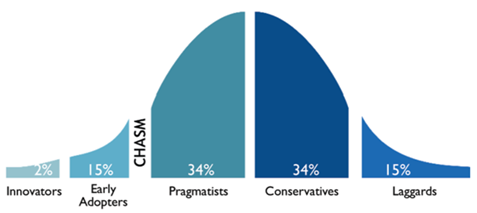
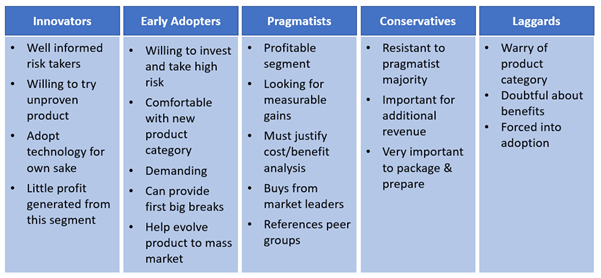
Diffusion of Innovations This theory by Everett Rogers explains how a new idea, product, technology or behavior gains a momentum and spreads over the time through specific set of population or social system. The end result of this diffusion is that people, as part of a social system, adopt a new idea, product, technology or behavior. Adoption means that a person does something completely different to what they had previously (example buy a new product etc.). The key to adoption is that the person must perceive the new idea, product, technology or behavior as new or innovative. Adoption of a new idea, product, technology or behavior (i.e. innovation) does not happen at the same time in a social set up. Some set of population adopt an innovation early while others take longer time for adoption. The people who adopt early have different characteristics than people who adopt later. There are five adopter categories viz. Innovators, Early Adopters, Pragmatists (Early Majority), Conservatives (Late Majority) and Laggards. The typical spread for these categories is shown in the graph below; The characteristic of different adopter categories as follows; Hence, while promoting an innovation, there are different strategies used to appeal to the different adopter categories. As per Geoffrey A. Moore, in between Early Adopters and Pragmatists lies a chasm. This is mainly because the both these adopter categories represent very different expectations and for crossing the chasm, detailed deliberate efforts are to be made by choosing a target market, understanding the whole product concept, positioning the product, building a marketing strategy, choosing the most appropriate distribution channel and pricing. Sources : a) 280 Group OPP, b) Boston University School of Public Health