Selva Mariappan Subramanian
Members
-
Joined
-
Last visited
Everything posted by Selva Mariappan Subramanian
-
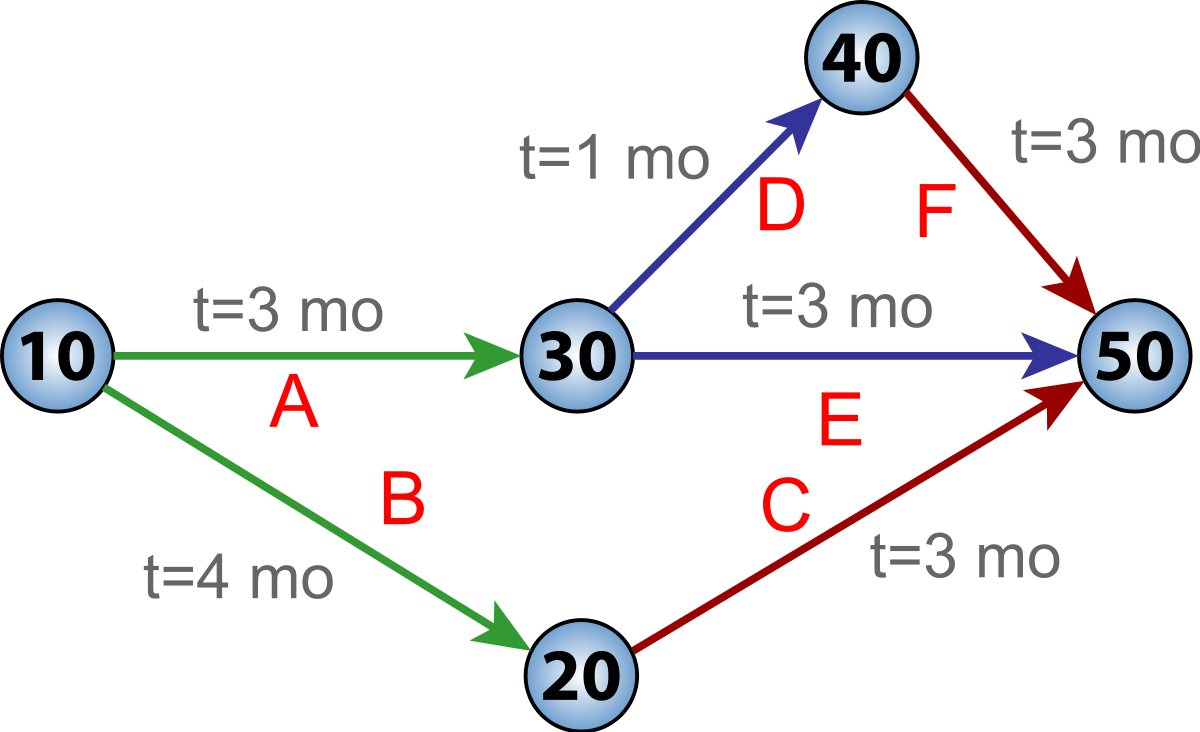
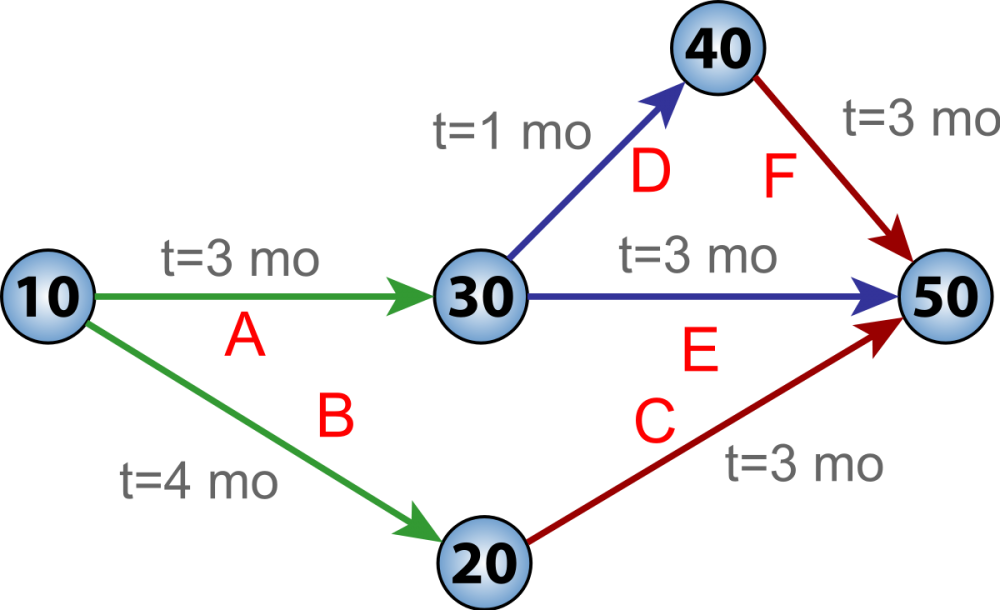
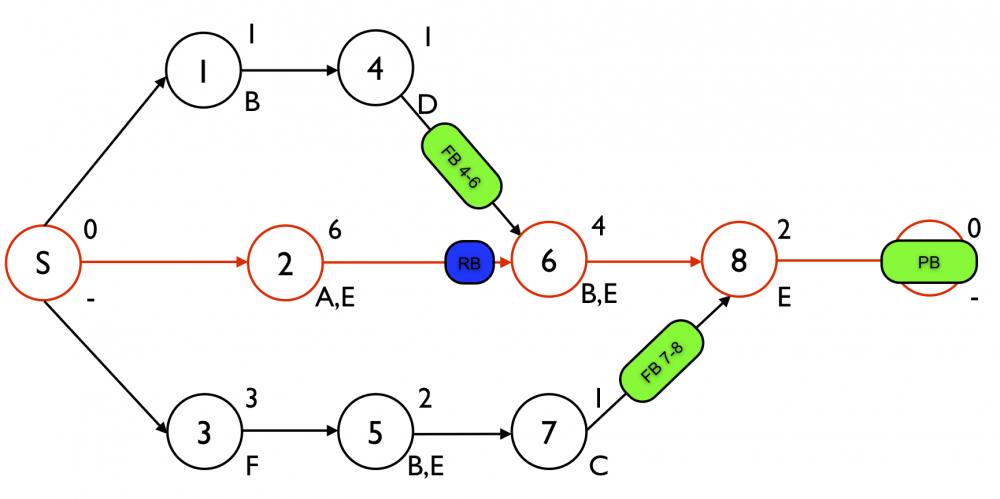
Selva Mariappan Subramanian replied to Vishwadeep Khatri's topic in We ask and you answer! The best answer wins!Critical path method CPM is used for scheduling a set of project activities and it identifies the critical activities of a program or project. As a conclusion it results in finding shortest time to complete a project It emphasis more on task orders and scheduling CPM principle is simple sequencing approach it is not feasible in case of resource constrained scheduling CPM calculates only duration taken for each activity and it arises problem in case of activities that have been delayed. It will affect the entire cycle of project completion CPM helps to identify bottlenecks in the project. Since it is calculating Early start (ES), Early Finish (EF), Late start (LS) and Late finish (LF) through forward and backward passes from project schedule network diagram Critical chain method CCM is used for scheduling and managing a set of project activities only when limited or restricted resources are available. Here project manager will schedule most of the high risk or critical activities at the earlier stage itself. It has buffers to handle unexpected problems in middle It emphasis more on resource management involved in the project CCM principle is network based analysis and it is well suited for resource constrained scheduling CCM has prior knowledge about resource sharing activities and it has wide range of choice on activities that will be delayed to eliminate resource conflict. So it improves performance by avoiding activities which are all sharing resources will not be scheduled simultaneously CCM is fully relies on priority and resource dependent task mapped. This helps in project management team to identify each location potential based on their production CCM Relation with theory of constraints The critical chain method derived from “Theory of constraints” was originally developed by Eliyahu Goldratt. TOC focus on improving throughputs of overall system by identifying and fixing bottlenecks in the system. CCM deals with resource availability or uncertainties in the project. The traditional triple constraints of time, scope and cost still exist in CCM with add on project constraint. Critical tasks are separated from the tasks which have low priority and the next step is deploying resources to complete those critical tasks at first. Uncertainty Management 1. Average task duration estimation Reduces duration of activity estimation by 50% which gains excessive safety time. This is implemented strategically as buffers in project. 2. Resource constraint Resource contentions is removed by leveling the project plan. It also determines resource dependencies. 3. Including Buffers in project Plan Resource buffer- Protect critical chain by ensuring resource availability and when the critical resource availability is needed. Feeding buffer- protect critical chain from accumulation of negative variations by inserting safety margins in the non-critical chain paths of network schedule which again feeds back into the critical chain path. Project buffer- summation of all internal buffers included in the project. 4. Prevention of Multitasking Tasks does not contain any predecessor so it prevents from multitasking which helps to increase the speed of a resource while completing a task. 5. Buffer management Use buffer management to control the plan. This help manager to get regular information from buffer. Insist manager to take necessary recovery action at exact time.
-
Selva Mariappan Subramanian replied to Vishwadeep Khatri's topic in We ask and you answer! The best answer wins!CONWIP CONWIP- Constant Work In Progress is similar to KANBAN for maintaining constant work in progress. In this method WIP is aggregated and treated as a whole. This methodology is used for effective production control. It uses pull principle. Backlog list —> CONWIP —> demand Push- product jobs are scheduled. Pull- product jobs are trigged to start on completion of previous jobs. (Demand based job or backlog list completion). CONWIP works on demand basis. Batch of job is completed and leaves the facility then the signal is sent to release the next batch of jobs from backlog list.CONWIP relies on signal to start working. Backlog list is organised in order to customer demand and low finished goods inventory. N= Amount of WIP in a system If N is larger it indicates long lead times and excess WIP. If N is smaller it indicates idle workstation and reduced output from system. To determine N first identify bottleneck station then gradually increase N until bottleneck is rarely empty from input queue. Card count (m) = Maximum WIP level for the line Production quota (q) =Target product quantity/Period Maximum work ahead amount = N If q+N is produced during a period then the line is stopped until the start of next period. Merits of CONWIP over KANBAN 1. CONWIP system immediately react to increase in customer demand because only high demand jobs are released into the system. Example: Factory produces two products A and B. In case demand for product A increases then WIP constant is increased to product A. Thus results the factory produced more product A on demand basis. So control over demand (input) increased as a result throughput (output) achieved. 2. CONWIP system do not need the setup and maintenance of KANBAN cards and containers for each part type. Example: Automobile industries need large setup to place containers to manufacture all the parts while using KANBAN method. 3. CONWIP Systems reacts well for highly variable part mix demand while maintaining constant levels of inventory. Example: The inventories are constant in CONWIP system only the manufacturing of products are varying on demand. Demerits of CONWIP over KANBAN 1. KANBAN is very useful in repetitive manufacturing where CONWIP is not effective for such constant demand based manufacturers. Example: In stores constant refilling of products was easy while using barcode reader. It is one of the application of KANBAN. Here based on demand the products are selling and refilling is a repetitive work. 2. CONWIP systems are more complex in means of maintaining backlog list here backlog list is the responsibility of inventory control staff. Example: Calculation of backlog list is based on customer demand. Tedious process to maintain those backlogs in priority wise. 3. CONWIP requires ample storage space before machines because WIP as a whole is constant. WIP is not controlled in each work place. Example: By using KANBAN inventory system, Toyota manufactures car parts. Here the parts are delivered to product line when there is a need. So there is no need of ample storage space and that saves space on product line to assemble products by workers. 4. Over a time as demand change the unwanted WIP may clog up the system in turns making the system less responsive one. To overcome it periodically cleanse the unused WIP. Example: One of the software companies fixed WIP constant as 3 developers and 2 testers for a project. But customer demands demo of the product as a first phase before final handover. Here for the first phase necessity for the developer is higher than testers. So, it leads to delay in outcome.
-
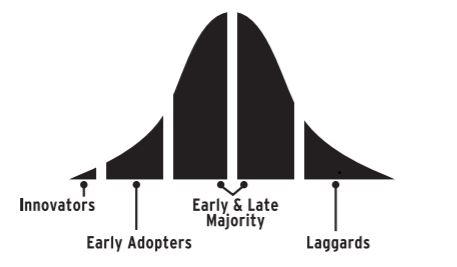
Selva Mariappan Subramanian replied to Vishwadeep Khatri's topic in We ask and you answer! The best answer wins!Purple cow Marketers have been long used to the 5 P’s (product, pricing, promotion, positioning, publicity, packaging pass-along, permission) in the marketing field everyone has their own favorite five P’s. Seth Godin coined a new P – Purple cow is a remarkable one. Boring 'brown cows' become invisible in place of something remarkable, exceptional, new, interesting purple cow taken worth noticeable one. Purple cow stands out from all other cows by being extraordinary or excellent. Its main motive is remarkable marketing. Remarkable marketing is consistent towards the product or service by building things worth enough to endure. Moore’s idea diffusion curve above figures out how a successful business innovation move affects more consumers from left to right until it reaches the end of life cycle. Being first in launching new innovative product was good idea but many factors such as advertisement, process innovation, and cost leadership can make the existing products outdated and replace with other products in the market. In today’s world the sure way to fail is the one to be boring. Old Rule Create safe products and combine them with great marketing. New Rule Create remarkable products that the right people seek out. Otherwise, it can be known as a business strategy called “Differentiation”. The differentiation can be in terms of product/functionality/service level. Some key concepts of 'Purple Cow' adaptation in Business excellence 1. Product Design Instead of making products from conventional design, products can be designed on the basis of user experience in terms of convenience and utilisation Otis Elevator Company radically plays its own game by developing purple cow. Elevator is the one time investment product installed at the time of building construction. They are not typical consumer products and used by most of the consumers. Company walked into the Cap Gemini office and noticed the problem of more waiting time. Each elevator stops at all floors for 5 minutes to reach last floor. They came up with solution by implementing centralized control panel. In return, the panel tells you which elevator takes you to your floor which turned elevator into an express and also waiting time is shorter now. 2. Product Innovation Instead of Investing in dying product, take profits and reinvest in something new. It’s time to realize that the time has changed. P&G’s Tide is successful with its own advertisement, distribution, and good name. Later it tied up with a retail partner Walmart, then the product's sales was more successful than its competitors. Without Walmart tide would have been long dead. 3. Product Rationalisation Differentiate your customers by grading most profitable one and most likely to react. Figure out and reward those group and ignore the rest. Bank sectors rely mostly on customers using its service frequently. They will contribute more to bank deposits than the customer doing transaction once in a while. 4. Low-cost differentiation Decide your marketing budgets over the upcoming product designs. Some movies with least marketing investment achieved great profit. They had believed on their remarkable story. Let the quality speak for itself! 5. Adaptability Measure it. If we measure the cost and obtained results from it. This will improve the business Zara retailer in Europe changes its clothing line in every 3 to 4 weeks. They are watching what are all working out and what’s not thus evolving faster than their competitors.

-
Selva Mariappan Subramanian replied to Vishwadeep Khatri's topic in We ask and you answer! The best answer wins!Q 265. Planning Poker is a gamified technique for estimating, more commonly used in agile software development. What is Planning Poker and how is it used in software development? Planning Poker Planning Poker is a consensus-based approach to estimate relative size of goals or deliverables in an agile software development. It is also called as scrum poker. This technique was first derived and named by James Grenning, later familiarized by Mike Cohn in his book Agile Estimating and Planning. It is a variation of the ‘wideband delphi’ method, developed by RAND Corporation. In this method, project team members play the numbered cards repeated times to converge at an estimate. Hence, it avoids the problem at the opposite ends of the spectrum. On one hand, it saves the team’s valuable time by eradicating long term discussions or meeting. On the other hand, since the team is playing the cards simultaneously, the method prevents anchoring (or) cognitive bias arising in a sequential method. Execution model in software development 1. In this technique, the entire scrum team (Product Manager, Scrum Master, Business Analysts etc.) is involved in the process. The number of rounds may vary for each user story depending on its estimation difficulty level. 2. Planning poker is played with a deck of cards and those cards have numbers are arranged usually in Fibonacci series (1, 2, 3, 5, 8, 13, 21, 34,). The numbers indicates the estimation value or story points for each use case. 3. Product owner or any one of the team mate is selected as a moderator who reads the user stories one by one for which the estimation is being calculated. Any final decision was authorized by him also in case of estimators have any questions he clarifies it. 4. When the moderator explains the first user story, estimators have to select a card privately which represents story points given by the estimator to the particular user story. After all the estimators have made their decision, all the cards are simultaneously turned over and held face up so the estimators can able to see others points. 5. By the end of first round all the points are very likely to be varied. The high and low estimators explain the reason for their estimations and if there is any contradictions others can involve in the discussions. Importantly moderator has to ensure the discussions are going in smoother way. He can note down the important points will be helpful in the development phase. 6. After the discussion, each estimator again re-estimates by selecting a card privately. When estimators finished the estimation once again all the estimators turn over their cards at the same time. 7. Repeat the process until all the estimators converged to a single estimated story point/range for the particular user story. Effectiveness of planning poker in software development: 1. Team can easily know about the different perspectives or difficulties in current user story. It leads to perfect estimation of task completion time. For example testing team may not know about the pain of development team and vice versa. Testing team have to build a new framework for the current user story but programmer part was easy in this case. 2. Some user stories are hard to estimate in this case team will split it into fragments and they can easily do estimation for this fragmented user stories. 3. Code quality can be improved by planning poker estimation because in normal process it does not involves any sort of detailed discussion so it may cause code change or code deletion. Here it is avoided completely and improves code quality. Problems 1 Product Uncertainty 2 Technical Uncertainty 3 Time consumption Solutions Team has to hold the story until its uncertainties are resolved. Use range as the estimate. So team mates has limitations while choosing points. For example range may be of 1 to 100. This techniques uses bubble sort so it consume more time in fixing accurate points to user story. So it can be avoided by any one of the team member picks a number and goes on by convincing others. Also time consumption was improved by establishing two values as a baseline. This can be done before starting the game by simple discussions. It is easy to choose between two numbers (e.g: 3 and 8 as baseline) than between range.
-
Selva Mariappan Subramanian replied to Vishwadeep Khatri's topic in We ask and you answer! The best answer wins!Q 264. What is the concept of Contradictions and Inventive Problem Solving in TRIZ? How can a contradiction be resolved without a compromise? Explain with examples from different domains. Contradictions and Inventive Problem Solving in TRIZ: Genrich S Altshuller who served in soviet navy as a patent expert invented the TRIZ algorithm. The acronym, translated into English literally means “Theory of inventive Problem Solving (TIPS). It identifies the root problems we are facing in industries which have already been solved approximately 90% in most industries. TRIZ is a problem solving method based on logic and data not by intuition. Its important recognition is that technical system can contribute towards increasing the ideality by overcoming contradictions. This problem solving approach is not just limited to the manufacturing problems. Rather it can be applied to common problems in the service sector as well. Ideality = ΣUseful effects / ΣHarmful effects If the system has only positive effects and there is no negatives then the ideality will be 100% and to achieve at most ideality system tends to increase its useful effects. Altshuller extracted 40 inventive principles, which help us to find the highly inventive solutions to the problems. To help which principles has to be applied he invented the table of contradictions. Below 7 steps ease the use of contradiction matrix while problem solving: 1. Determine the parameters which improves the system by the elimination of undesired effect. Define a known method for improvement of this parameter. By the application of known method find the parameter that’s gets worse as a result Plot the table of contradictions by matching each of the 2 parameters to the appropriate 39 parameters. Here row represents parameter to be improved and column represents parameter that worsen the performance Derive the number of recommended principles in the cell at the intersection points of the selected row and column Find the recommended principles’ descriptions. Convert the general solution recommended by the specific principle into a concrete solution for the problem. From the contradiction matrix table with 39 parameters the below one is the sample recommended inventive principles obtained from the intersection points. Contradiction Number Improving feature Worsening feature Inventive principle identified using the TRIZ matrix 1 16 34 1 2 24 16 10 3 30 34 35, 10, 2 4 24 30 22, 10, 1 5 27 39 1, 35, 29, 38 6 24 27 10, 28, 23 Examples: R&D, Quality , Value Engineering, Business, Marketing, and Innovation are common fields where the TRIZ concept is applied 1. Electronics Industry In the panel manufacturing industry, SAMSUNG introduced new technology that changed the note, monitor, TV, and mobile markets in the TFT-LCD industry. To achieve a faster response time, the size of the object becomes considerable high. TRIZ method enhanced the response time (speed) by reducing objects volume and other harmful effects. The contradiction in parameters and the potential solutions were found by applying TRIZ method. Useful function Harmful function Recommended inventive principles 9:Speed 7:Volume of moving object 7.Russian dolls - Possibility of integrating different components one over another 34.Discarding and recovering - Retire obsolete parts and substitute with ones during use 31:Object generated 2. Taking out 35.Parameter changes 21.Skipping 2. Food delivery A local pizza shop promises the customer that the pizzas will be delivered at customer’s door steps in hot condition. The shop advertised that customers who are delivered cold pizzas will get a 100% refund. Now the contradiction lies in maintain the promise to the customer with respect to the quality. In order to be maintained hot, pizza must be enclosed with air-tight packing. But the tight packing of hot food increases oxidation and water vapor makes the pizza wet and reduces the appearance and quality. Hence the ideal case is the pizza that is served hot with zero moisture and water vapor Useful function Harmful function Recommended inventive principles 17:Temperature 30:Harmful factors acting on object 2. Design the packaging box that allows for sufficient air circulation within 22. Convert the harm into benefit – Use the water vapor to keep the temperature hot 35.Make parameter changes Change in temperature Change in packaging dimensions
-
Selva Mariappan Subramanian replied to Vishwadeep Khatri's topic in We ask and you answer! The best answer wins!Hammurabi Code - one of the first law ever written suggests to have one's own skin in the game thus entrusting a moral obligation for fair play. Highlight some of the innovative ways of implementing such moral obligation in an organization? To govern the people under his kingdom so called Mesopotamian society, the king Babylonian (reign 1792-1750 B.C.) enacted set of rules or laws which was referred as the Code of Hammurabi. This code was the first law code and it dictates varying level of punishments to the crimes and also rewards for the wide range of workers. In the code of Hammurabi there are nearly 282 laws which includes criminal law, family law, civil law, economic standards. The code was derived from the basic principle of “an eye for an eye”, a tooth for a tooth” which may be the fundamental rule of any law but it is applicable to all classes. Most of the laws are relevant to today’s organisational leadership practices. Law#48 Debt for the loan: If anyone owes a debt for a loan and in the year end he did not gained profit from his business then, he can be spared for the obligations for that year. organisations suffering loss of revenue during this covid 19 can be given loan moratorium. Law#53 Liability: If anyone who is not able to keep his assert in basic primary condition and it harms others then it may be sold out to others and the amount may be divided among others who are affected. This is applicable to organization who can’t able to afford Wages to their workers then the organization was undertaken by someone else to make it under proper functional one. Law#104 Trade: Policy of exchanging receipts. Applying this to an organization they must follow the government rules. It is helpful for the government in case of tax return. The transactions are properly maintained as billed one. Law #265 Fraud: Any loss to the owner is returned by 10 times more as a punishment. This law is applicable to the fraud activities taken place in an organization. The same person has to continue his job with minimum wage for some duration. Duration is applicable according to the loss amount. Law #42 The duties of workers: If the worker did not work for his wage then owner has the rights to give more works to him. If anyone did not work on his deliverable and it goes beyond due dates then the organization should take necessary action against the employee. Law# 221& 224 Rewards: If a surgeon cures his disease then the patient has to repay as a reward to the surgeon. Organization has to divide some portion of the profit among the employee’s and should give them as a reward as a part of appreciation of employee. Law #5 Judgements: If a judgement is wrong or there is an error and it be through his own fault then he should pay 12 times as a fine. If any wrong decision is made by an individual in the organization then he has to sell some of his shares to others Law #275,276,277 rental properties: If anyone hired a thing from owner he has to pay rent on daily basis. Businesses are under obligation to pay the rent for the assets they do not own but they use to earn the revenue Law #261 Exchange policy If anyone hires sheep, he shall repay in amount of corn as rent. Organizations can exchange their goods among themselves for the shared services.
-
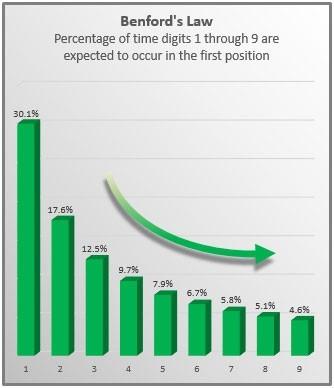
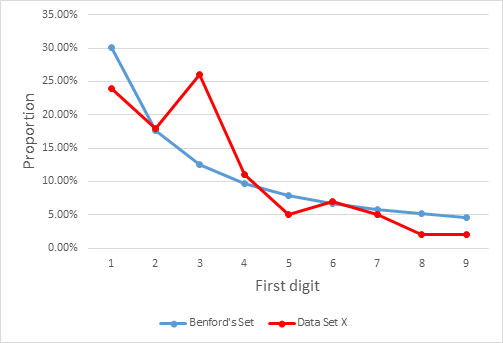
Selva Mariappan Subramanian replied to Vishwadeep Khatri's topic in We ask and you answer! The best answer wins!Benford’s law: Benford’s law states that in a naturally occurring data set, the frequency of leading digits does not follow a uniform distribution even if the data set is random. The probability of low order digits (digits starting with 1) has the highest probabilistic occurrence than the next order (digits starting with 2) and so on. This law however is relevant only when the data set is in high orders of magnitude. The figure below depicts the proportion of occurrence of numbers 1-9 as the leading digit. Limitations to the applicability of Benford’s law: · Smaller datasets do not follow Benford’s law accurately. · Datasets must follow natural order (no human imposed limits are allowed). Example: Population of cities, countries. Application of Benford’s law: 1. Risk based audits Any manipulation in data set for vendor invoices can be compared with Benford’s distribution in audits. First Digit Benford's Set Data Set X Deviation 1 30.10% 24.00% 0.06 2 17.61% 18% 0.00 3 12.49% 26.00% -0.14 4 9.69% 11.00% -0.01 5 7.92% 5% 0.03 6 6.70% 7% 0.00 7 5.80% 5% 0.01 8 5.12% 2% 0.03 9 4.58% 2% 0.03 Data set X represents the frequency of first digit for 10,000 vendor invoices. 2. Fraud detection 1. Forensic audits for detecting fraud, security breaches and irregular payments 2. Financial Statement audits for manipulation of cash on hand, inventory values etc. 3. Corporate finance or company valuations in examining free cash flow forecasts.
-
Selva Mariappan Subramanian replied to Vishwadeep Khatri's topic in We ask and you answer! The best answer wins!Analysis Paralysis is a phenomenon by which decision makers tend to overthink / over-analyze the situations and prone to be inconclusive in making a decision. This delayed decision-making scenarios vary from minor decisions in day-to-day operations to a strategic planning for a long term business continuity. Often the cost of over analysing and delaying a decision might far outweigh the damages inflicted by the timely incorrect decision. There are several factors that cause this paralysis: 1. Over analysis of data /abundance of trivial data 2. Extrapolation of data over a long horizon 3. Being over cautious about uncertainties Extinct by instinct on the other hand implies an arbitrary decision making as a result of largely irrational process. This kind of pitfall mostly occurs when decision makers rely heavily on intuition. In this spectrum, decision makers do not value the significance data analysis, assumptions and uncertainties while making decision. Often brainstorming, What-if scenarios, forecasts and other valuable decision tools are over-looked. There are several causes for this instinctive behaviour: 1. Assumption that future is same as the past 2. Incompetent statistical data analytics 3. Cognitive bias 4. Experience and gut-feeling These two contradicting pitfalls constitute the opposite ends in the decision-making spectrum. Corporate decisions typically lie within these two extremes. Corporate decision makers must be wary of these two pitfalls while making decisions in order to avoid them. Typical corporate behaviours associated with Analysis Paralysis / Extinct by Instinct 1. Late Adoption Companies suffering from “Paralysis in analysis” tend to be late adoptors / laggards in the innovation curve and hence bound to suffer a huge blow due to its off-time. One can recall mobile phone giant “Nokia” finding its graveyard in the smartphone market due to its late market adoption. In contrast, companies such as Xiaomi tasted its success when they adopted their business model to lure the Indian customer market, which highly embraced the ecommerce and luxury smartphones at an affordable price. 2. Diversification Some corporates exhibit diversification strategy to pursue aggressive growth. They invest a huge capital in large scale acquisitions and different industries. Such growth comes at a price which cannot be substantiated by the marginal benefits. In other words, the combined value of the firm decreases after a series of diversification. In most cases, such firms do not evaluate the internal competencies, market risks, competitors, and external threats. Extinct by instinct is the common trap these companies fall into. Once a $42 billion business empire, Anil Ambani’s Reliance ADAG has eroded its value to zero in nearly twelve years. The finance and telecomm giant, driven by growth appetite, went into bankruptcy as a result of series of rapid cash-burning acquisitions resulting in diminishing returns. There are some ways to avoid these two decision making errors in corporate decision process: 1. Deploy business modelling techniques such as Monte Carlo simulation 2. Encourage data-driven decision making across the business 3. Perform SWOT, identify cultural and strategic fit from the business context 4. Identify growth enablers, inhibitors, market disruptors and build a dynamic business model
-
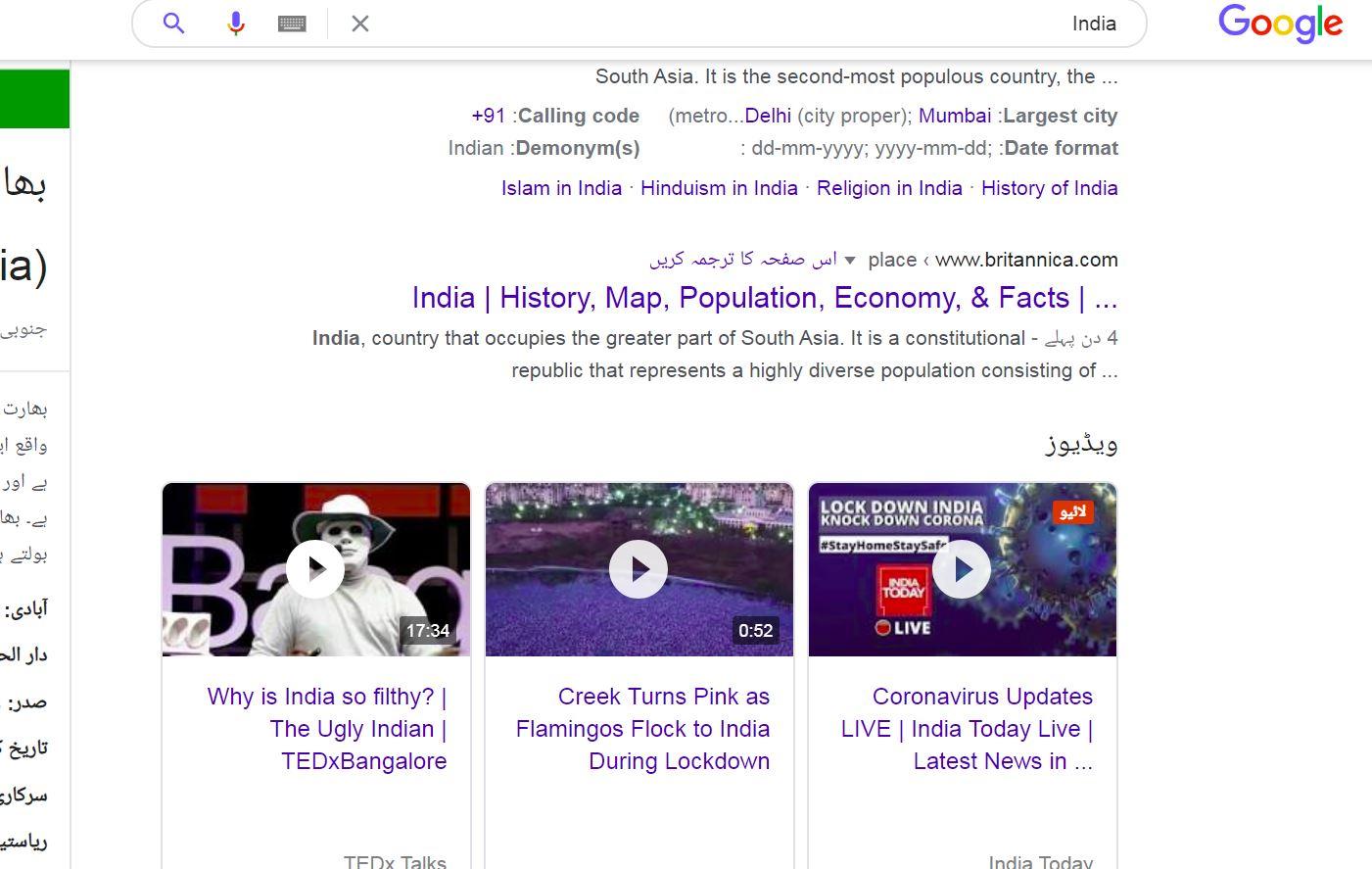
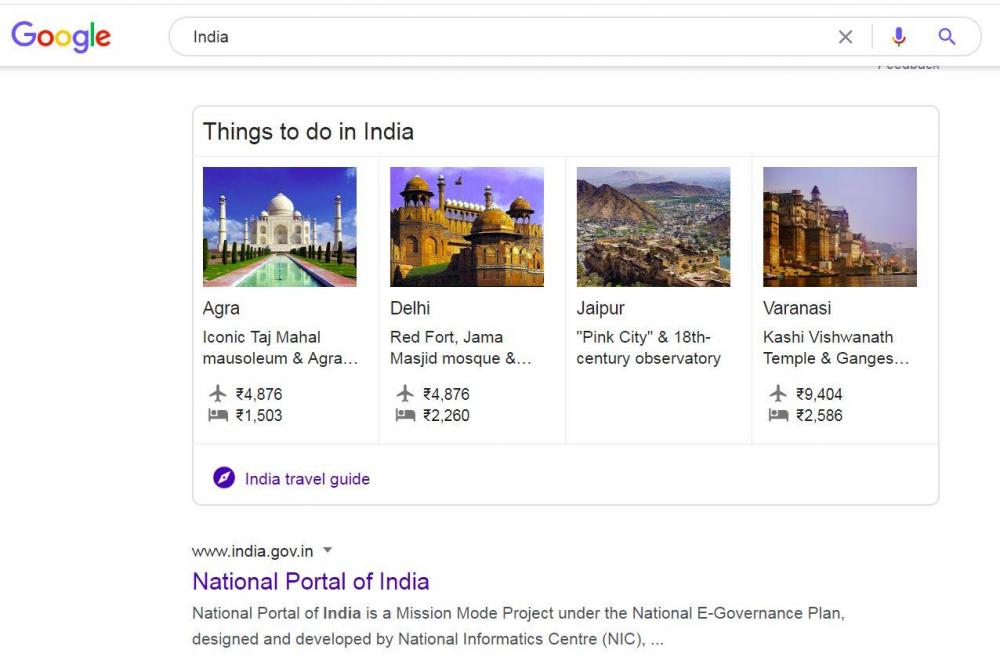
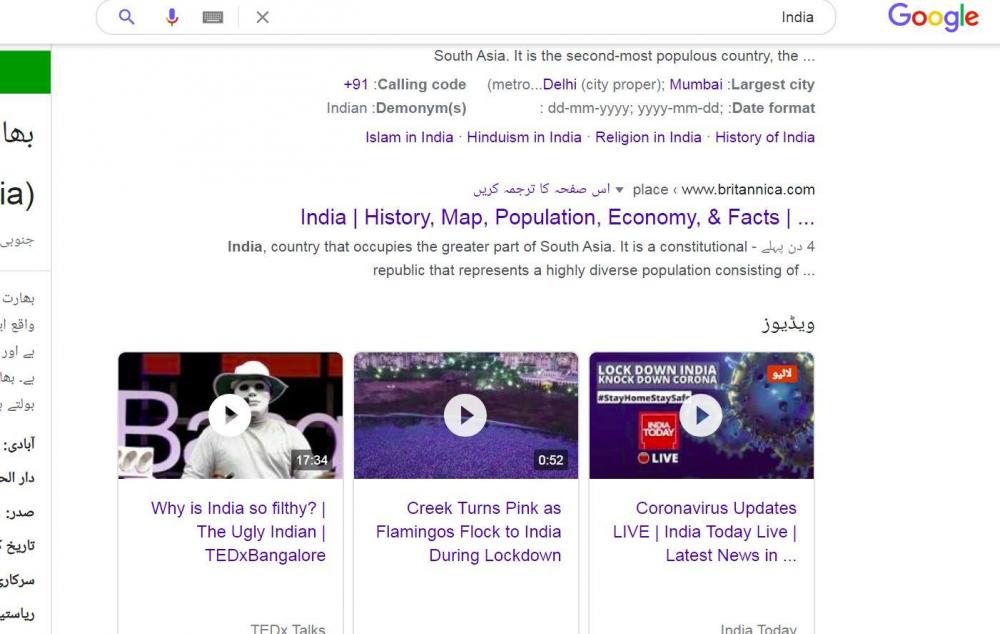
Selva Mariappan Subramanian replied to Vishwadeep Khatri's topic in We ask and you answer! The best answer wins!The phenomenon although has been existing for years, it came into much prominence and scrutiny after the 2016 US presidential elections. During the presidential campaign, millions of US internet users were bombarded with the Pro-Trump news and most of them turned out to be fake. Although, the viewer preferences have the influence in what they see, confirmation bias subdued the validity of claims and influenced the election results to a larger extent. This so called filter bubble phenomenon is common in the business world. Popular companies such as Amazon, Google, Facebook, LinkedIn etc., use this algorithm to reach their audience effectively. One can see how Amazon identifies common buying patterns and persuades the customers of its popular products. Here is another example of how this works. A simple google search on the term “India” will render different results depending on different locations. An example shown here is the search result from google.co.in (Picture 1) and Google.com.pk (Picture 2) What is a filter bubble? Filter bubble is an algorithm based on which internet users get customised news feeds in all the digital platforms. This kind of tailored information is influenced by several factors such as the user’s past preferences, demo graphical, geographical, psychological, ideological, religious, and political affiliations. This introduces the confirmation bias in validating the facts. Because, the algorithm reinforces the user’s belief and any counter arguments and evidences will be out of reach. In other words, algorithm forms multiple clusters or bubbles from the whole population. By this way, individuals become delusional and stay within the group of like minded individuals causing the bubble. Potential applications in Business world Businesses need to come up with competitive ideas and strategies in order to succeed. Business can exploit the advantages of this “Filter bubble” to identify the right customer segment (where it gets the biggest bang for the buck!!!) and also predict the customer choice precisely. Filter bubble can be of practical use in the business world with its potential clustering nature, especially in targeted ad campaigns. There are advantages like the cost effective marketing strategy as opposed to hefty mass-marketing methods. Filter bubbles are extremely useful in e-commerce and market place businesses. It helps business identify the target market segment based on individuals purchasing behaviour. A game development company will be able to market the new product to the teenagers whereas a pharmaceutical company can promote a prescription drug to the vulnerable communities using the algorithms.
-
Selva Mariappan Subramanian replied to Vishwadeep Khatri's topic in We ask and you answer! The best answer wins!Risk assessment is a crucial step in any business process. Therefore, it is important to perform risk analysis before making a business decision. However, the uncertainties and risk factors involved in the business are often difficult to calculate precisely and hence estimating the desired outcome is a tedious process. For example, an investment decision may involve combination of more than 10 unique factors and each factor may have different underlying assumptions and probabilistic outcomes associated with it. In such cases, the process of deciding whether the investment is worthwhile or not is cumbersome. There may be hundreds of thousands of outcomes in this case, given the complexity of possible combinations of different factors to compute manually. Monte Carlo simulation helps in assessing the risk by modelling the different factors and calculating them. It then presents the likely outcomes with a certainty by performing numerous iterations of factors by substituting the values within its defined probabilistic functions. The probability of desired and optimal outcomes can be obtained from the uncertainties and risks. MC Simulation not only predicts the range of possible outcomes in a given scenario but also the critical areas that impact the outcome most. Sensitivity analysis for instance depicts the impact of variations within the most important factors and its correlation to the outcomes. By doing so, the stakeholder can focus on the most crucial elements or factors in order to minimize the overall risk. There are many applications of MC simulation in different sectors and industries in assessing the risk. Ranging from individual’s choice of products or services among alternatives to government’s policies at the macro level, MC simulations are of practical significance in almost any area. One such example can be seen in the world of capital market. A fund manager who manages clients’ portfolios will have to assess the risk and invest according to the clients’ expectations. There are several risks and uncertainties such as funds’ historical returns, macroeconomic factors, unsystematic risks peculiar to the funds, overall market volatility and so on. In this scenario, the fund manager can model the risks using his/her knowledge and available information and identify the optimal portfolio using the Monte Carlo simulation to mitigate the risks before actually investing in the funds. Another application of Monte Carlo simulation can be witnessed in predicting the success rate of oil exploration. It is a highly risky business in which the investment might far outweigh the benefits most times in terms of project cost, long pay off period etc., In such cases, MC simulation can be of great advantage in predicting the likelihood of success, identifying the high-risk areas and deciding the ways to maximise success.