


Pratyush Kumar Nayak
Members
-
Joined
-
Last visited
-
Pratyush Kumar Nayak replied to Vishwadeep Khatri's topic in We ask and you answer! The best answer wins!The following data sets are confusing for continuous or Discrete like Age , Income, Percentage data, Time.
-
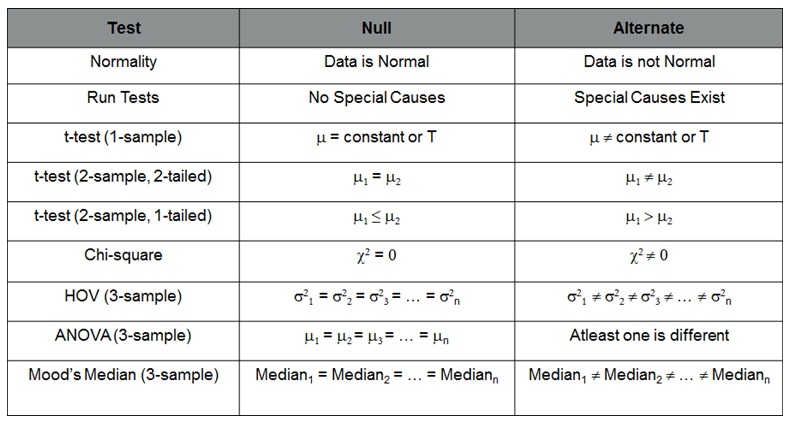
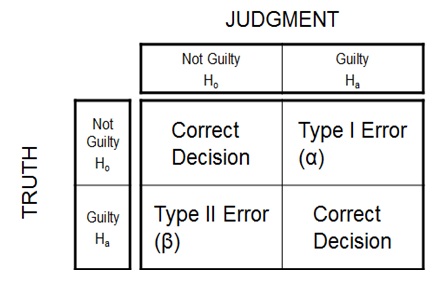
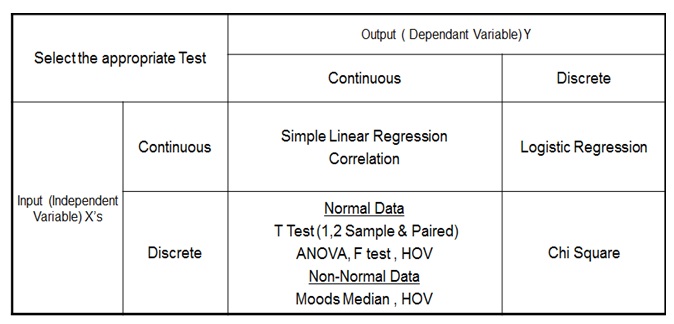
Pratyush Kumar Nayak replied to Vishwadeep Khatri's topic in We ask and you answer! The best answer wins!Hypothesis Testing is used in the Analyze phase. Hypothesis testing tells us whether there exists statistically significant difference between the data sets for us to consider that they represent different distributions. For Continuous data, hypothesis testing can detect Difference in Average and Difference in Variance. For Discrete data, hypothesis testing can detect Difference in Proportion Defective. To Summarize the detail in pictorial form is given below.
-
Pratyush Kumar Nayak replied to Vishwadeep Khatri's topic in We ask and you answer! The best answer wins!The right interpretation for Poka Yoke is option -4 i.e Human error may happen, the defect will also happen but will be detected and corrected automatically. The examples are as follows.



-
Pratyush Kumar Nayak replied to Vishwadeep Khatri's topic in We ask and you answer! The best answer wins!Takt time is to produce product at the rate at which the customer requires it. If the customer demand averages one unit per production minute, produce the product at this rate (Takt time). There are four Key concept to elaborate: 1). How linear is the actual demand. In many industries, the actual demand varies significantly period to period. For example, if average demand is 100 units/day is of little value when actual customer demand regularly varies from zero/day to 300/day! If we were to produce at an average rate, while consistently meeting customer demand, we’d likely have to carry some finished goods inventory. This strategy has all of the typical “wastes” associated with inventory: Double handling, tracking, risk of obsolescence, hidden quality defects, tied up money and space, etc. 2). How does the customer want to take delivery? Needless to say, producing at a nice linear rate, all month long, only to ship once/month, defeats much of the benefit of producing at a rate. All month long we’ll be building and storing inventory, double handling (put it into storage, then take it back out of storage to ship it), with all of the wastes associated with inventory. One of the biggest benefits implied by being able to produce linearly, at Takt time, is the ability to produce essentially directly to the shipping process and to transfer the product immediately to the customer. I.e. we want to produce and ship at the takt time rate. In the circumstance where the customer does NOT want daily linear deliveries, it often makes more sense to produce and ship JIT according to the customer’s shipping constraints. I.e. instead of producing linearly and accumulating the product to ship, it may make more sense to produce the shipping quantity, at a considerably higher production rate, and then immediately load and ship the product. 3). Are there any shipping constraint? If the logistical costs of daily shipments are prohibitive, then some of the benefits of takt time are lost. We’d produce nice and linearly, but then have to accumulate and store the product waiting for an “efficient” transportation batch 4). How Large is the value added work content? Another limitation to takt time usefulness is the amount of value-adding time required to produce the unit. On the above example, this time with no constraints on the shipping rate: i.e. the customer is willing to take daily delivery, and the transportation costs are not prohibitive. Our computed takt time is 4.2 minutes/unit. But what if the entire value-add time is less than 1 minute/unit? i.e. one production operator can produce a unit in less than 1 minute. Does it make sense to spread out the work beyond 1 minute? Probably not! Takt time applicability demands that the total value-add time is substantial enough to justify producing at a rate.
-
Pratyush Kumar Nayak replied to Vishwadeep Khatri's topic in We ask and you answer! The best answer wins!FTA is a deductive analysis approach for resolving an undesired event into its causes through logic diagram and Bollean algebra. Same is developed by Bell laboratories. •A logic diagram called Fault tree is constructed to show the event relationship. •Probability of occurrence values are assigned to the lowest events in the tree in order to obtain the probability of occurrence of the top event.
-
Pratyush Kumar Nayak replied to Vishwadeep Khatri's topic in We ask and you answer! The best answer wins!The other Value additions are as follows. 1). Leaders and managers may not be directly involved in adding value to the product or service. Leaders add value by engaging employees in ways that will help them continue to add value for the customer. 2).In case of educational institute, The difference between the predicted performance and the actual performance represents the value added by teacher's instruction. 3). In case of hotel industry, Loyalty program, inclusive package, personal touch, Extra support are tangible and intangible value addition. 4). Value added in Health care as, providing at lowest possible cost, a successful "high-tech," "high touch" approach through the combination of process re-engineering and employee training in customer relations.
-
Pratyush Kumar Nayak replied to Vishwadeep Khatri's topic in We ask and you answer! The best answer wins!Yes.. 5S actually save enough money when implemented outside manufacturing. For example in service industry like Hotels, Hospitals, Banks etc... Following are the tangible and intangible cost benefits. 1. It improves safety of the work place. 2. Moral of employee become better, hence higher productivity. 3. Less chance of error. 4. Inventory well managed. 5. Reduction in waste. 6. Response time to customer improves, hence turn around become faster.
