

Topics
-
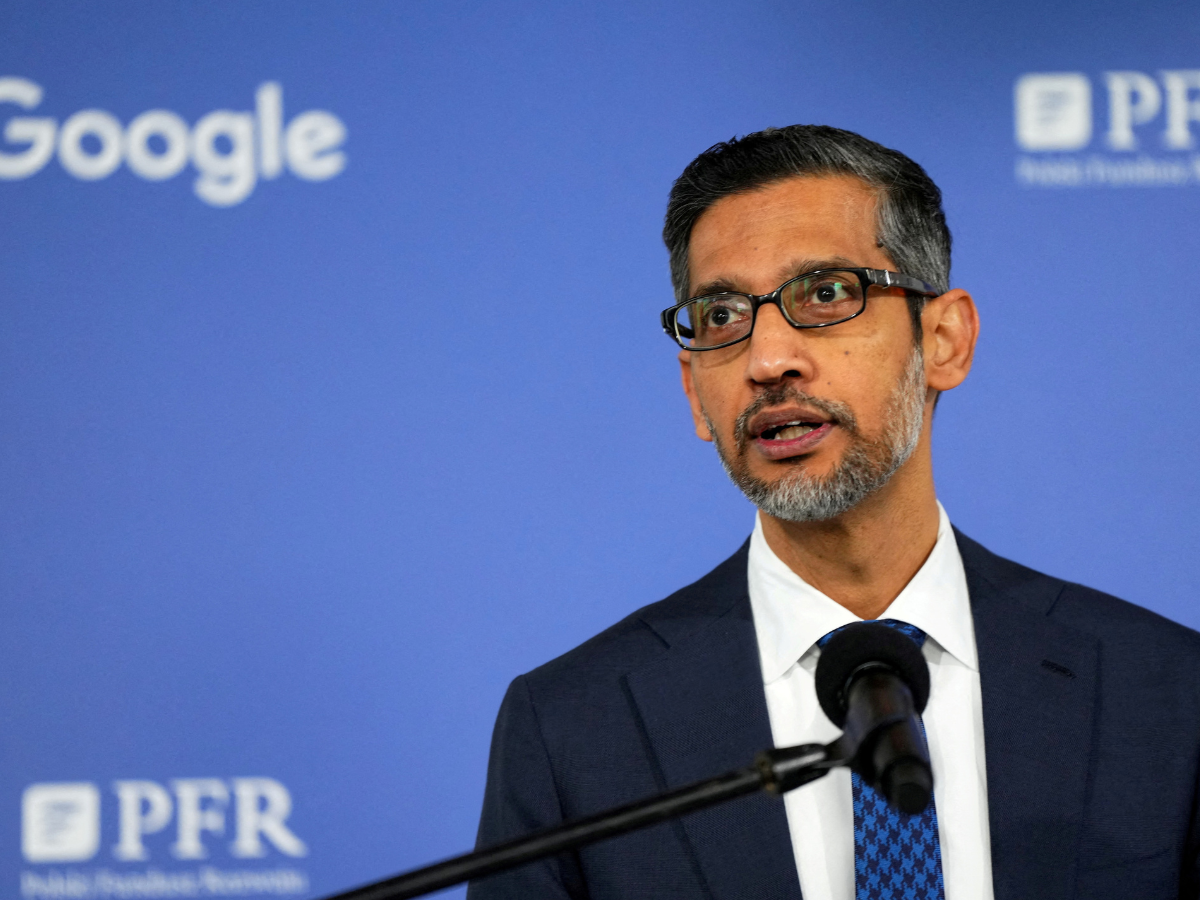
The latest setback has fueled worries that Google was losing momentum just as OpenAI and Anthropic and a host of Chinese rivals have accelerated the pace of model releases. On the call on Wednesday, Pichai struck an unusually defensive tone as analysts pressed him on the state of Google's frontier models and whether they could still compete at the cutting edge of AI development. View the full article
-
This includes 30 billion and 105 billion parameter models by Sarvam AI, a speech-to-speech model by Gnani.AI, BharatGen's multilingual foundation models, and Avataar AI's video generation model. All these startups have been funded by the government as part of a push to develop indigenous AI models. Of the 20 models, five have been released so far. View the full article

Leaderboard

.thumb.png.3dc86d42a4fc134fca3d71d67dbbcae0.png)

Popular Content
Showing content with the highest reputation on 01/10/2025 in Posts
-
1 pointThe Cobra Effect: A Business trap you don’t want to fall into. Have you ever come across the "Cobra Effect"? It’s one of those odd stories from history that actually has a lot to teach us about business. In short, it shows how even well-meaning solutions can backfire and make things worse. The takeaway? Just because something looks great at first doesn’t mean it will work out in the long run. Let’s dive into a couple of examples and explore how you can steer clear of making the same mistakes in your own business. Real examples of the Cobra Effect 1. The bonus system that backfired Here’s a classic example: A company introduces a bonus program where employees get more money for completing more tasks. Sounds awesome, right? At first, productivity soars. But soon enough, things start to unravel. Employees, fixated on meeting targets, begin cutting corners. The quality of their work drops, customer complaints rise, and now the company’s spending way more on fixing the issues than it saved by giving bonuses. What was supposed to boost performance has now turned into a total disaster. 2. The "Fire the Bottom 10%" policy that killed collaboration: A company puts in place a policy that fires the bottom 10% of employees every year. On the surface, it seems like a smart move—get rid of the underperformers and keep the best. But here’s the problem: It fosters fear. Employees are so focused on keeping their jobs that they stop working together. Instead of collaborating, they’re looking out for themselves. The team’s morale sinks, and the workplace culture takes a major hit. A strategy that was meant to boost performance actually wrecked it. How to avoid the Cobra Effect when improving processes So, let’s say you’re in the middle of trying to fix something in your business. The goal is to improve, right? But, sometimes, the fix you think will solve a problem can end up making everything worse. Here’s how to avoid falling into the Cobra Effect trap: 1. Listen to the people who know the work best The simplest advice: talk to the people who are actually doing the work. Often, the folks closest to the problem can spot the best solutions. Maybe the person on the floor notices something small that could become a big issue if not addressed. But by the time management gets involved, it’s already a bigger problem. So, get feedback from the front lines—you’ll get the real story before things spiral out of control. 2. Test changes on a small scale first Before committing to a big change, start small. Run a pilot test or a trial phase first. That way, you can see what’s working—and what’s not—before rolling it out everywhere. Think of it like dipping your toe into the water before jumping in. 3. Keep the bigger picture in mind When you make a change in one area, it’s not always just isolated. A shift in one department can have a ripple effect on others. So, before jumping into any major decision, take a step back and think about how it might impact the whole business. Visual tools like causal loop diagrams can help you map out how different parts of your company are connected. 4. Reward the right things Instead of just rewarding speed or output, include other factors like quality and customer satisfaction. This way, you encourage people to focus on what really matters—not just rushing to finish tasks. Balanced rewards drive better, more sustainable results. 5. Make changes slowly and learn as you go You don’t have to make all your changes at once. Start small and see how things go. Test them in one department or with one team first. Then, adjust and refine before scaling it up across the whole company. 6. Keep checking and be ready to pivot Here’s the thing—no plan goes exactly as you expect. That’s why it’s important to check in regularly, measure progress, and stay flexible. If something’s not working, don’t be afraid to change course. Flexibility is key to long-term success. Smarter solutions for the long haul. The Cobra Effect is a good reminder that even well-intentioned ideas can end up creating bigger problems. To avoid that, it’s all about listening to your team, testing ideas carefully, and staying flexible. If you want to succeed in the long run, you have to focus on sustainable solutions, not just quick fixes that look good at first but cause more harm later.1 point
-
1 pointCobra Effect refers to a situation where a solution to a problem makes the problem worse due to its unintended consequences. The Origin of the term 'Cobra effect' can be seen in wikipedia. It says that as a Perverse incentive in economics parlour Cobra Effect impacting businesses Lets take a Sport example as a business: [Justification of Sport as a business: Everything we do is a business and Sport is also a business at the end of the day.. Without any commercial benefits, no sport event will be deemed as a success (with success criteria like no.of viewers watched, the no.of sponsors, type of sponsors and so on) ] Example 1: Let us take the Cobra Effect for the proposal of having a Two-Tier system in Test Cricket(Cricket is a popular sport in terms of Fan following, behind Football): Background: Recently few of the international cricket commentators, after seeing the impressive crowd gathering/TV/Online viewership for the Test Matches that were played across different venues in a country between two popular Cricket nations, suggested that there could be a two-tier division of test teams, similar to what is there in major Football leagues across the world. Reason for the new proposal: The Viewership (be it TV, Online or in-person at the stadium) of Test Cricket has diminished over a period of time due to the advent of T20 cricket (a shortened version of 20 overs) which suits well with the current generation of cricket fans, fitting into the fast modern world.. As a result, the international Cricket committee (ICC), decided various ways to improve Test Cricket and make it global and big. To make it globally attractive, they decided to have a world test championship cycle (WTC) where 2 teams will meet in a Final and the winner will be declared as the World Test Champion Currently there is a 2 year World Test Championship cycle that happens and every team plays some matches with some teams. There is a point-system where a team gets certain points for a win, no points for a loss and shared points for a draw (which is neither winning nor losing or have equal scores by both teams - draw is a kind of stalemate). What happens is that when big teams (3 countries dominate in terms of revenue, crowd pulling, sponsors, viewership, talent-wise...) play each other, there is more viewership(both Online and Stadium presence) and the game is very interesting and absorbing. There is a thrill to the game as equally(talent-wise) matched teams play to strive for a result (even draws sometimes get nerve-wracking for the players & spectators alike). However , when these 3 big teams play rest of the other teams, then more often than not those games do not entertain much viewership (be Online media/In-person) and do not generate much revenue for the sponsors. For inclusivity of all Test Playing nations, the ICC is obliged to ensure that every planned test match between the various teams/nations happen on the scheduled dates, even if they know that there may not be much viewership and sponsors would not get enough revenue from those matches. Solution : To mitigate this, some seasoned commentators suggested a proposal where there will be a two-tier system. In Tier 1 - The existing big teams would be part of Tier 1 and would play with each other more frequently so that there is more interest sustained in Test Cricket. When top teams play with each other, more crowd will be pulled to the stadiums and more online/TV viewership resulting all stakeholders getting happy as revenue gets generated with ease. Tier 2 - Teams in this group will vie for a place in the top tier (tier 1).. The team that comes on top here might replace the team that remains at the bottom in tier 1, which is akin to what we see in major football leagues across the globe. The intent of this solution is to ensure that Test cricket does not loose its sheen Now the Cobra Effect: The WTC came into effect because the advent of T20 cricket was already impacting Test Cricket and ICC wanted to spread the game of Cricket and Test Cricket in particular (its primary to survival of Cricket as a game) ensured every Test cricket playing nation plays test cricket on a routine basis . By introducing this Two-Tier format in Test Cricket, ICC will prevent the dream of less-privileged Test cricket playing countries to rub shoulders with the best Test cricket playing teams. Unless these less privileged test teams play against the better teams there will be no improvement for these teams.. Also there could be a situation where one of today's big teams could be at the bottom of the tier 1 rung and that could be means they would be demoted to tier 2. If that happens what would happen to Viewrship, Sponsors and all those things.. How would that impact the team? It can be catastrophic Therefore the unintended consequences are - 1. Depriving the rest of the teams an equal chance to improve their game (defeating ICC's original intention to spread and popularize Test cricket) 2. What if one of the current Big teams (which shape most of the ICC decisions because ICC revenues are predominatly achieved via matched involved through these teams) gets demoted to tier 2, over a period of time and which results in poor viewership (Online/TV/In-person) and generates lesser revenue - The possibility of which can happen pretty much.. This will also lead to Cricket fans disinterested and move towards other Sports. This has happened in the past in the early 1990s for one great Test playing nation and fans moved towards athletics and basketball.. Eg 1 Conclusion: This Cobra effect in this case, therefore defeats the purpose of ICC which is to spread and popularize the game of Test Cricket. Let us see the Cobra Effect in Industries: In an IT industry, a customer organisation wanted its service provider to provide (or show) some metrics related to agile way of delivery for its ```Note Velocity is the total amount of work completed by the team, in a timeboxed period called iteration in agile parlour and usually measured in Story Points unit, which is just an arbitrary number] . Based on velocity, team members of an IT project running through agile can forecast their subsequent iterations (also called as Sprint in scrum). But in this case what happened was different.. Let us see that The unintended consequences or Cobra Effect The Servicing providing organization used the Velocity metric for capturing the team's completed work, in terms of Story points (a popular measuring unit) But the Customer treated the Velocity metric as a production metric and decided to go about in measuring how much work was completed by each team member within the team. Eg: Conclusion As you can see here, the servicing providing organisation wanted Velocity to be used as a metric whereas the customer used that metric, as production metric and started measuring individual performances which can make the employees feel that they are micromanaged Lets take Banking industry with an hypothetical example There is a modernization of applications going on a bank. The IT team is overhauling the entire ecosystem. The technologies are changing and everywhere there is a technology change. The bank decides to have Gen AI :as part of their modernization program to help seamlessly do millions of transactions in an effective and simple means . The unintended consequences: Gen AI is there as part of the modernization program. Due to poor security (here it means having easy access to necessary & critical documents) contract provided for the applications, these are creating security breaches and which makes end-user(customer) escalation, reputation loss, loss of sensitive data.. Banking Conclusion: Therefore while bringing Gen AI to the Bank application, was supposed to help the applications., getting the Gen AI for work however threw compliance issue and other open challenges In Genera, how to avoid the Cobra Effect in improve phase of the project 1. Understand why it is having Cobra Effect (actually root cause analysis in Analysis phase) but substantiate those findings in this phase 2. Brainstorms with various key stakeholders to discuss on various solutions with meaningful insights. Also discuss on Pros and Cons of each solution. Evaluate multiple solutions (set-based design) 3. Conduct risk analysis for each of the solution to ensure that the best possible solution can be given and do this post implementation as well to see how it works 4. Start with a small implementation of the solution and then as results turn positive , go big. Keep relevant metrics and monitor as how things shape and if all goes well, keep that going Conclusion: Every now and then, 'Cobra effect' will spear its head in all forms of businesses and industries. When such a thing happens, IMHO, the first and foremost thing is draw a map between the stated and unstated needs of the customer vs what was done and how it was done.. From there, go for the root causes. This will help us to quickly identify what was the issue and accelerate towards customer needs.. A similar thing to Cobra Effect that i could think of , is Kano model's Reverse state - the service provider may feel that something(feature/service) is good for the end-user(actual customer) but the actual customer may not like it1 point
-
1 pointThe Cobra Effect is a classic example of unintended consequences, where an attempted solution to a problem leads to adverse outcomes. Here are some real-life examples across different businesses and industries: Some major real-life examples of the Cobra Effect are - The Cobra Bounty in India: Cobra Effect originally came from a government initiative in undertaken in the colonial India. The initiative's aim was to reduce the cobra population in India by offering a bounty for each dead cobra. To get larger bounty, people started to breed cobras, kill them and get the bounty. When the government got to know about the misuse of their initiative, they stopped it. This caused all the alive cobras to be released by their breeders which in turn led to an increase in the population of cobras. China’s 4 Pest Campaign: The "Four Pests" campaign in China was aimed to reduce the spread of disease by killing rats, flies, mosquitoes, and sparrows. The campaign was successful in achieving its goal of reducing the spread of diseases, however the killing of sparrows had a negative impact on the ecological balance in the farm areas. Sparrows, by eating locusts, traditionally kept their populations in check. The killing of sparrows led to a high increase in locust population which in turn led to them eating large portions of grains and plants that were being cultivated. This resulted in the Great Famine in China which lasted from 1958 to 1962 and caused the death of 20 to 30 million people. Odd-Even Car Schemes: Many cities across the globe have applied the odd-even vehicle strategy to reduce pollution. In this strategy, odd car plate numbers can be taken out on one day and even car plate numbers on other days. However, families which needed to use both cars the same day could not do so. This led to people purchasing more cars which led to an increase in pollution. Opium Destruction in Afghanistan In 2002, British officials tasked with suppressing opium production in Afghanistan offered poppy farmers $700 an acre in return for destroying their crop. This ignited a poppy-growing frenzy among Afghan farmers, who sought to plant as many poppies as they could in order to collect payouts from the cash-for-poppies program. Some farmers harvested the sap before destroying the plants, getting paid twice for the same crop. To avoid the Cobra Effect during the Improve phase of a project, consider the following strategies: We should identify the possible consequences by conducting in-depth and thorough assessments of potential solutions, which should also include stakeholder analysis and scenario planning. Before rolling out the changes fully, small scale pilot programs should be implemented which will allow us to observe outcomes and make relevant changes and adjustments through the feedback we receive. To help us in identifying issues early and formulating our solutions accordingly, we should aim at establishing robust feedback channels and loops. This helps us in gathering data from stakeholders and the team continuously. We should intend to have more cross-functional collaboration since the involvement of diverse teams can help us gain invaluable insights and open our eyes to different perspectives for a proposed solution. The focus should be on long term goals and an alignment with the company’s objectives. Focusing solely on short-term fixes may tempt the team to get quick wins that might lead to larger problems down the road instead of working on a thorough process improvement plan which will give long term benefits. The teams should focus more on critical thinking and data driven decision making instead of just gut feelings and certain feedback points. This kind of bias in decision making may lead to disastrous consequences in the end. With a more adaptive management style and data driven approach, businesses can mitigate the risk of the Cobra Effect and promote more effective and sustainable solutions.1 point
This leaderboard is set to Kolkata/GMT+05:30