

Topics
-
The latest setback has fueled worries that Google was losing momentum just as OpenAI and Anthropic and a host of Chinese rivals have accelerated the pace of model releases. On the call on Wednesday, Pichai struck an unusually defensive tone as analysts pressed him on the state of Google's frontier models and whether they could still compete at the cutting edge of AI development. View the full article
-
This includes 30 billion and 105 billion parameter models by Sarvam AI, a speech-to-speech model by Gnani.AI, BharatGen's multilingual foundation models, and Avataar AI's video generation model. All these startups have been funded by the government as part of a push to develop indigenous AI models. Of the 20 models, five have been released so far. View the full article



Leaderboard
-
Anchal Parashar
Lean Six Sigma Green Belt1Points10Posts -
SIDDHESHWAR JANGID
Members1Points12Posts -
Shubham Chamoli
Members1Points14Posts -
Alpana Sharma
Members1Points10Posts


Popular Content
Showing content with the highest reputation on 08/07/2024 in Posts
-
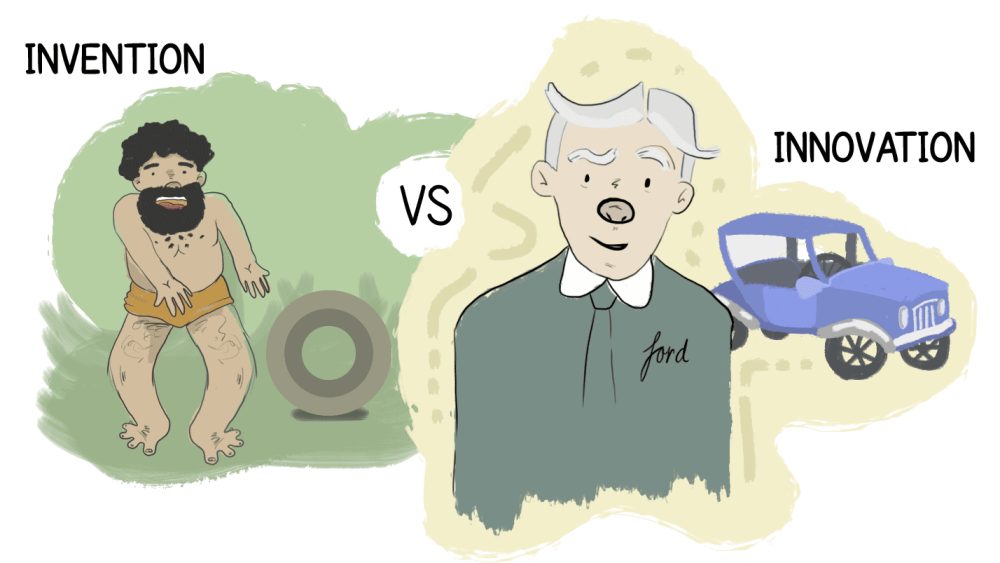
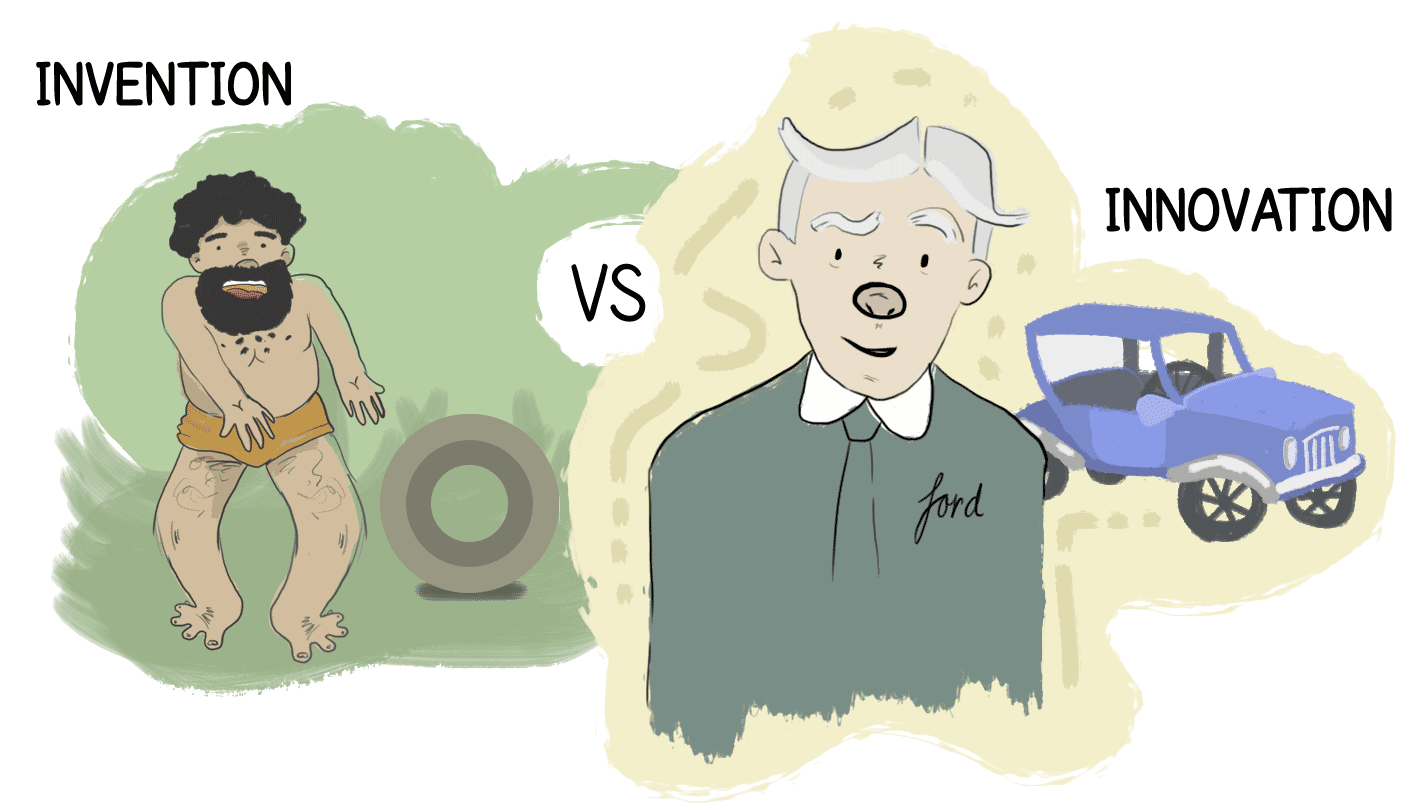
1 pointInvention: Anything which was never created in the past and developed, is called invention. Example: the invention of blub, telephone, etc. Invention is always the result of novel research and experimentation. A great idea that is just changed into a Tangible product is called invention. Innovation: An invention or existing idea, when used to develop more value adding products by using technical, marketing, or other strategies, is called innovation. Ex. smart phone, LED, etc. Below is the more detailed comparison of Invention and Innovation Basis for Comparison Invention Innovation Meaning Invention refers to a completely new idea for a product or process that has never been created before. Innovation involves implementing an existing idea for a product or process that is being introduced for the first time. What is it? The invention is based on an original idea and its theoretical workings. Innovation focuses on adding value to something that already exists. Concept Innovation involves implementing an idea for a product or process being introduced. Innovation is characterized by the practical implementation of a new idea. Skills required Invention typically requires scientific skills. Innovation necessitates a combination of marketing, technical, and strategic skills. Occurs when Invention occurs when a new idea strikes a scientist or inventor. Innovation arises when there is a perceived need for a new product or an improvement to an existing product. Concerned with Invention is primarily concerned with a specific product or process. Innovation encompasses the integration of various products and processes. Lean Six Sigma can be applied to invention as well as innovation. During research and new idea / concept development, Lean Six Sigma can help organize research and structure the development process. Lean Six Sigma’s data driven approach can give more accurate and quality results during invention. Similarly, Lean Six Sigma can guide the development of new products out of existing products or services using data and a structured approach. Lean Sigma tool also expedites the overall development process of invention as well as innovation In both cases, Invention or Innovation Lean Six Sigma’s DMADV approach is used.
 1 point
 -
1 pointInvention and Innovation Invention: Invention is something that refers to the creation of anything that is new, that may be a new product or a new process or a new idea or even a new solution, etc. Creation of anything that is unique can also be considered as invention. Innovation: Innovation can be a value addition to an invention. It can be successful commercialization of an innovation or may be the implementation of invention. It can be conversion of invention from an idea to practical, usable and marketable propositions. It can also be altering an invention for a greater and much better realization. To understand the difference between Invention and Innovation, let us consider very common and famous examples: 1. Bicycle: The first bicycle was not so much user friendly, in terms of balance, weight, ease, breaks and durability, etc. But with continuous innovation in the industry, bicycles are now available with Carbon fibre body, tubeless wheels, gear system, better balance and aerodynamics, etc. Hence are delivering better value to the end user and user is paying greater price for it. 2. E Payment system: Initially we required credit/Debit cards physically to do payments. Now we can do it thru UPI or mobile banking, etc. 3. Led Bulb: Initially LED bulb was heavy, bulky and less energy efficient. Now the lamps are smaller in size, better aesthetics and far more energy efficient (5 Star). There are numerous examples like: First Mouse, First Computer, First antibiotic, First lamp or First electric car. Six Sigma principles can be applied to Innovation definitely. Or we may rephrase that all Innovation is done through process improvement, Six Sigma being one. DOE and improvement projects based on DMAIC are all examples of innovation. For invention, use of Six sigma may have limited scope but definitely it may push towards invention. Whenever inventions have been made, inventors have always worked on theories and evaluated results based on trial and their outcome. Once we have data, we may definitely apply six sigma for refinement of result getting one closer towards invention.1 point
-
1 pointAt some level Invention and Innovation seem same or interchangeable but when we do a deeper dive it’s not. Inventions are typically creation of a new product which wasn’t existent and is being created. History is full of such examples; invention of Airplane by Wright Brothers changed the way one could travel or ship products from one place to another. Similarly, invention of Telephone completely revolutionized the mode of communication forever. Inventions are usually patented by their inventors or organizations. They are breakthrough or a novel solution to a human problem or need for advancement. Innovation on other hand is different from invention in regards of being completely non-existent. Rather innovation is about improving an existing product. It is a result of incessant pursuit of excellence by keeping the vision & customer needs in vision, coming up with new ideas and implementing them to an existing product to add new features to make it better and efficient. Great example of innovations are the smart phones, smart watches and digital cameras. While the concept of a mobile phone was already invented as keypad mobiles in early 90s, companies like Apple and Samsung innovated it and taking absolutely up to a different level in 2000s by adding features like touchscreens, internet connectivity, and mobile apps, transforming the way we communicate and access information. In fact, innovation is one of the prominent Theories of Profit in Microeconomics. Overall, we can say, invention is about creating something entirely new which wasn’t existent earlier, while innovation is about improving or building upon existing products. Both invention and innovation play crucial roles in human evolution and business excellence in any sort of business. Lean Six Sigma principles are more focused on improvement of existing product/business. To invent new thing these principles may not work completely as we can go for Design for Six Sigma, but it will still help to an extend not completely.1 point
-
1 pointInvention : Invention is giving birth to something, which was not existed on this earth. Like , Bulb, Camera, Computer etc. Six Sigma can be used after the invention to improve the quality of the product or efficiency of the product. But Six Sigma can be used at the inception stage of any invention. Here it is inventors freedom. Completely a brain child of the inventor. Innovation: Innovation is making changes or enhance or improving the existing. Like Bulb now evolved as Led. Camera has now evolved as micro camera so on and so forth. Six Sigma can be used starting from inception. From Idea generation to deployment and monitor the progress, every stage we can use Six Sigma. It is a methodical approach aiming to achieve pre decided goal.1 point
-
1 pointInnovation and Invention both focuses on the creative skillset required to drive excellence in each and every aspect of life, be it personal or professional. Invention primarily revolves around creating something which is completely new, for example, when Lean Six Sigma got established as core basic of bringing improvement at Toyota motors, it was Invention in Operations Methodology. Over the years. LSS has encompassed multiple facets, as per the changing times and emerging ways of working, thus, leading to Innovation in LSS Philosophy1 point
-
1 pointThis is a wonderful question because many a times we confuse being innovative with being inventive, let us see how. #1 Invention is easier to understand. It is coming up with something tangible that is totally new, that can be sold as a product and service to others. Innovation, on the other hand, is mostly looking at newer ways of doing a process. This could use a newer invention, but is not necessary. It is for sure moving away from current state to attain target condition, and typically you would want to be progressive in your way of work, hence using latest economical invention of that time would be recommended. Let us understand this with an example. Wheel was invented long time ago. if a heavier version of Off Highway truck uses a bigger wheel than the corresponding lighter version; that is just an innovative approach to creating a product line for customers. Heavier version OHT will be an invention; but usage of wheel in it will not be. #2 Innovation is typically a LSS project. You can easily move from current state to meet defined goal and future state through Lean or Six Sigma approach depending on the topic itself. Various other methodologies like TOC, Design Thinking, DMADV etc can also be applied. But, for Invention, though you can apply high level DMAIC framework; but key usage will be of TRIZ principles to help you rethink your solution, and create inventions. So, in conclusion, yes you can apply LSS & TRIZ to both innovation and invention; but they apply respectively for innovation and invention in a better way.1 point


This leaderboard is set to Kolkata/GMT+05:30